E-Fabrication · Unit 04
Personal Design Sprint
Tinkercad + 3D Printing · 10 Bambu P1S printers
Today’s challenge
Build a small identity-based object.
Grade 3 focusBasic solids and holes, align/group, large features, guided file naming, and teacher slicing.
Grade 5 focusRuler-based dimensions, tolerance tests, fit systems, orientation choices, and material/print-time limits.
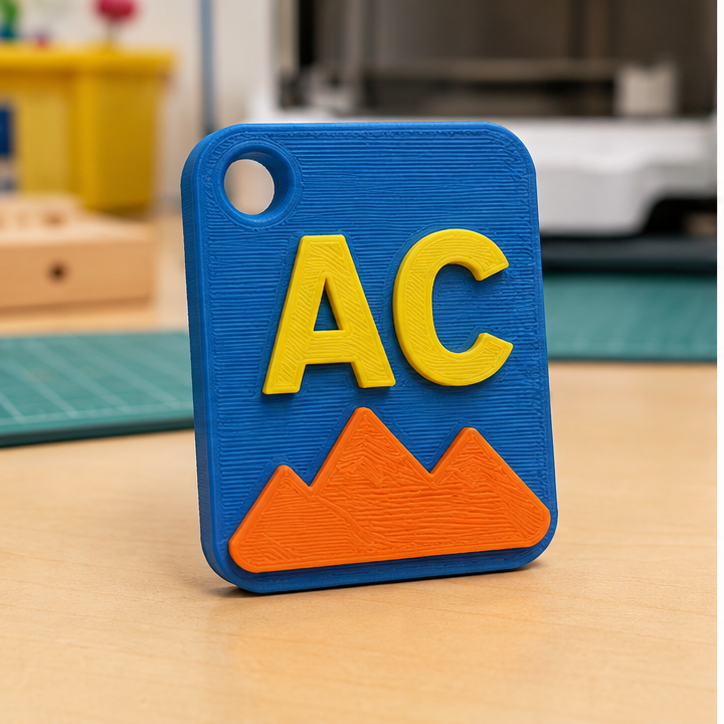
Success example · inspiration, not a design to copy
Look closely. What makes this successful?
Text is readable, features are thick enough to print, and the design feels personal.
What to do
- Understand. Read the challenge. Circle the important need, rule, or safety limit.
- Plan. Use the thinking spaces below before you begin making.
- Make. Build, model, code, practice, or investigate carefully with your team.
- Check. Use evidence—not guesses—to decide what worked.
- Improve or explain. Make one useful change or share your strongest conclusion.
Engineer’s thinking
1. Who are you designing for?
2. What must your idea do?
3. What limits must you follow?
4. Sketch and label at least two ideas.
Evidence check
Show what you learned.
Your teacher will look for: A named Tinkercad file, two sketches, and a print-ready badge model.
My evidence
My next step
Exit reflection
Today I learned that because .
Next time I will .
How independently did I work?□ I needed coaching□ I worked with my team□ I can teach this skill