Grade 3 · 3D Printing01
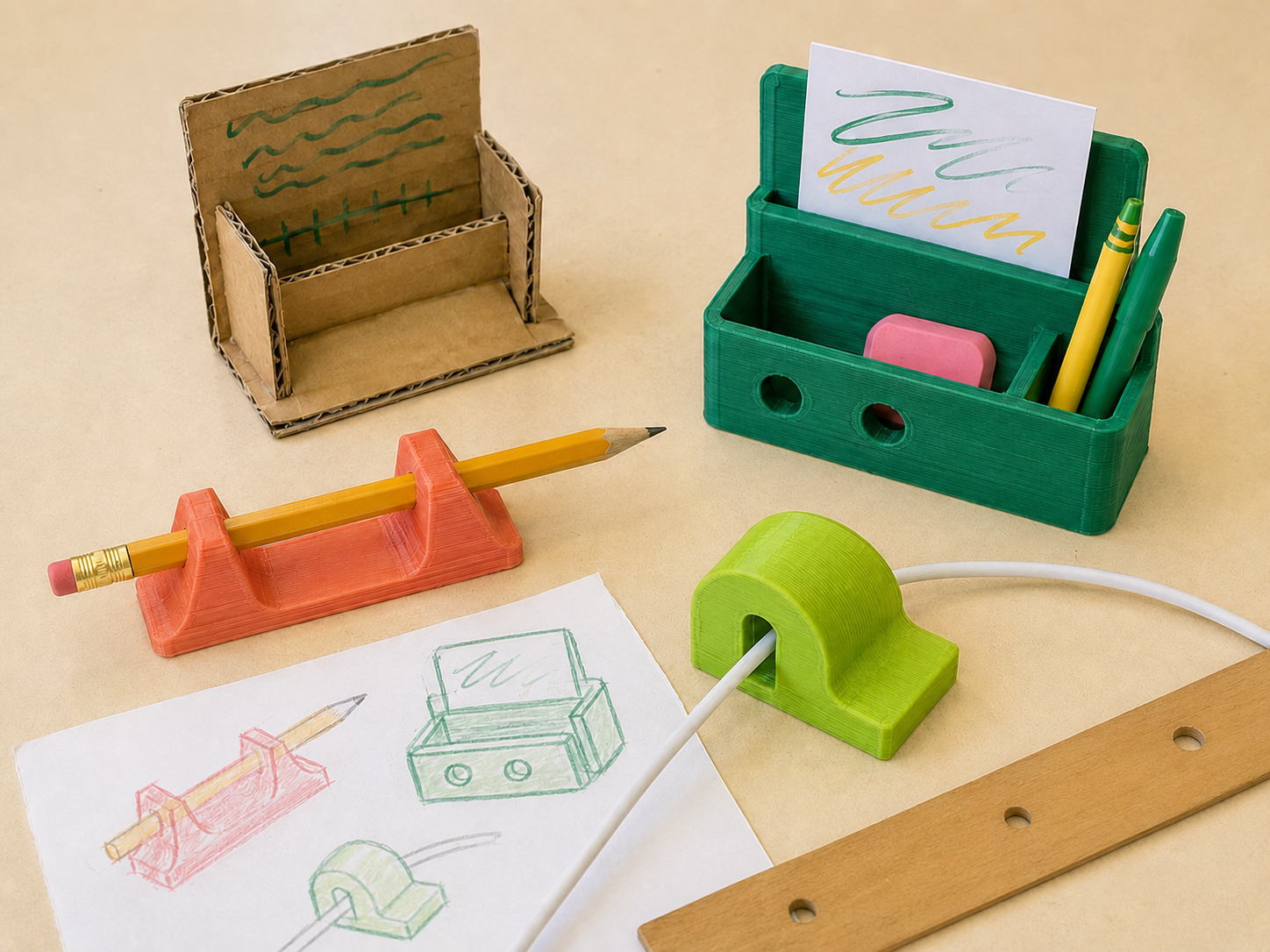
Design a Helpful Desk Tool
Students find a small desk problem, make ideas, build a test model, and improve it. Then they turn the best idea into a small 3D print.
3D PrintingProduct DesignIteration
Fresh engineering, technology, and visual arts lessons for third- and fifth-grade classrooms—grounded in national standards and designed for real creative work.

Start with curiosity.
Build. Test. Try again.
E-Fabrication lesson library
Students find a small desk problem, make ideas, build a test model, and improve it. Then they turn the best idea into a small 3D print.
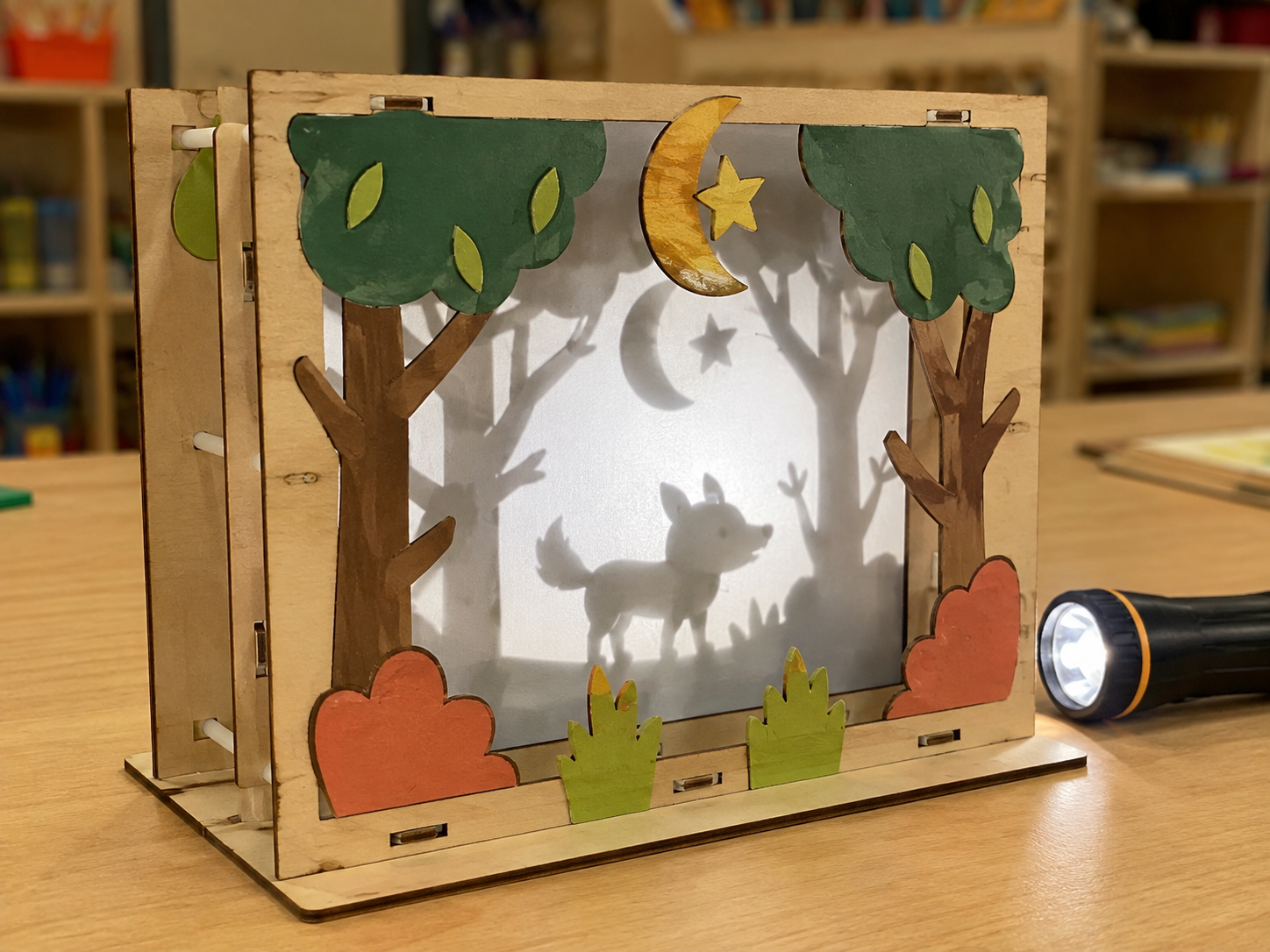
Students build a shadow story with three layers. They test which shapes and spaces make the story easiest to see.
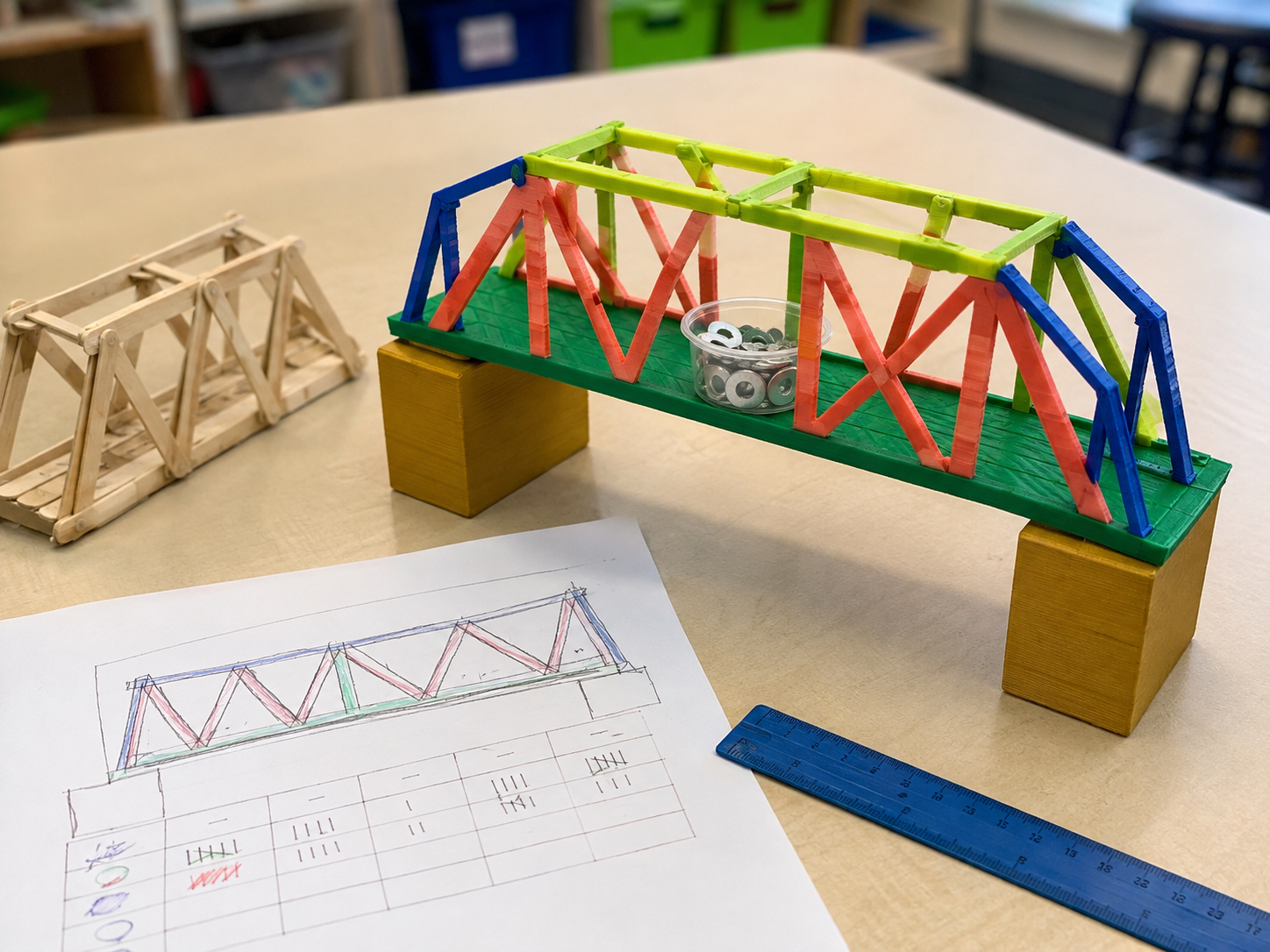
Students design a bridge for a community. They compare ideas, test how much weight a model can hold, study the results, and improve the bridge.
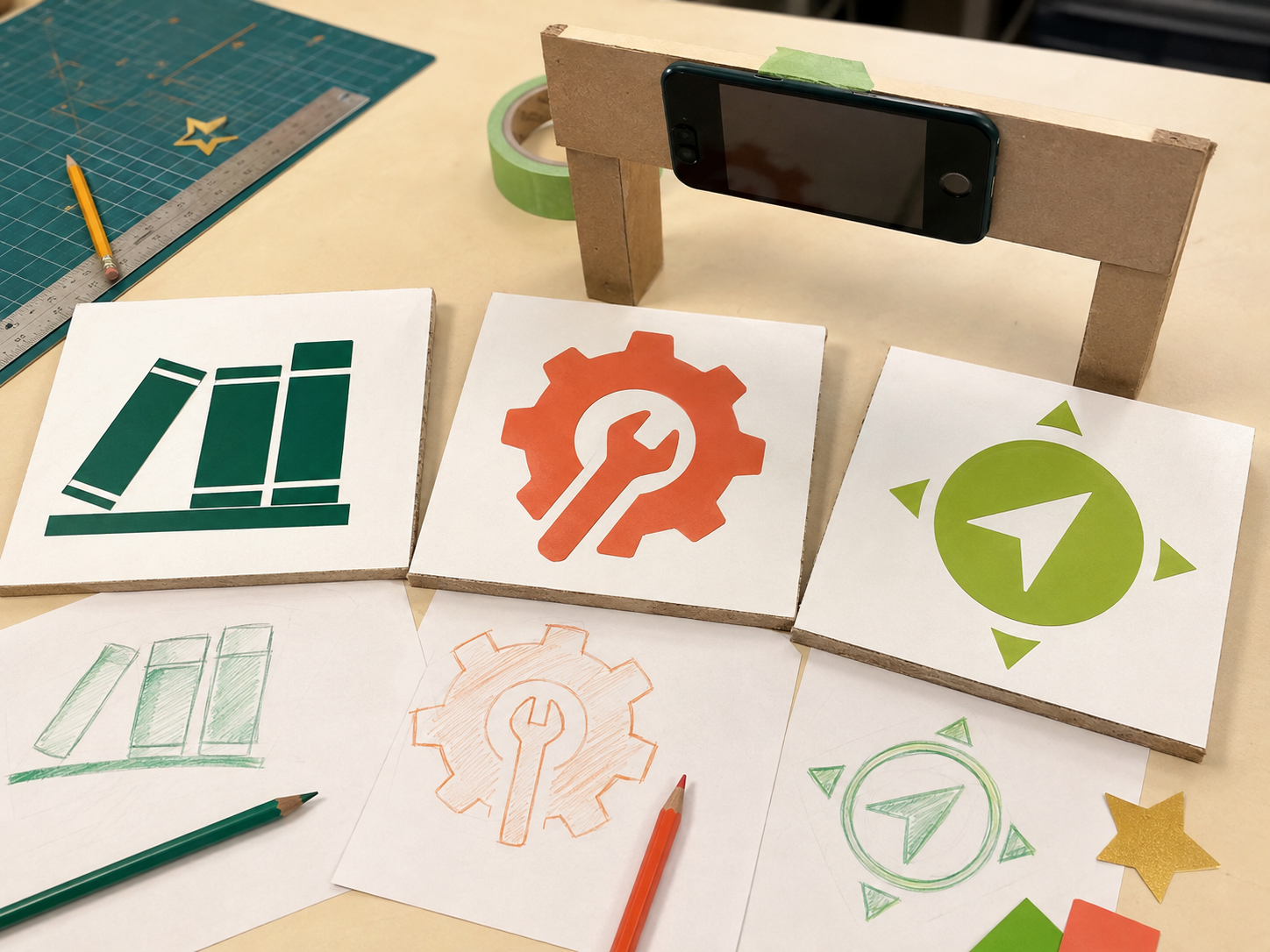
Students make signs that help people find their way. They check AI ideas, draw their own symbols, test them with viewers, and improve the clearest design.
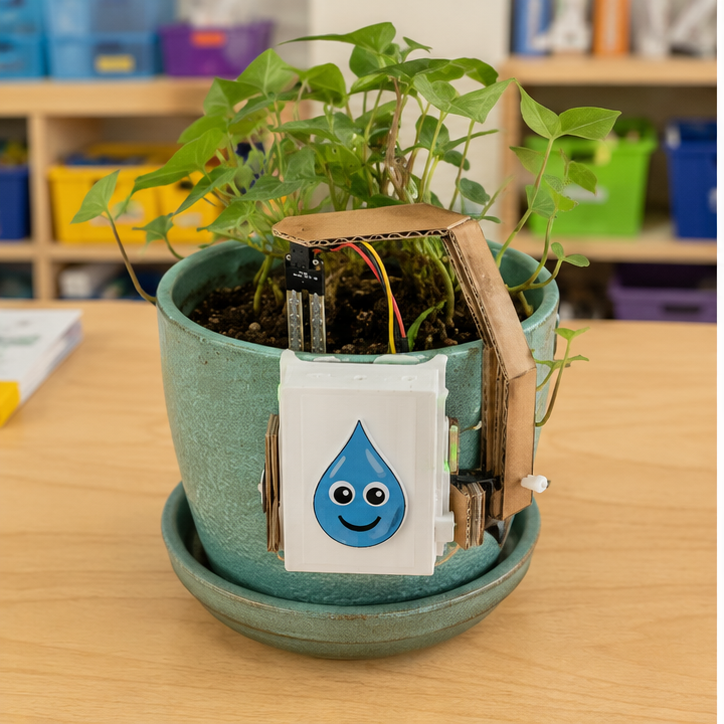
Students invent a plant-care signal using observation cards, a simple probe, or an optional sensor, then make a splash-safe holder and sign.
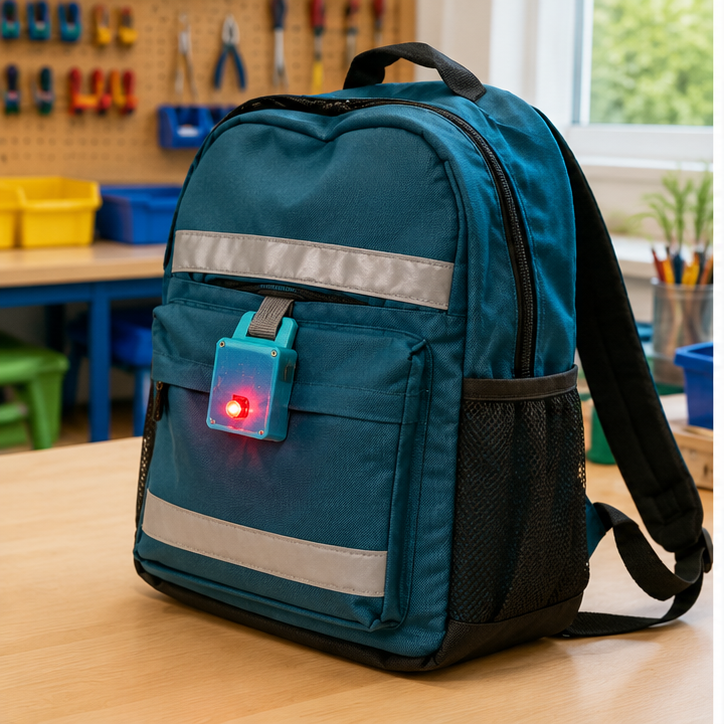
Students make a copper-tape paper circuit and switch, then choose cardboard, vinyl, reused plastic, or a small 3D print for the tag body.
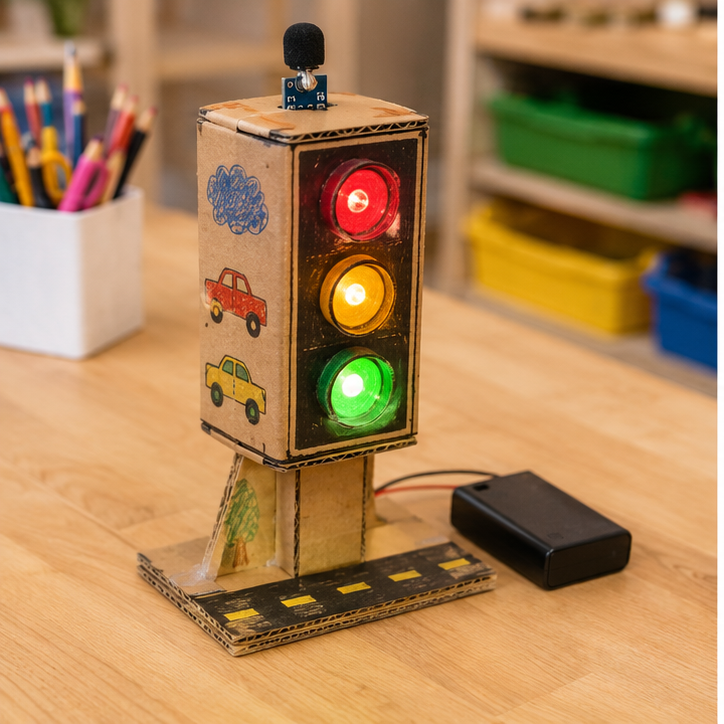
Students may code a Scratch sound meter, build a manually operated signal, or connect a sound sensor to a simple light display.
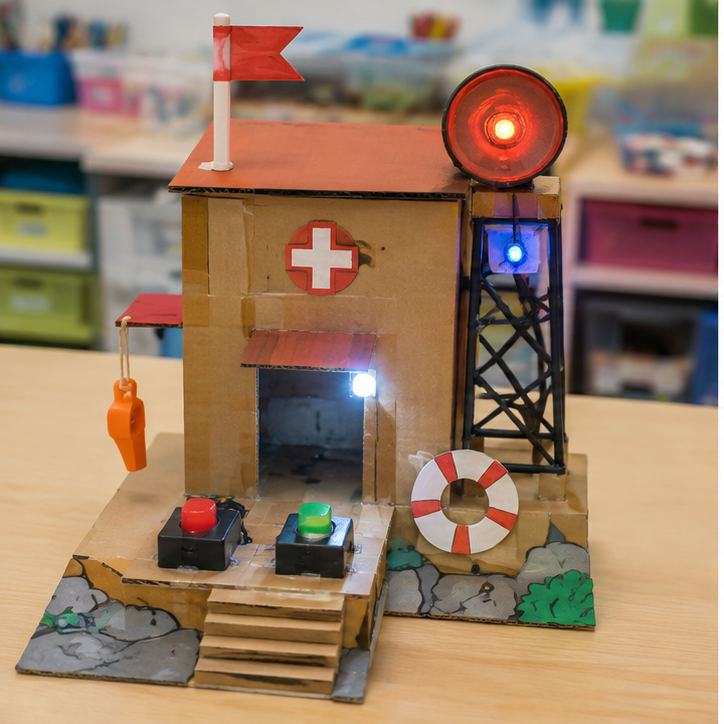
Students invent signals using paper circuits, handmade switches, reflective materials, vinyl symbols, or optional programmable lights.
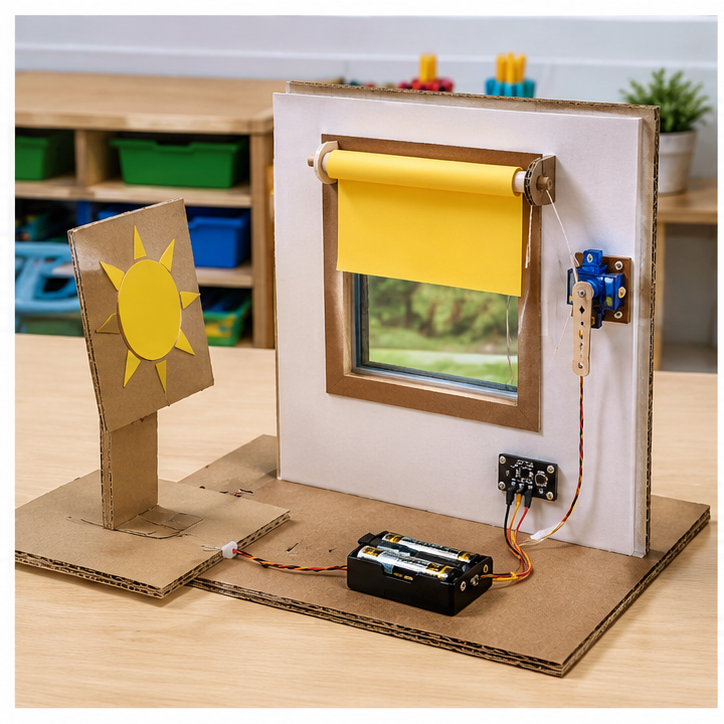
Students build cardboard linkages, sliders, hinges, and 3D-printed connectors; a sensor and servo are an optional extension.
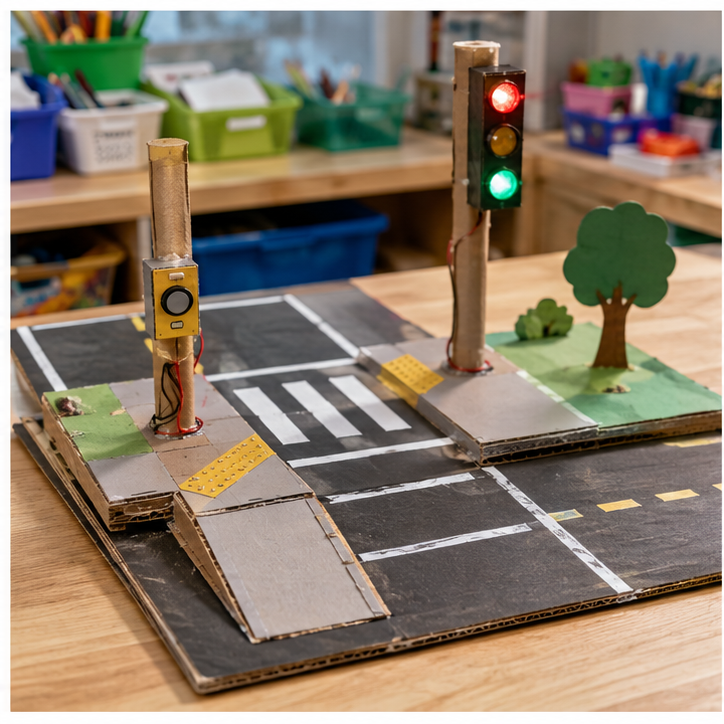
Students code a timed push-button crossing sequence with LEDs and a buzzer, then build an accessible model intersection.
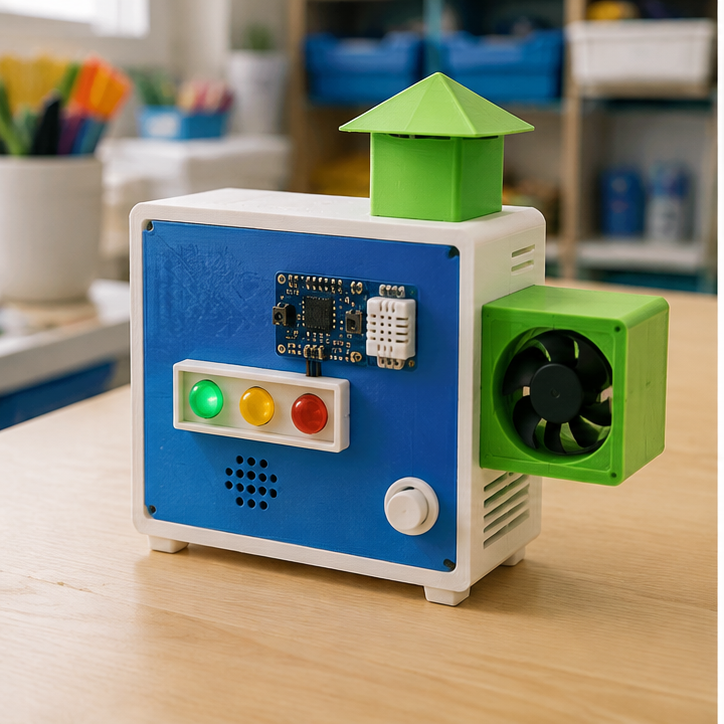
Students code a classroom-safe air or temperature/humidity sensor, graph readings, and design a ventilated monitor enclosure.
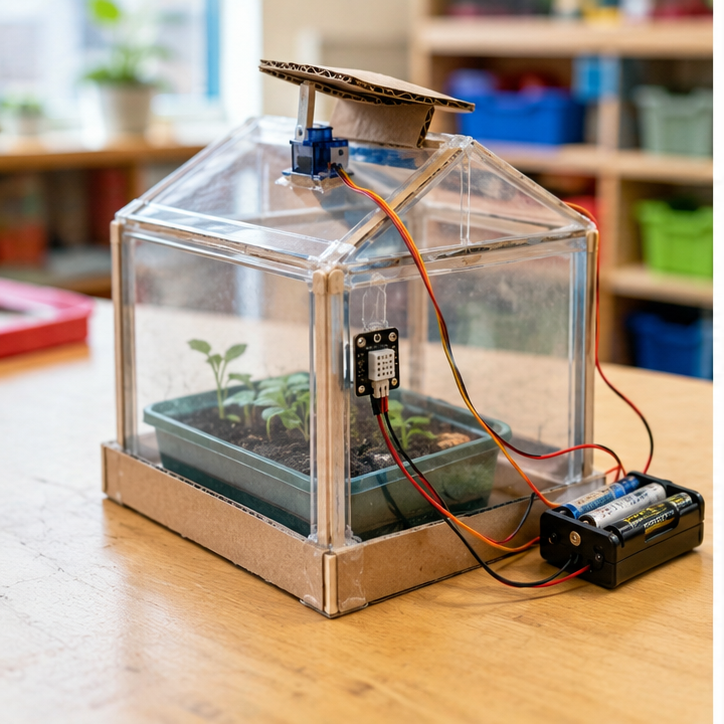
Students code a temperature-controlled servo vent, analyze thresholds and tradeoffs, and fabricate a working greenhouse model.
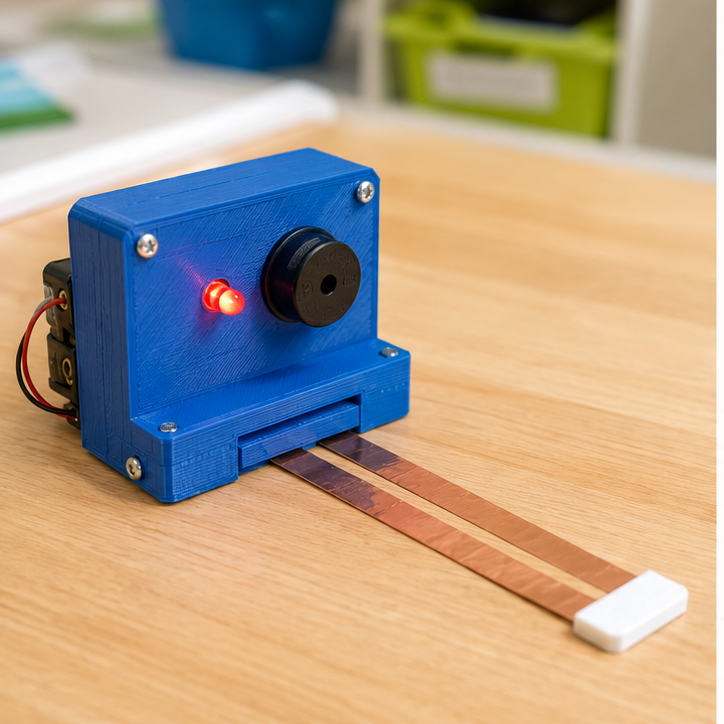
Students build a simple foil- or probe-based buzzer circuit, compare false alarms and detection speed, and choose basic or fabricated materials to protect it.
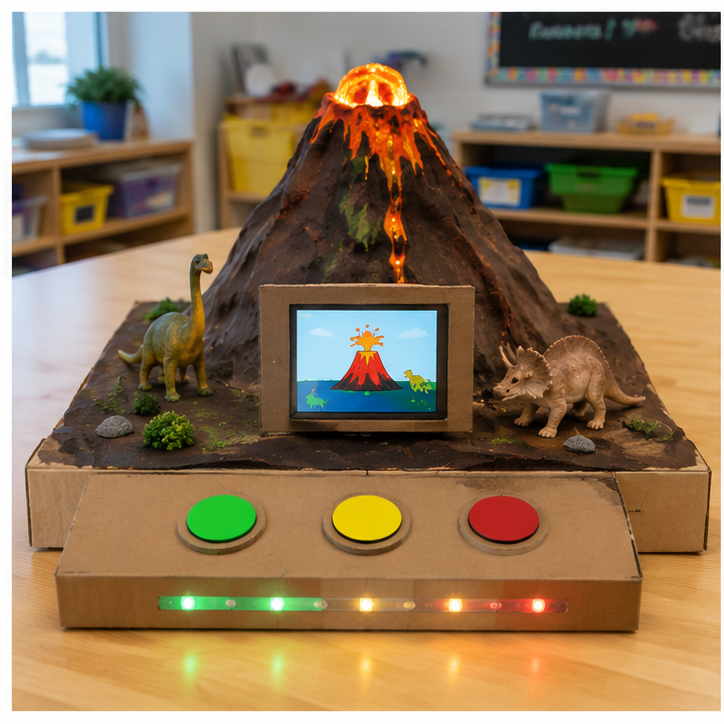
Students may use mechanical flaps, paper circuits, Makey Makey with Scratch, simple switches, or a microcontroller to build an original interactive exhibit.
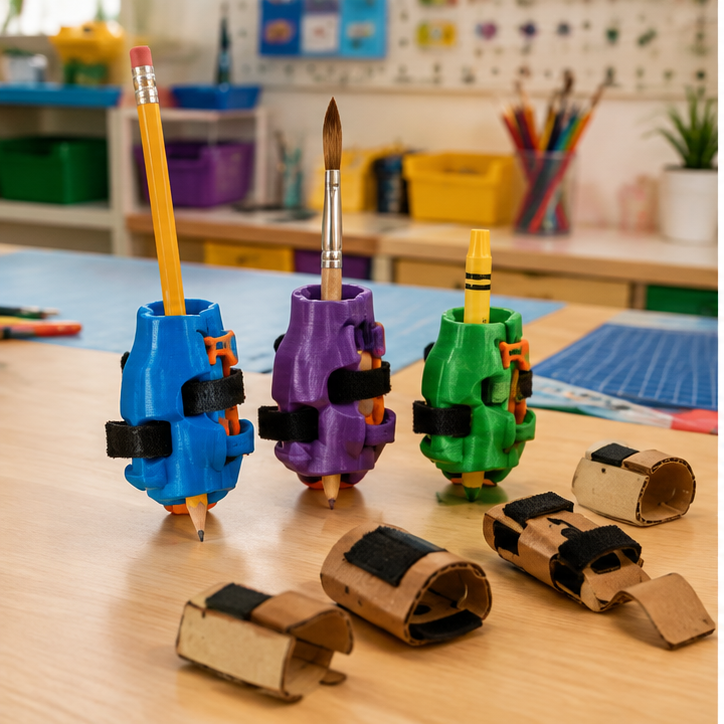
Students interview a user, prototype grips in foam and clay, measure the best idea, and 3D print a removable grip for a marker, stylus, or paintbrush.
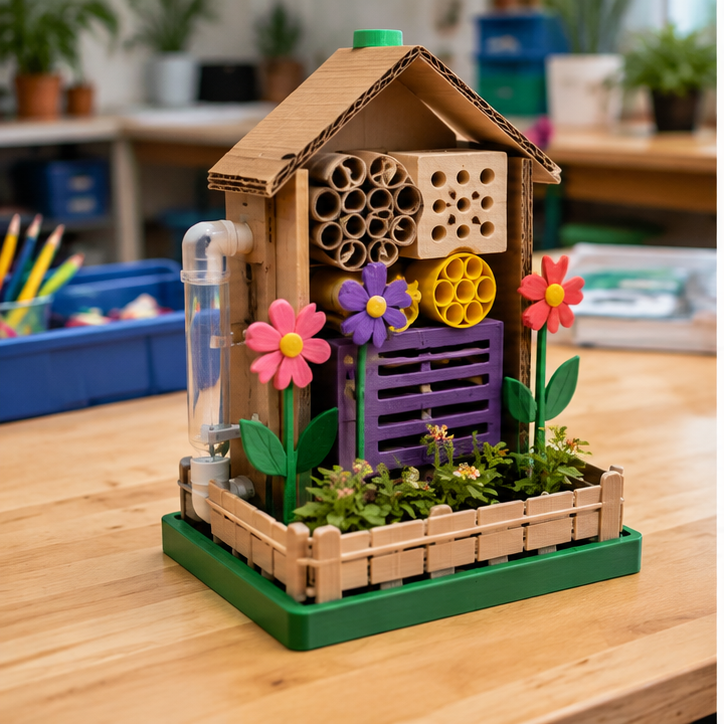
Students research general habitat needs, build cardboard models, and 3D print stackable demonstration modules with drainage, shelter, and observation features.
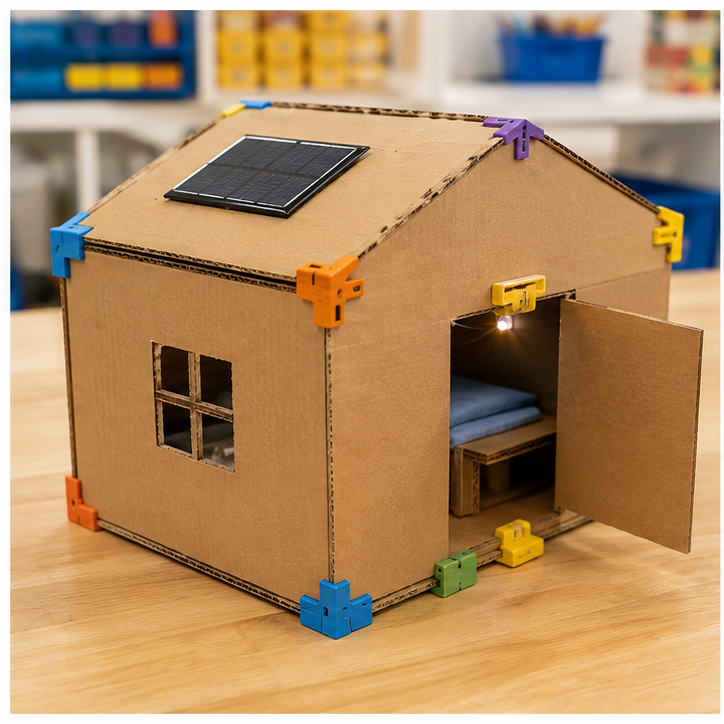
Students compare joint geometries, use parametric CAD to create small connectors, print them in batches, and test a model shelter under repeatable wind and load conditions.
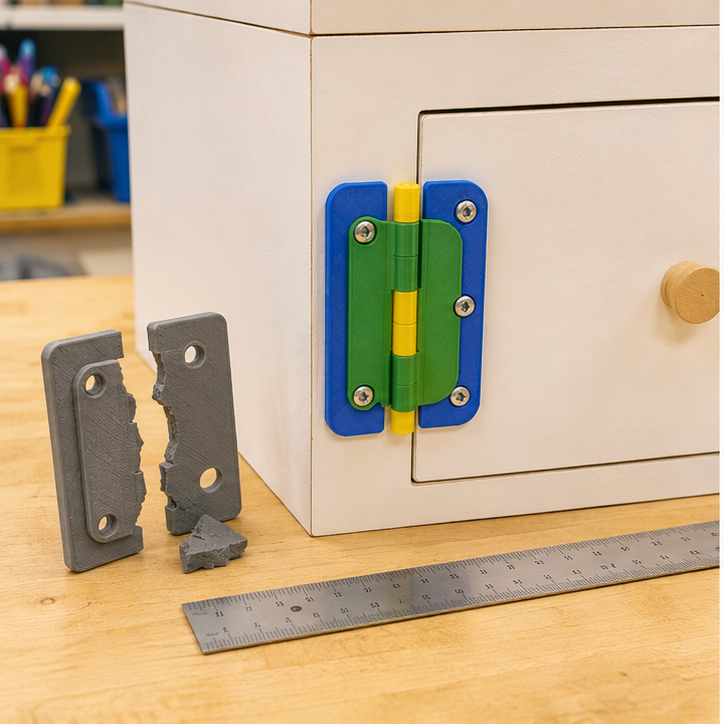
Students inspect a missing knob, clip, spacer, cap, or organizer part, measure interfaces, model alternatives, and print-test a replacement while documenting limits.
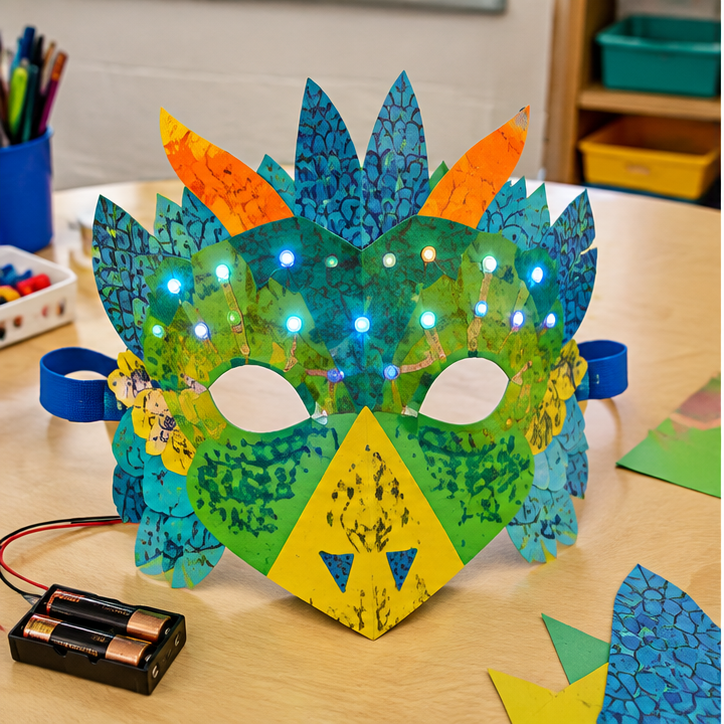
Students sketch an original creature, build a comfortable cardboard mask or wall face, add vinyl or laser-cut details, and create a simple paper-circuit light effect.
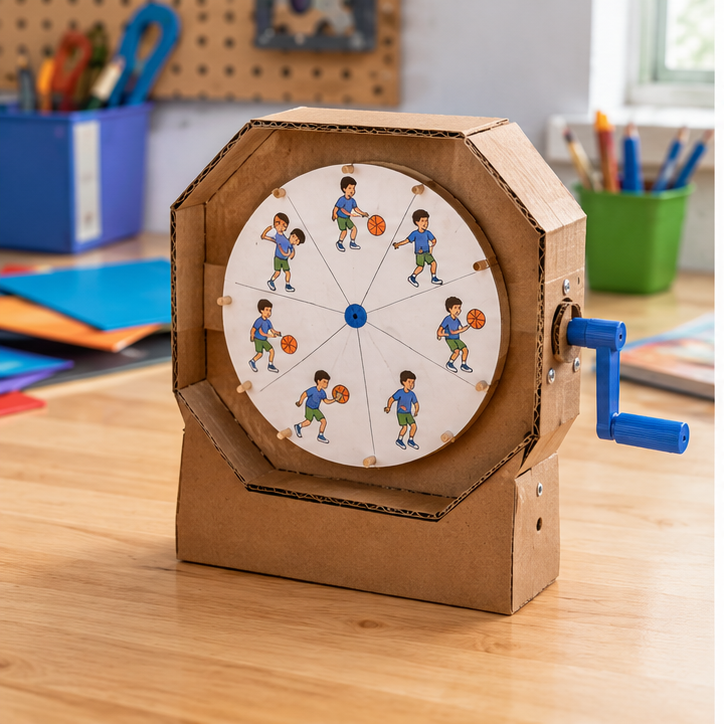
Students draw animation frames, build a hand-spun zoetrope or flip mechanism, and optionally print an axle, handle, or frame that improves motion.
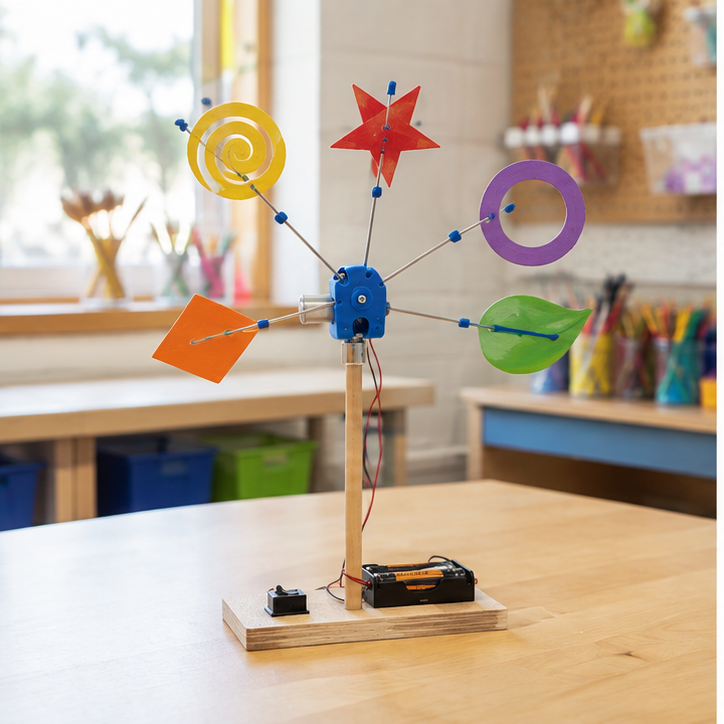
Students explore balance and drag with paper forms, then combine laser-cut shapes, printed hubs, wire, and found materials into an original moving sculpture.
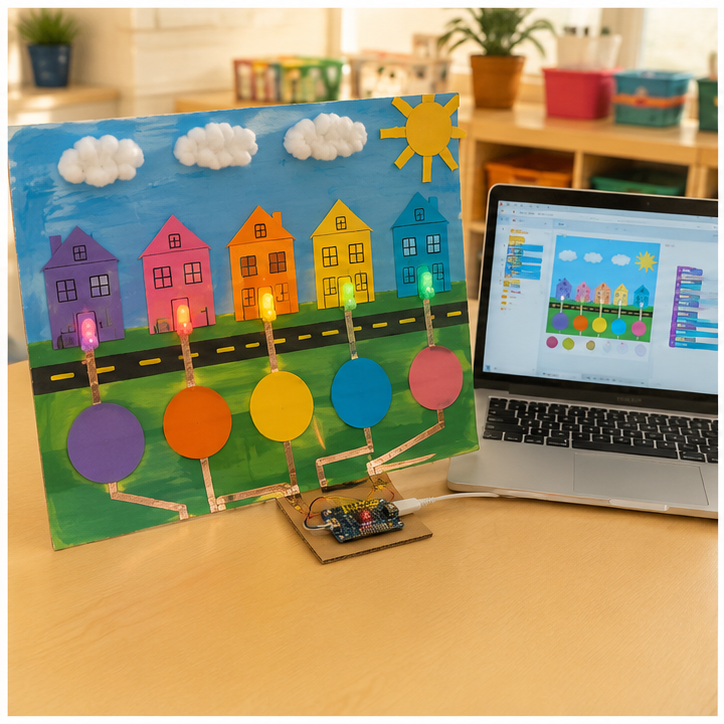
Students design a collaborative art panel and choose Scratch, Makey Makey, simple switches, or optional sensors to let sound or touch trigger color, light, or animation.
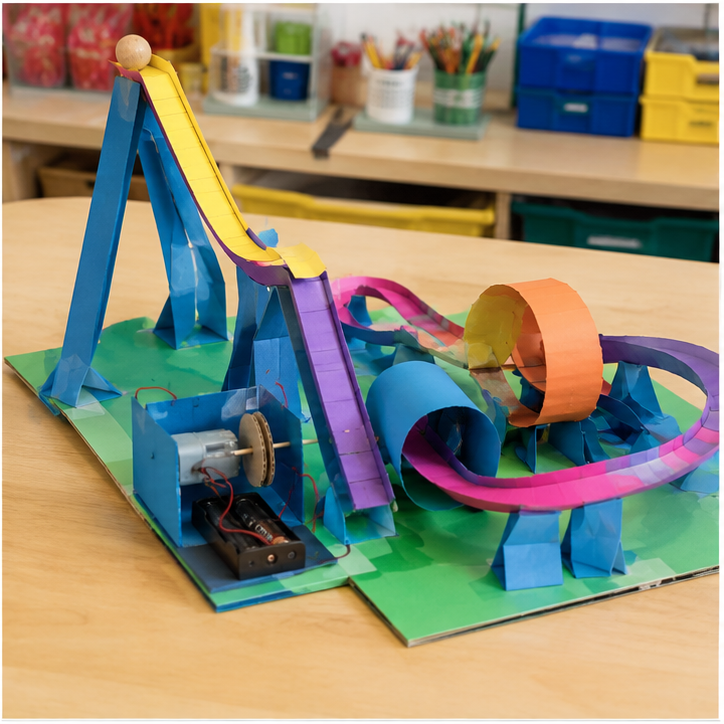
Students turn paper strips into hills, curves, tunnels, and supports, then improve a coaster using travel time and successful-run evidence.
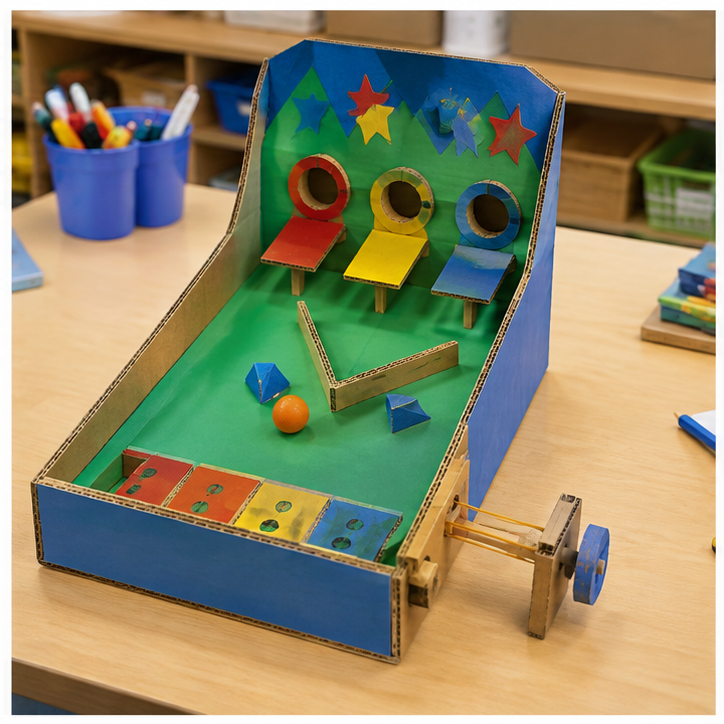
Students create an original arcade-style game powered by fingers, gravity, rubber bands, or rolling objects and refine it through player feedback.
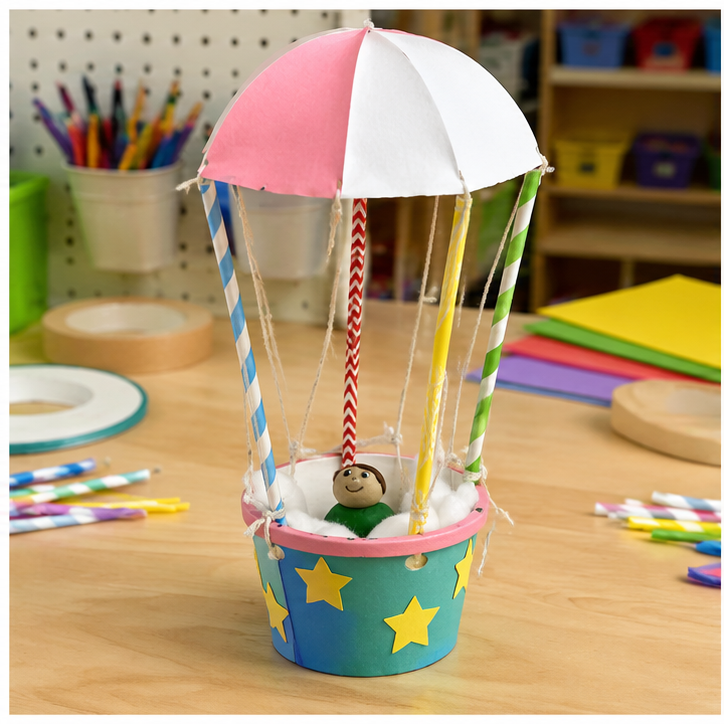
Students explore cushioning, suspension, crumple zones, and parachutes while designing a protective pod for a repeatable classroom drop.
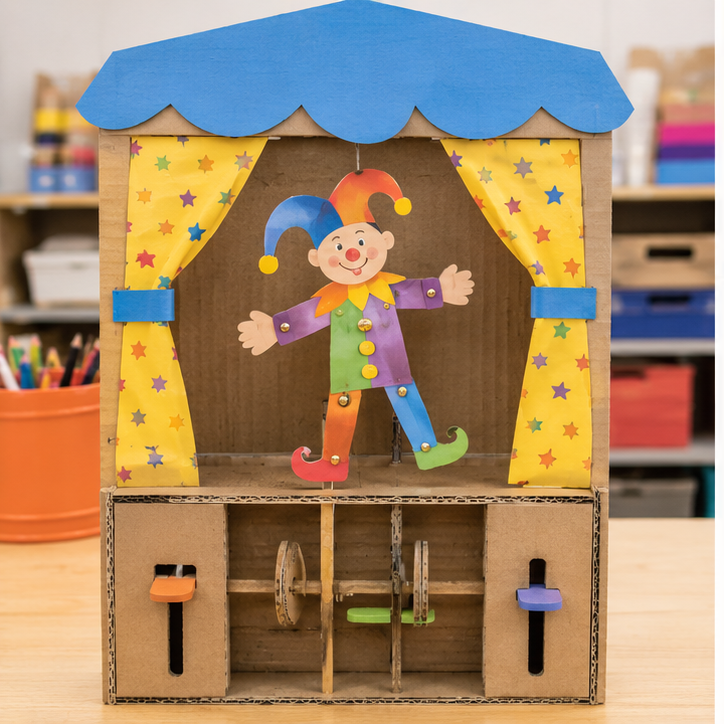
Students combine storytelling and mechanisms to create a cardboard puppet scene with at least two controlled movements.
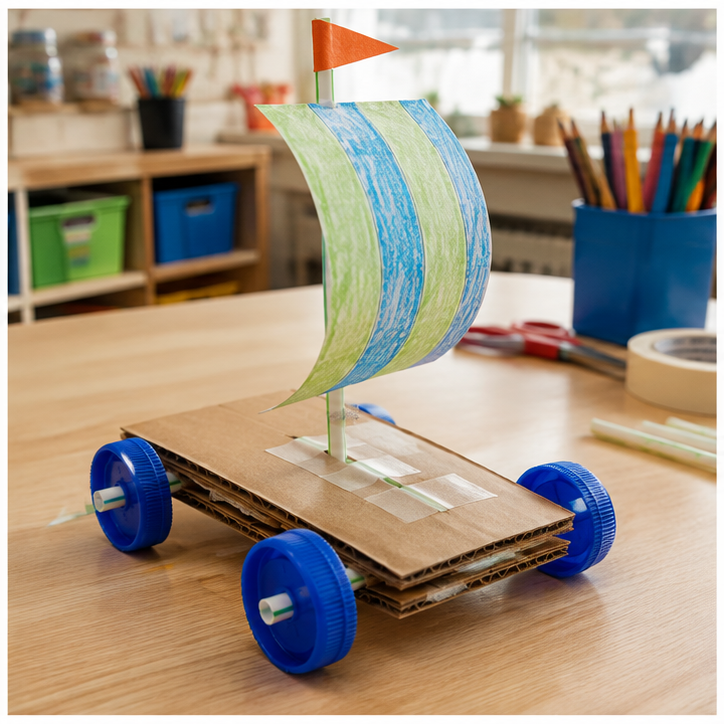
Students build lightweight cars with rolling axles and artistic sails, then compare sail area, shape, and wheel alignment.
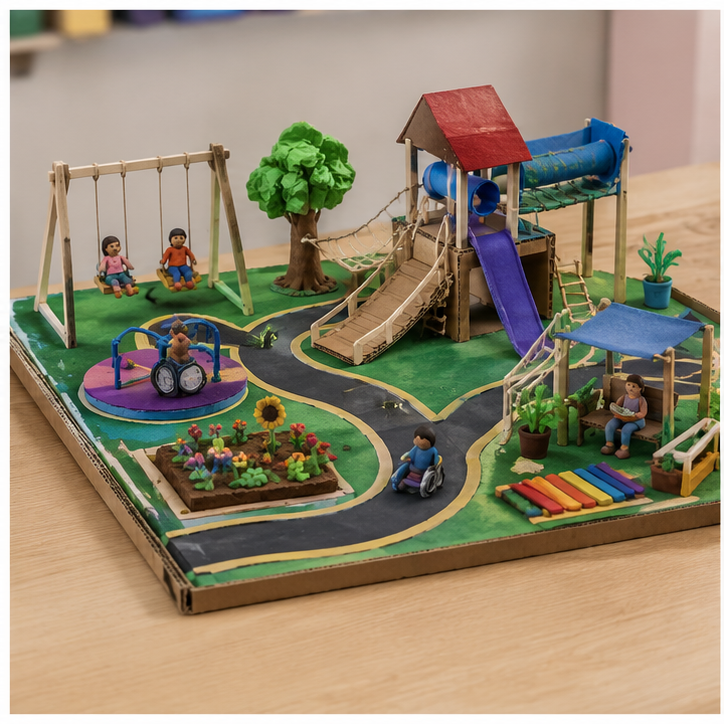
Students use loose parts and recycled materials to create an inclusive playground model with paths, gathering areas, and imaginative features.
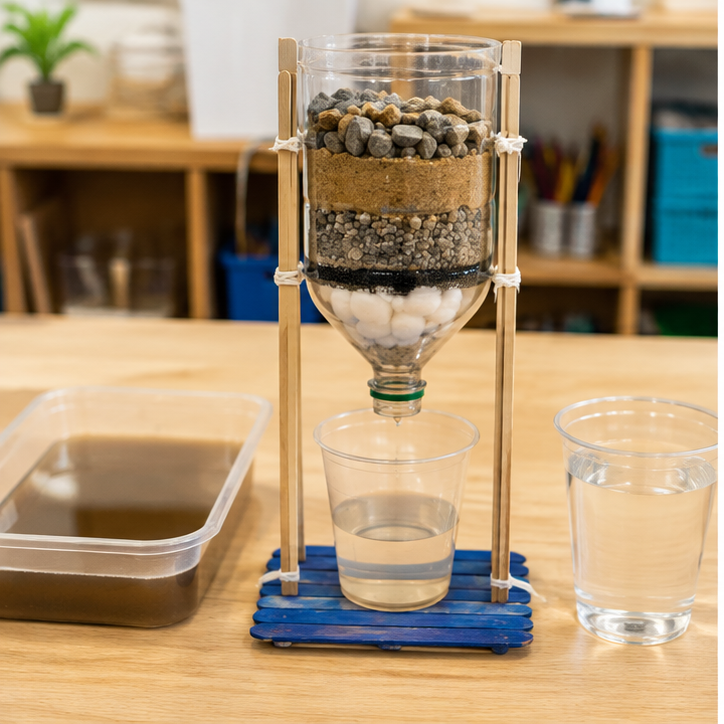
Students compare filter media, flow rate, and clarity while creating an educational cross-section model of stormwater treatment.
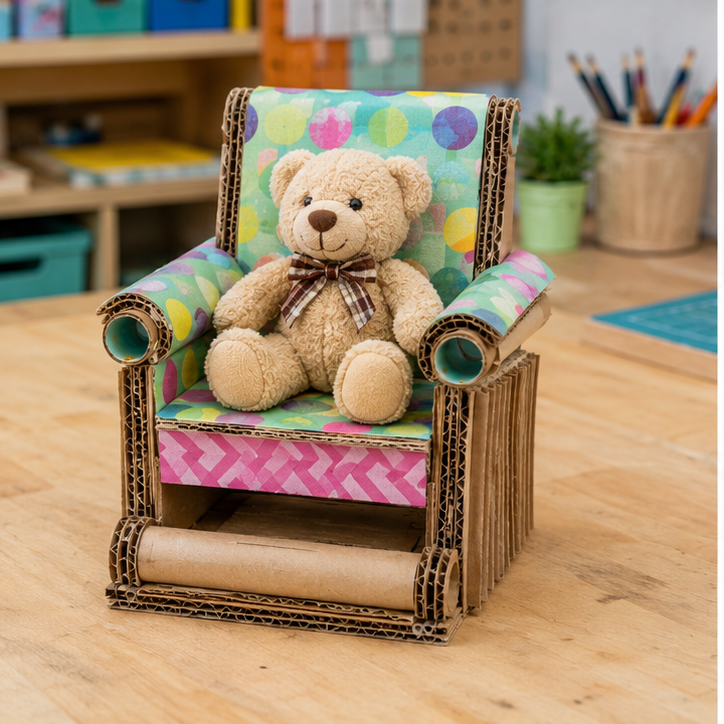
Students investigate folds, tubes, ribs, and corrugation direction to engineer a miniature chair that is also visually distinctive.
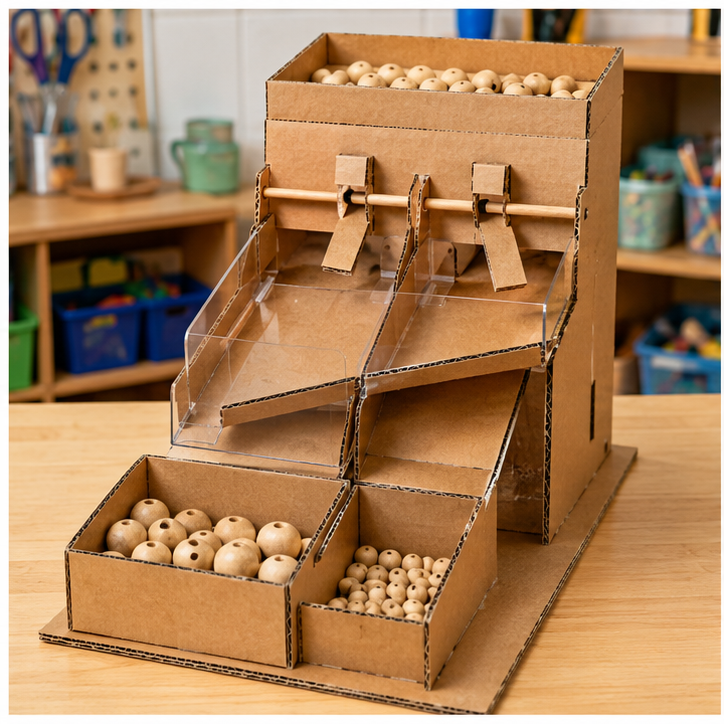
Students create gravity-powered chutes, gates, holes, and diverters that sort two or more kinds of safe classroom objects.
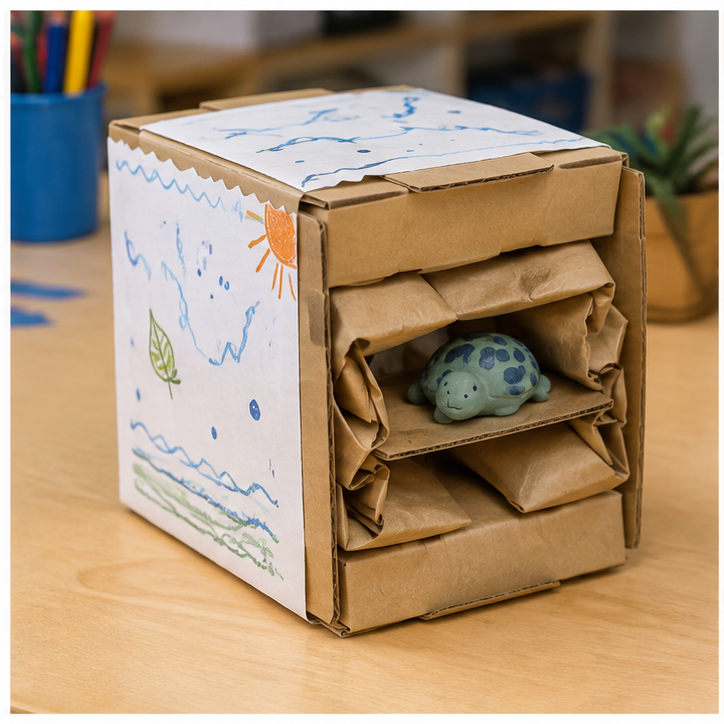
Students design recyclable packaging for a chalk, clay, or cracker-shaped model item and balance protection, opening, labeling, and waste.
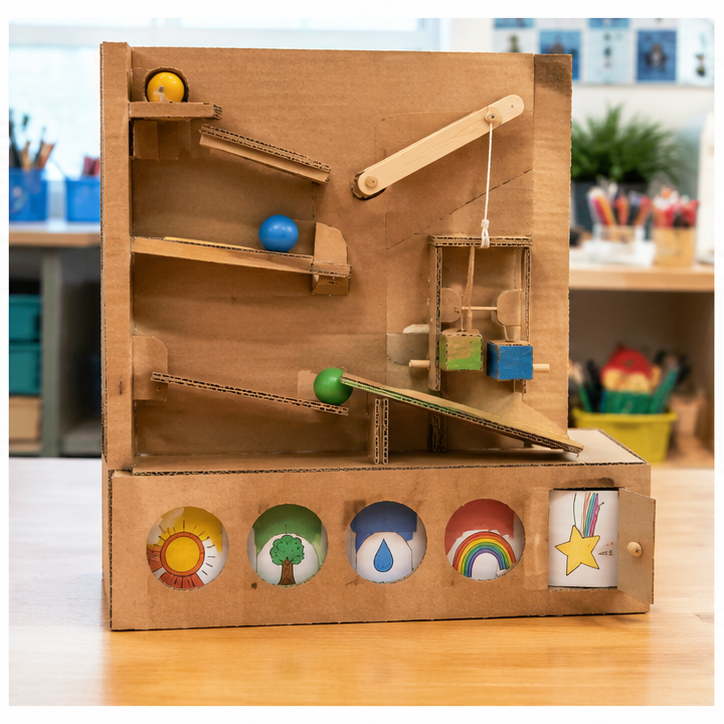
Students choreograph ramps, levers, falling pieces, rolling objects, and revealed images into a reliable mechanical narrative.
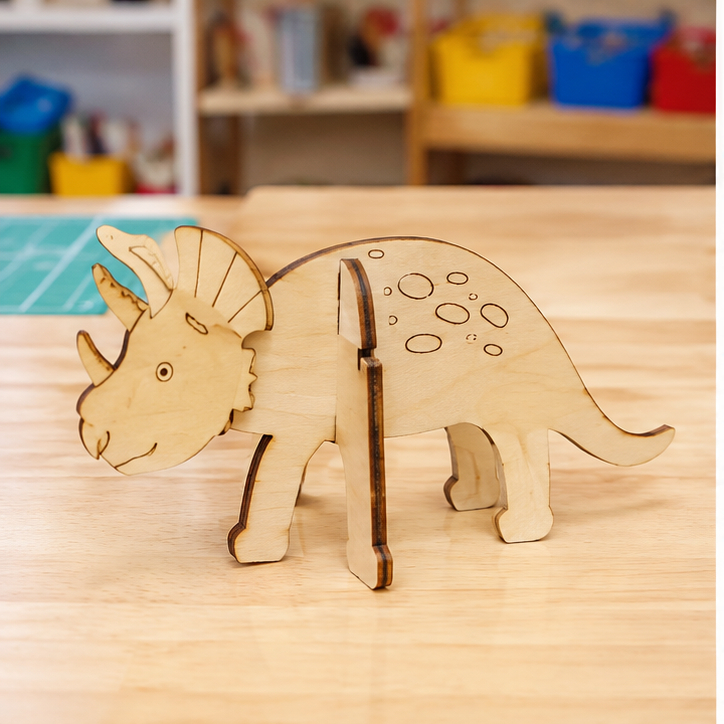
Students sketch an animal, simplify it into sturdy flat parts, and test slot width and balance before an adult cuts the final creature.
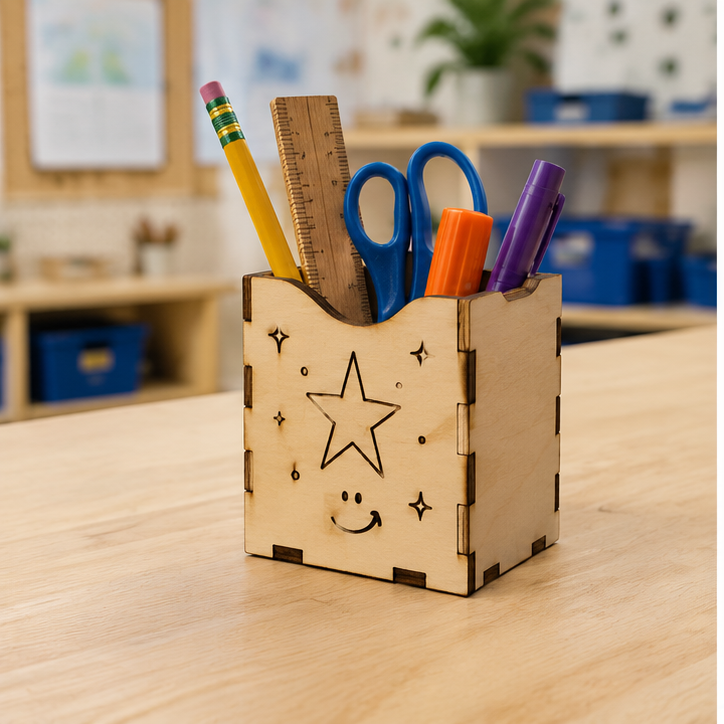
Students measure classroom tools, prototype a small slotted container, and add engraved names, symbols, or patterns for a real user.
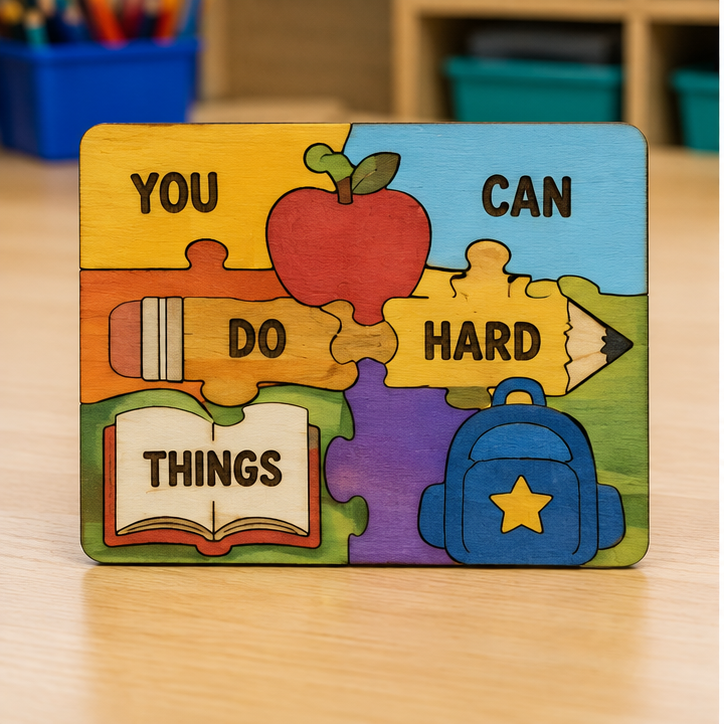
Students design a bold postcard image, divide it into sturdy puzzle pieces, and use timed user tests to improve difficulty and clarity.
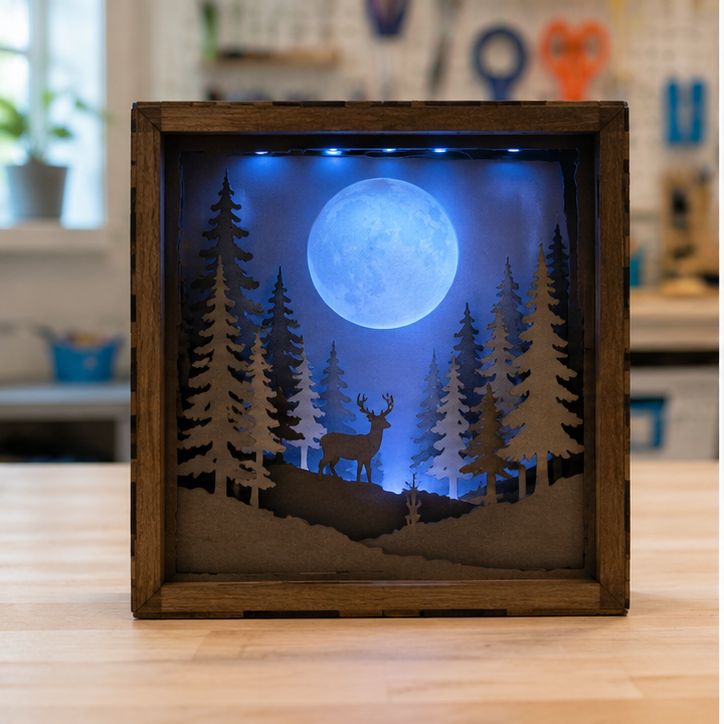
Students arrange positive and negative shapes in a sturdy frame, then test readability and shadows with a cool LED light.
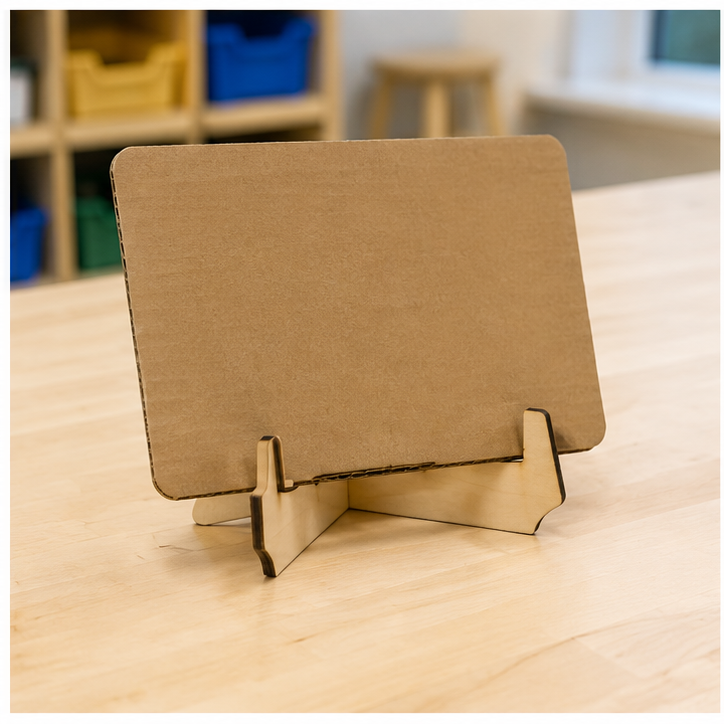
Students measure a teacher-provided model device, compare stand profiles, and optimize angle, stability, and flat-pack assembly.
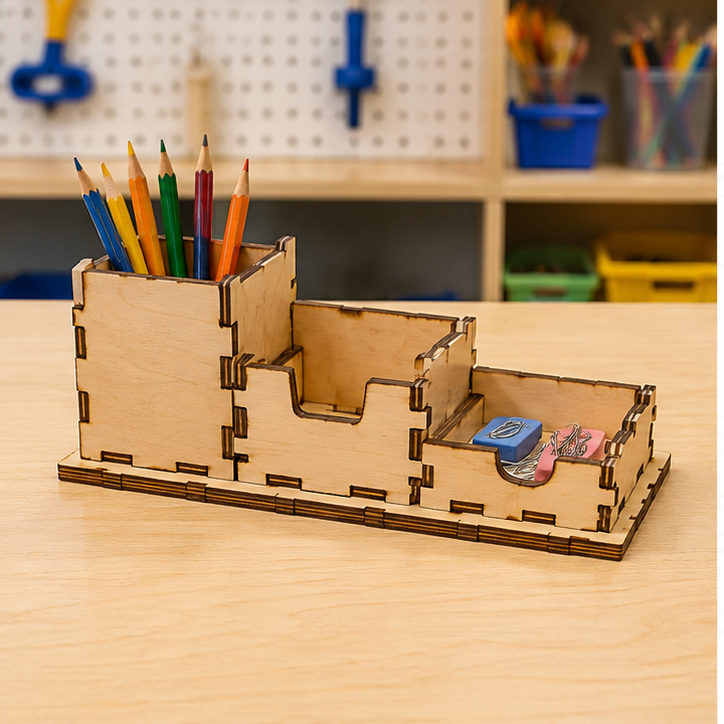
Students interview a user, measure tools, compare layouts, and build a slotted organizer that can be rearranged as needs change.
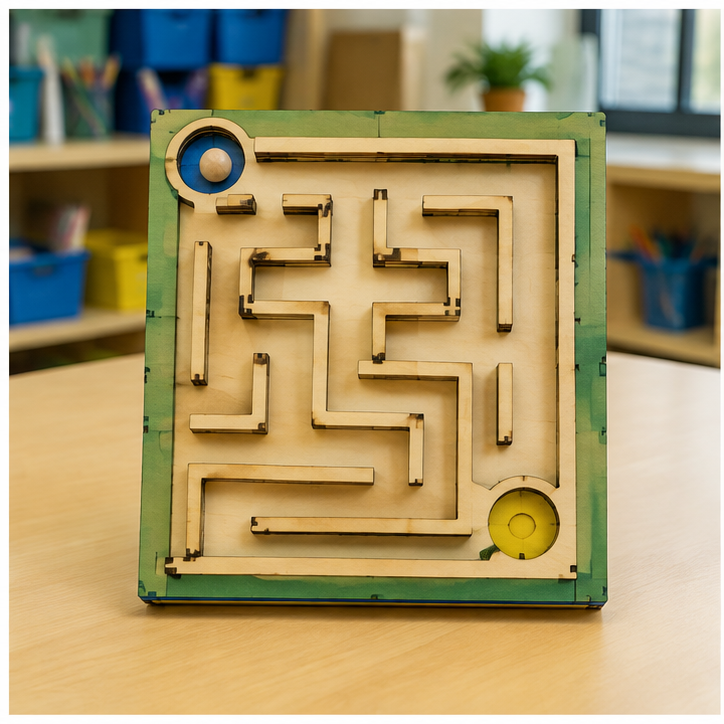
Students design a tabletop maze from layered shapes, analyze where players get stuck, and revise path width, barriers, or goals.
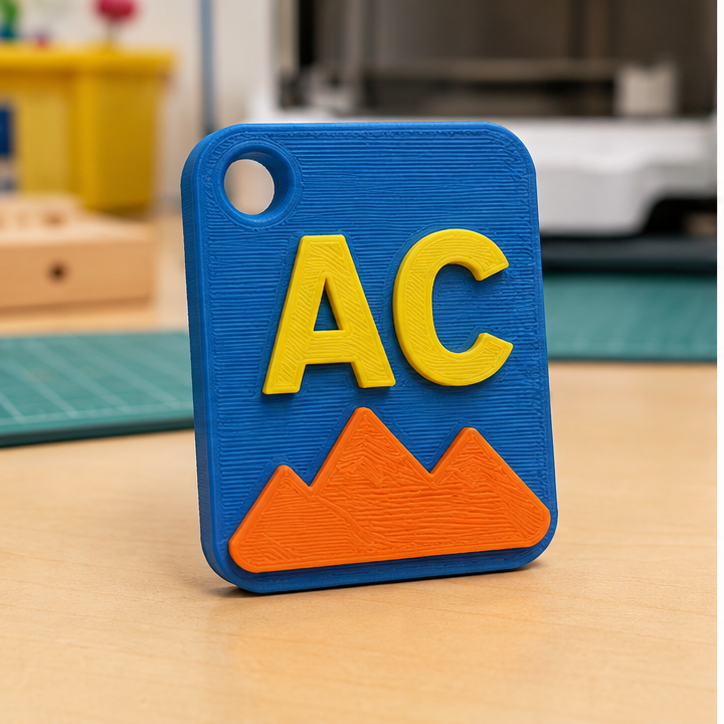
Students measure a badge area, compare layouts, and use text, align, group, and hole tools to create a readable printed badge.
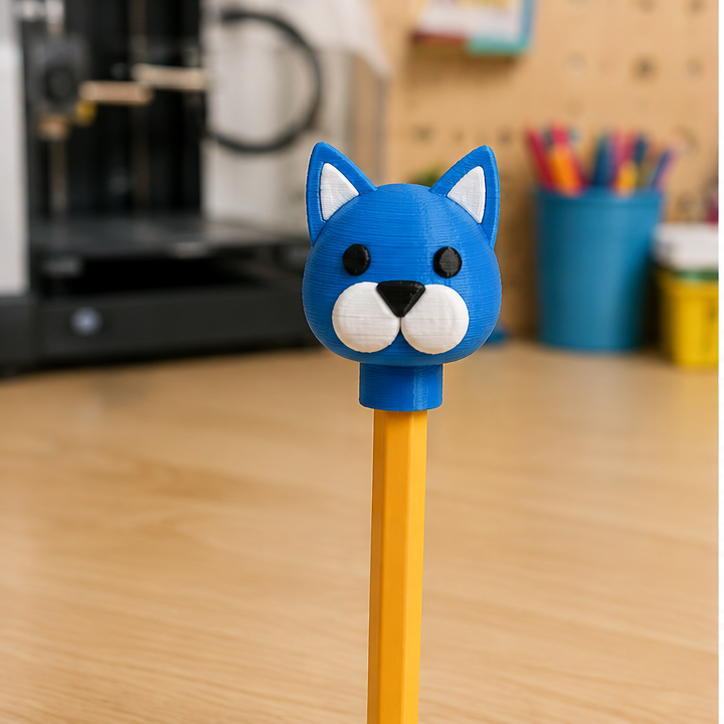
Students simplify an animal into basic solids, measure a pencil, and use a centered hole to make a small functional topper.
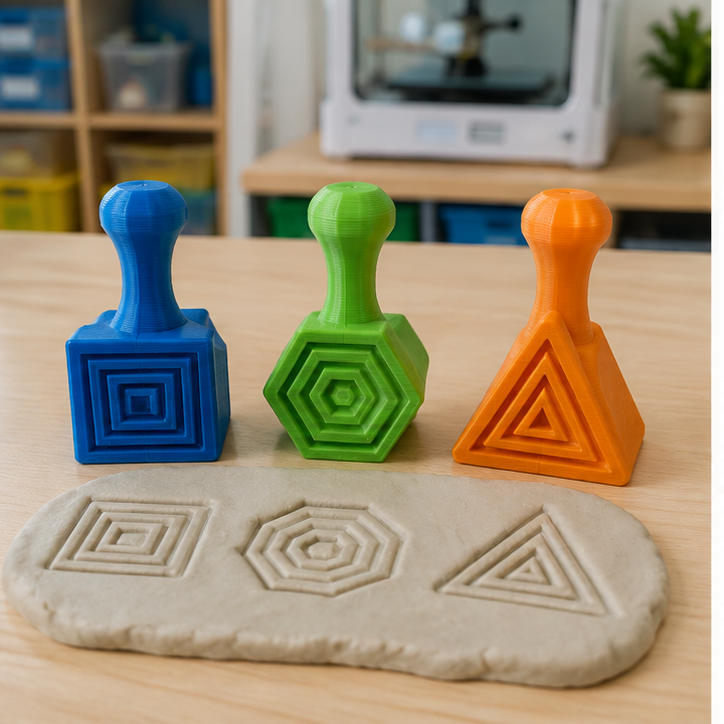
Students design three related stamps, test handles and raised patterns in clay, and revise for clearer impressions.
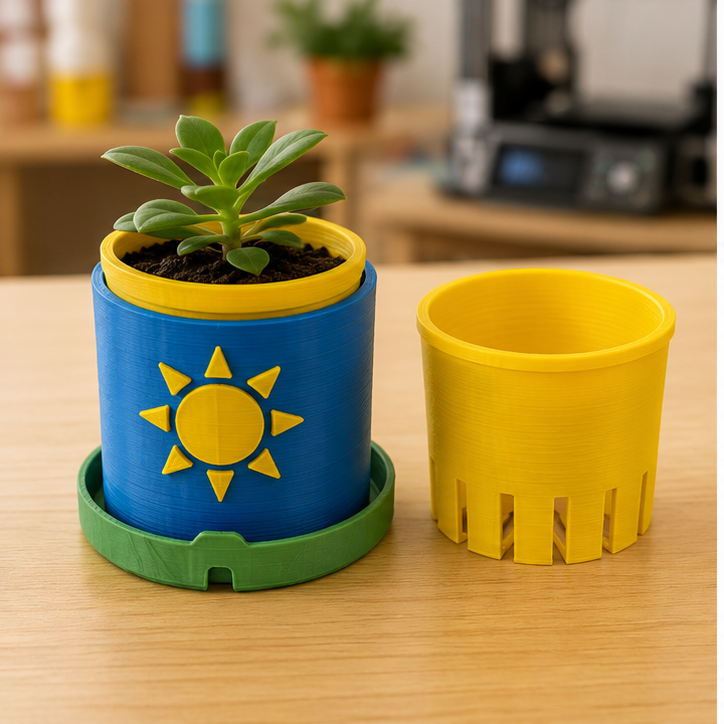
Students measure a small nursery cup, model a decorative outer planter, and test drainage-hole number and base stability.
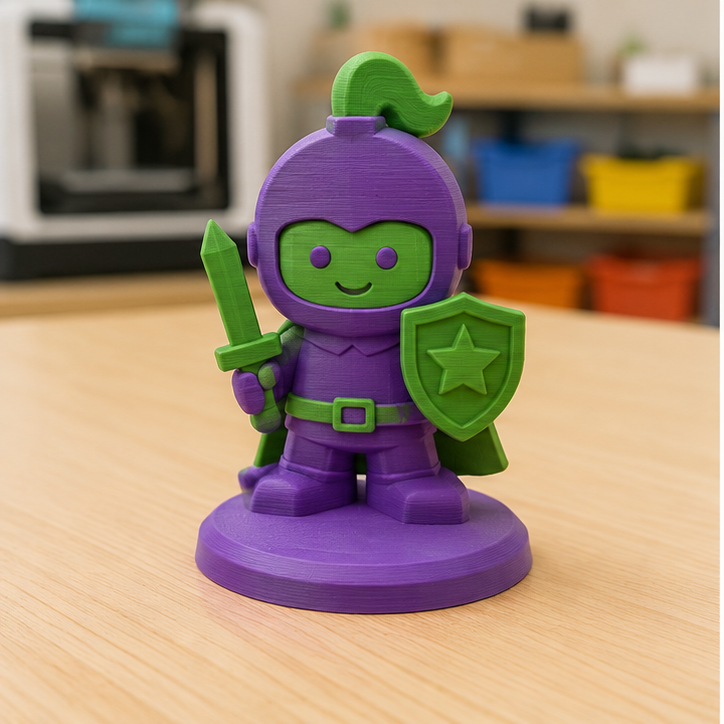
Students translate an original story character into a sturdy standing token using simple forms and engraved or raised details.
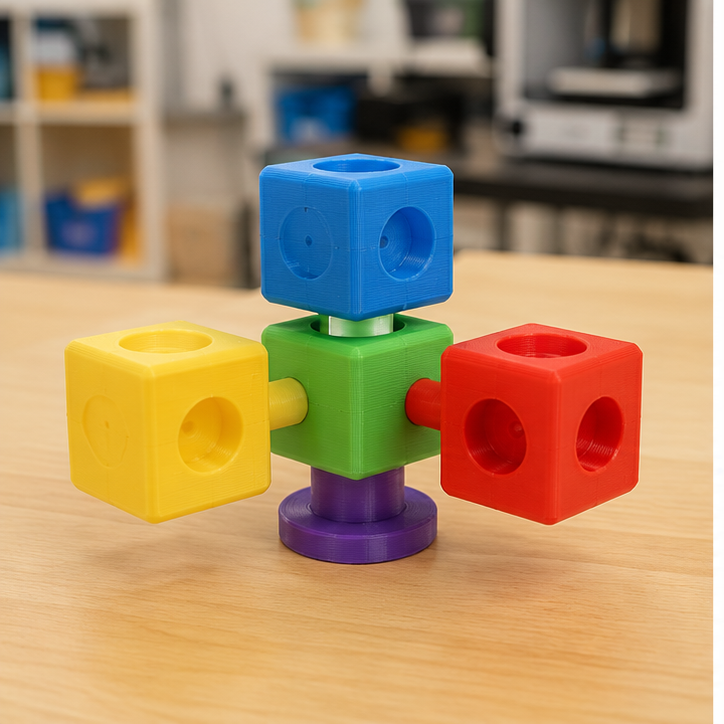
Students design one original block system, print shared copies, and test whether pieces connect, separate, and build stable structures.
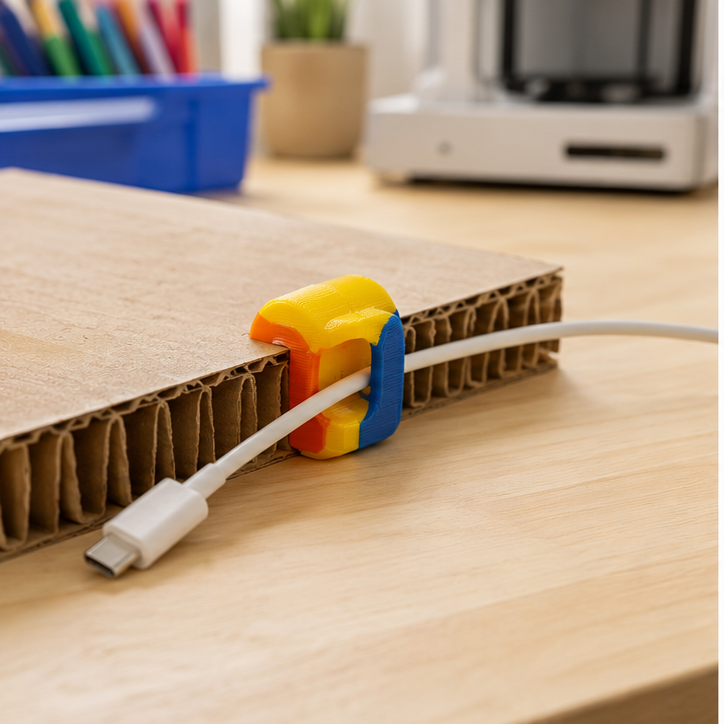
Students examine a safe model cord, compare clip shapes, and design a rounded guide that holds and releases it without damage.
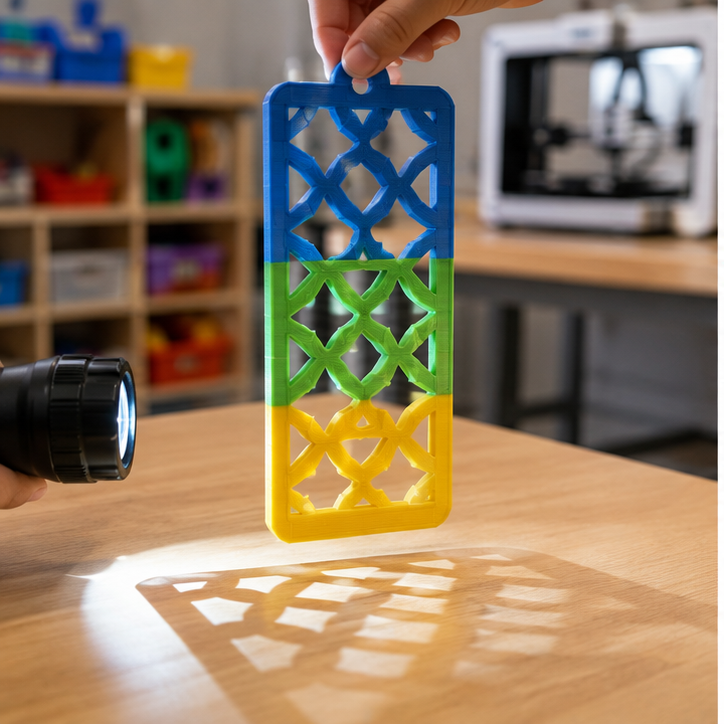
Students use duplicate, rotate, and hole tools to make a thin hanging panel, then compare the shadows from two pattern layouts.
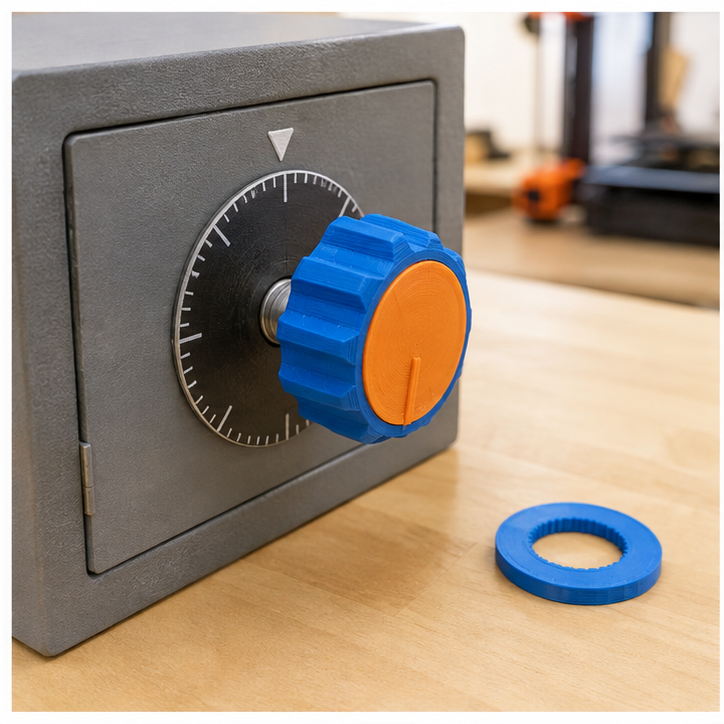
Students measure a safe model shaft, compare knob profiles, and iteratively fit a printed replacement that is comfortable and secure.
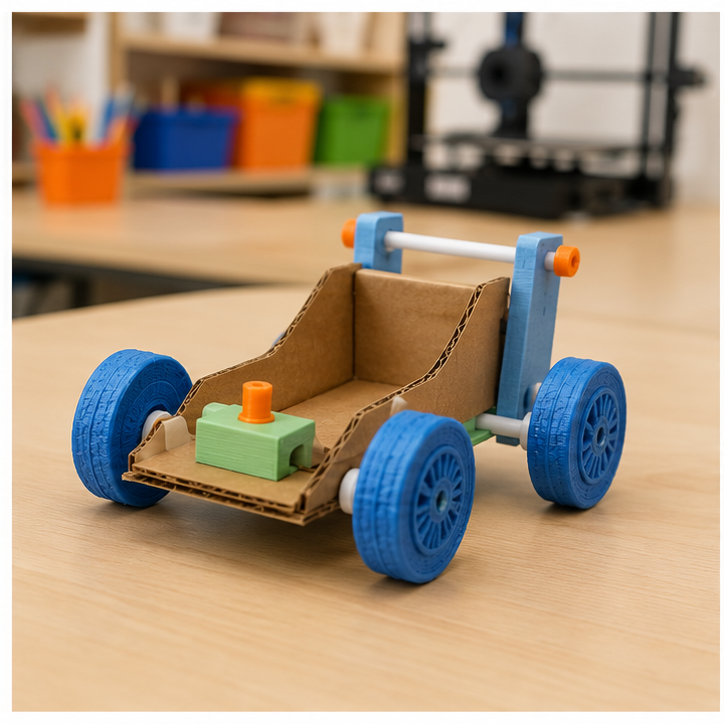
Students model printed wheels, hubs, spacers, or chassis parts and combine them with simple materials to build an efficient rolling vehicle.
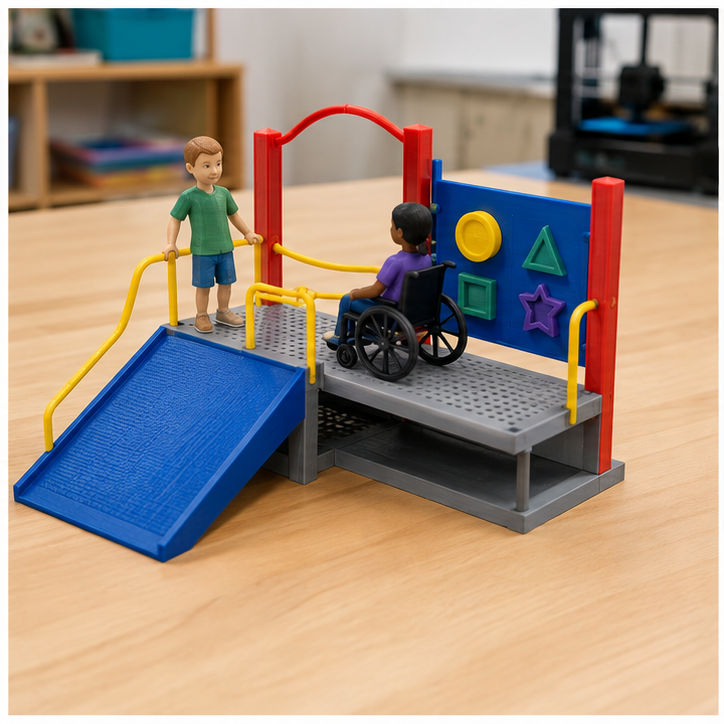
Students use a user scenario and scale figures to model an inclusive ramp, transfer point, sensory panel, quiet feature, or play element.
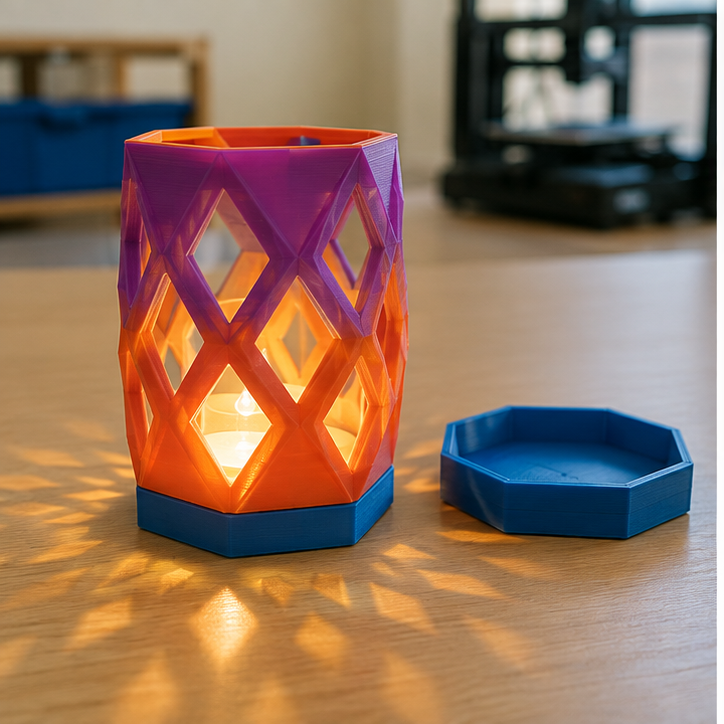
Students model a lantern shell or panel system with repeated openings and test brightness, shadow quality, strength, and access to a cool LED.
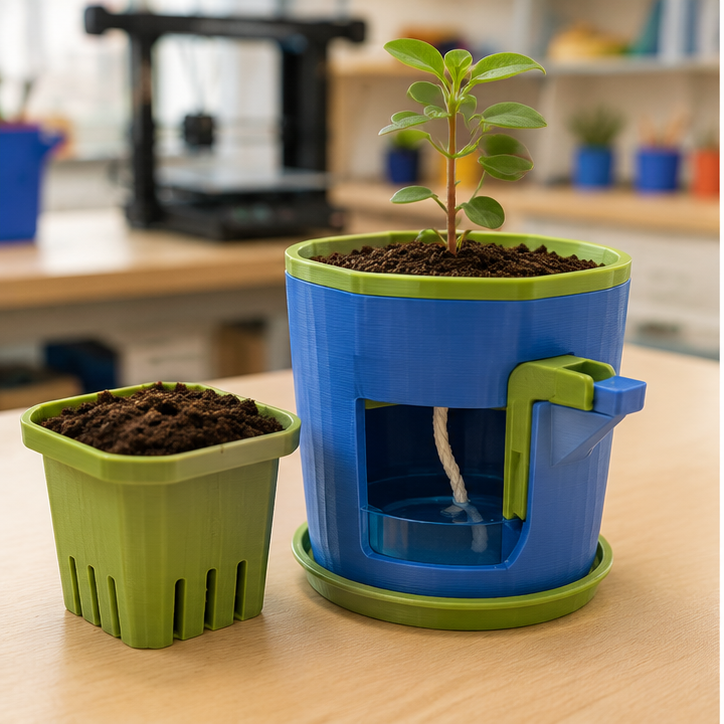
Students design a small self-watering planter prototype and use measured water movement to improve reservoir capacity and overflow placement.
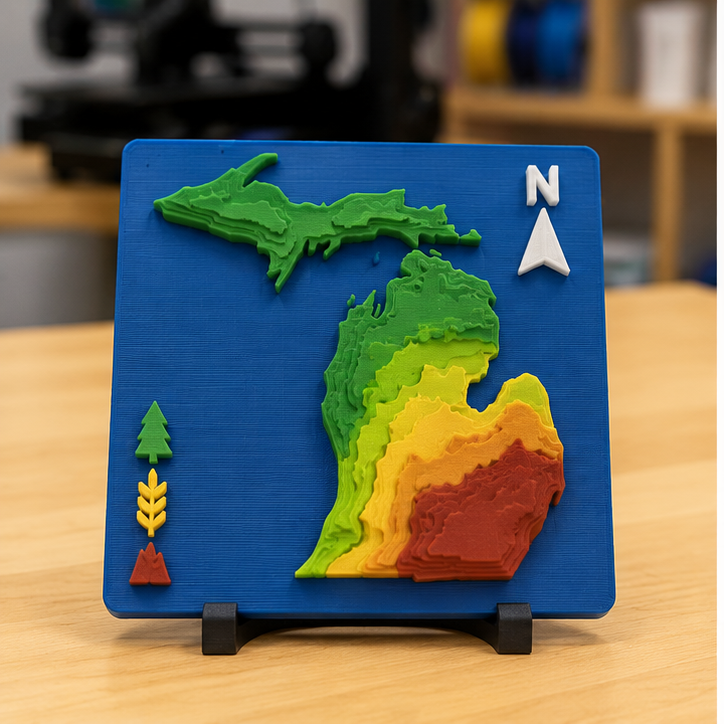
Students interpret a simplified Michigan elevation map, build stepped height zones, and test whether viewers can distinguish landforms by sight and touch.
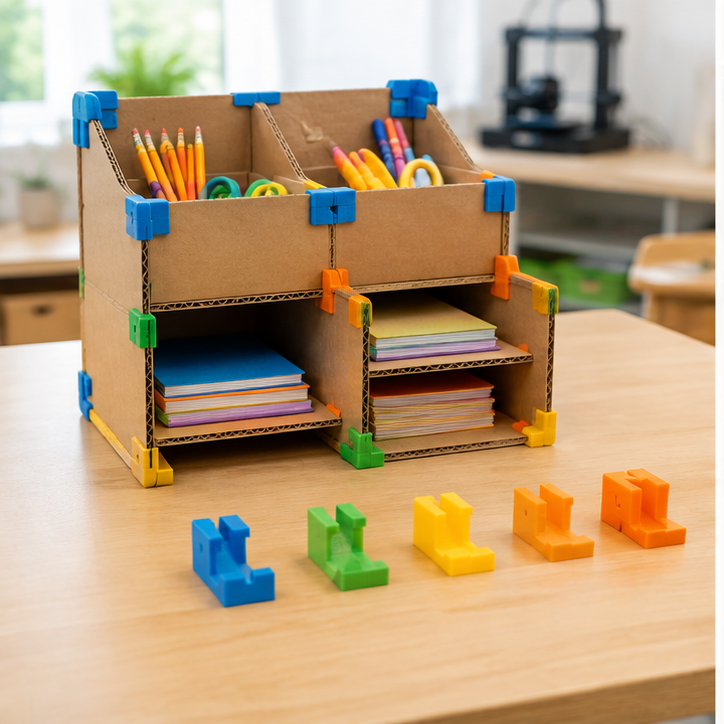
Students measure cardboard thickness, model corner and edge connectors, and use tolerance testing to assemble rearrangeable classroom organizers.
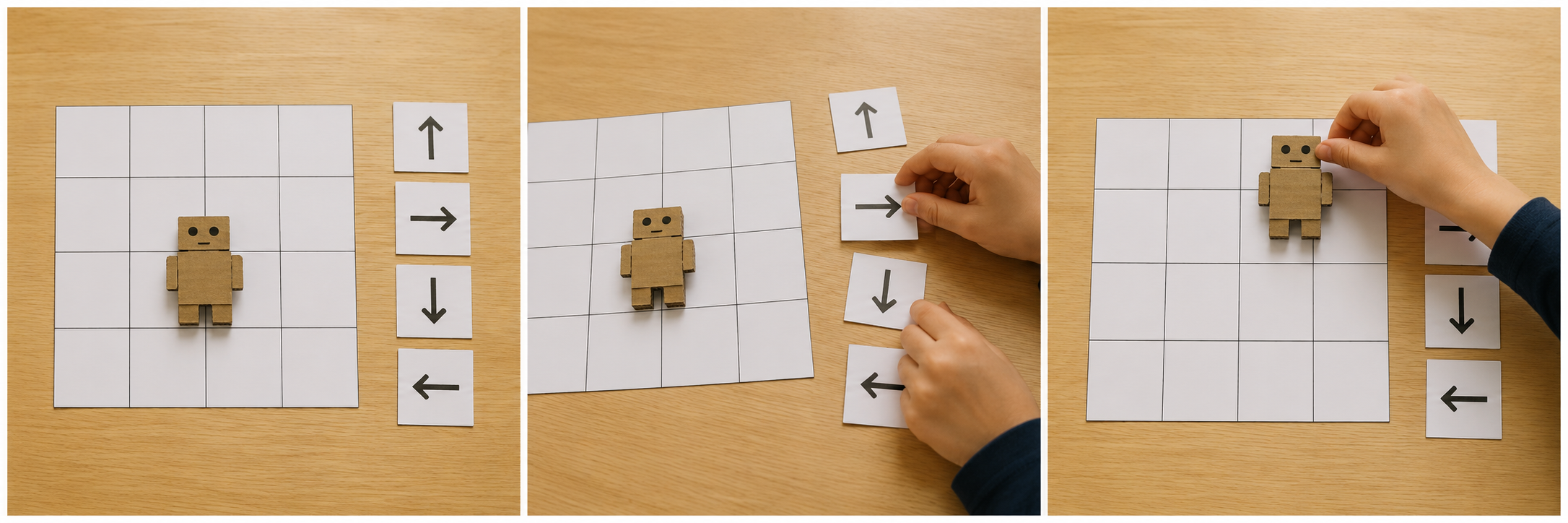
Make a paper program that guides a tabletop robot from its start square to a delivery square without a partner guessing what you mean.
Create a compact paper program for a robot delivery route. Compare a full command list with a repeat-based version that reaches the same goal.
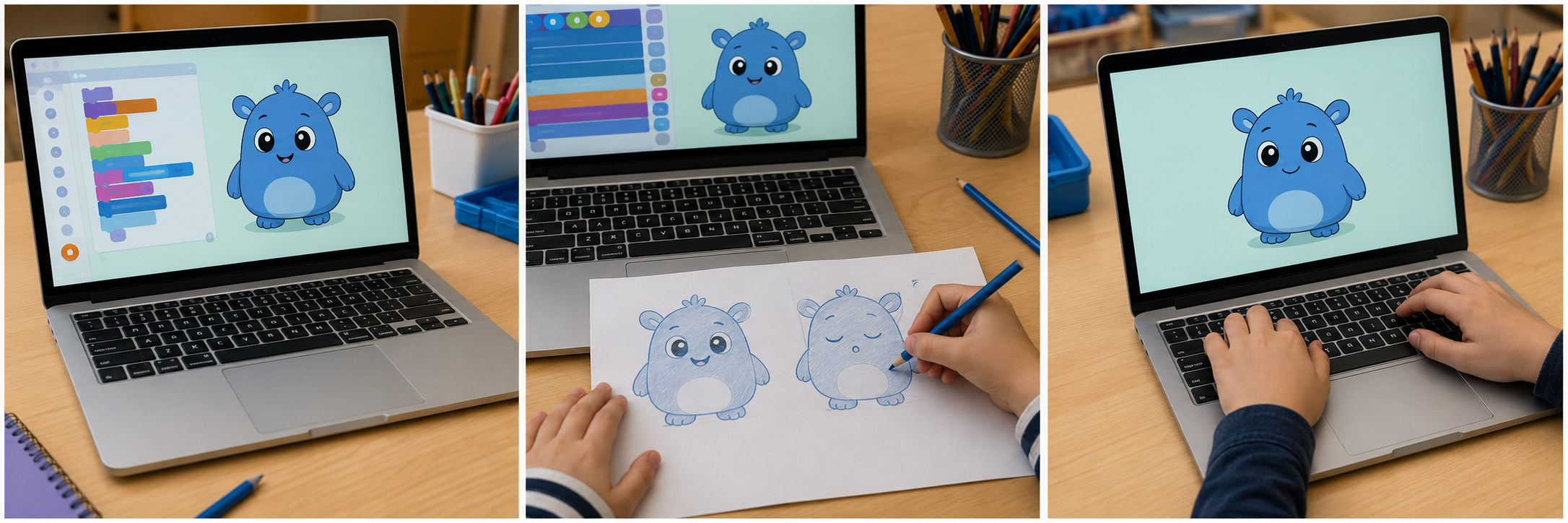
Make a simple blue digital pet that greets a visitor when the space key is pressed and returns to its resting costume.
Make a digital pet that stays happy while the space key is held and rests when it is released. Use keyboard sensing rather than an external sensor.
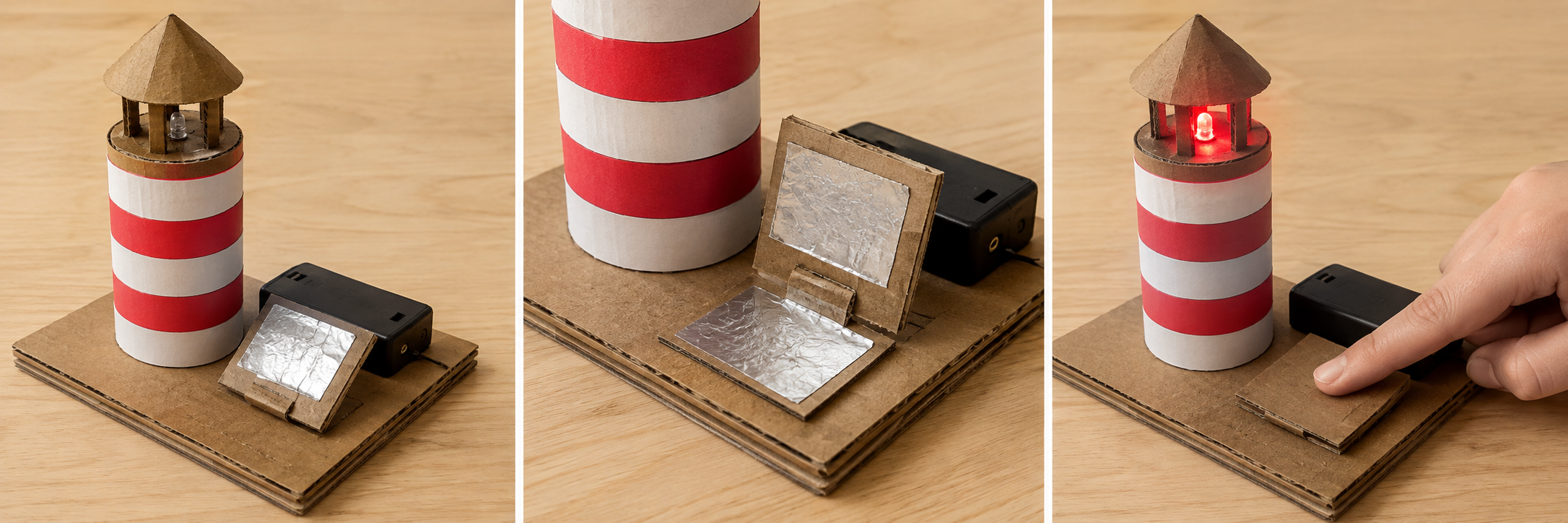
Build a cardboard lighthouse whose red light turns on when a visitor presses a broad cardboard switch and turns off when it is released.
Build a press-to-light lighthouse, then improve the switch so another student can turn it on and off reliably across ten trials.
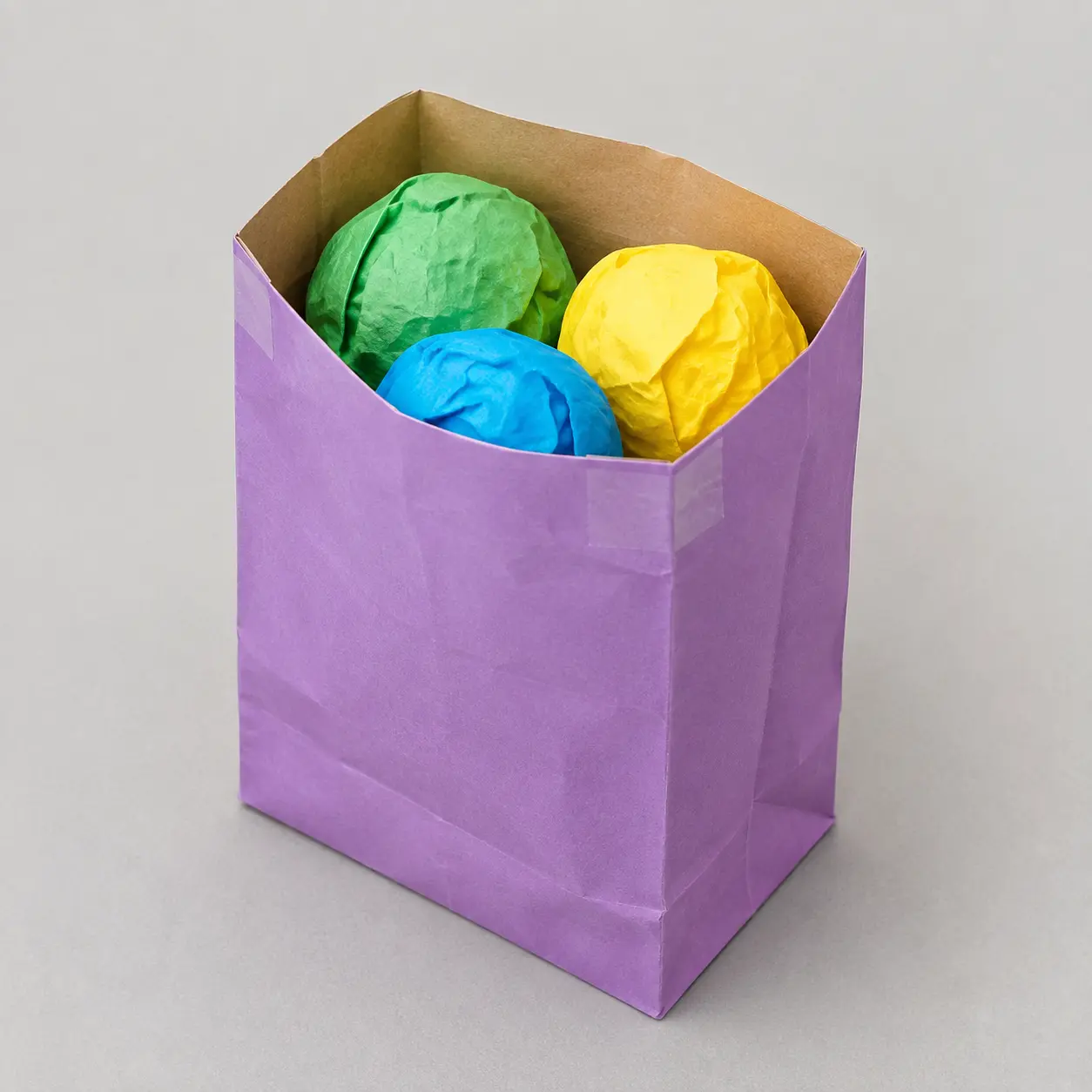
Make a small paper bag with a flat bottom that stands while a partner puts three paper balls inside.
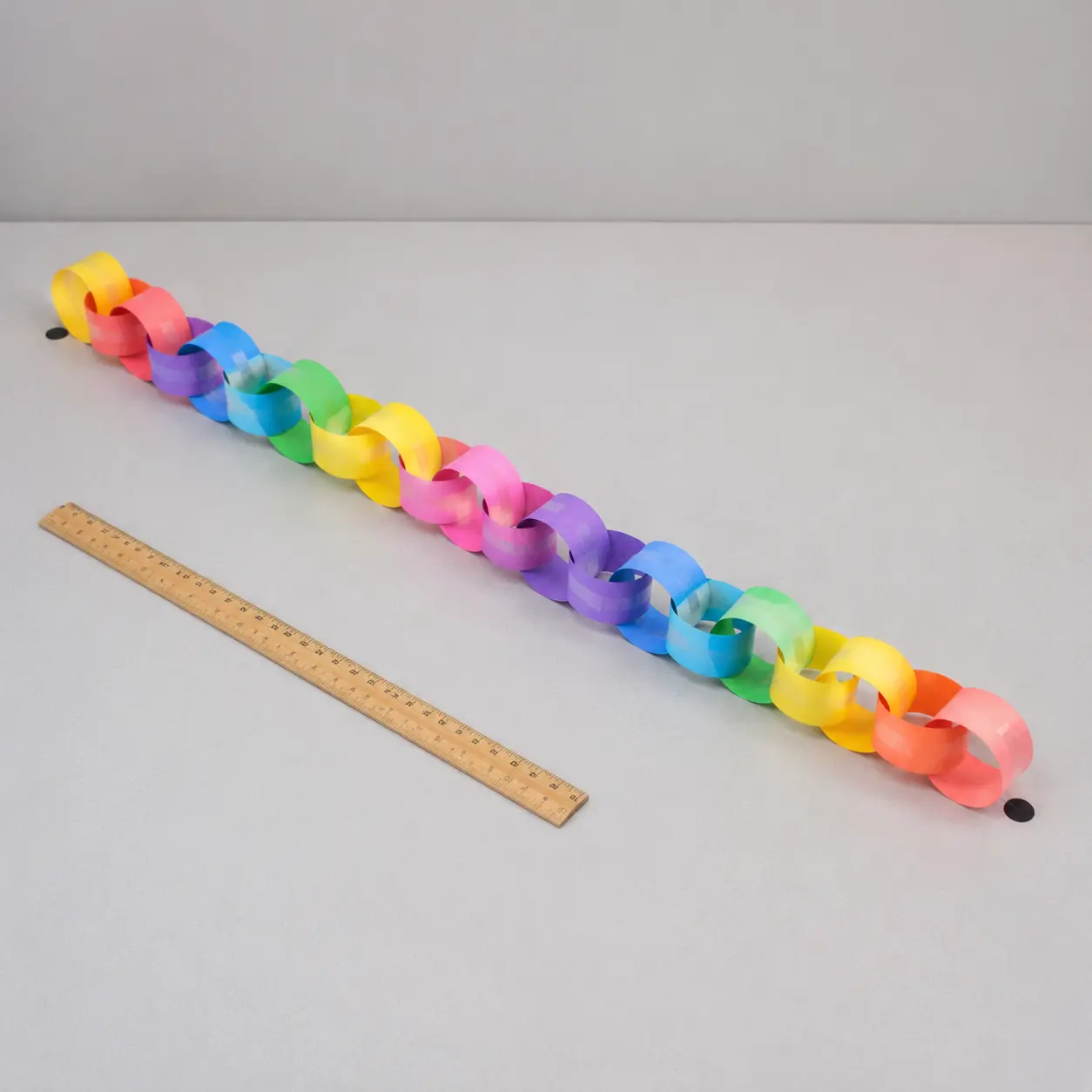
Make a paper chain that reaches between two marked points without its links opening.
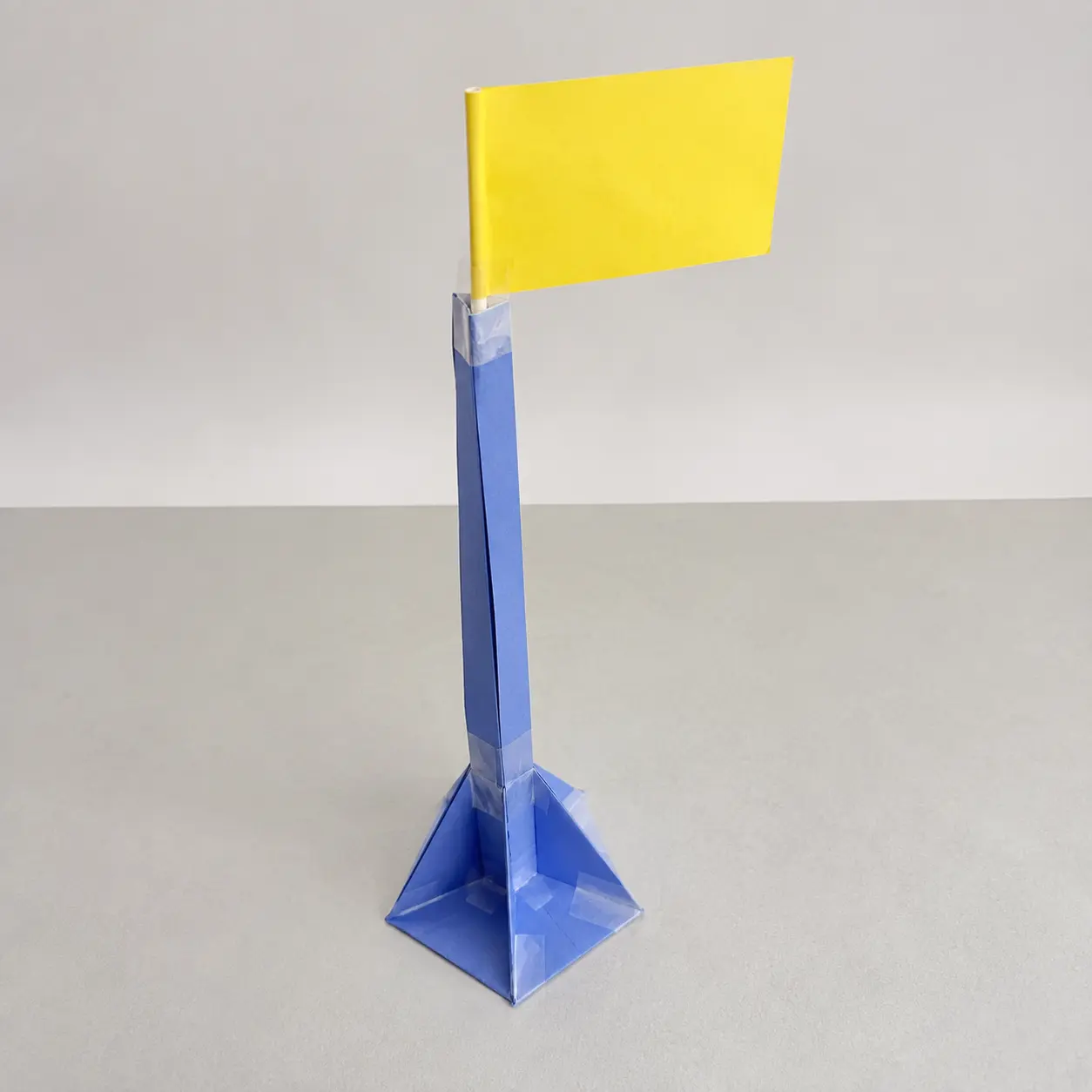
Make a freestanding tower from folded paper that holds a large paper flag at its top.
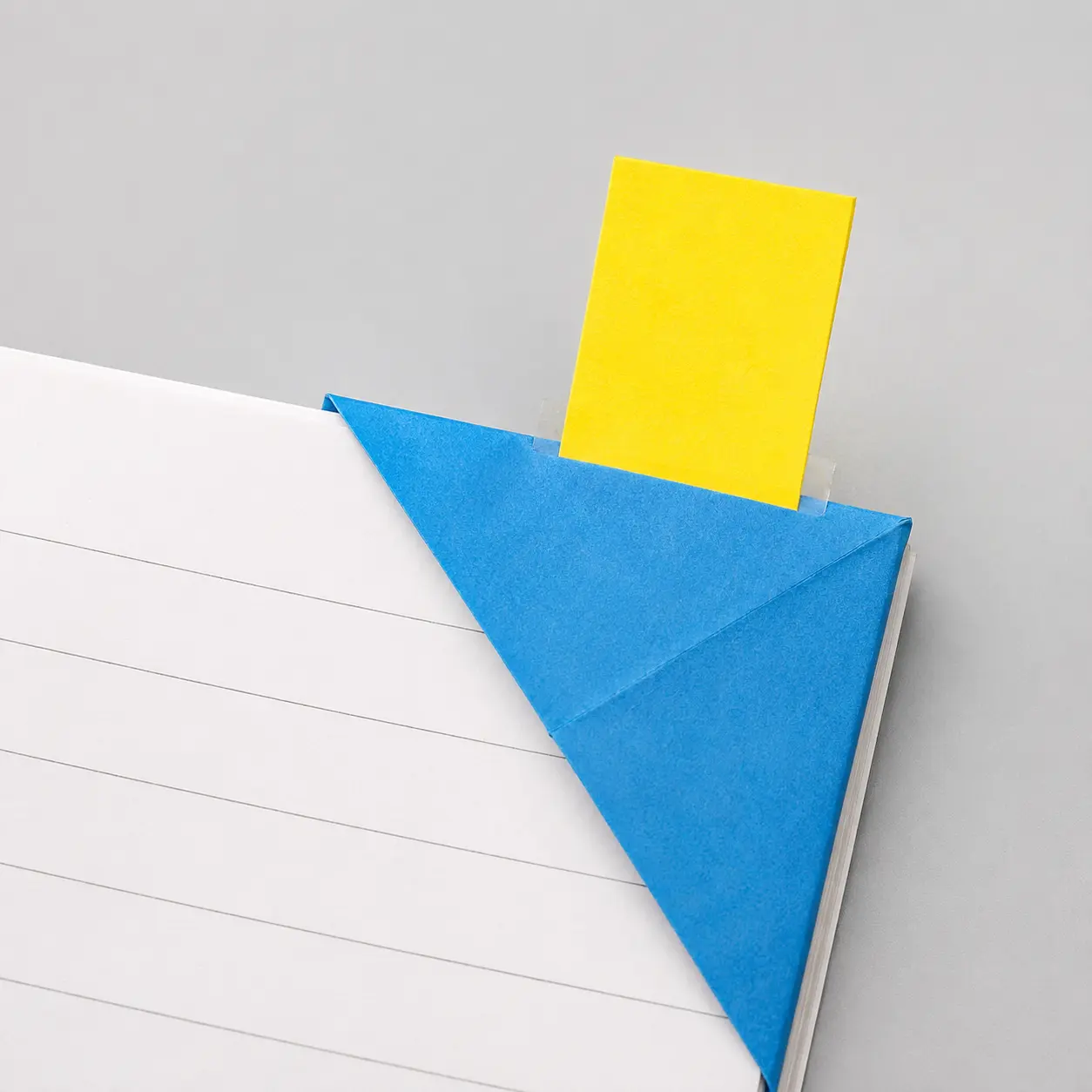
Make a folded corner bookmark that keeps a page easy to find without bending or tearing it.
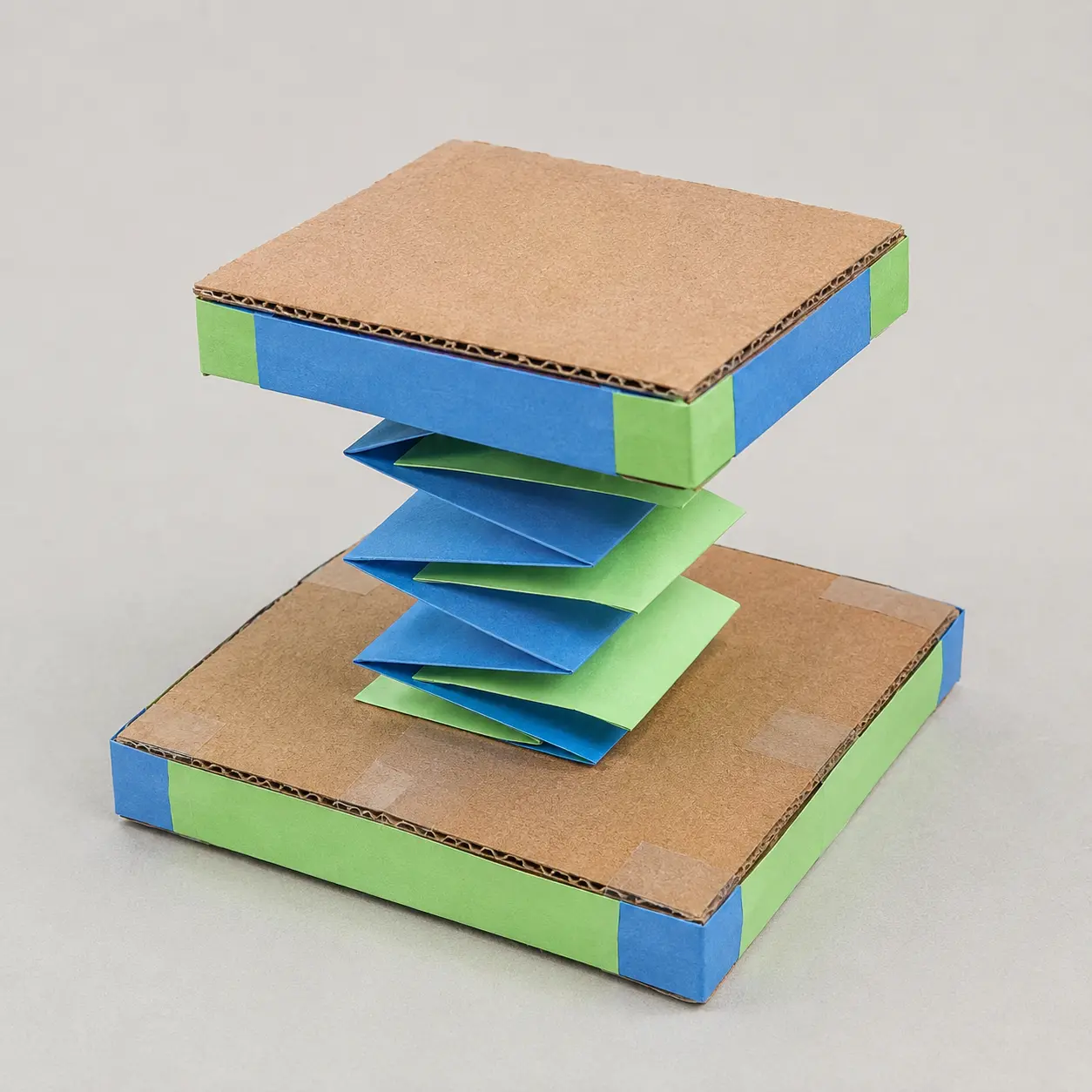
Make a large paper button that rises again after a gentle press using a folded paper spring.
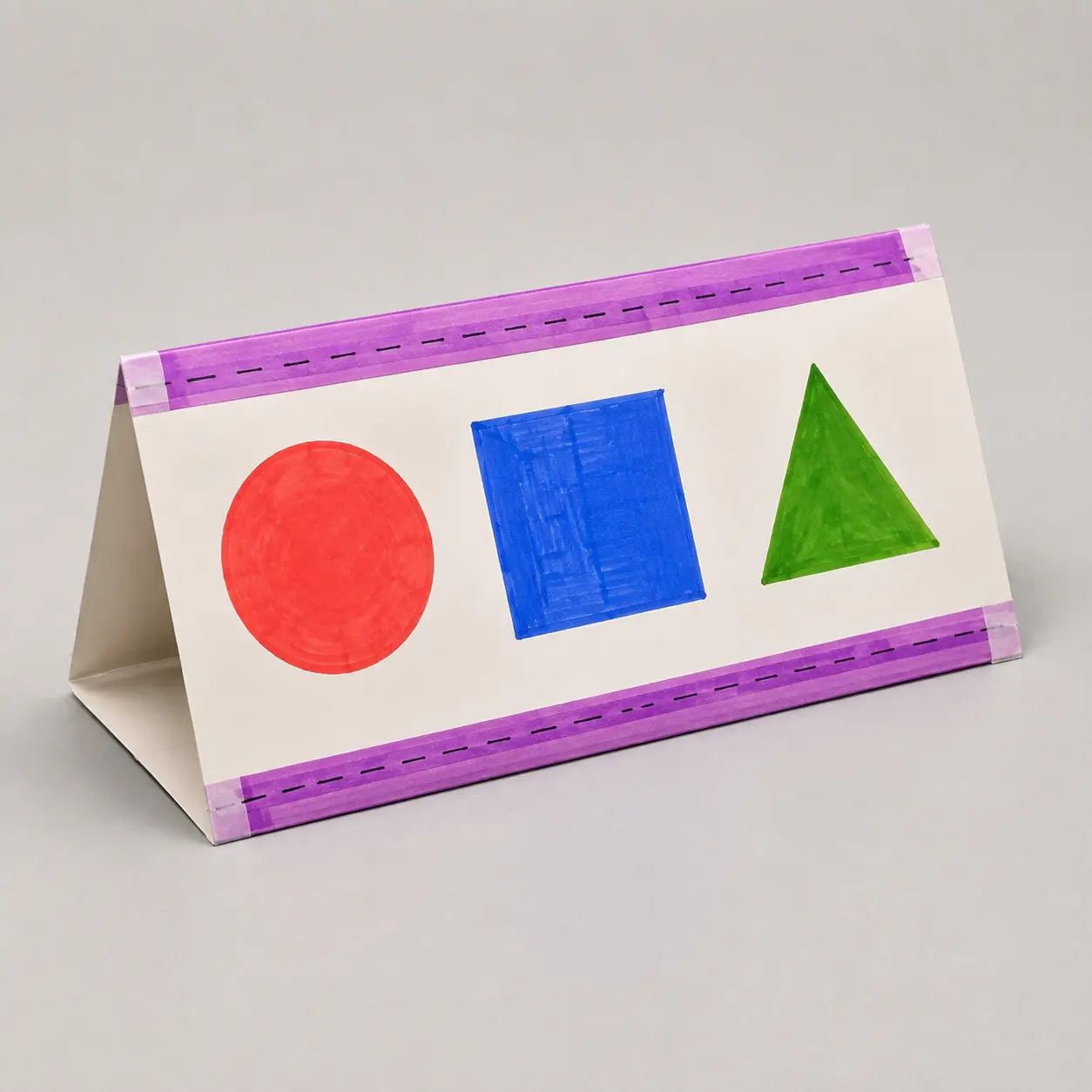
Make a freestanding folded name card that can be read from across a classroom table.
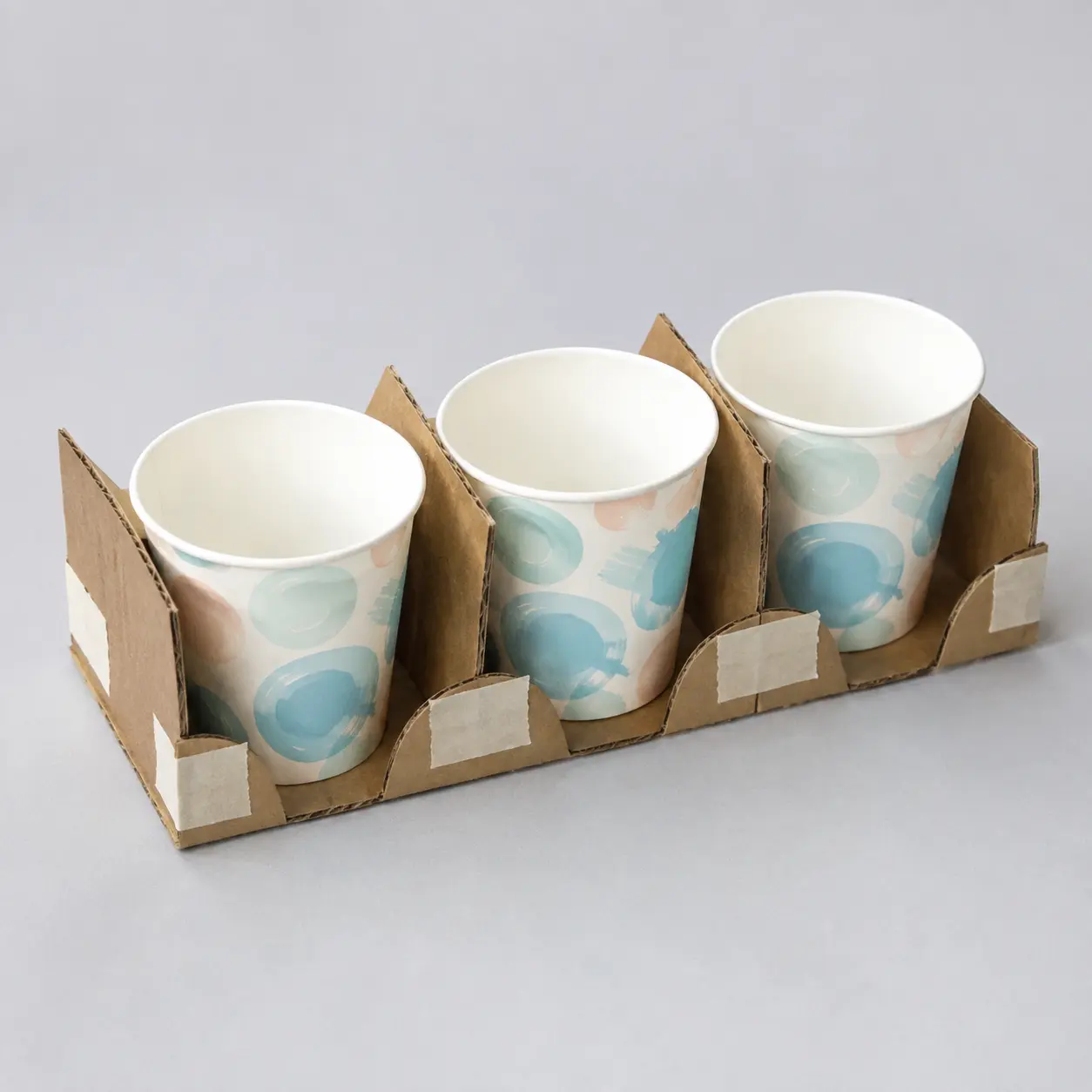
Make a cardboard guide that helps a partner line up three lightweight paper cups in a neat row.
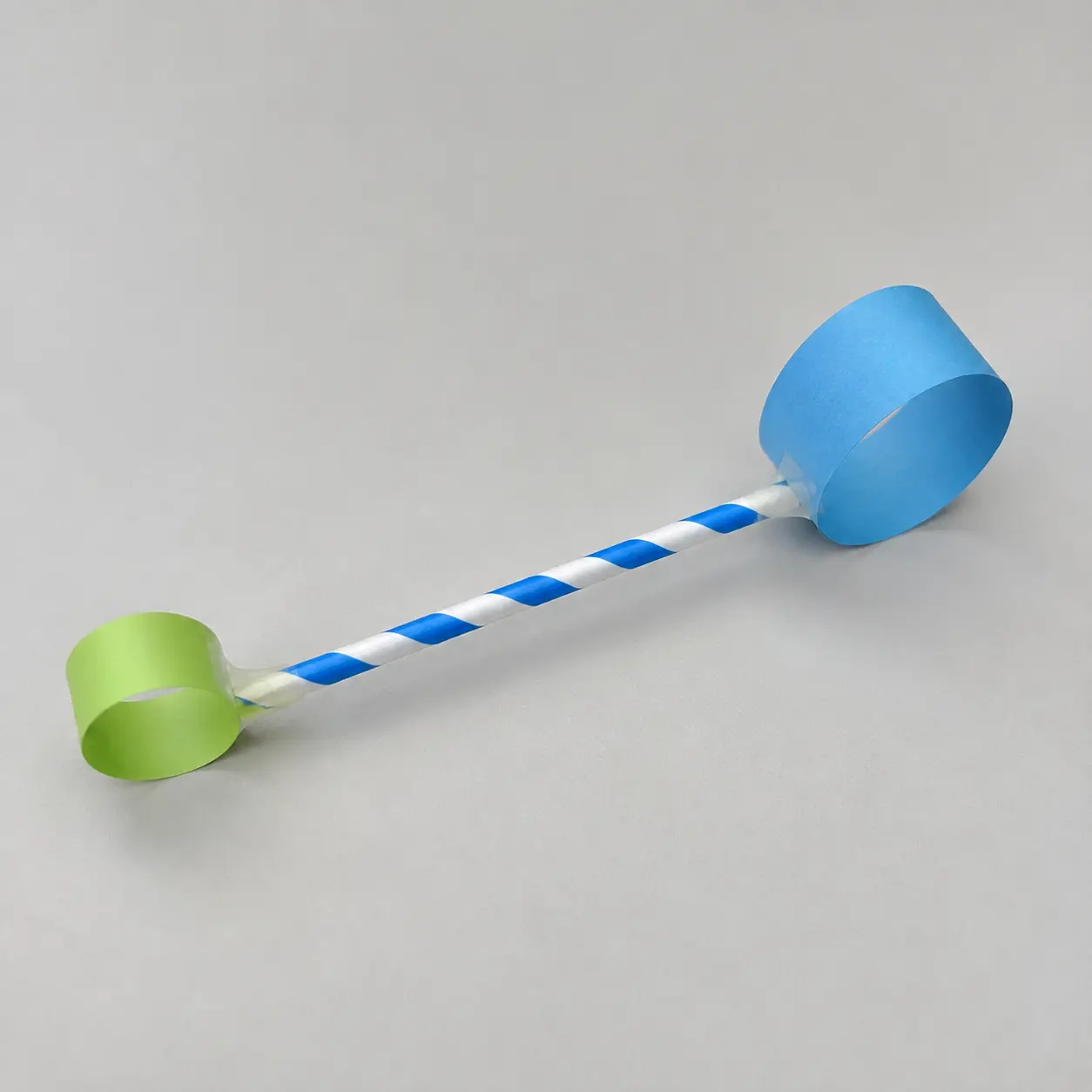
Make a light glider from a paper straw and two paper loops, then compare gentle flights along a clear indoor lane.
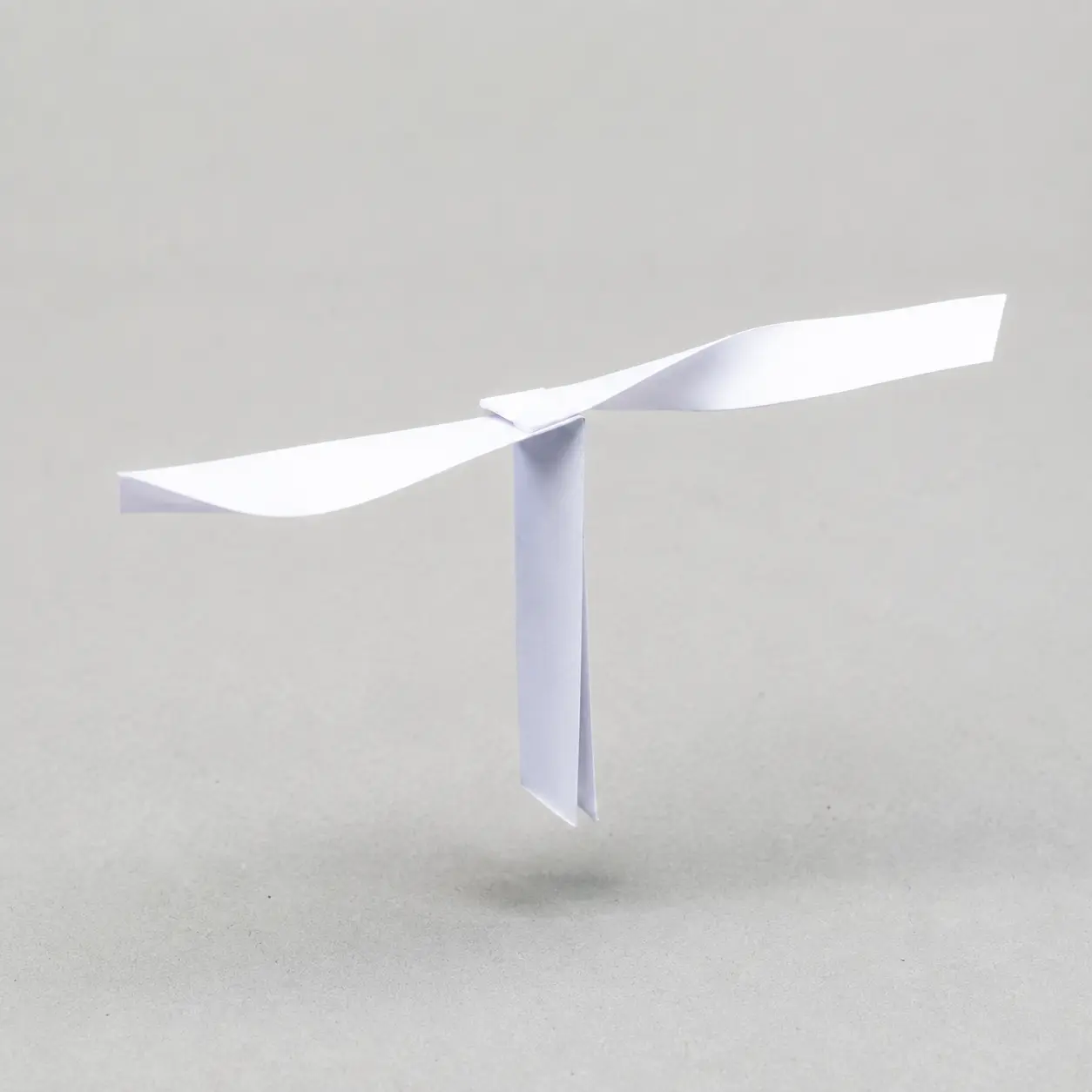
Make a paper rotor that turns as it falls through the air.
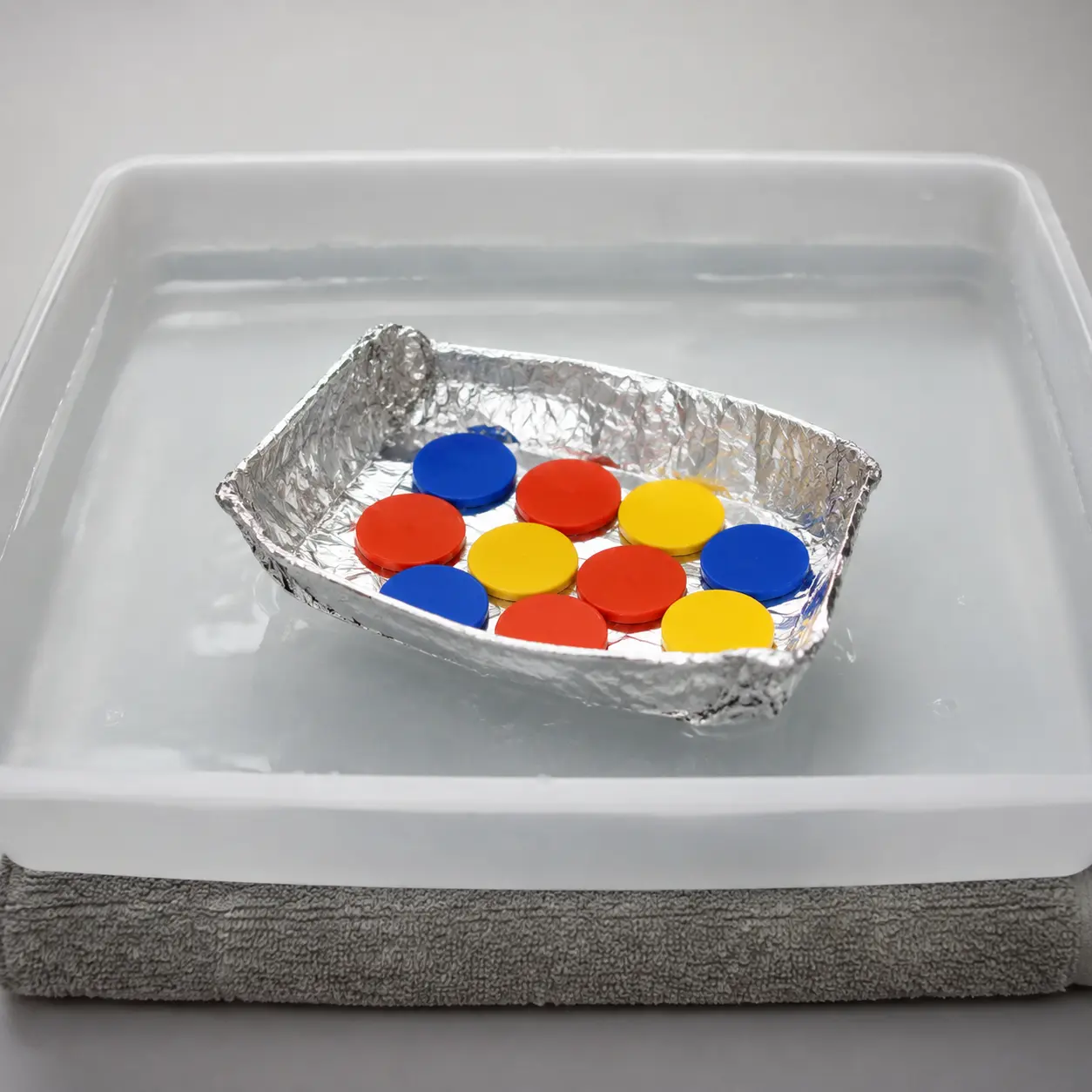
Make a shallow foil boat that floats in a tray while holding teacher-provided large counters.
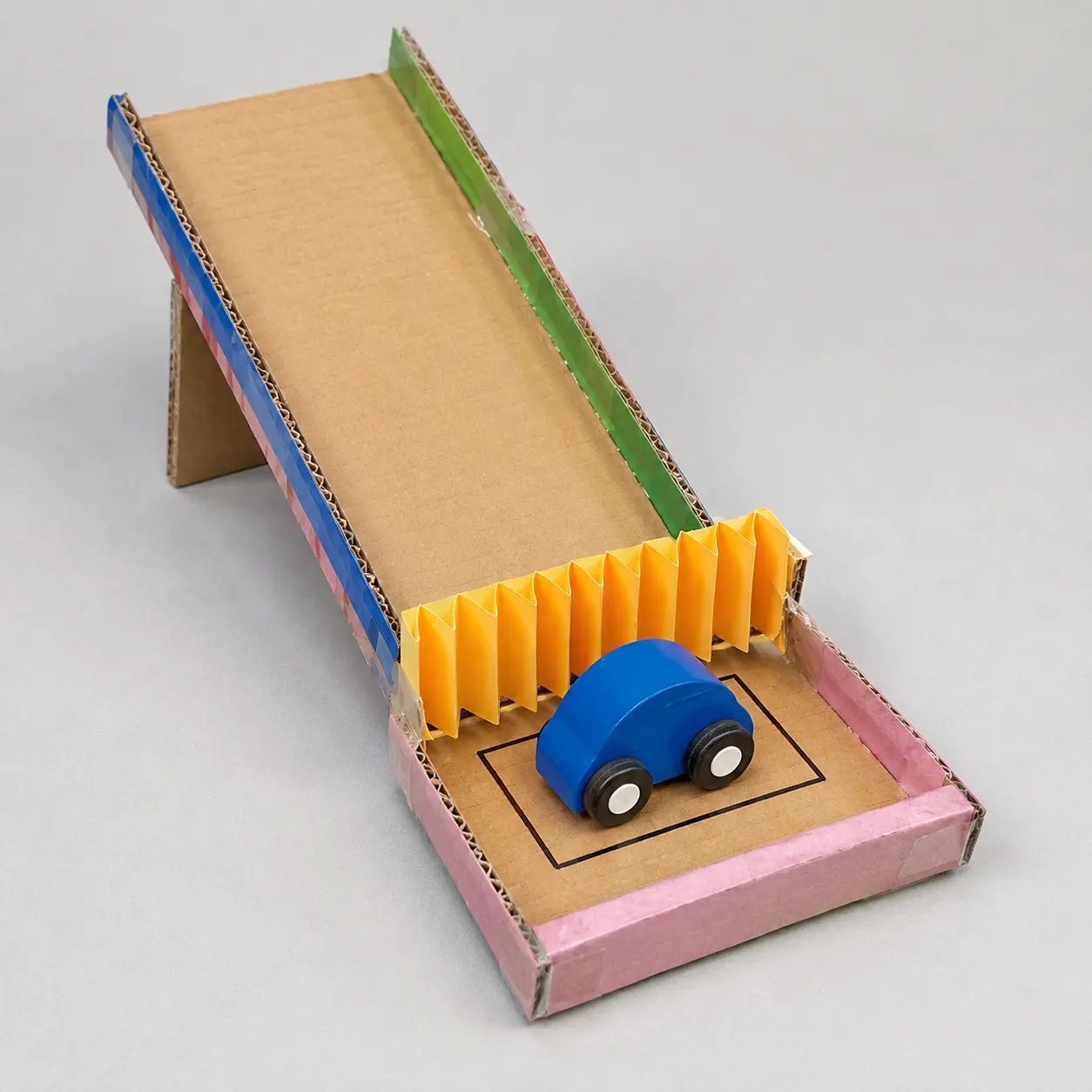
Make a soft stopping barrier that keeps a classroom rolling toy inside a marked finish area.
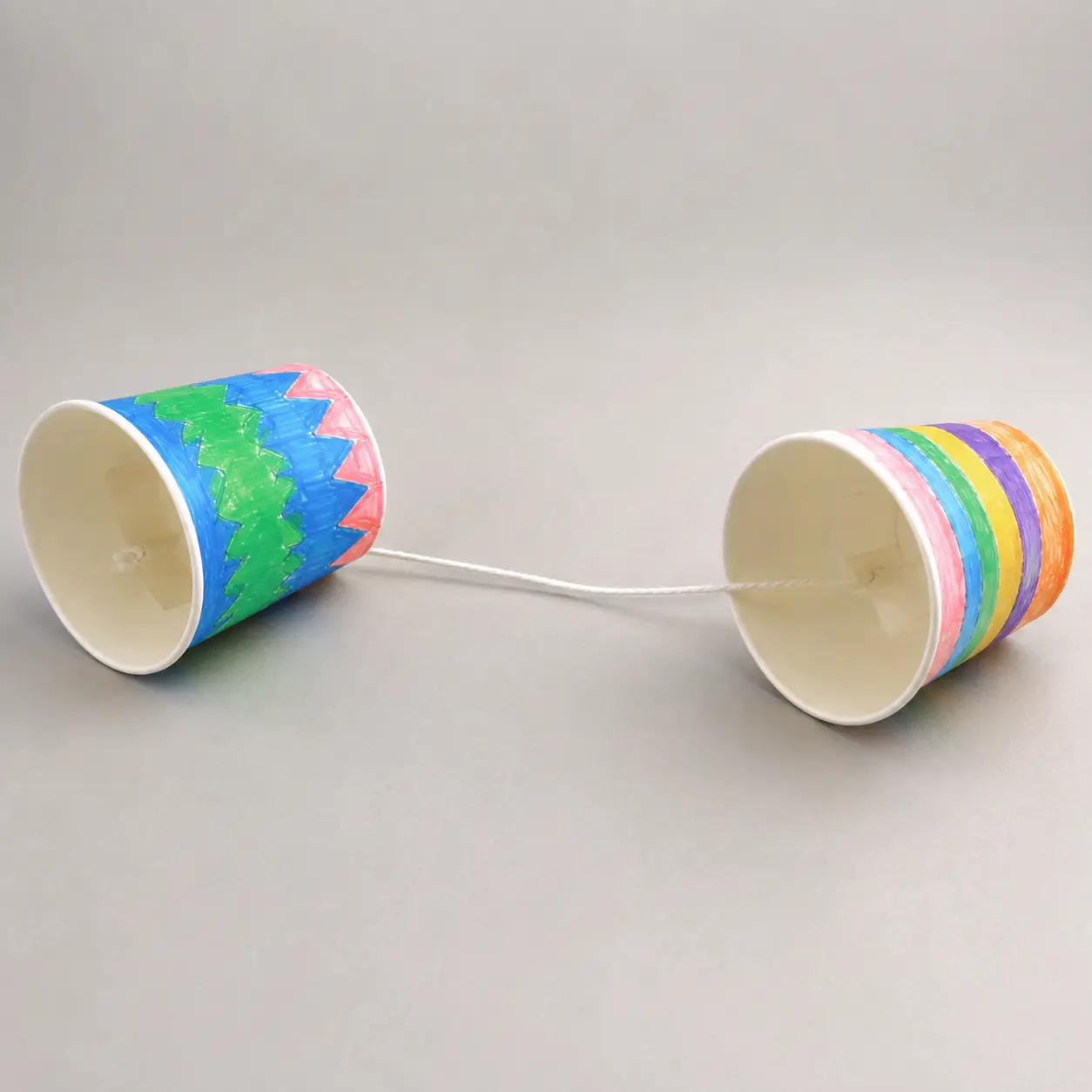
Make a two-cup string phone and compare how clearly a partner hears the same quiet message.
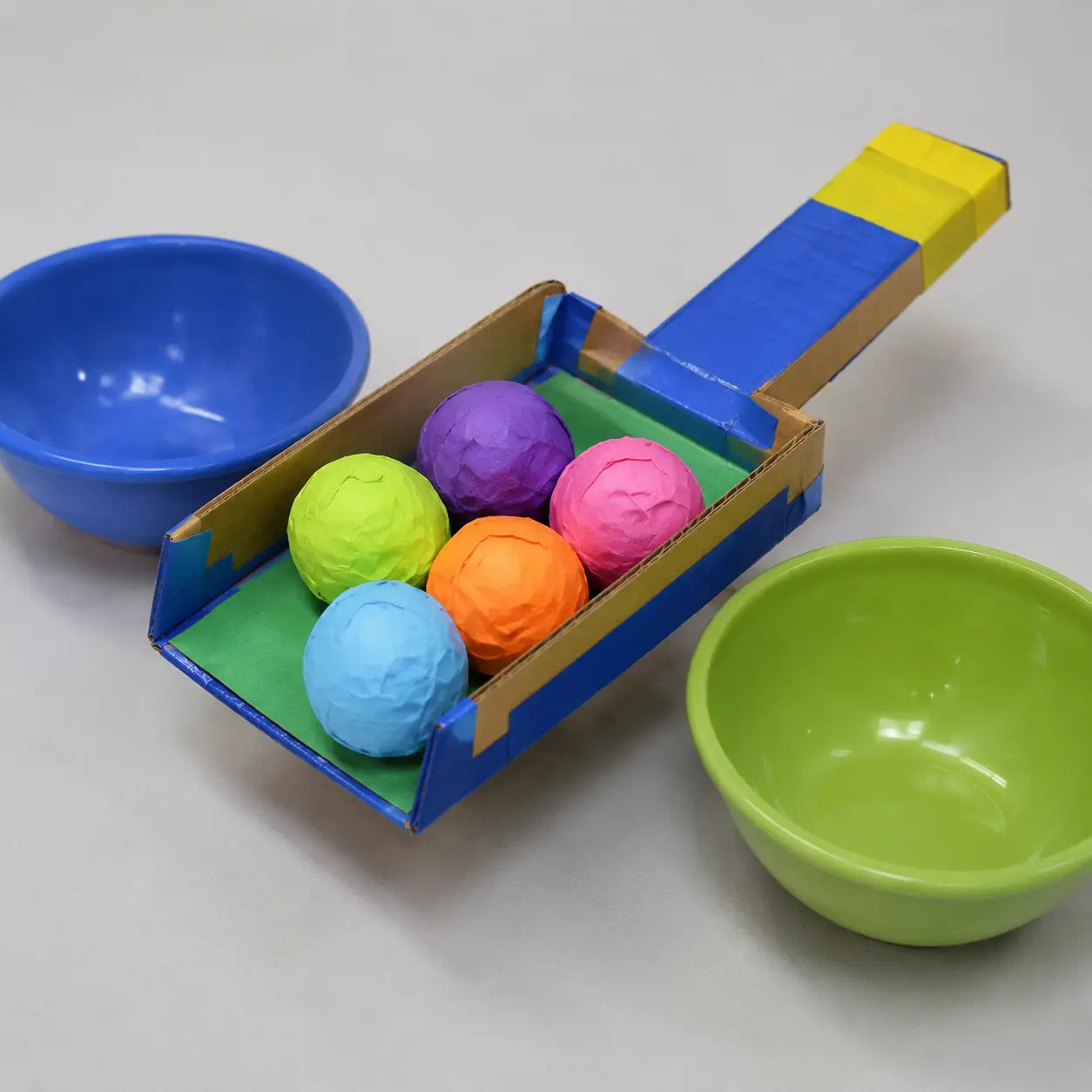
Make a hand-held cardboard scoop that transfers large paper balls between two tabletop containers.
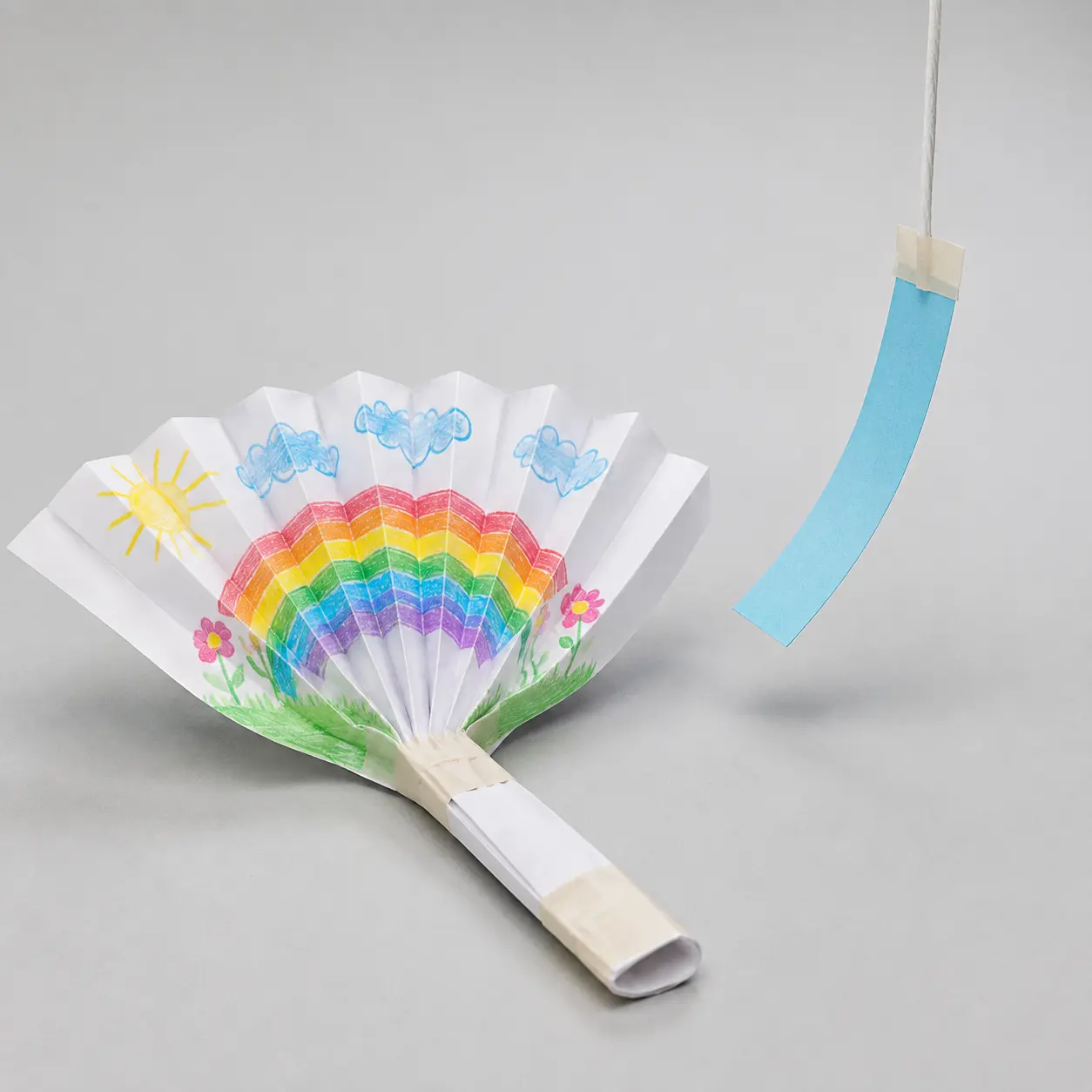
Make a folding paper fan that moves a hanging paper strip when you wave it gently.
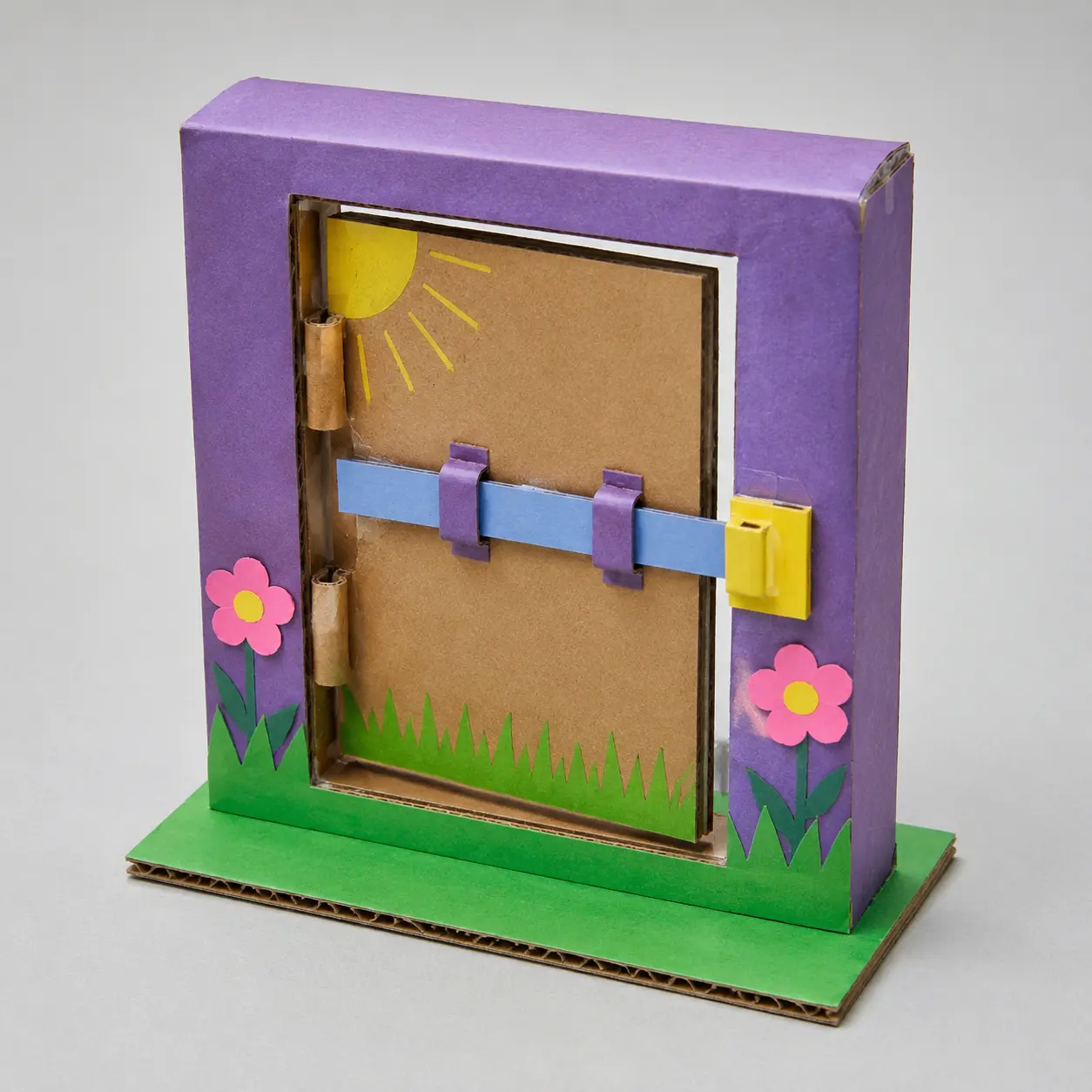
Make a cardboard door with a sliding latch that a partner can open and close.
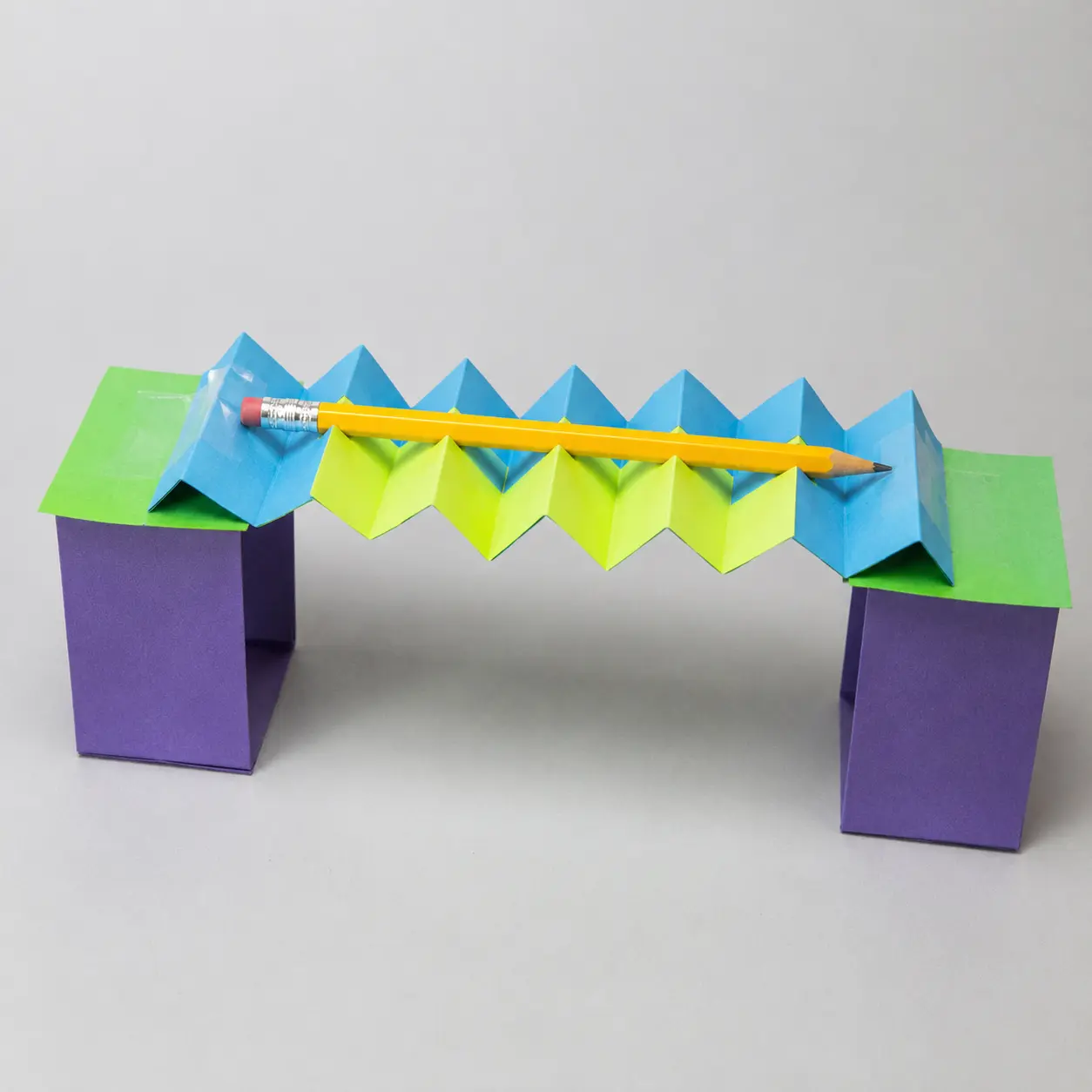
Make a folded paper bridge that supports one pencil across a small teacher-set gap.
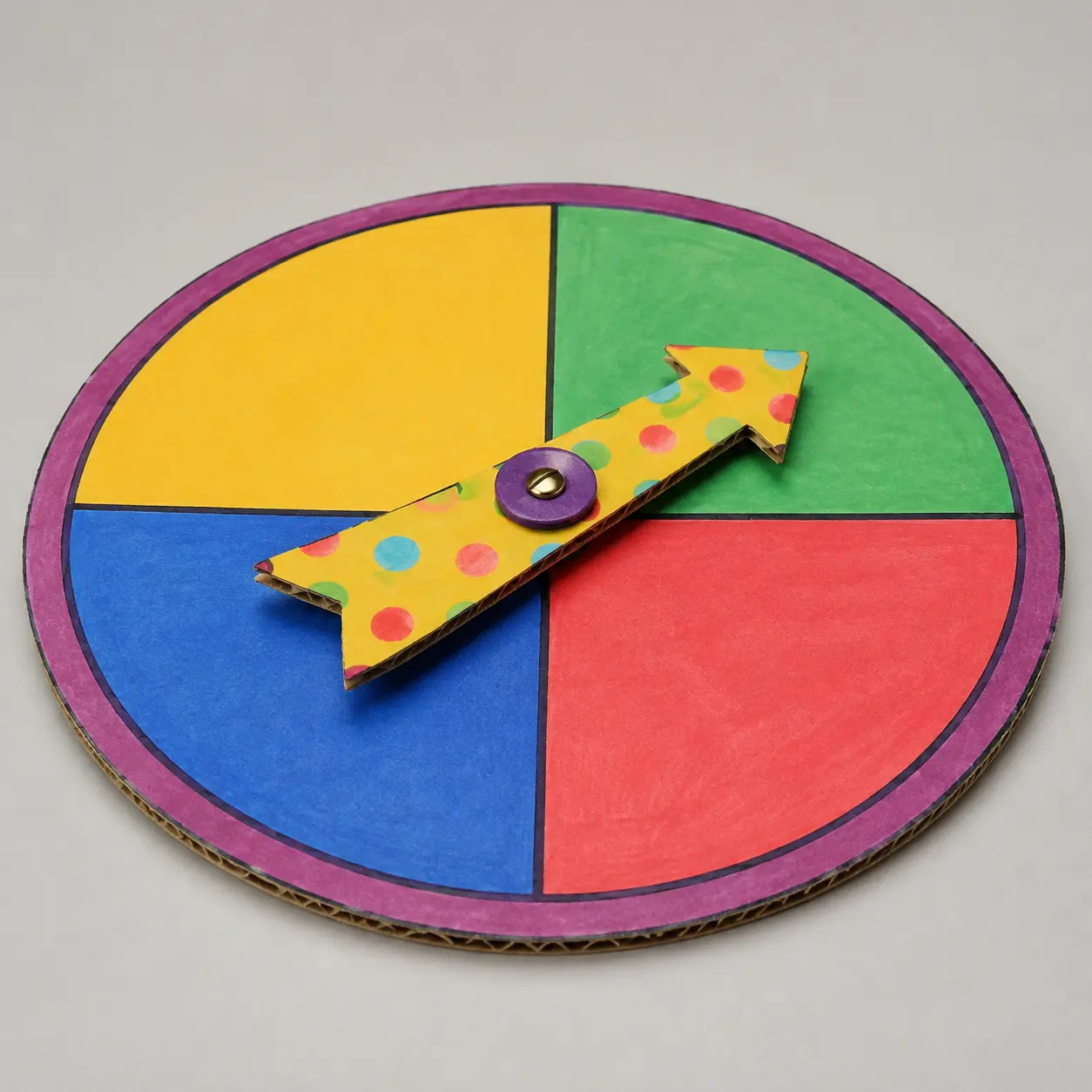
Make a cardboard arrow that turns freely and points to a clear choice on a game board.
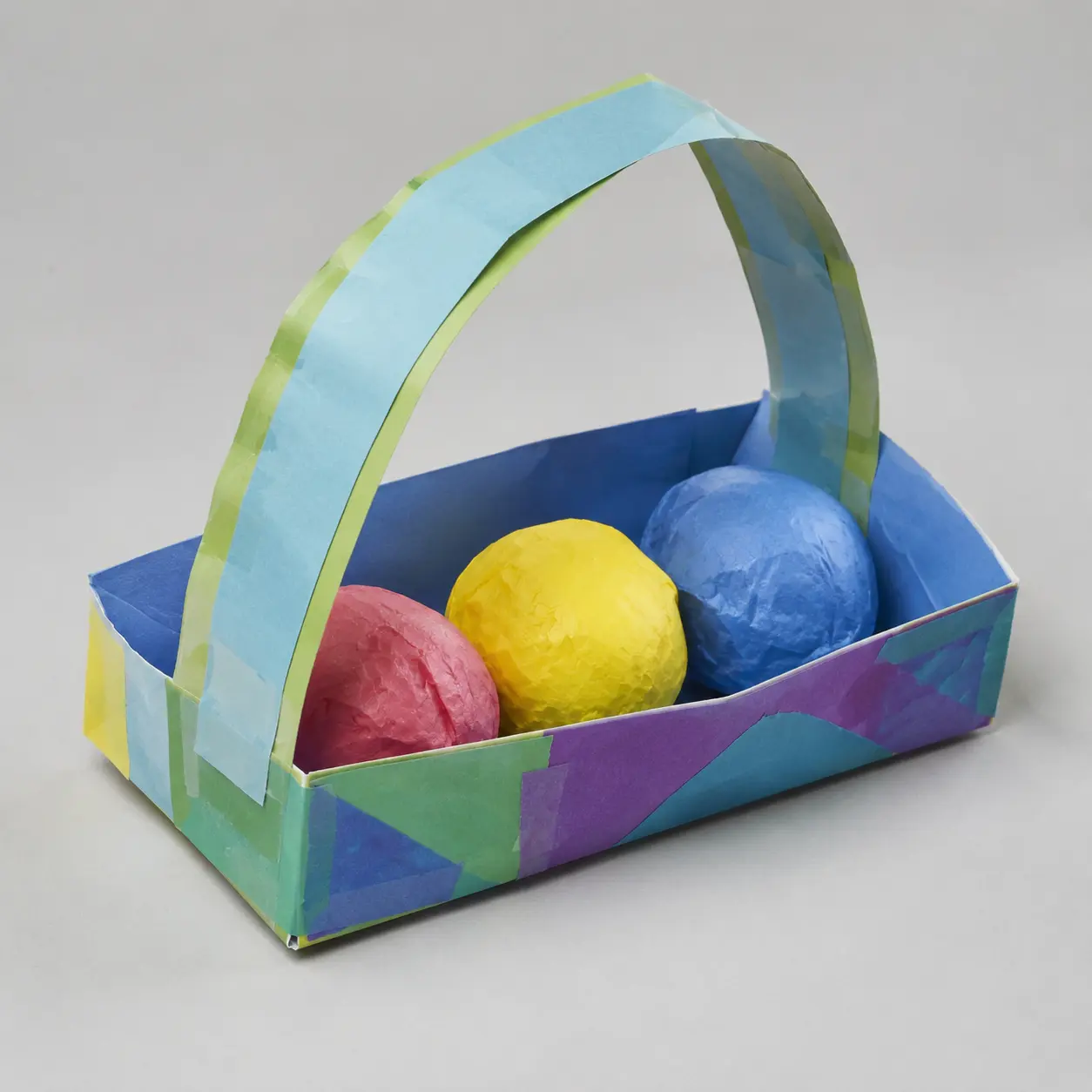
Make a light paper carrier with handles that holds three large paper balls for a short tabletop move.
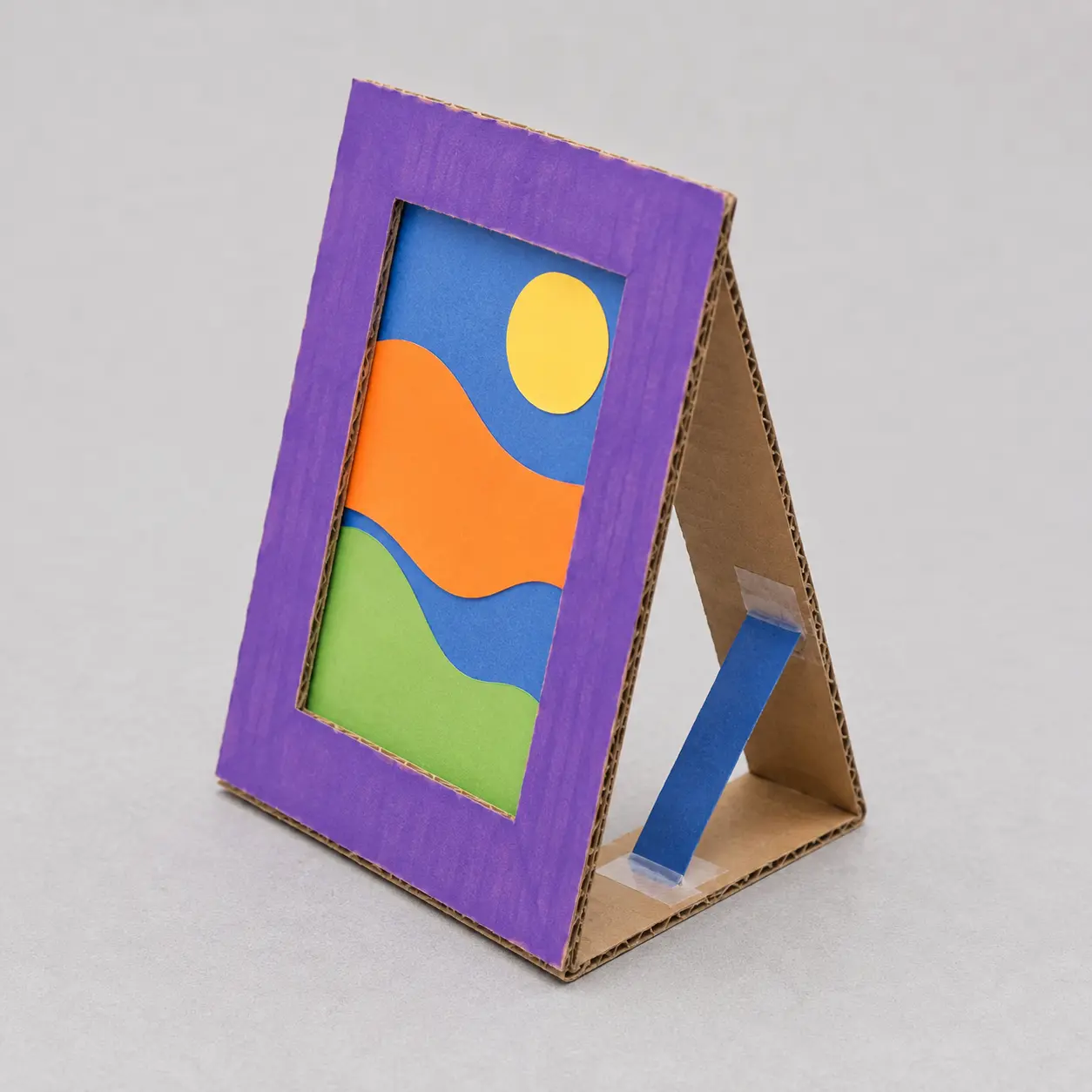
Make a cardboard picture frame with a back leg that stands up and folds flat for storage.
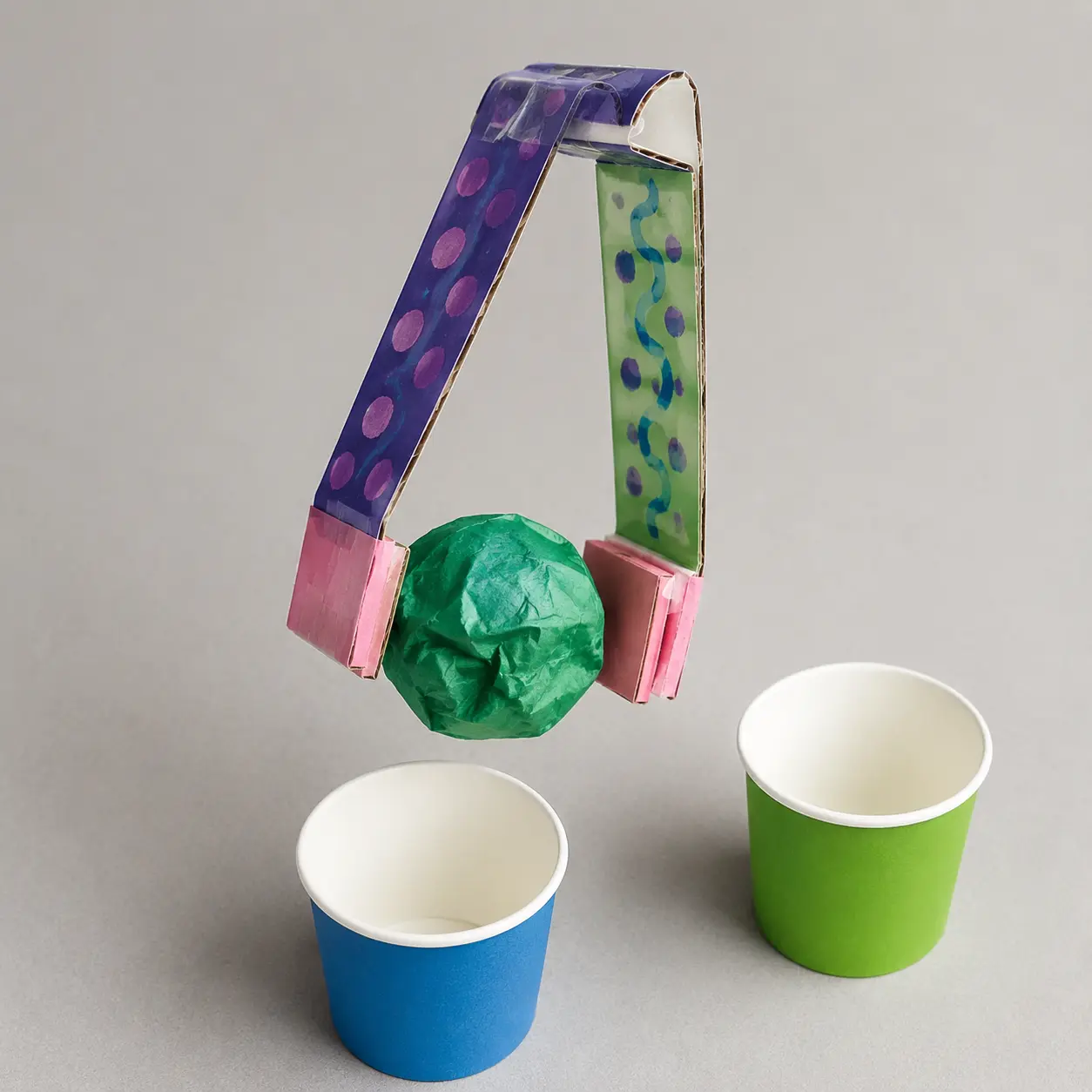
Make simple folded-card tongs that pick up a large paper ball without touching it with your fingers.
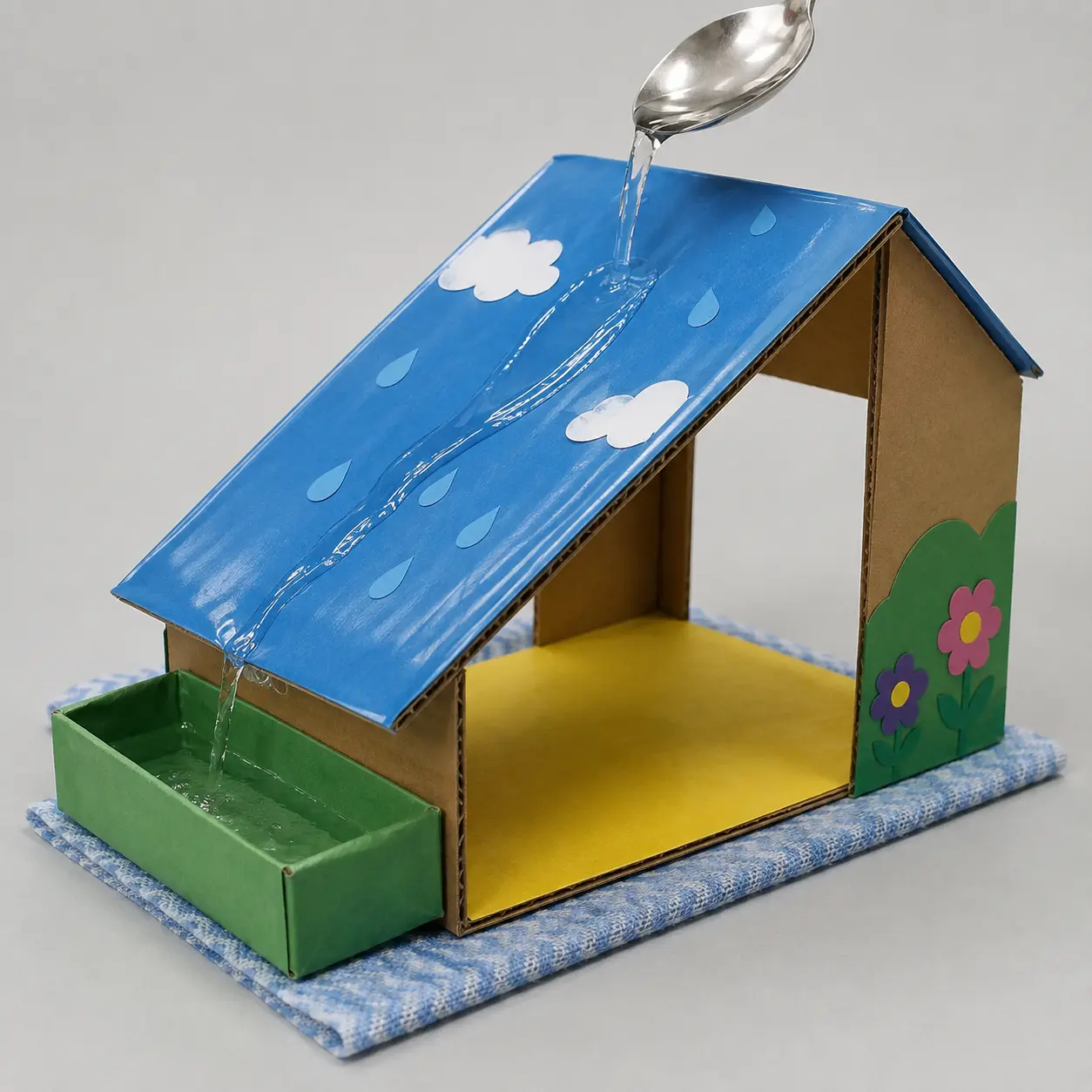
Make a small sloping roof that guides a measured spoonful of water into a catch tray instead of onto a paper house floor.
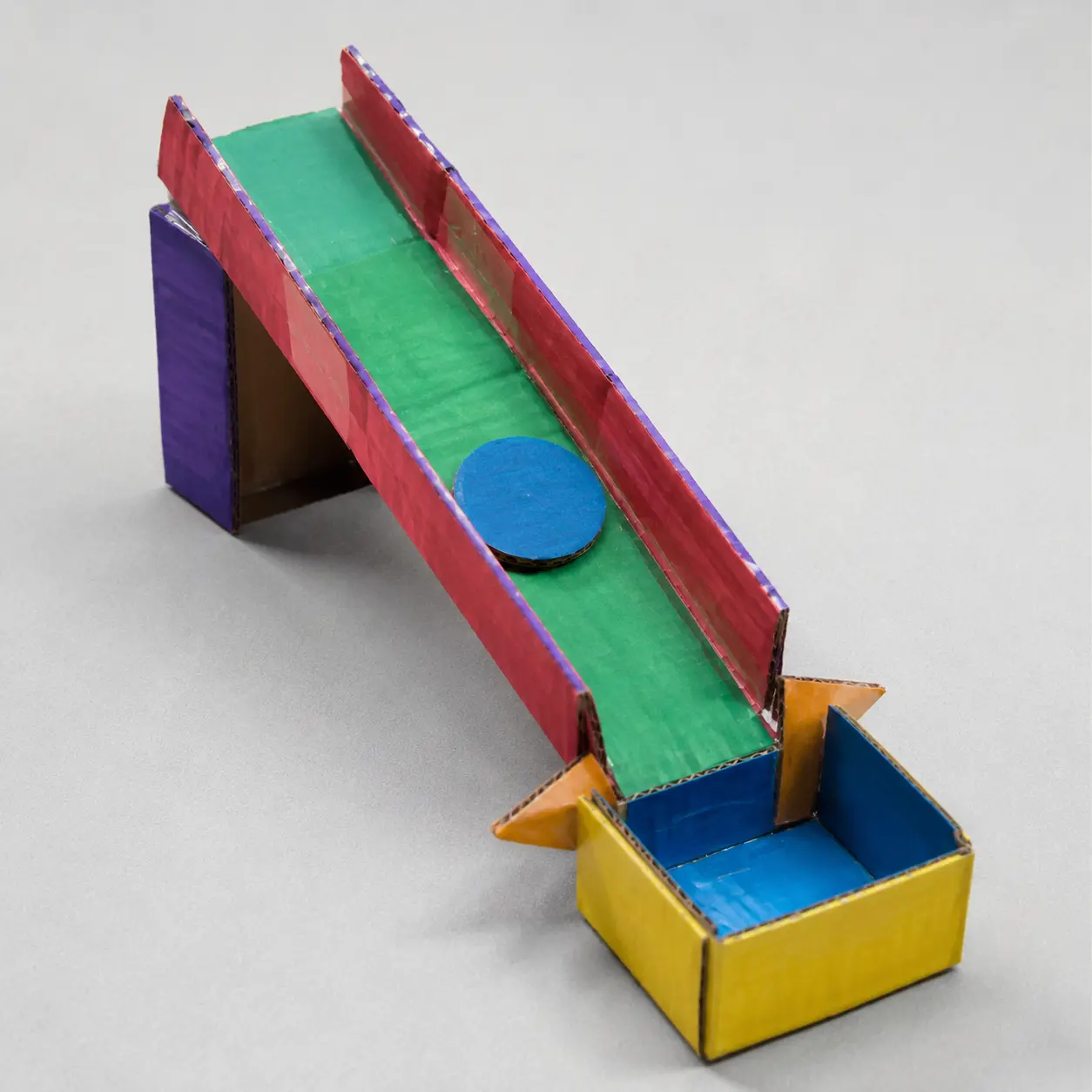
Make a short enclosed slide that sends a large flat cardboard token from the top to a target box.
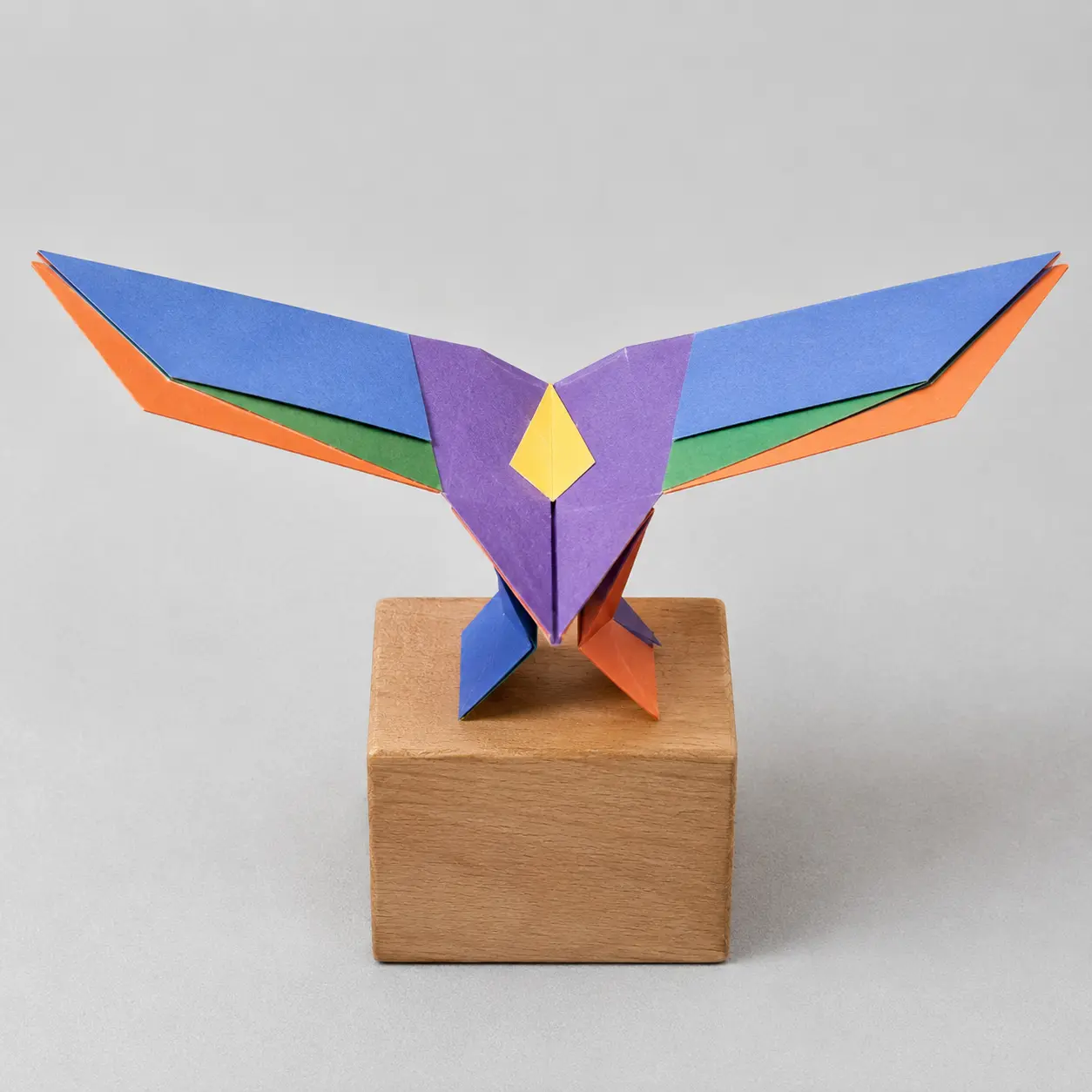
Make a wide paper shape that balances on the flat top of a classroom block without being taped down.
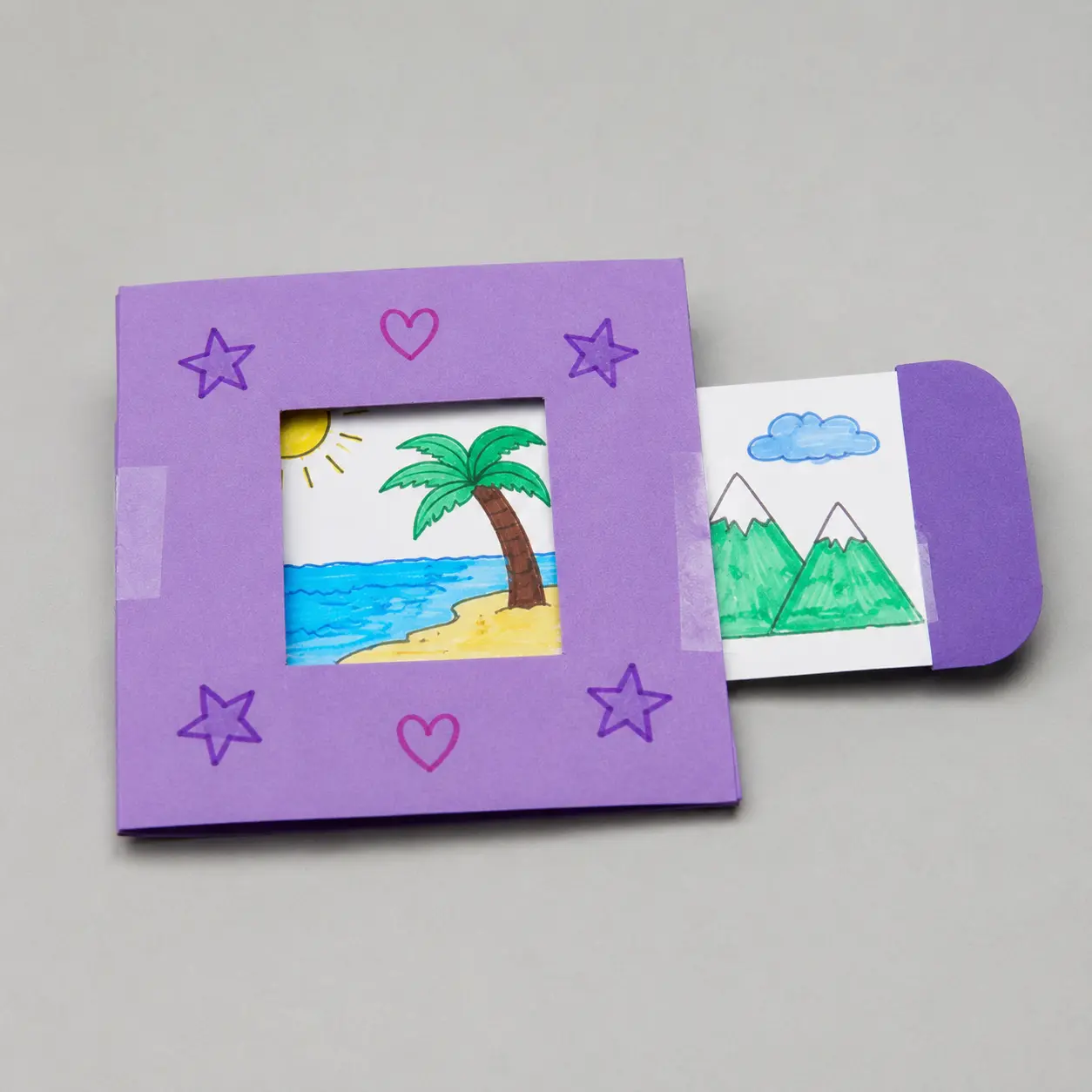
Make a paper sleeve with a window that reveals one of two pictures when a tab slides.
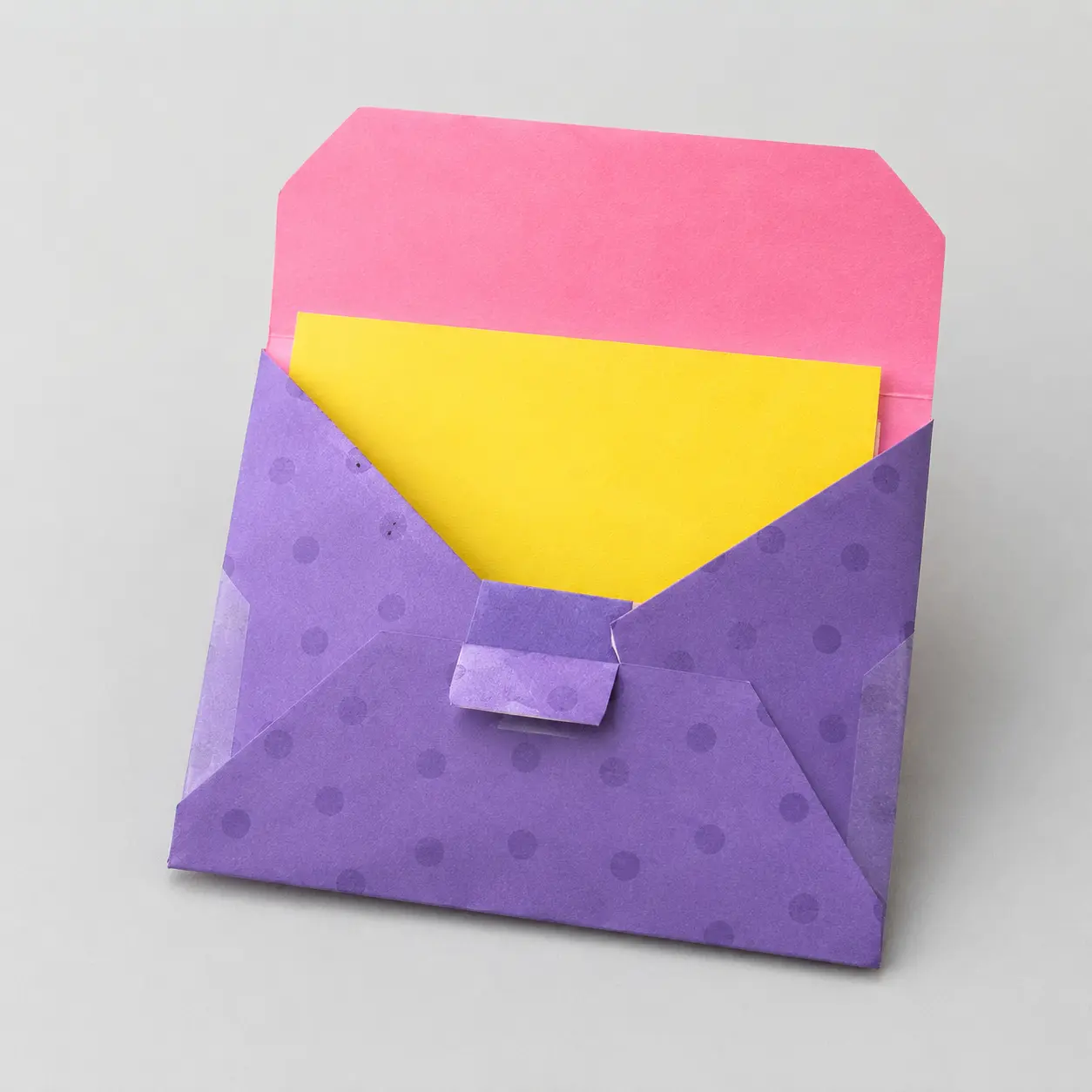
Make an envelope that holds a classroom message card and closes with a tuck flap instead of fresh tape each time.
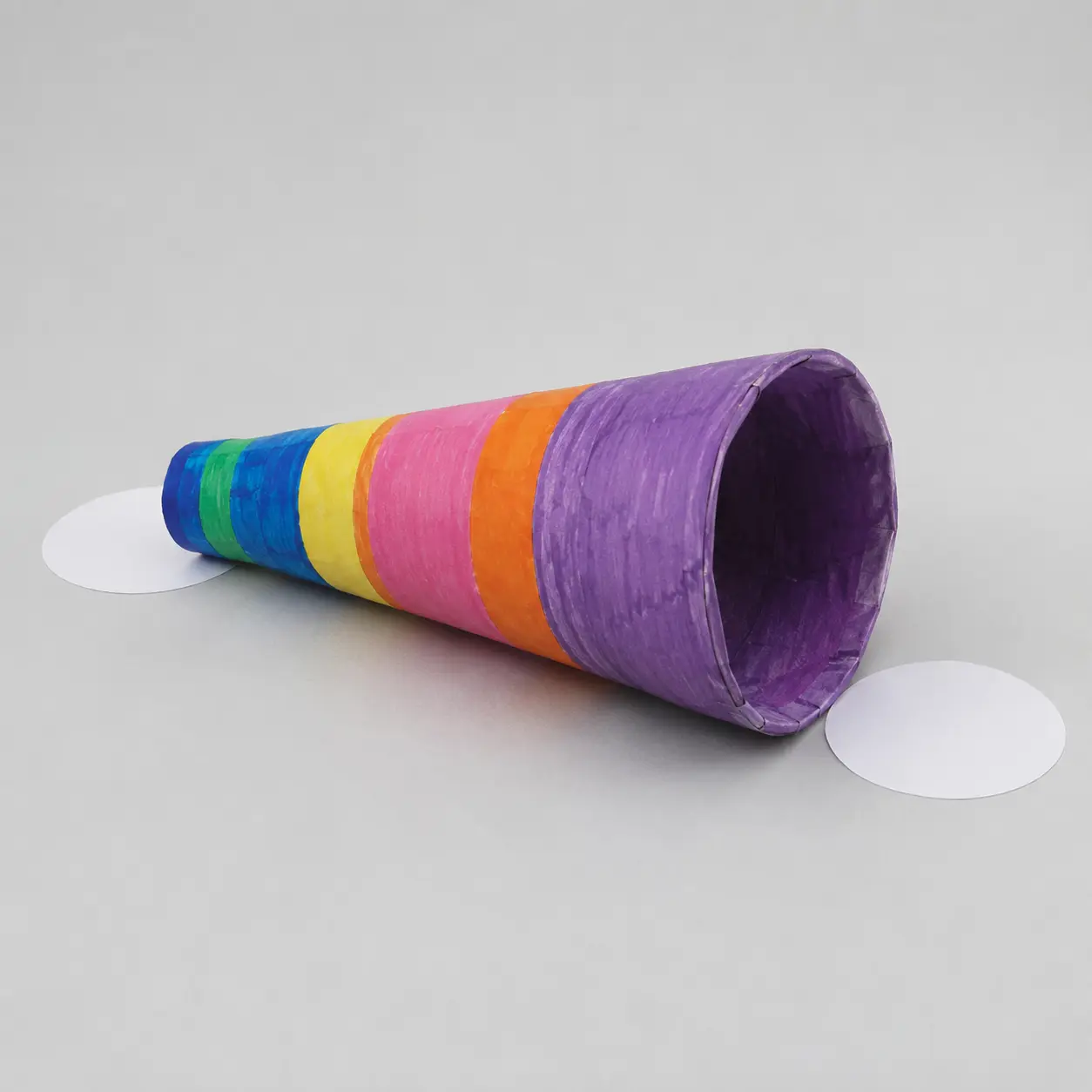
Make a paper horn that directs a quiet voice toward a listener, then compare it with no horn.
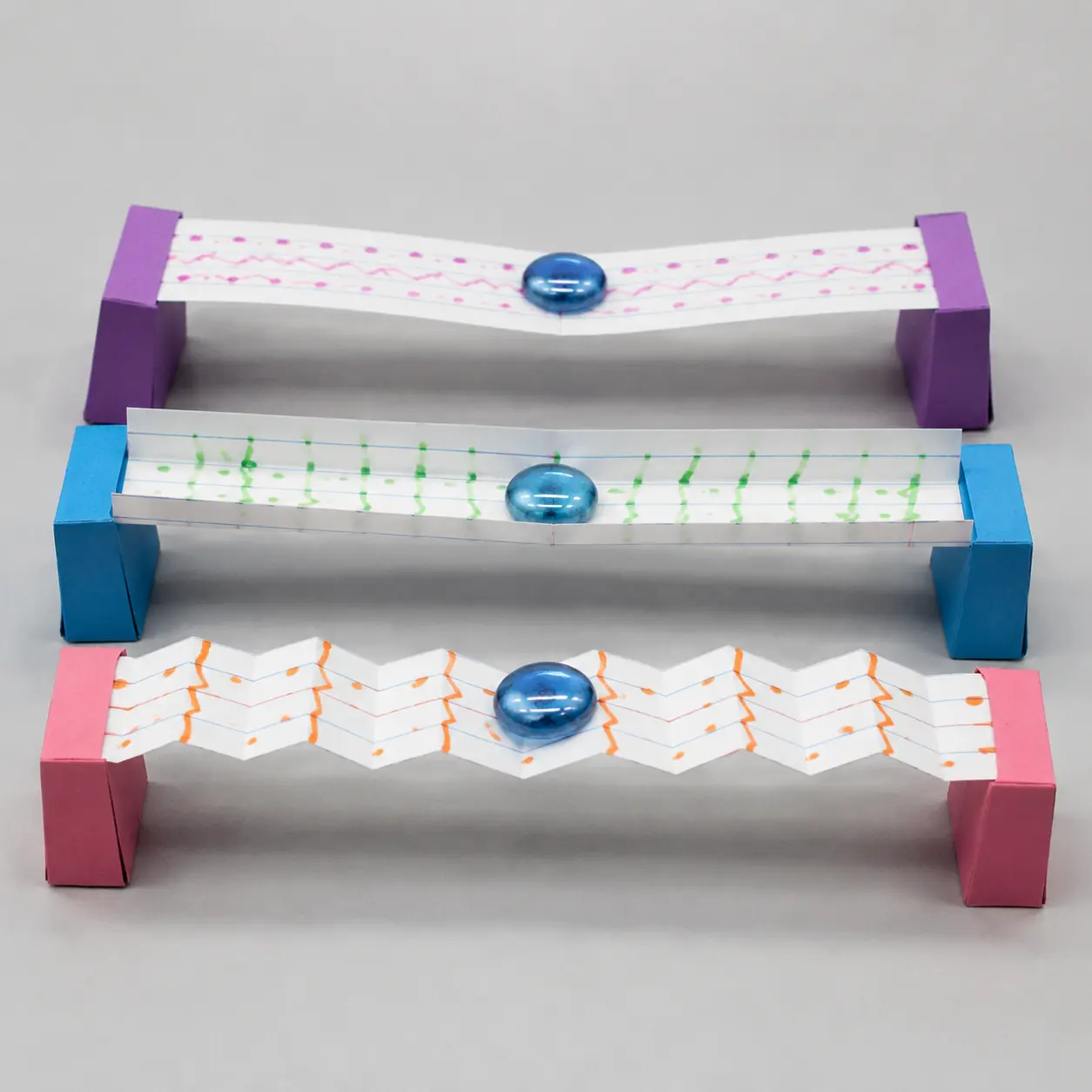
Make three beam shapes from equal-size cards and compare which supports a small central load with the least bending.
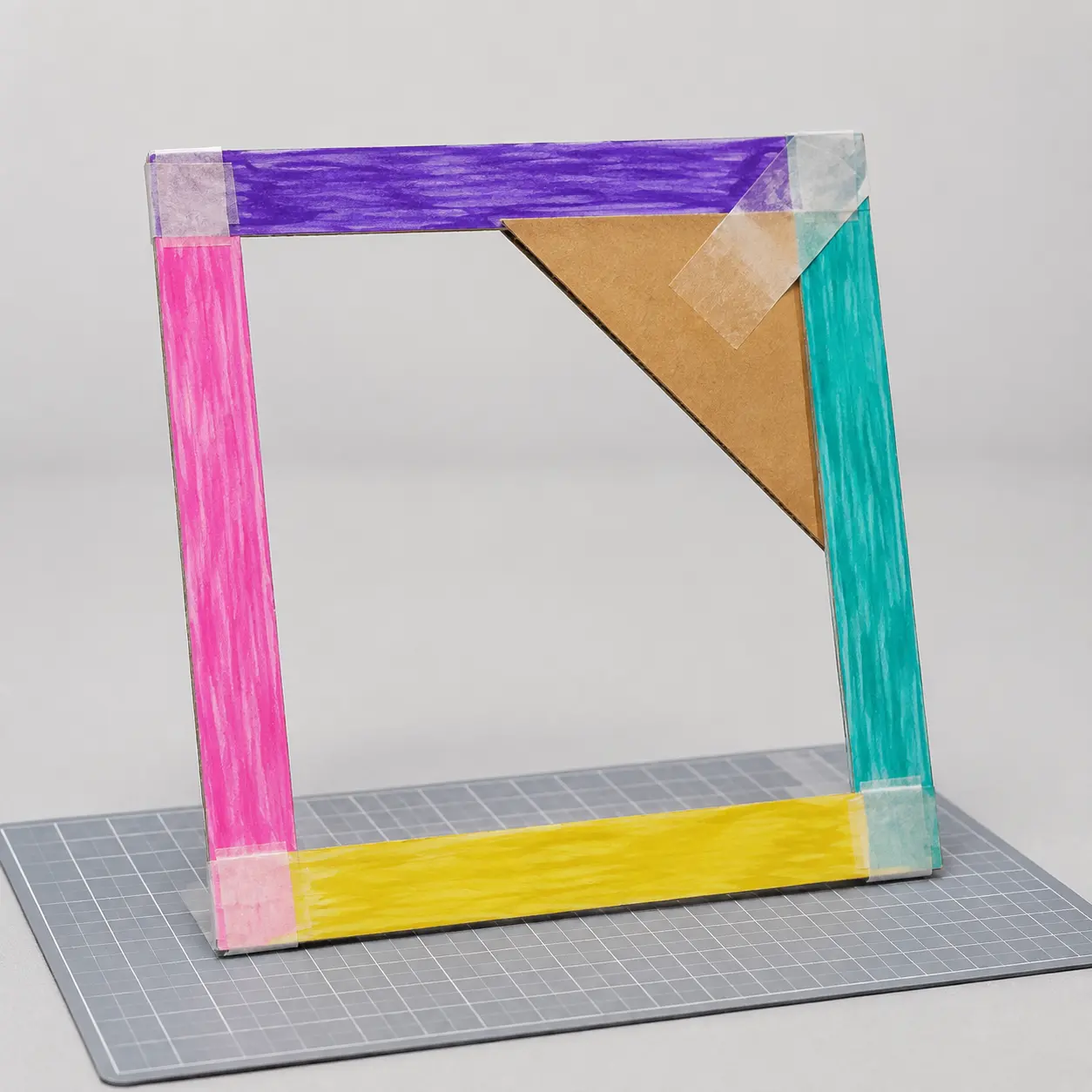
Make a square cardboard frame and add a brace that helps it keep its shape under a gentle sideways push.
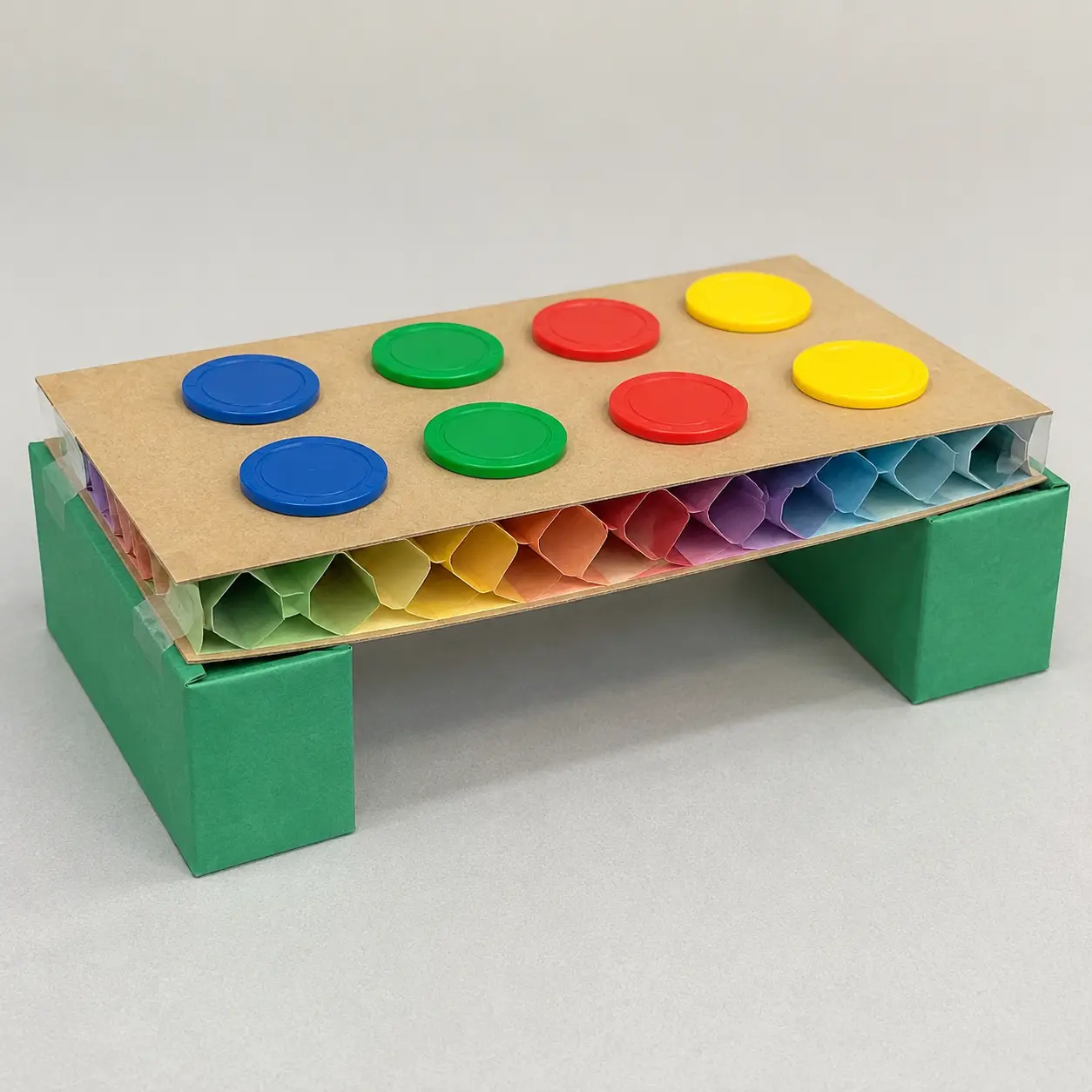
Make a lightweight sandwich panel with folded paper cells between two card faces.
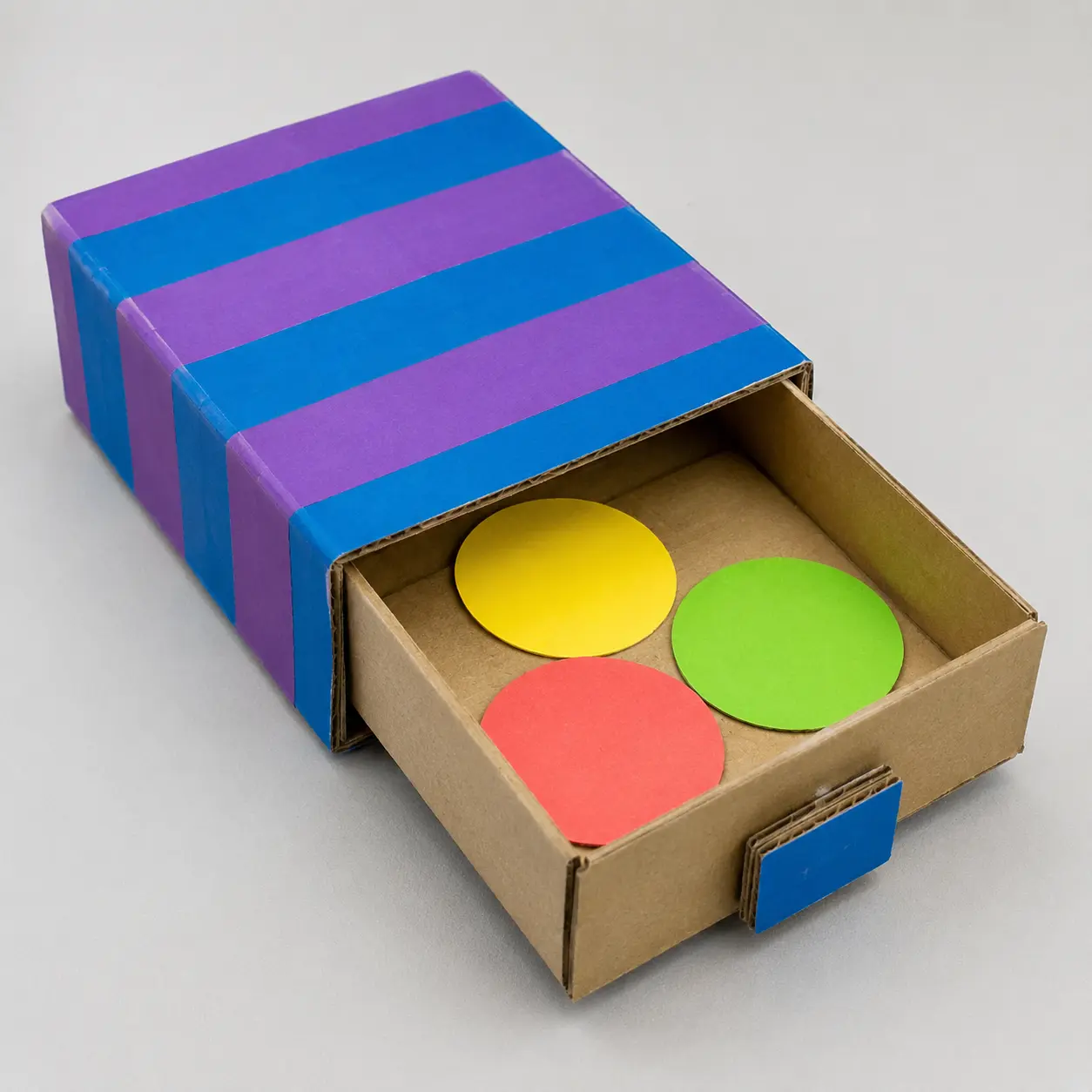
Make a small cardboard drawer that slides in and out of a sleeve while holding three large paper tokens.
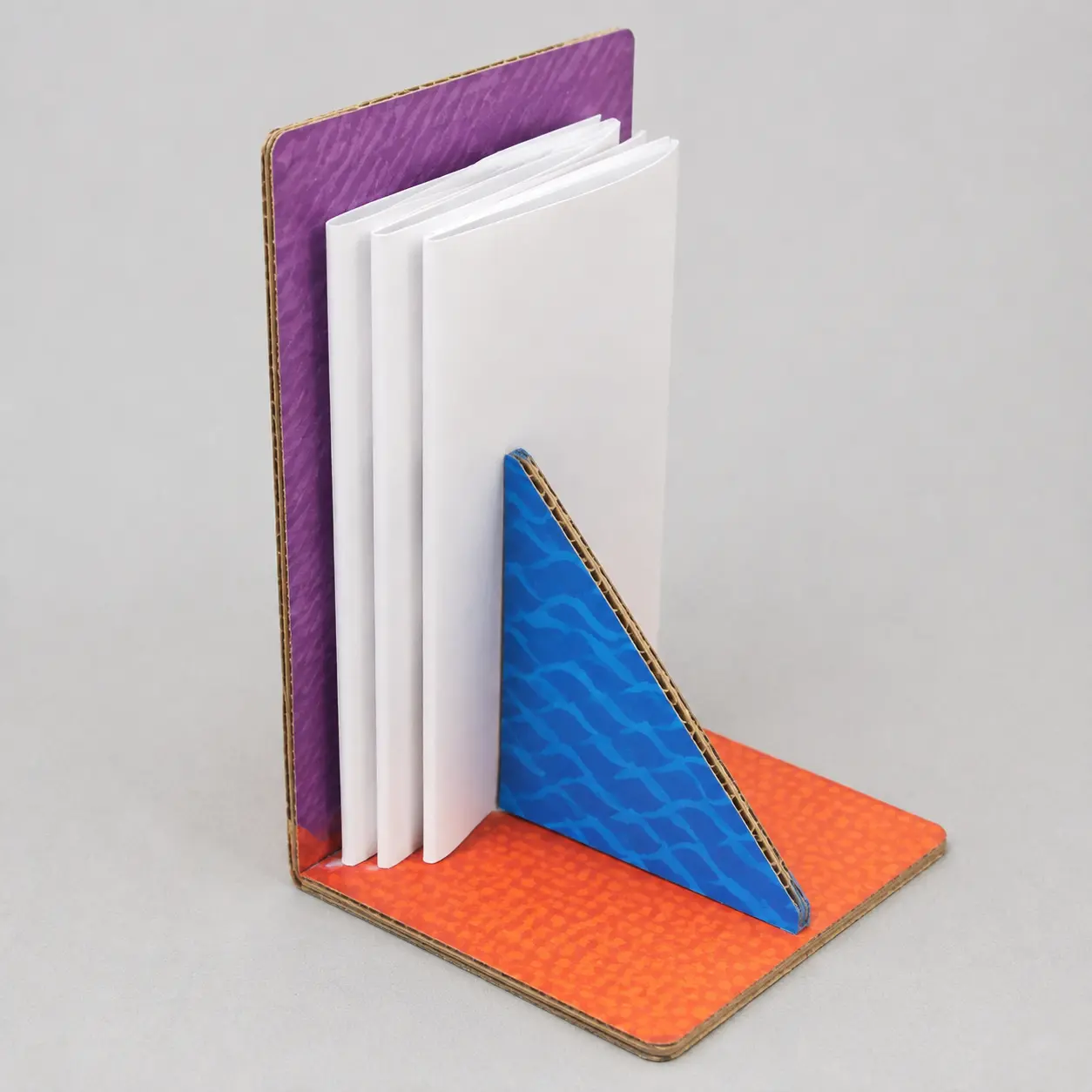
Make a cardboard bookend that keeps three lightweight classroom booklets upright on a table.
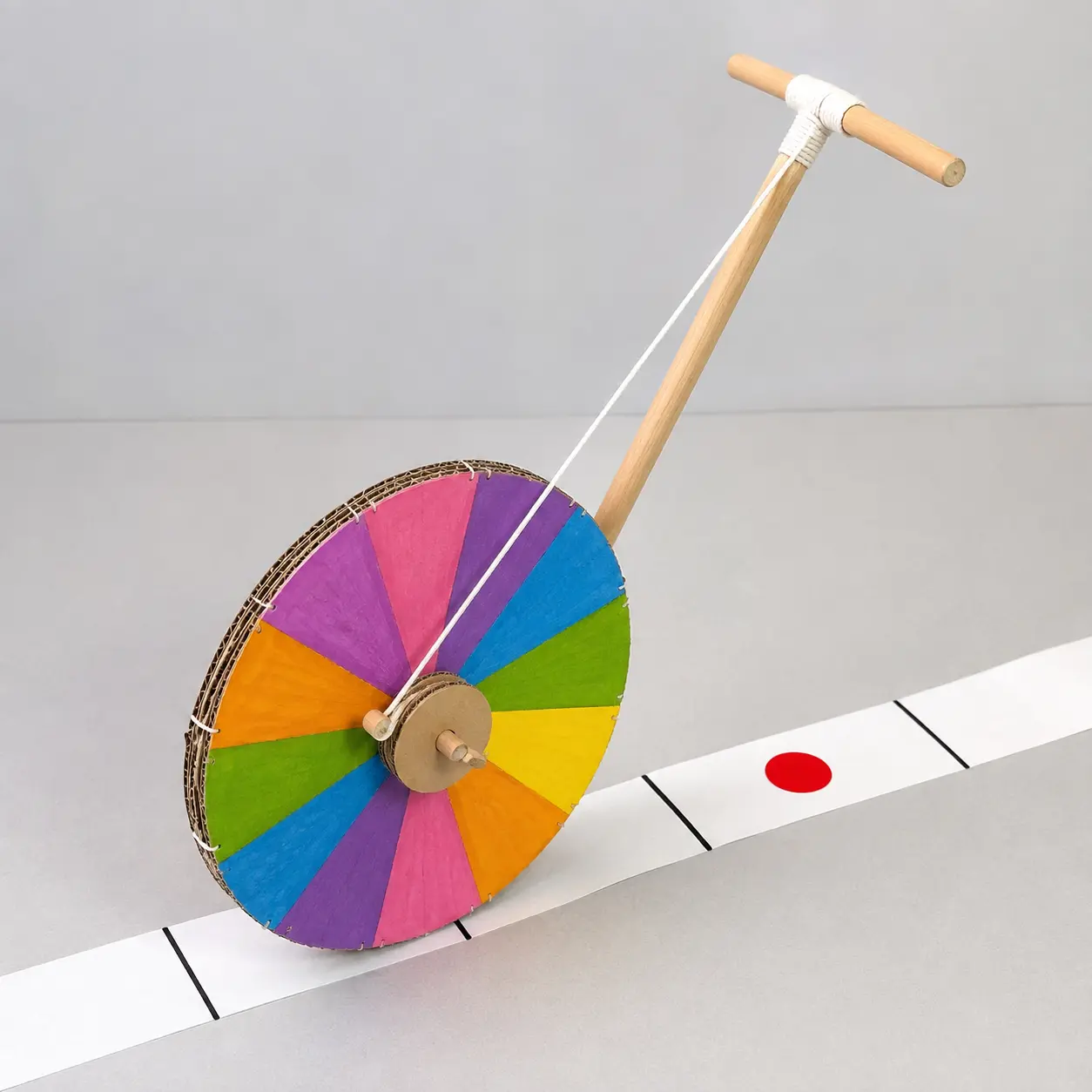
Make a cardboard wheel with a turn marker and use it to estimate a short tabletop distance.
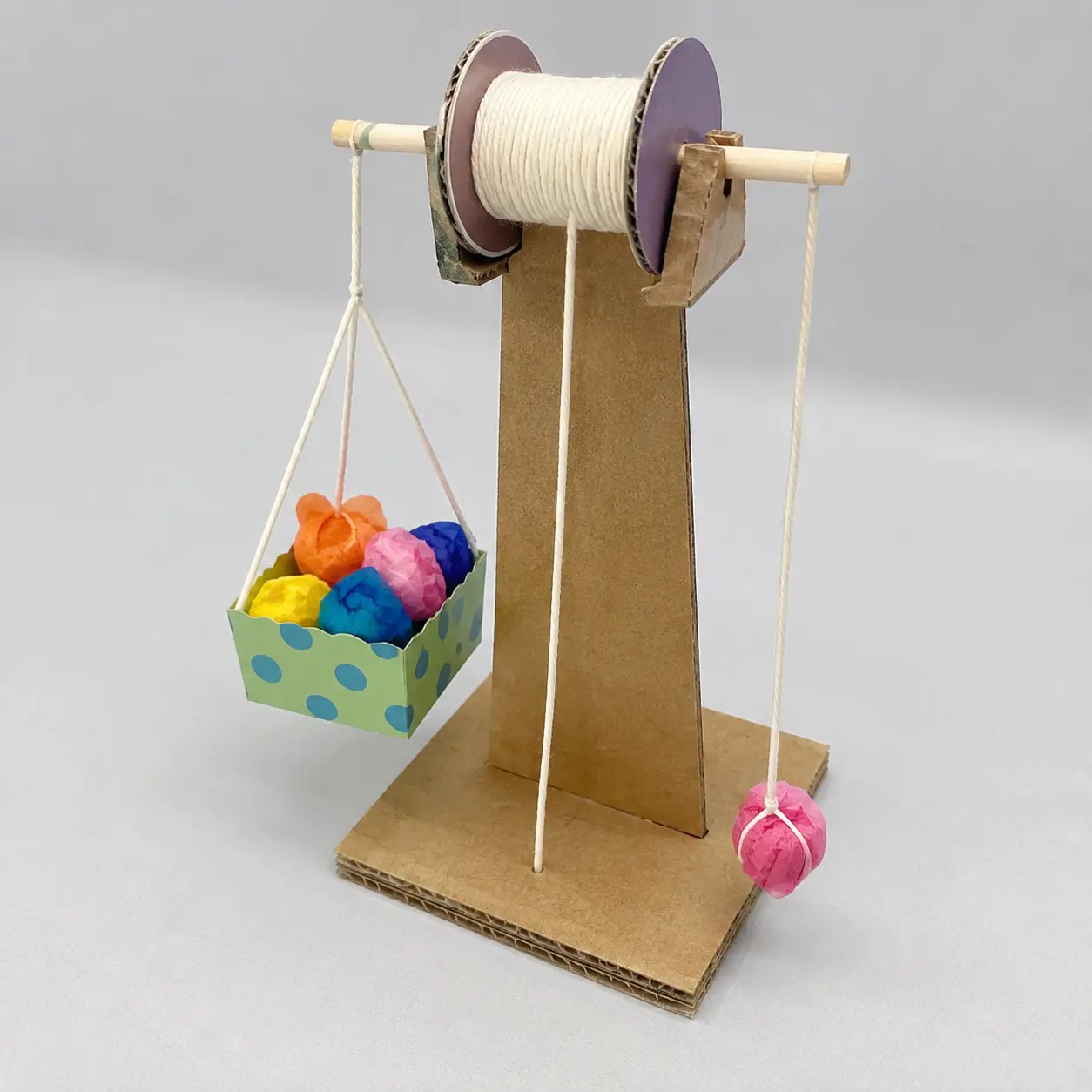
Make a small model that changes a downward pull into an upward movement of a light paper basket.
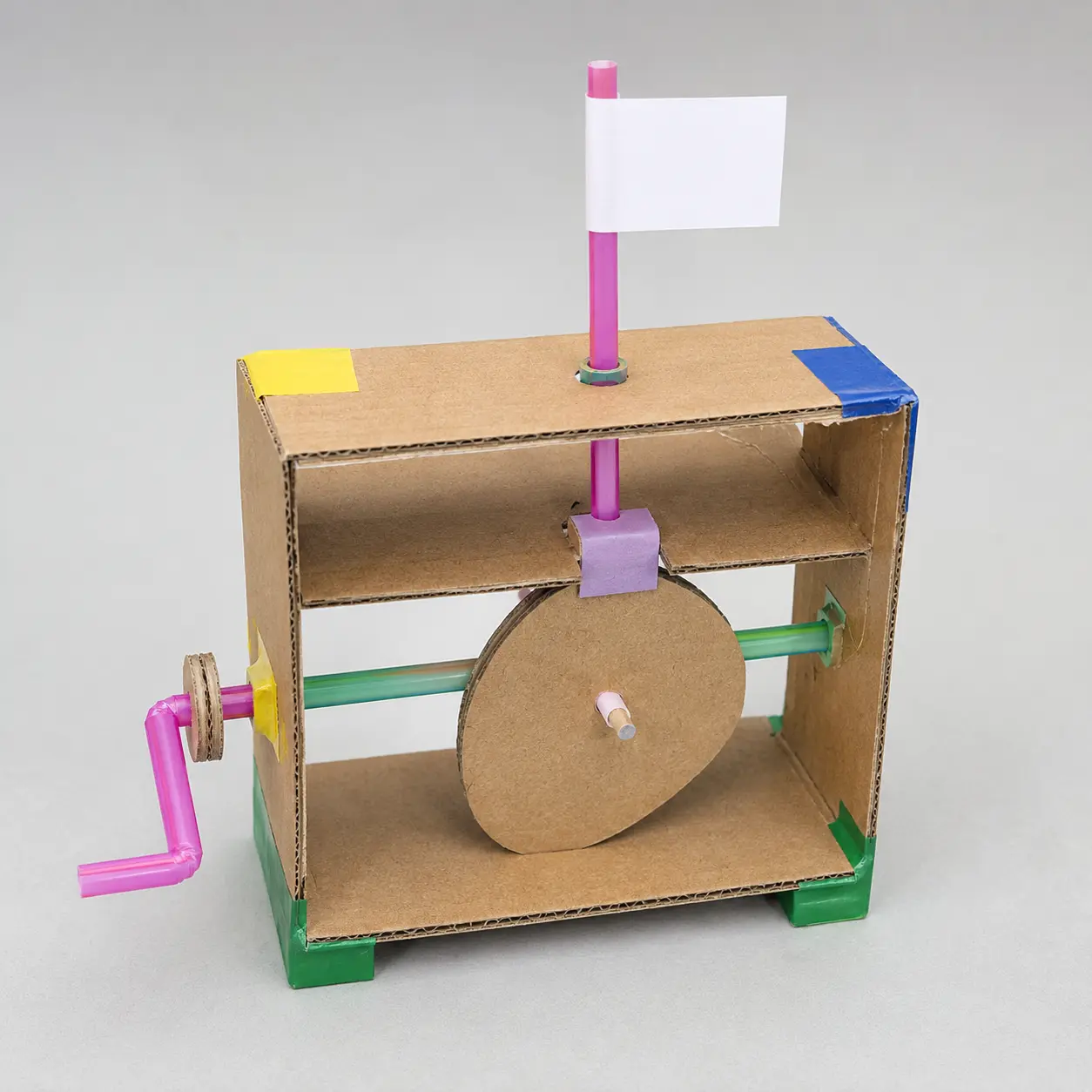
Make a cardboard wheel mechanism that gently raises and lowers a paper flag as a handle turns.
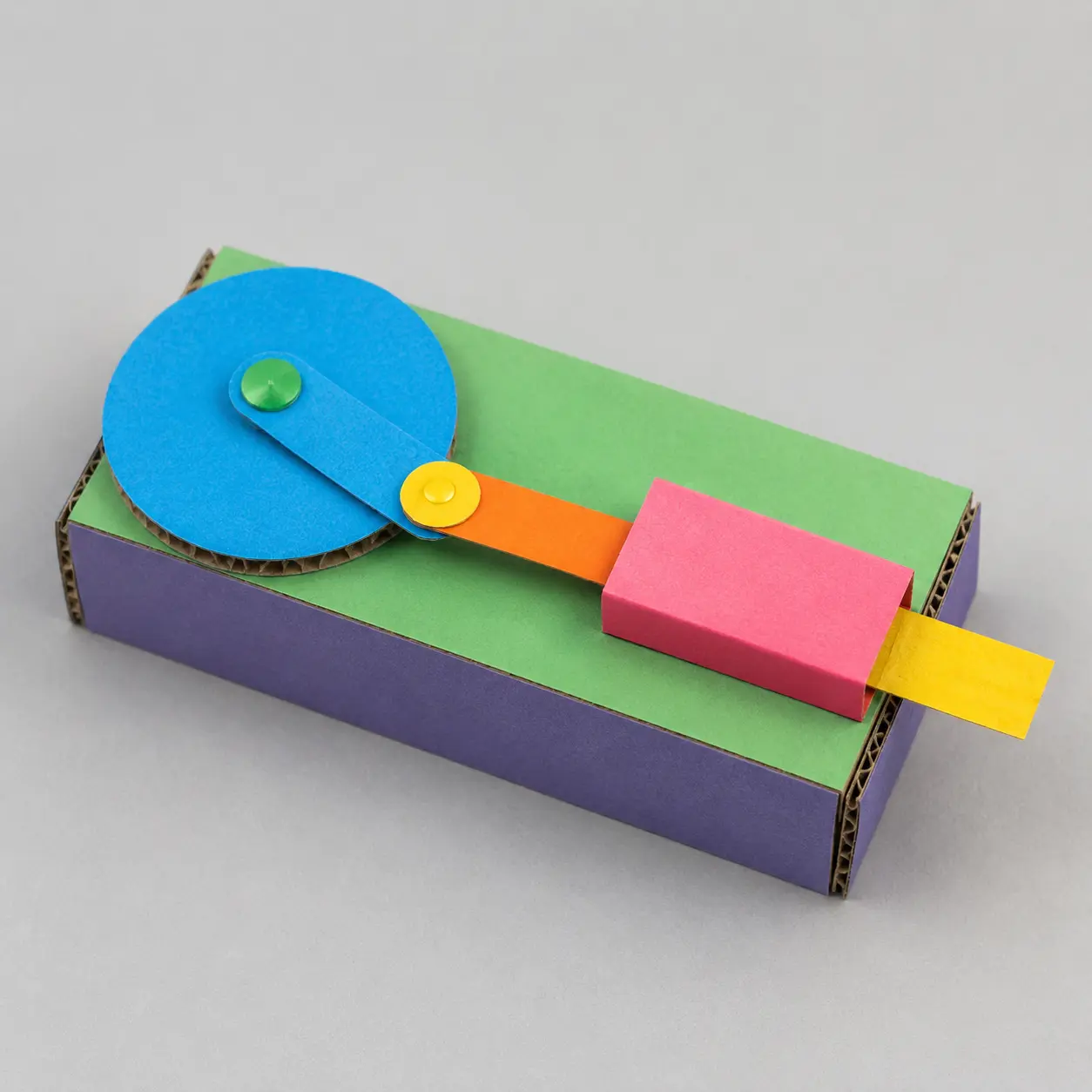
Make a model crank that changes a slow turning motion into a back-and-forth paper tab.
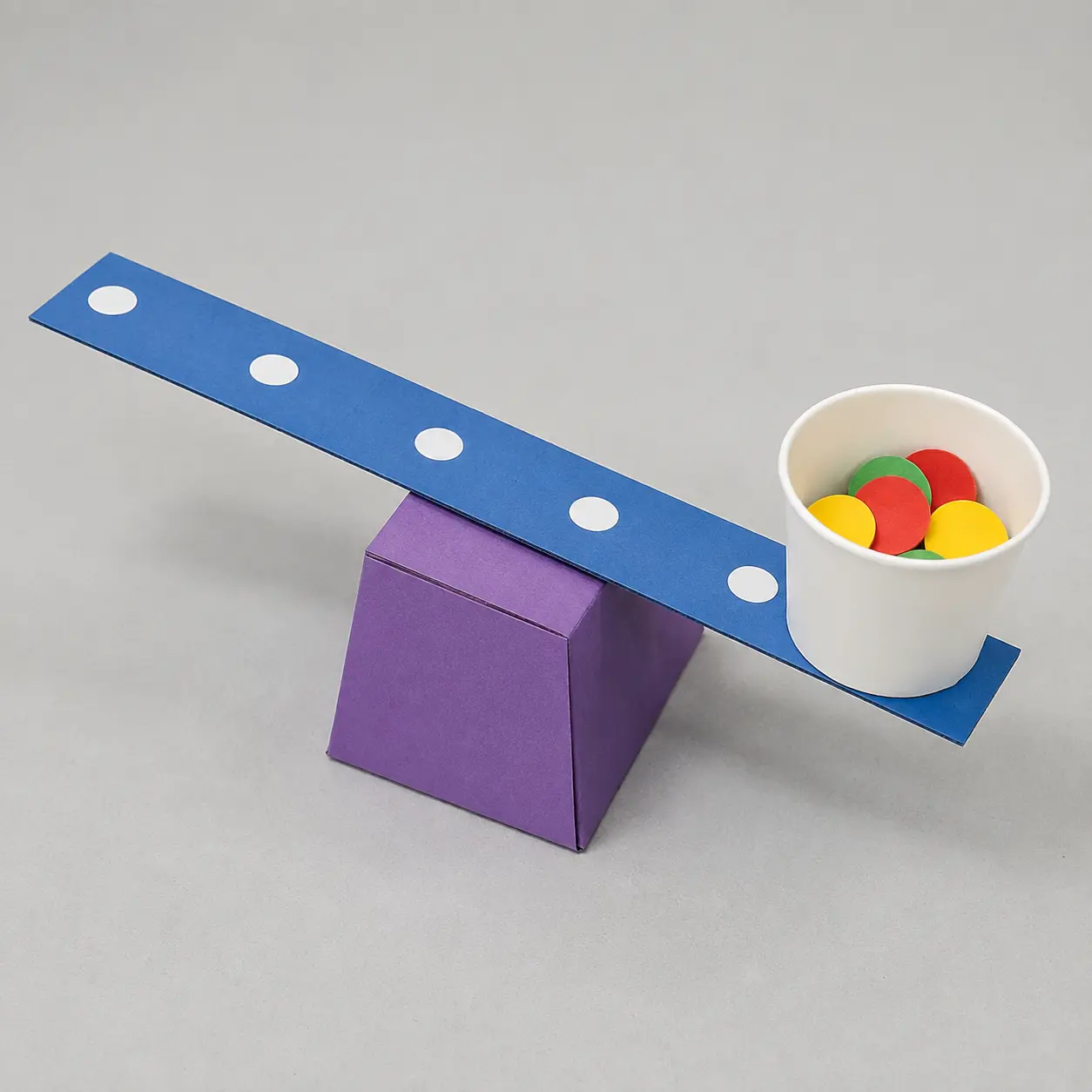
Make a tabletop lever and compare where a support should sit to lift a light paper load.
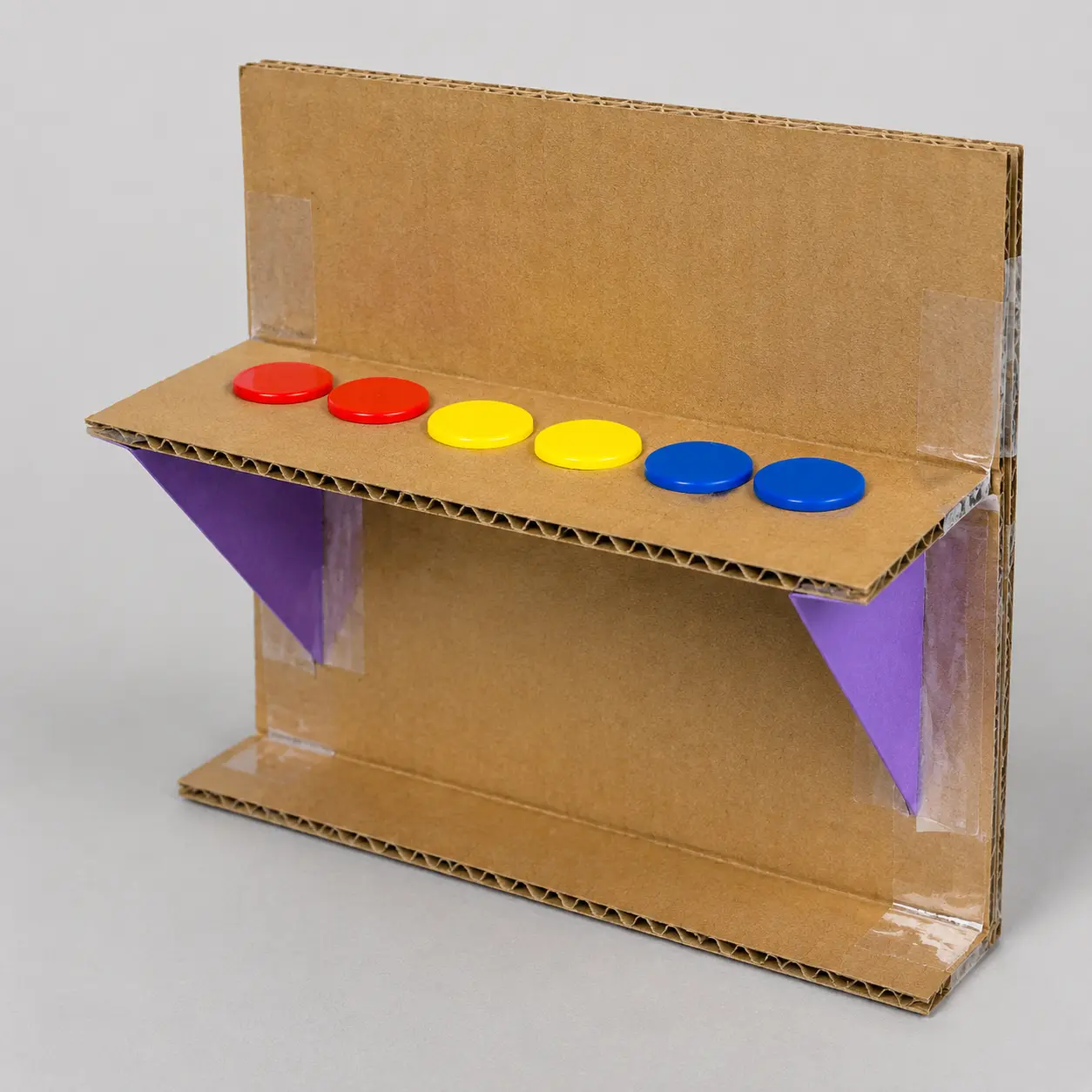
Make a model shelf supported by folded-card brackets and test it with a small teacher-approved load.
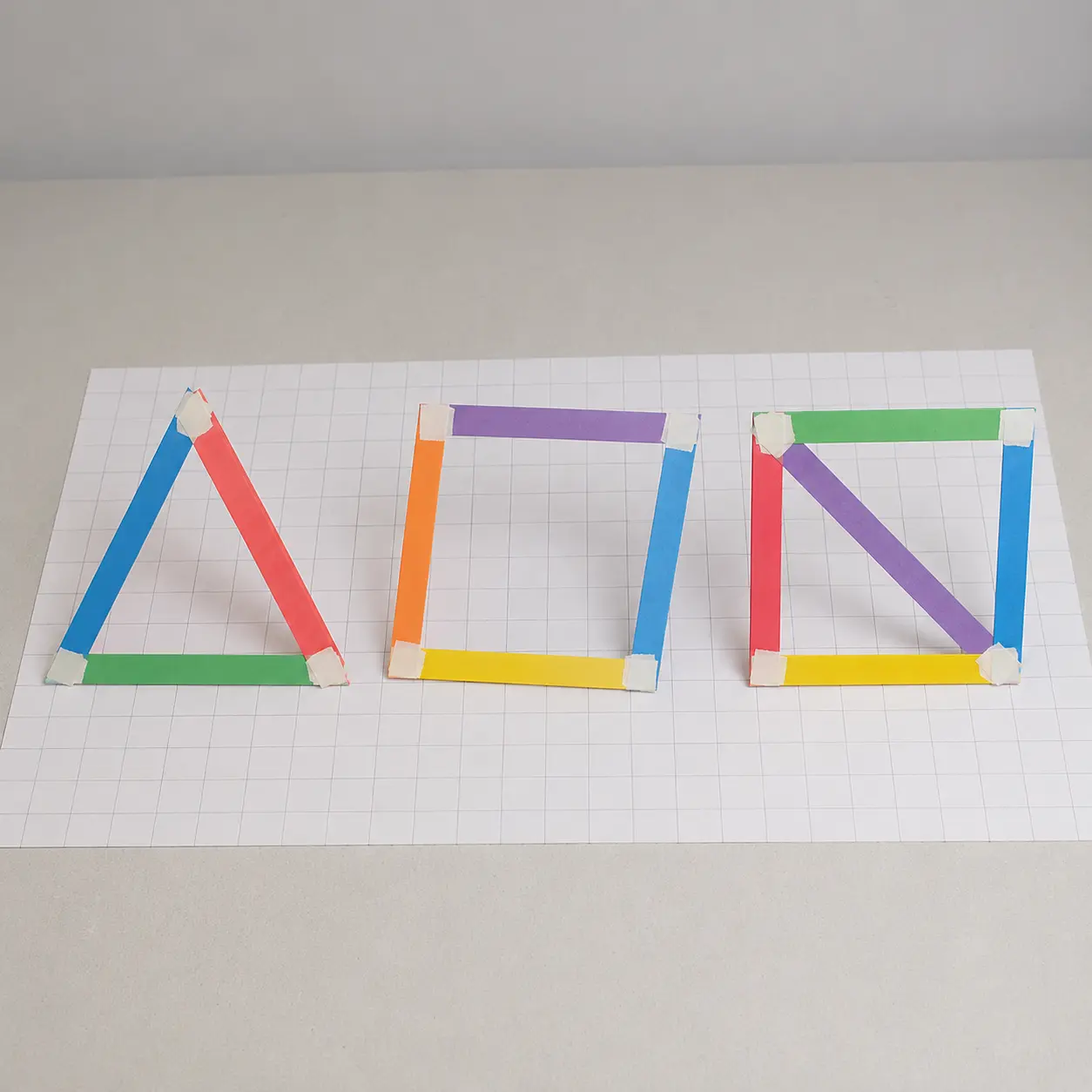
Make triangle and square strip frames and compare how their shapes change under a controlled gentle push.
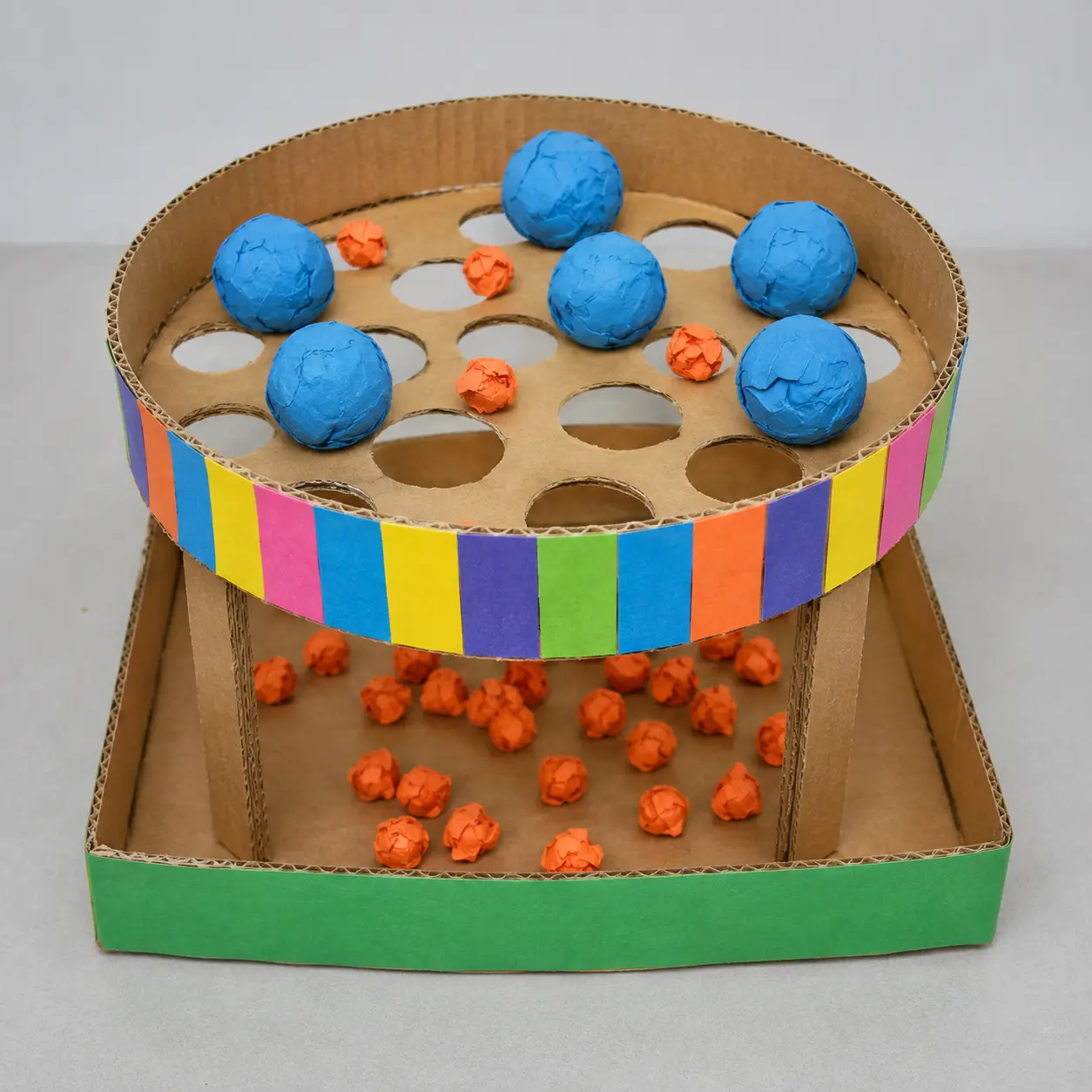
Make a tabletop sieve that separates two sizes of large paper balls into a tray.
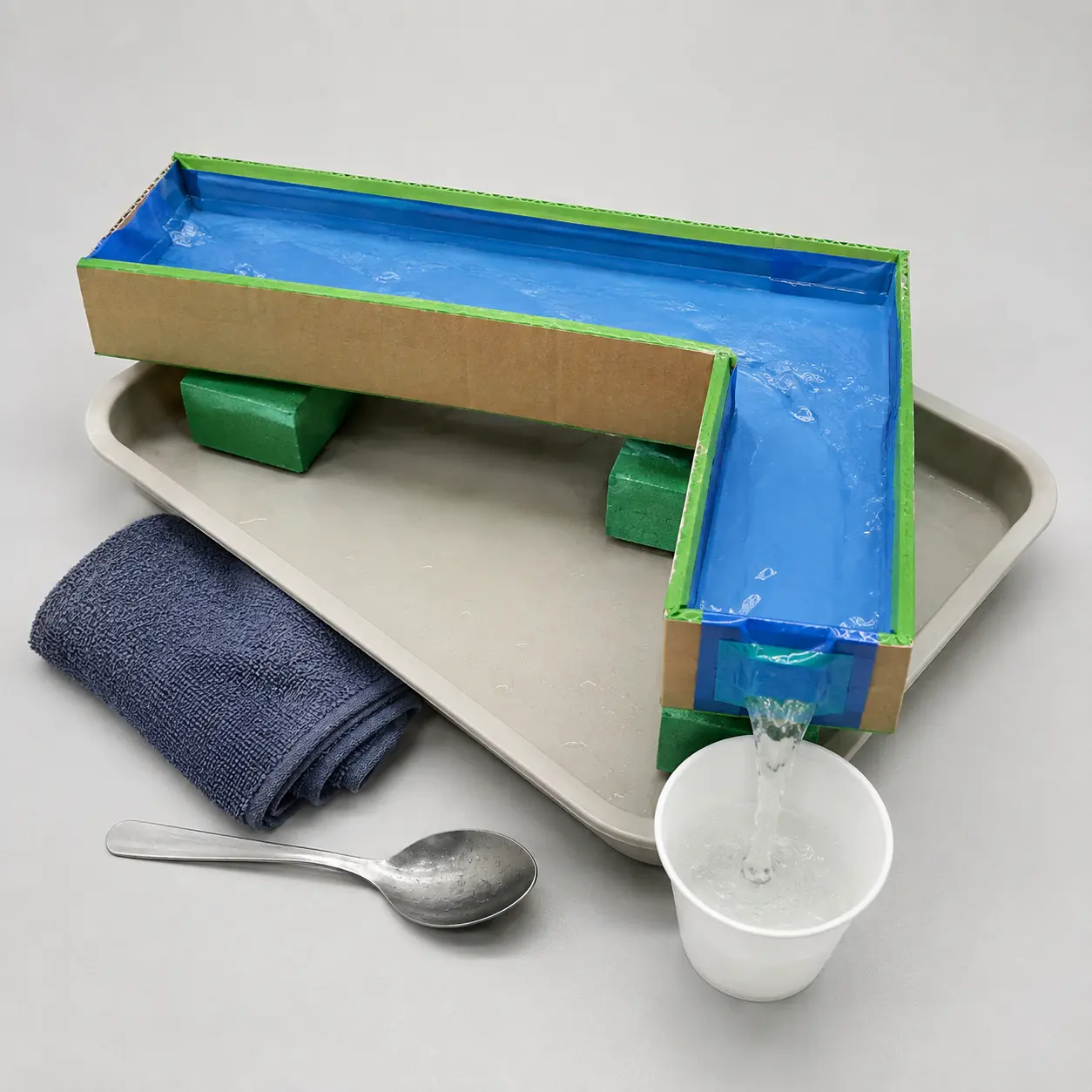
Make a short lined channel that guides a measured spoonful of water around a corner into a cup.
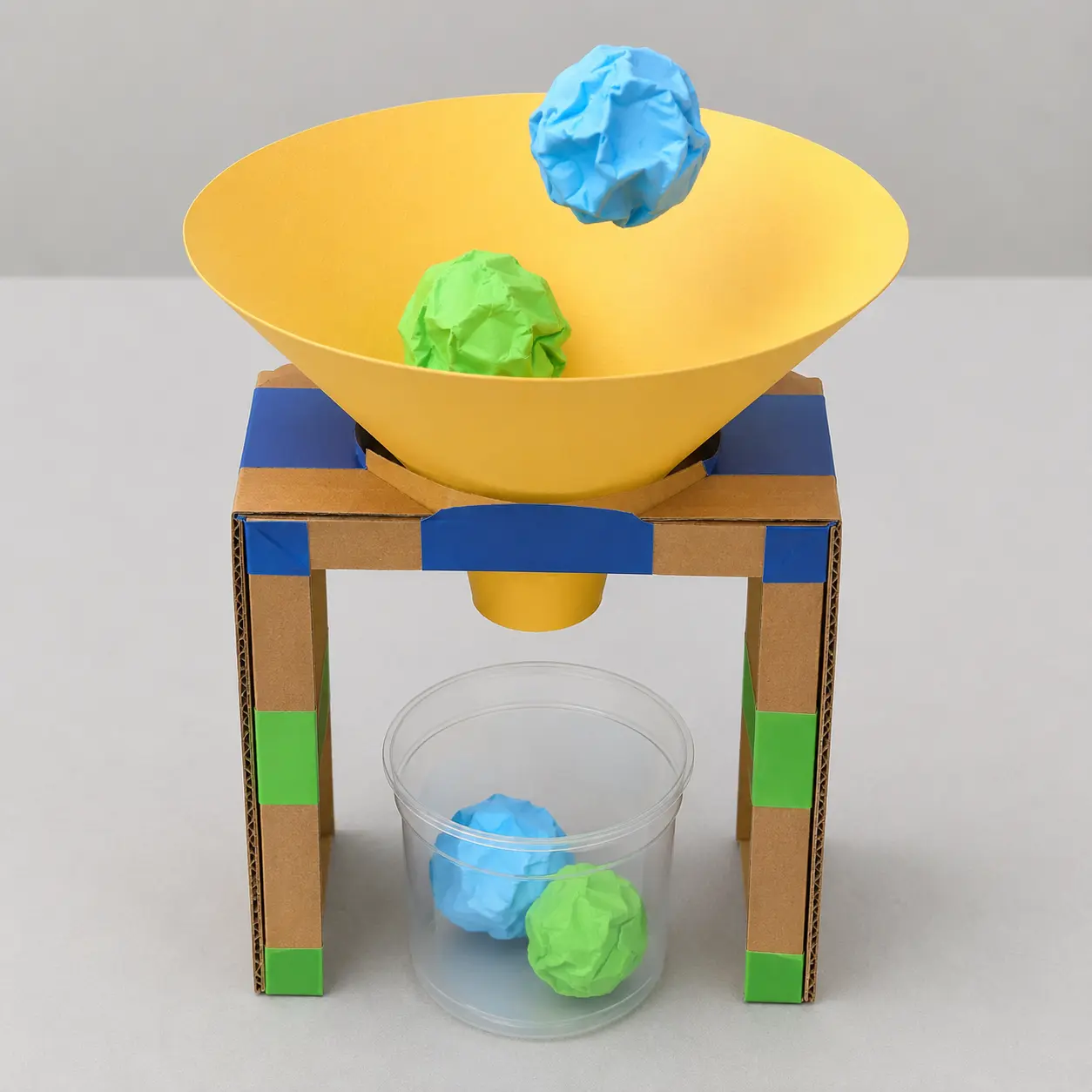
Make a wide-entry funnel that guides large paper balls into a container without jamming.
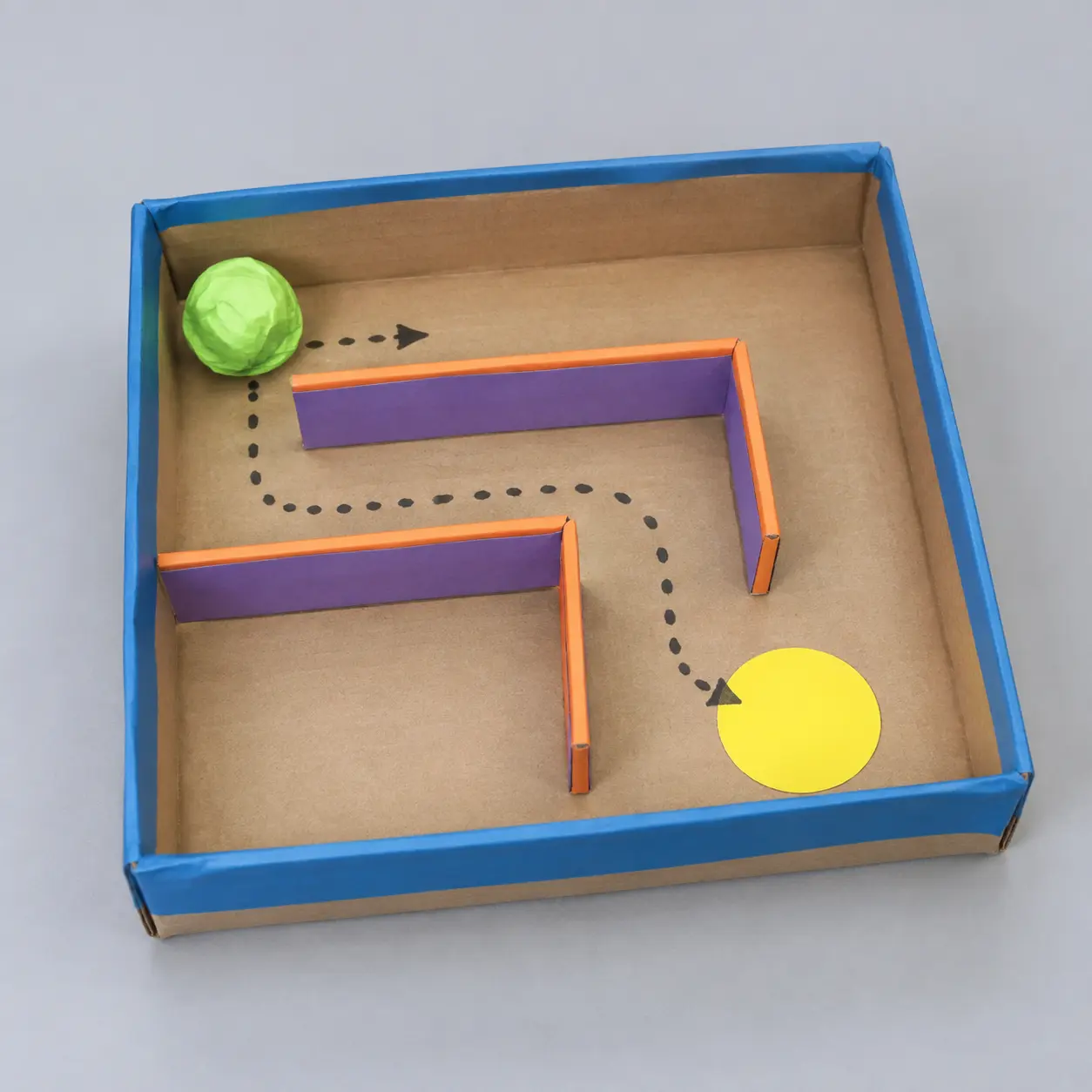
Make a small hand-tilted board that guides a large paper ball to a target without the ball leaving the sides.
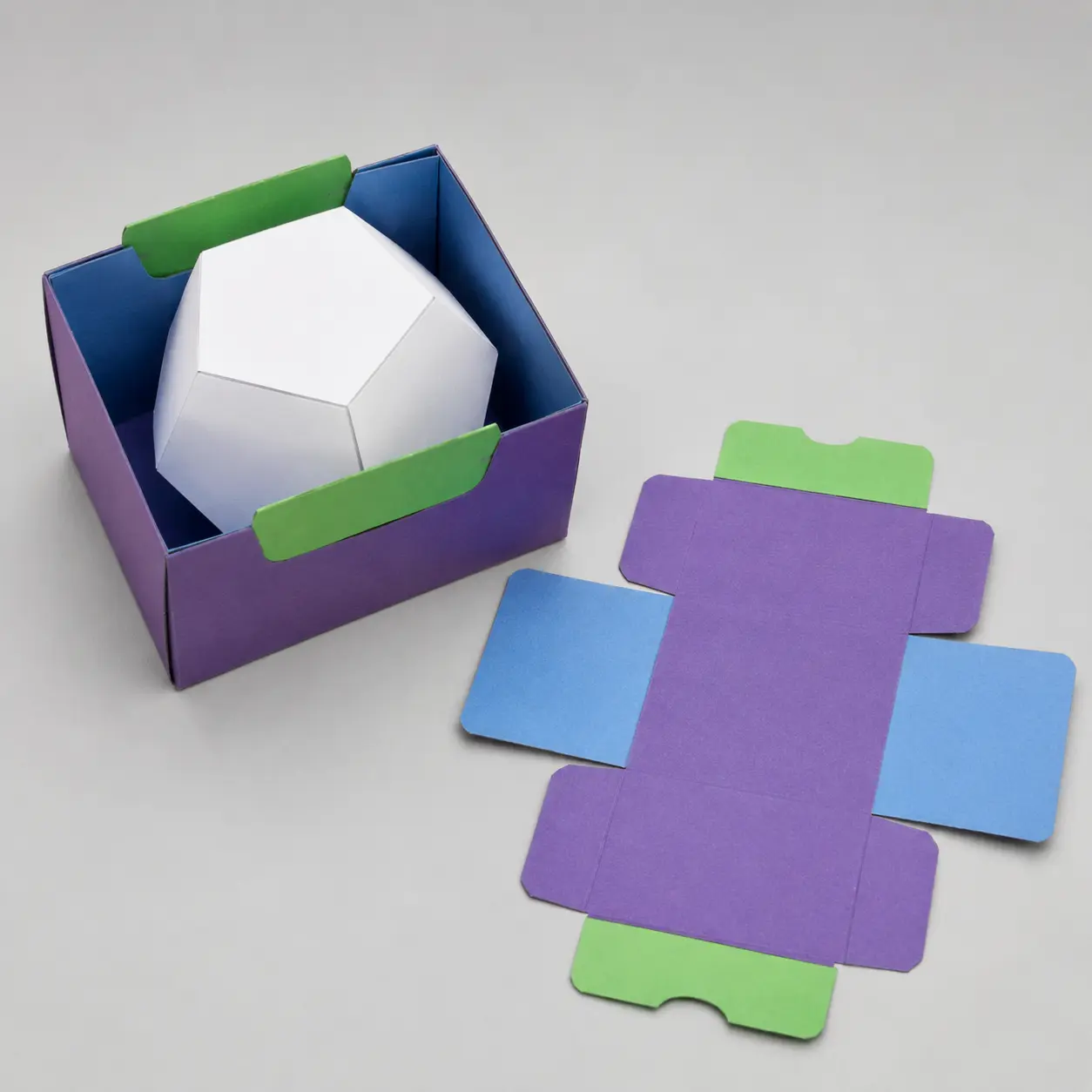
Make a small box from a paper net that folds flat and assembles again without new tape.
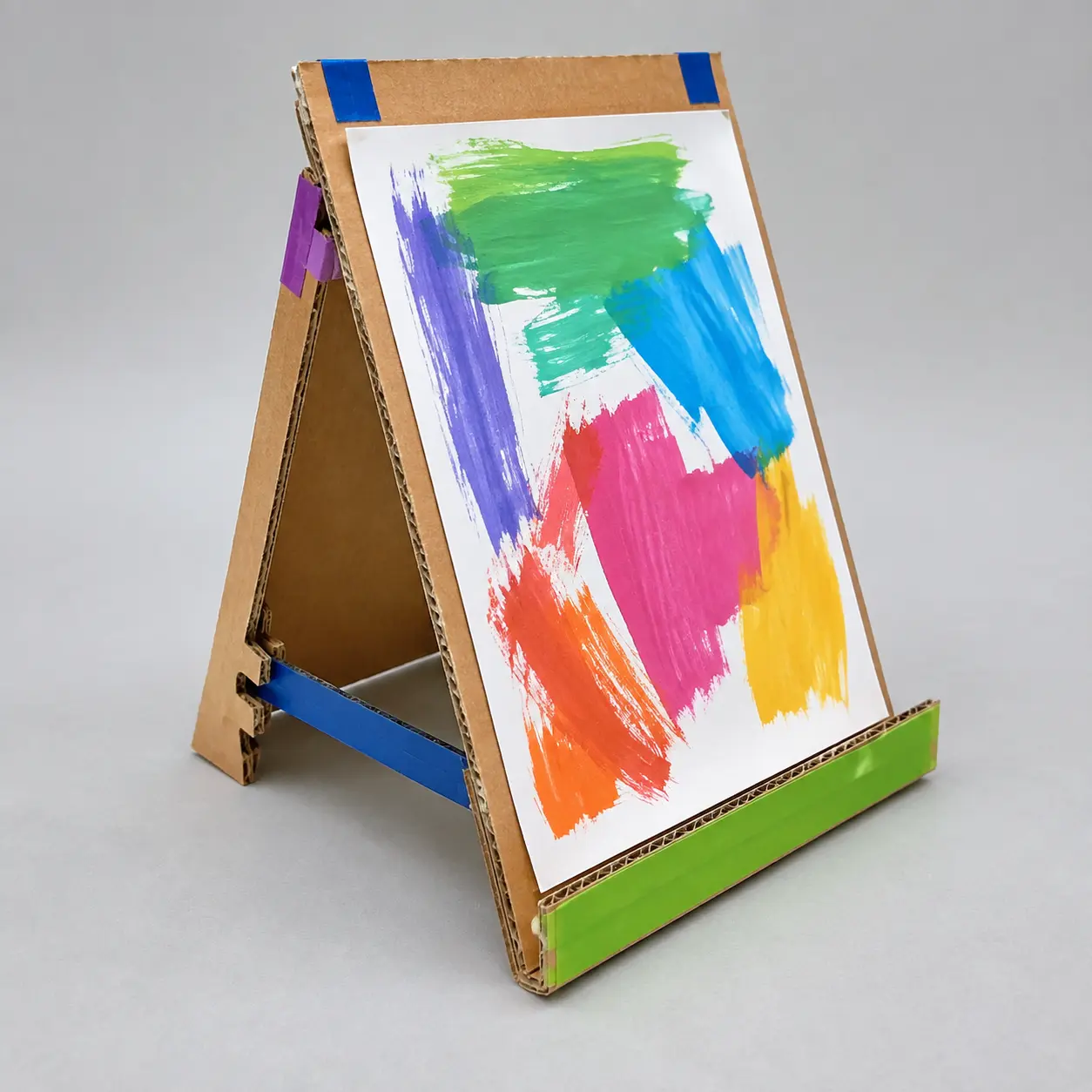
Make a small easel that holds the same picture at two different viewing angles.
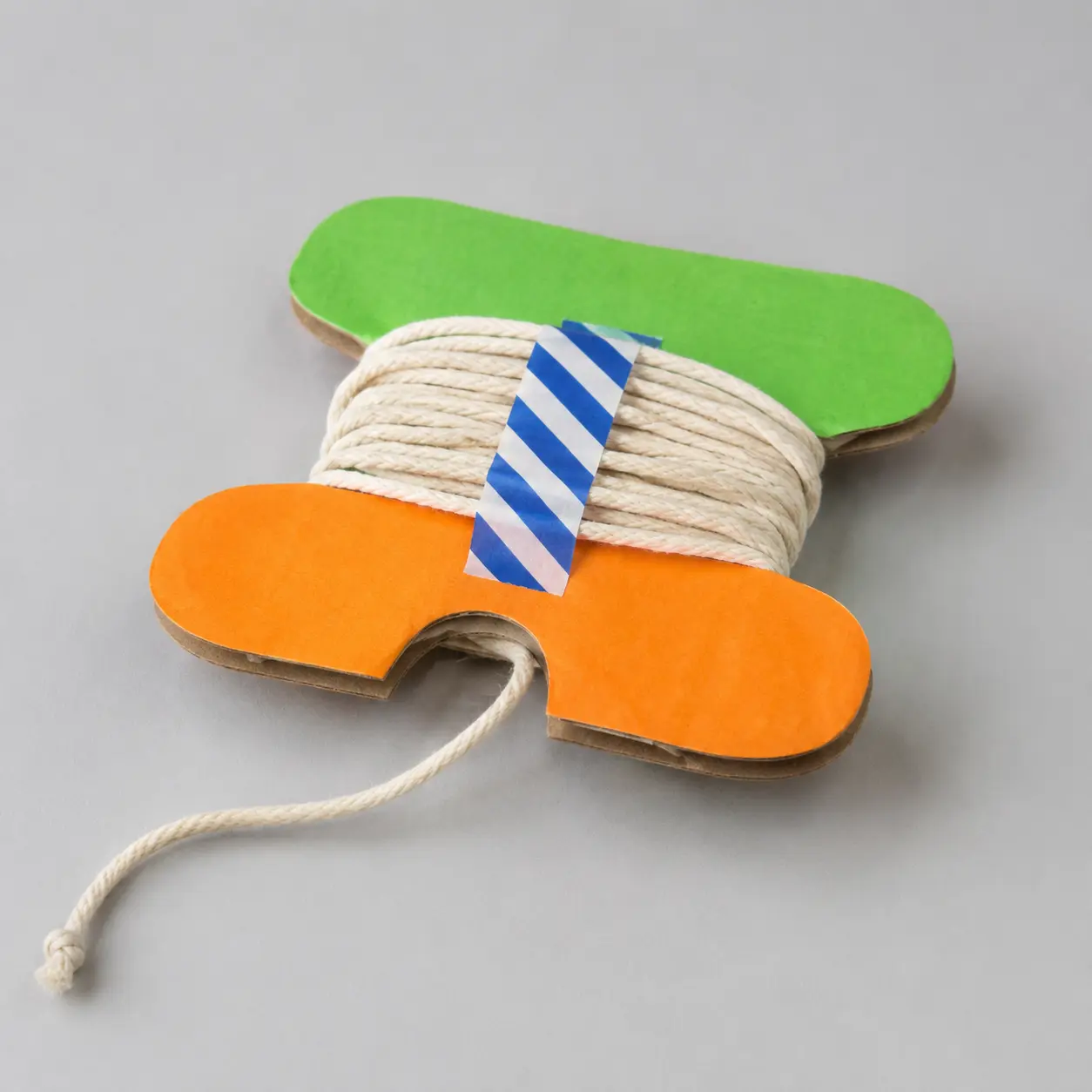
Make a rounded cardboard holder that stores a loose model cord and lets a partner unwind it easily.
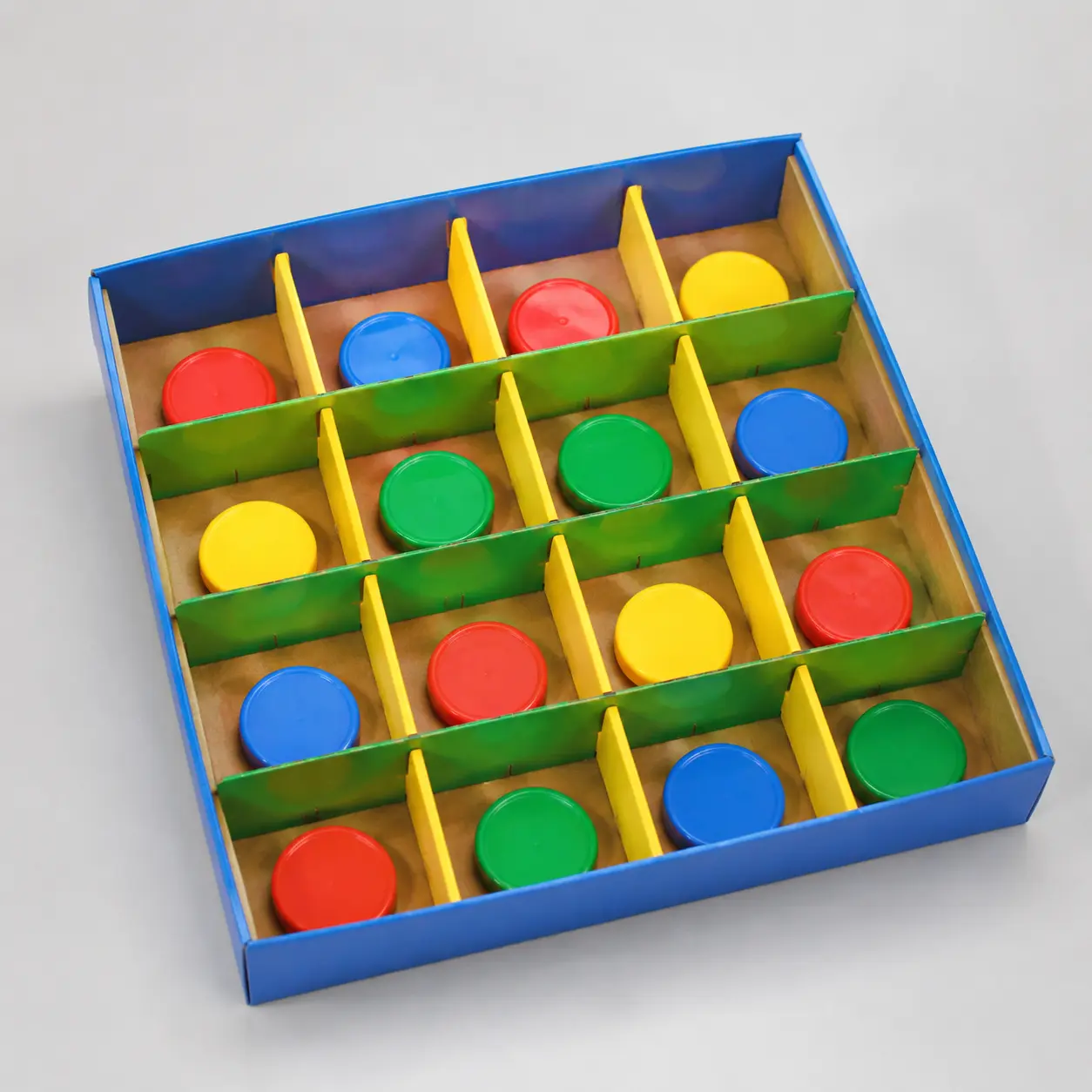
Make interlocking cardboard strips that divide a shallow box into spaces for large classroom tokens.
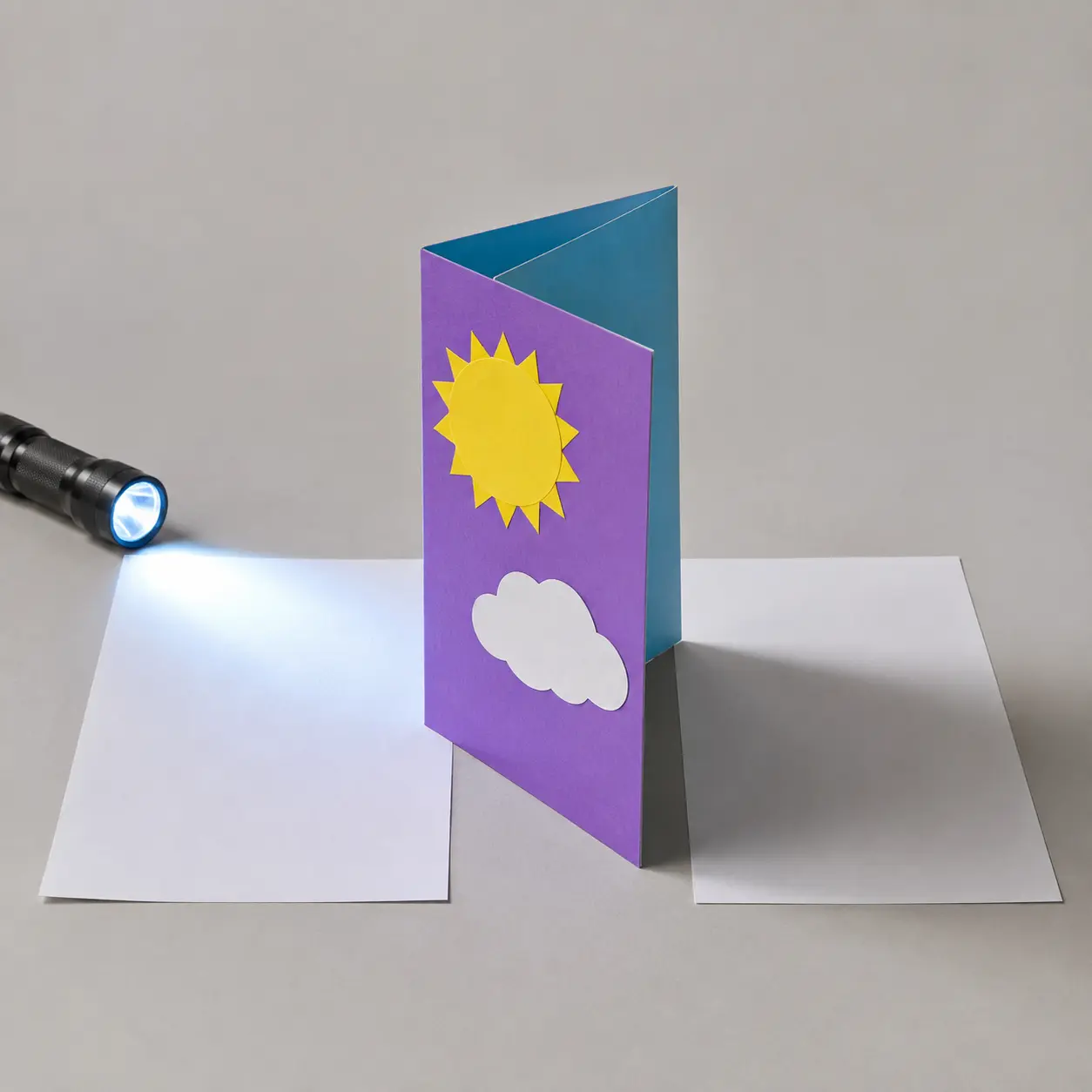
Make a freestanding card shield that blocks a cool flashlight beam from one marked area while leaving another area lit.
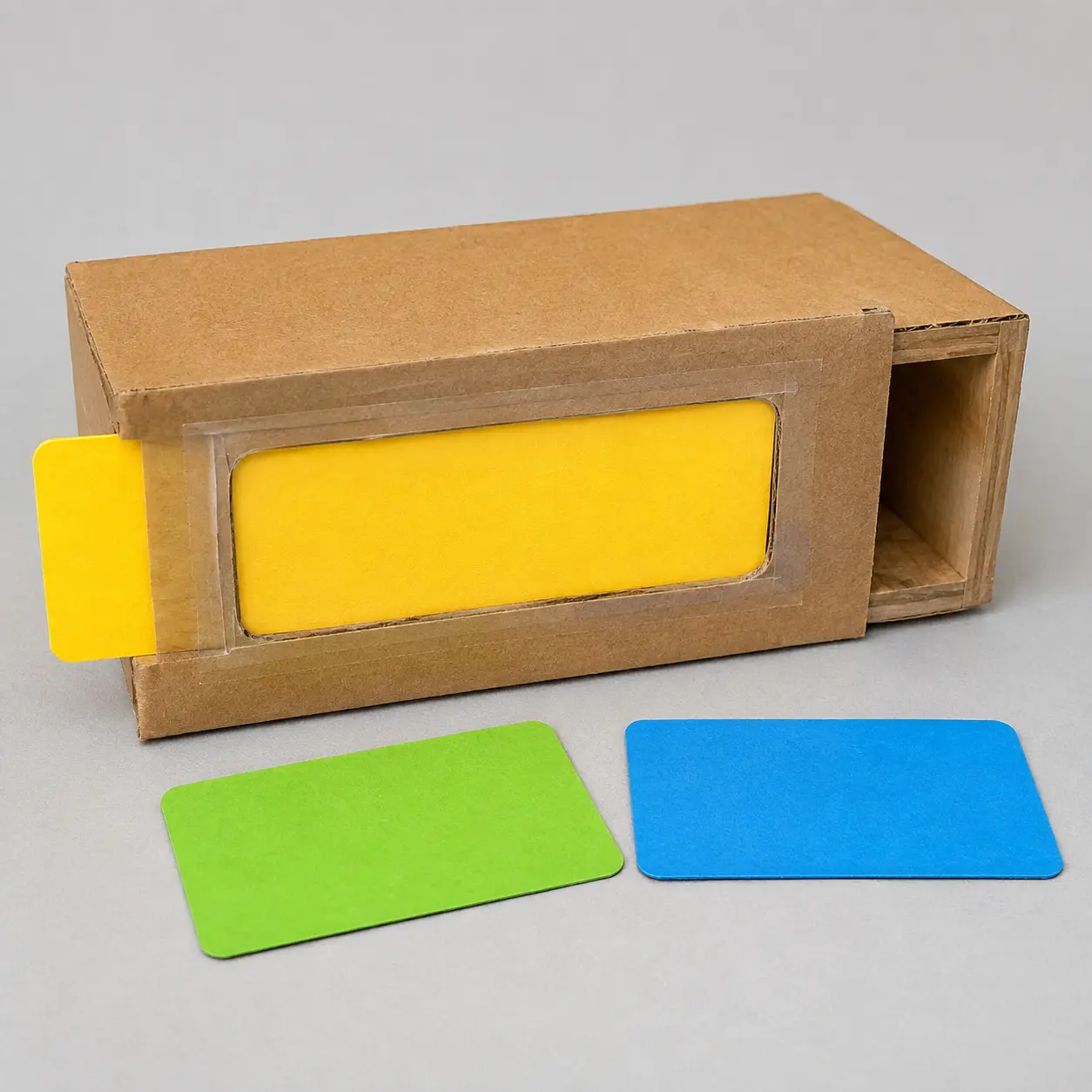
Make a reusable shelf-label holder with a window and removable paper inserts.
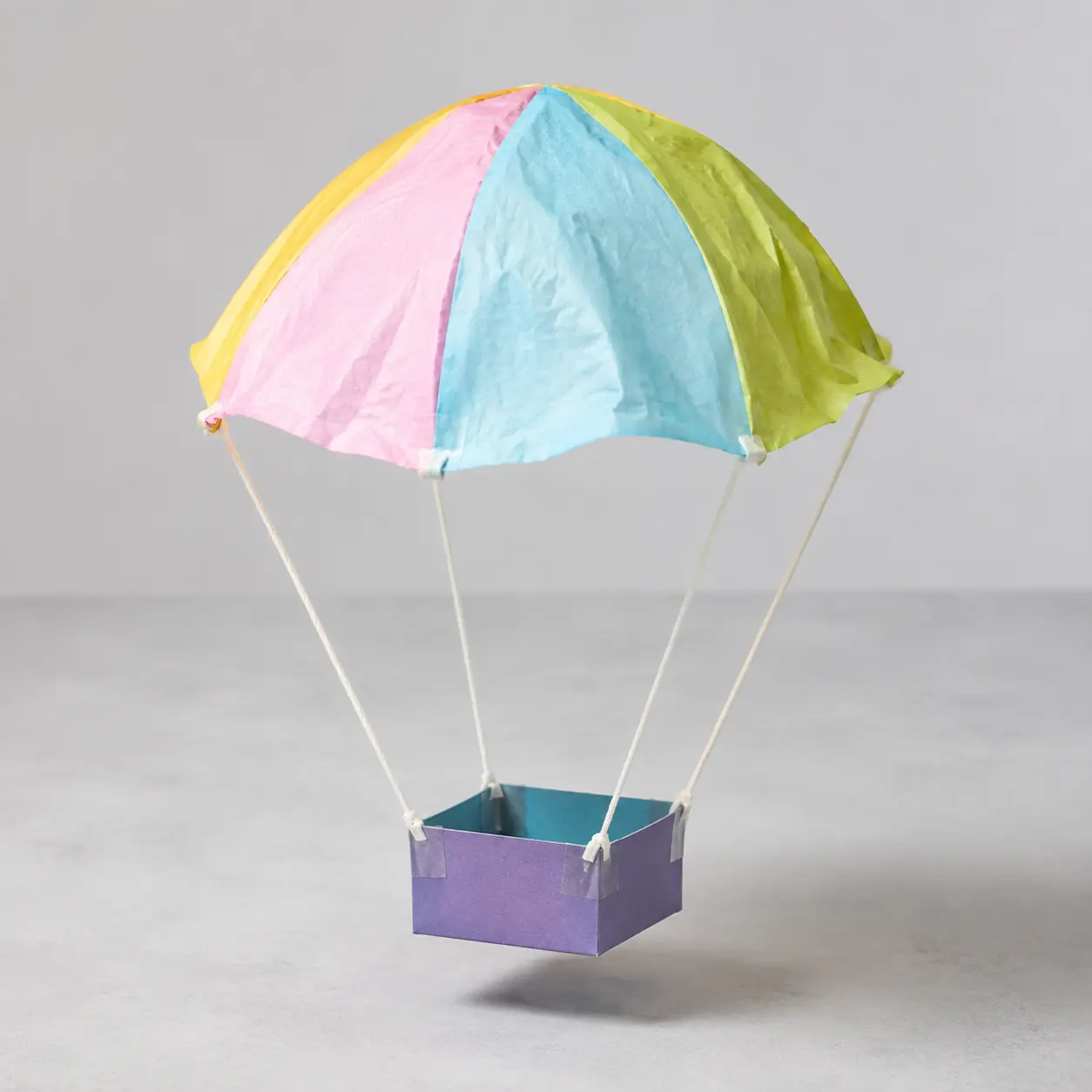
Make a small paper parachute for a light paper basket and compare controlled drops.
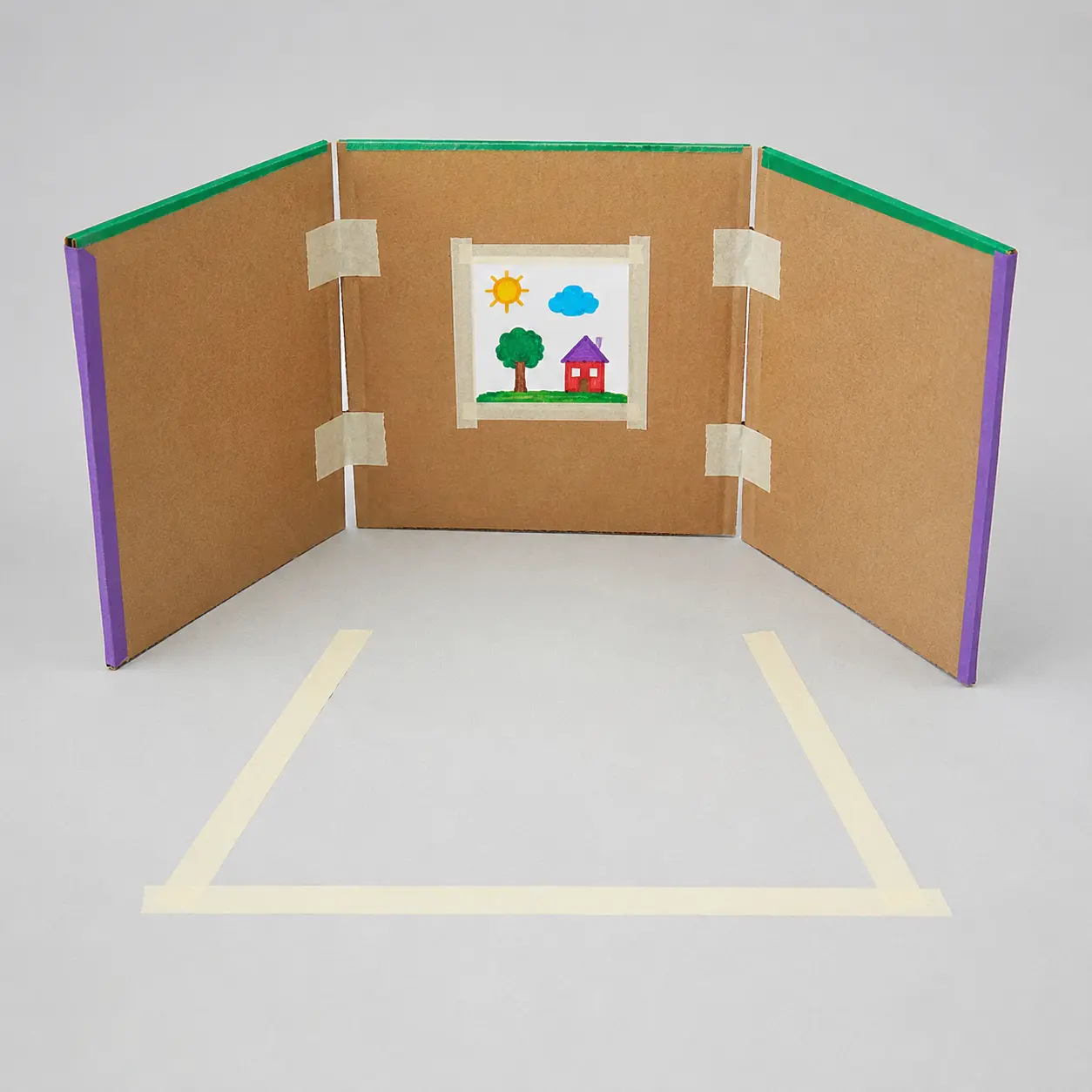
Make a small folding tabletop screen that stands by itself, folds flat and blocks a model viewer’s line of sight.
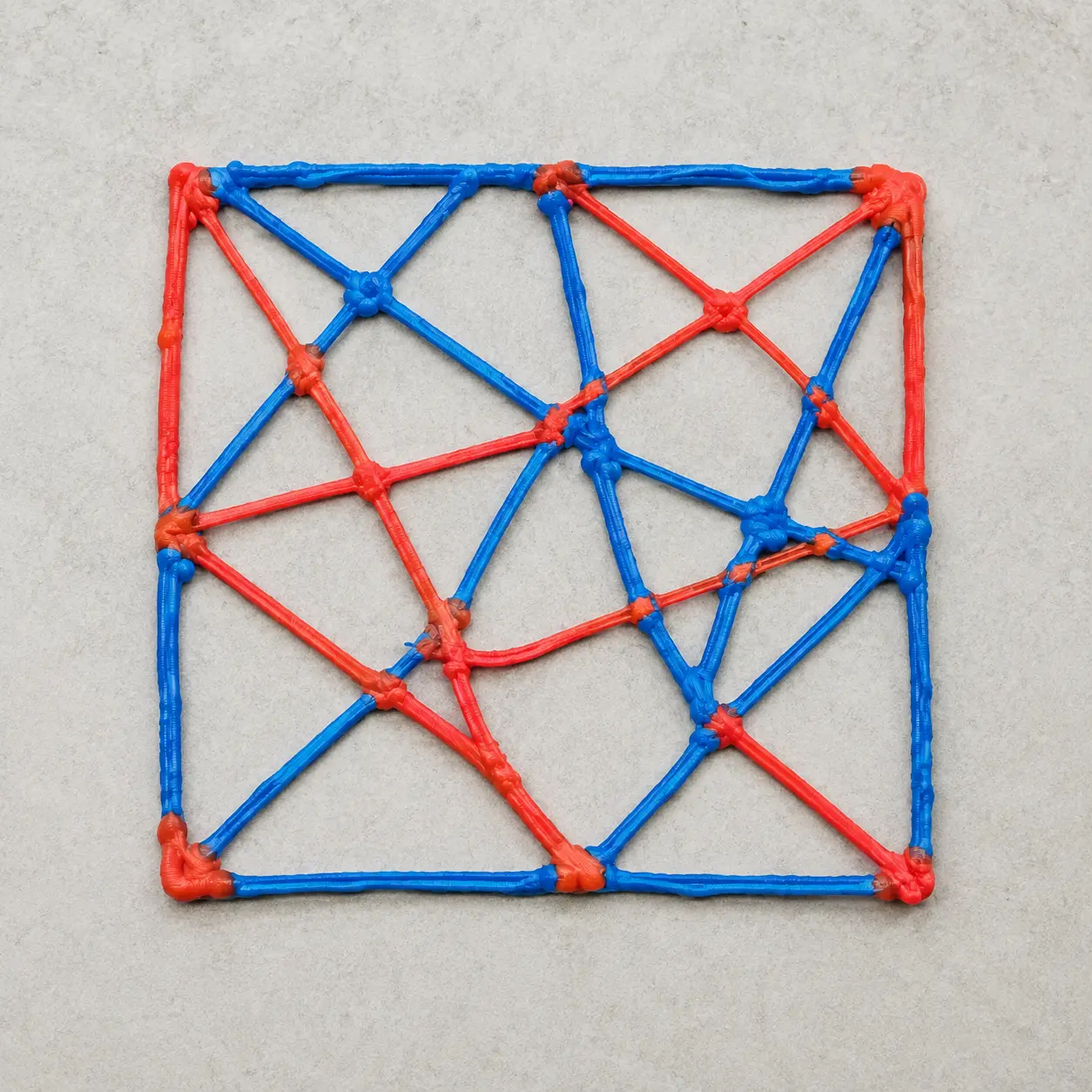
Make a connected colored-line panel in a square frame that a partner can lift as one piece.
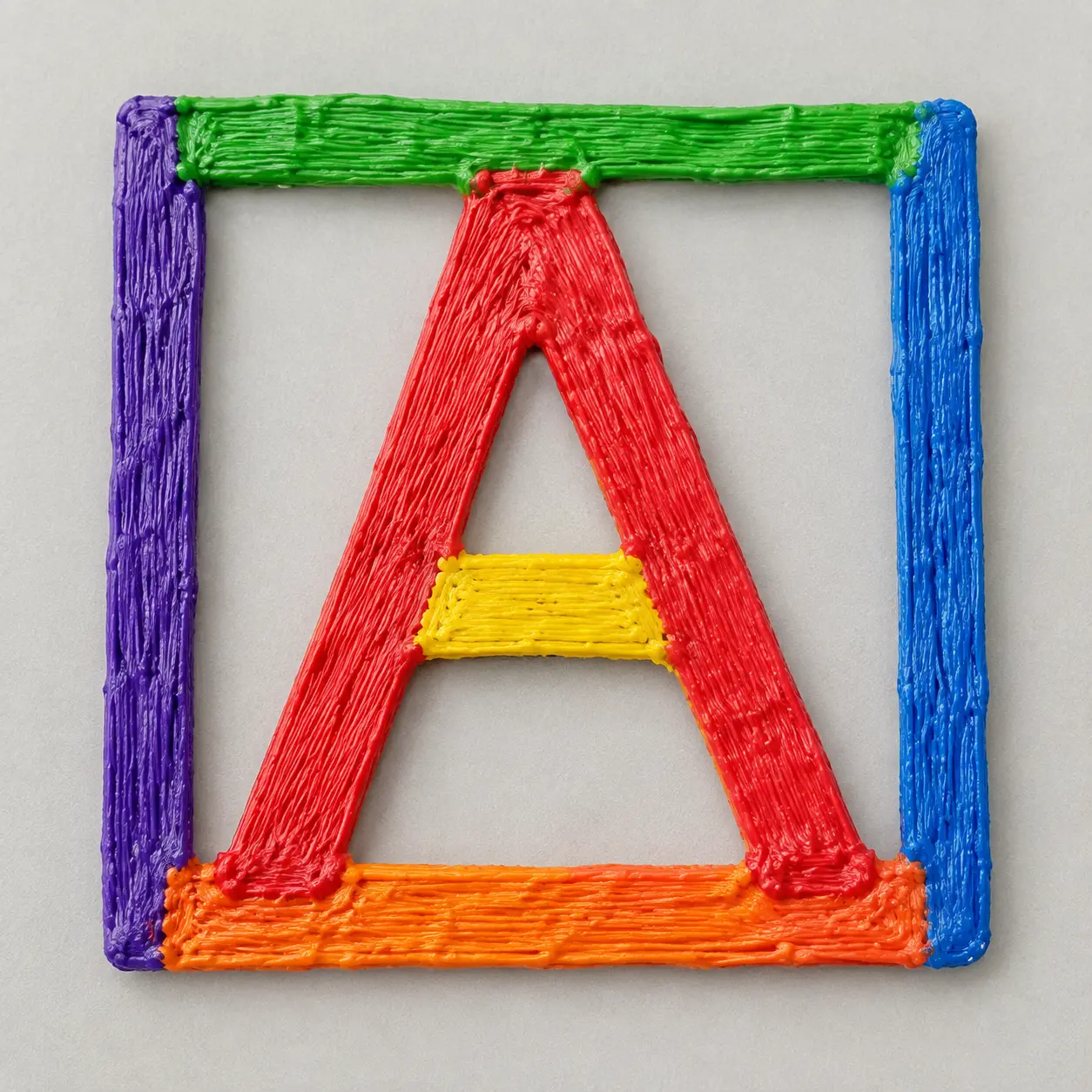
Make a flat initial inside a sturdy border so someone can recognize your chosen letter.
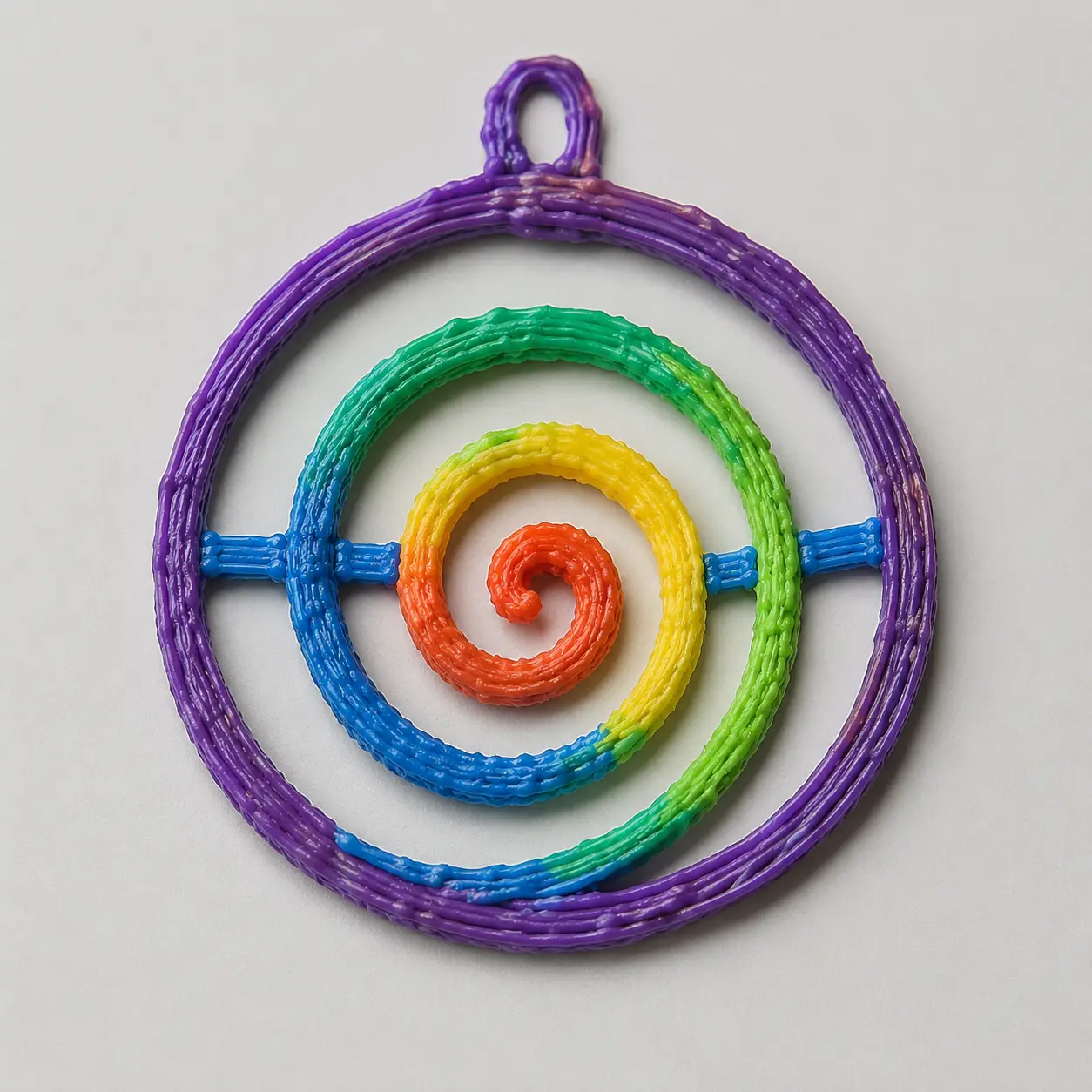
Make a flat circle decoration with a connected spiral inside and a strong hanging loop.
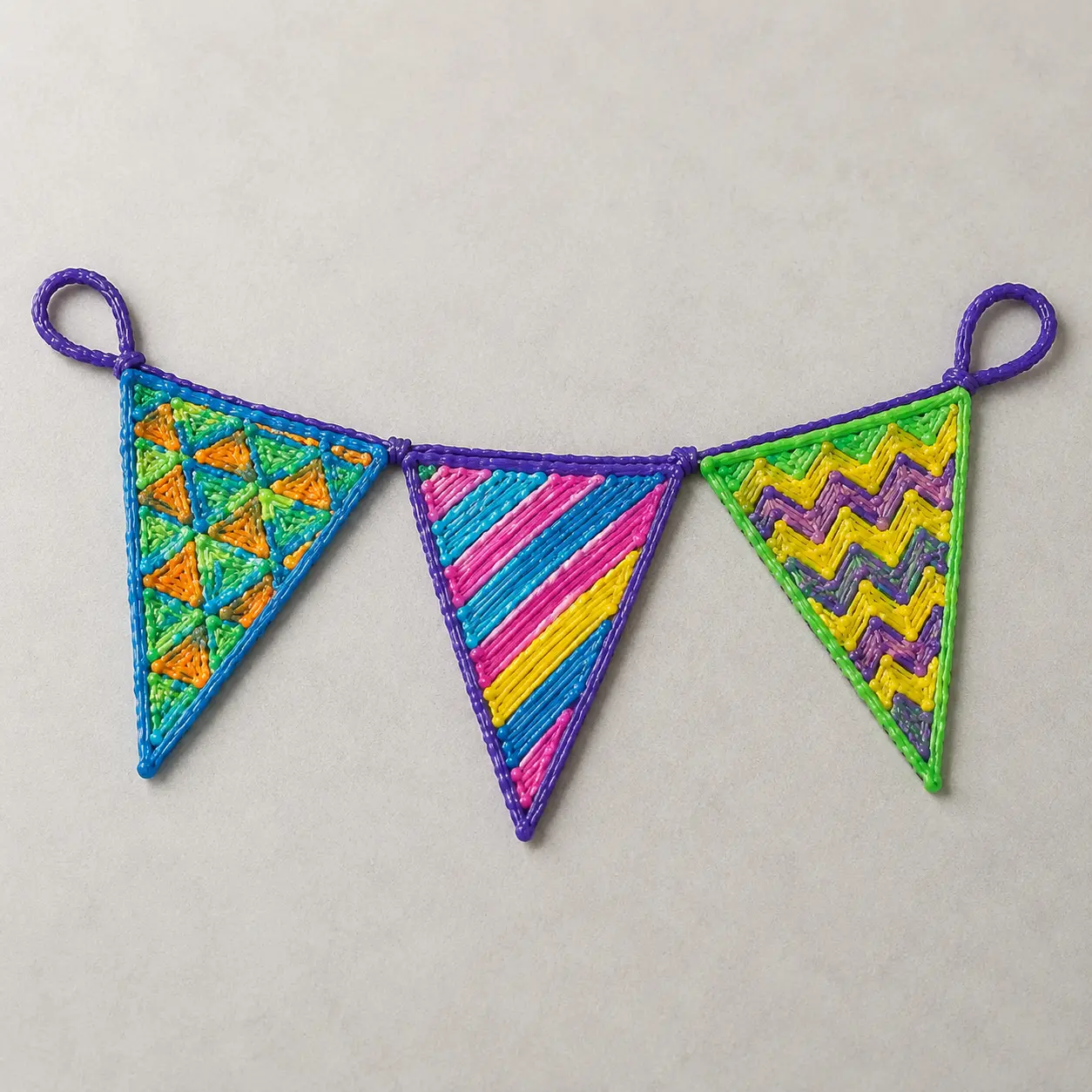
Make three small triangular flags with different connected patterns for a tabletop display.
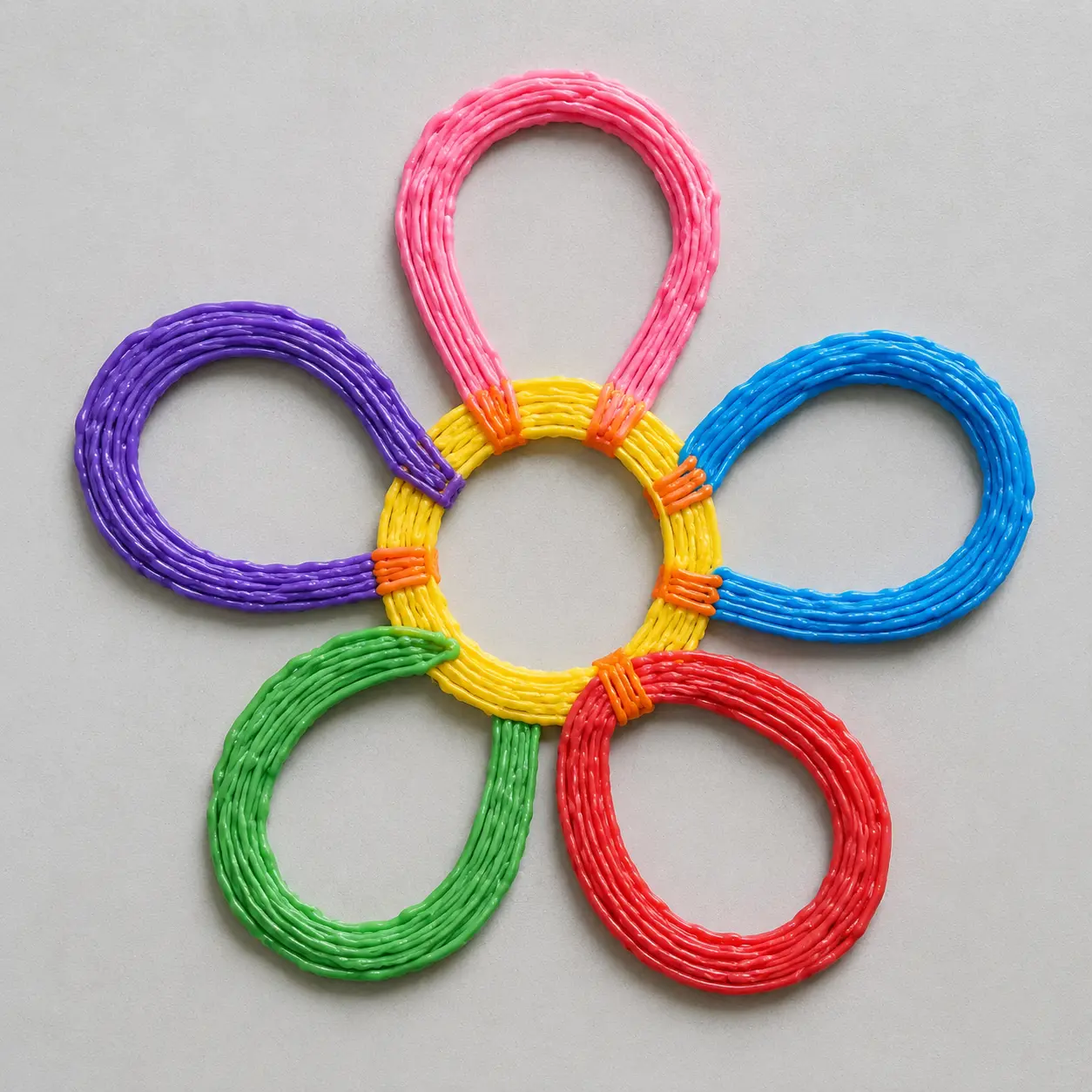
Make a flat flower using a center ring and broad loop petals, all joined as one piece.
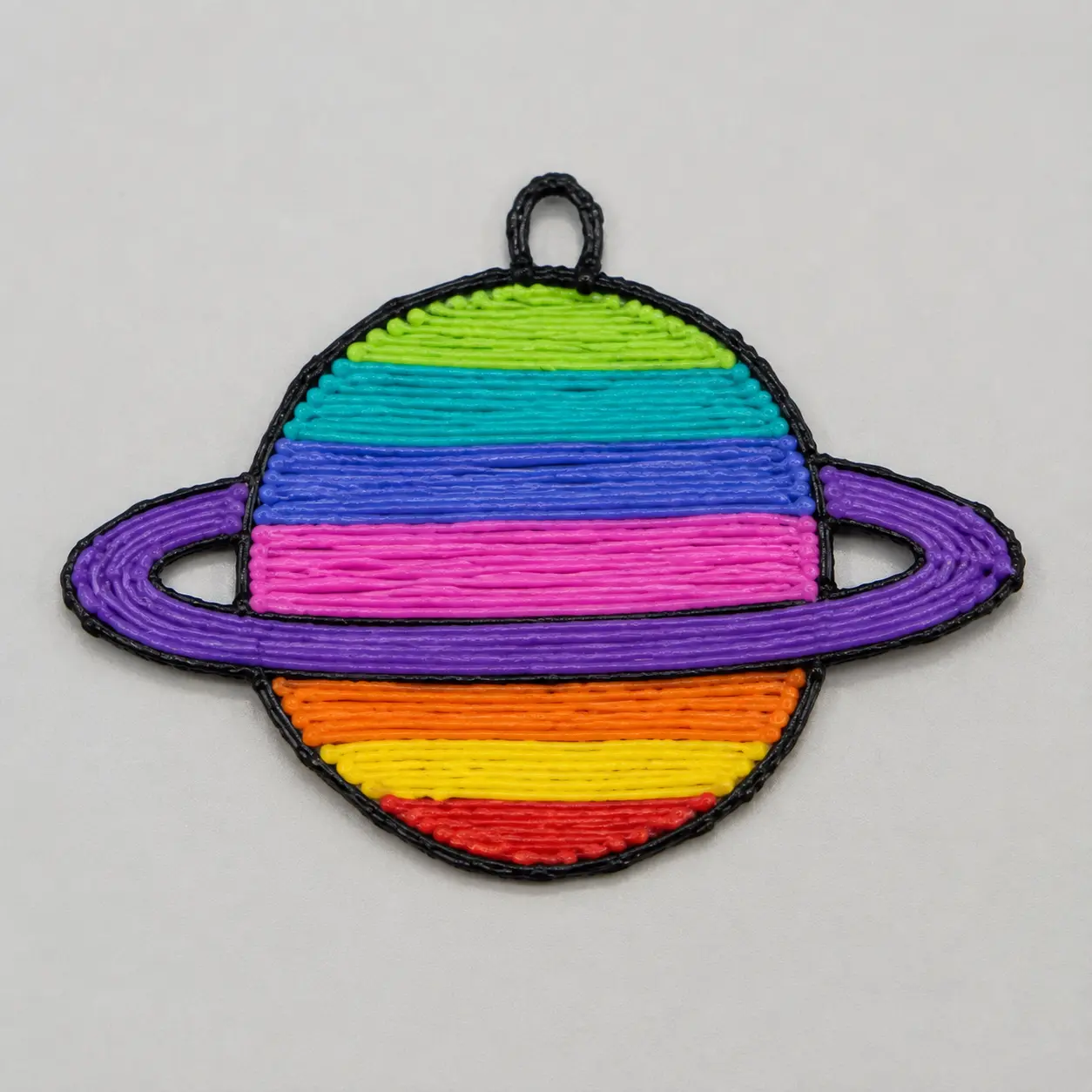
Make a flat ringed-planet decoration with a circular center and an oval ring connected to it.
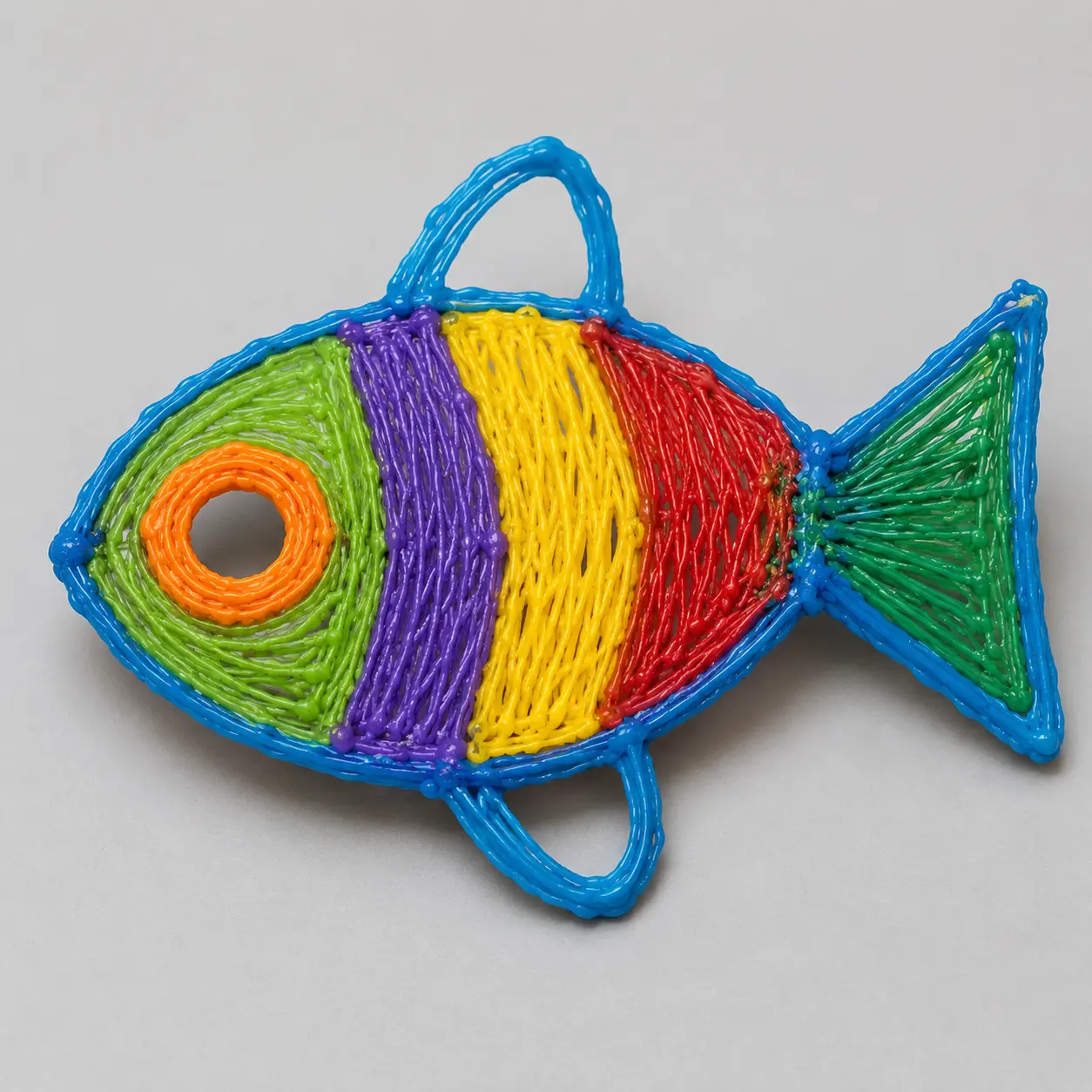
Make a flat fish silhouette from an oval body and triangle tail with connected line details.
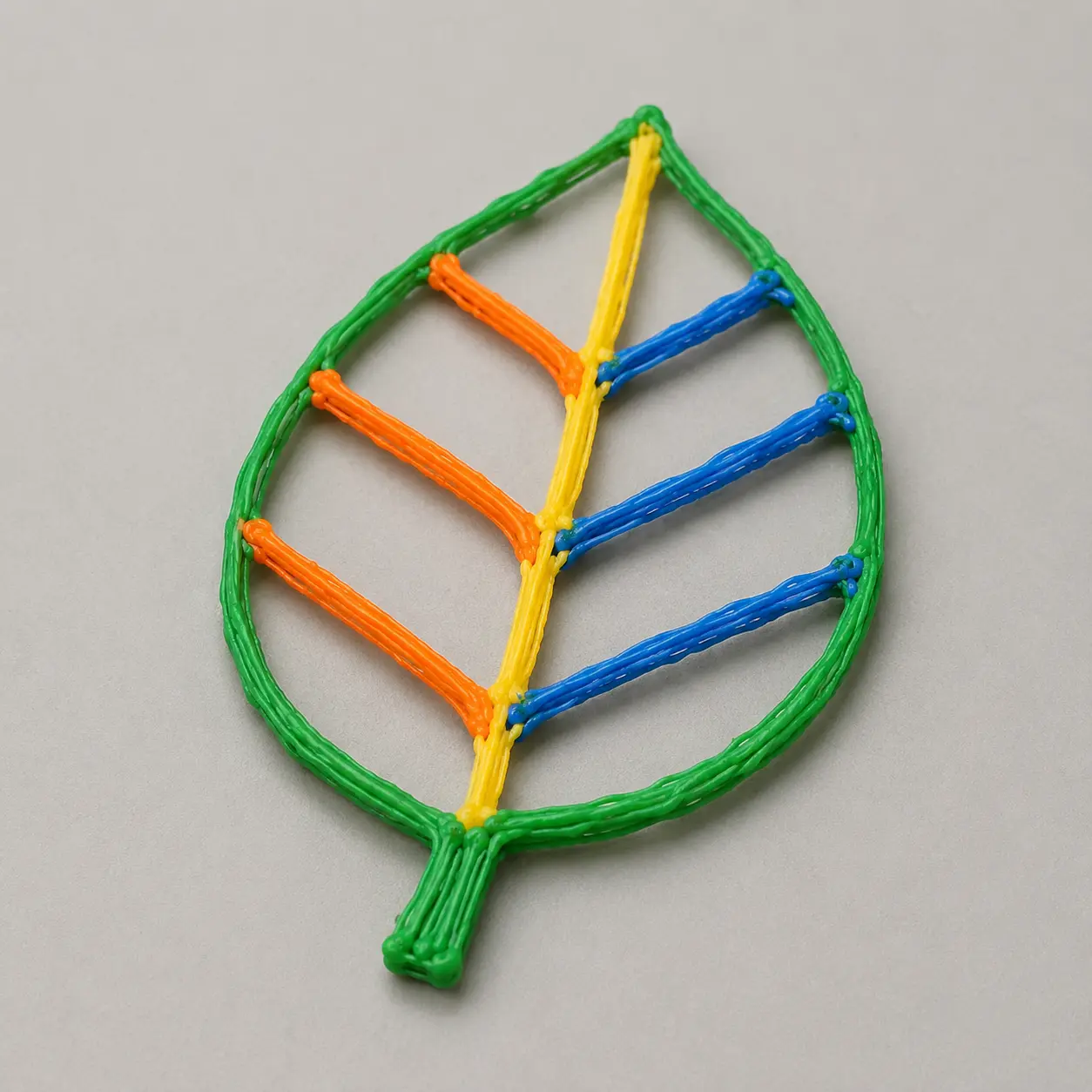
Make a flat leaf outline with a central vein and connected branching lines.
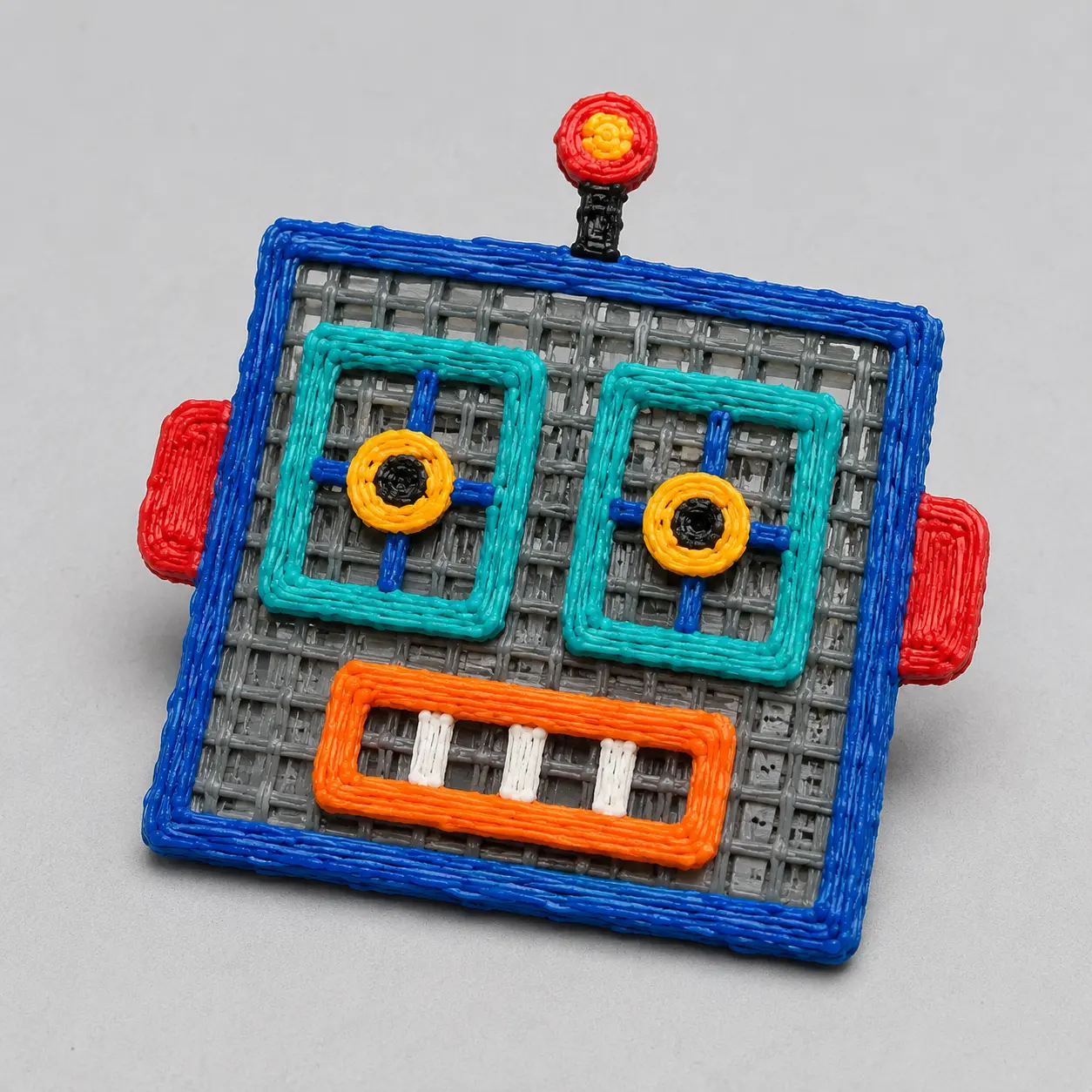
Make a flat robot-face tile using joined squares, rectangles and broad connecting lines.
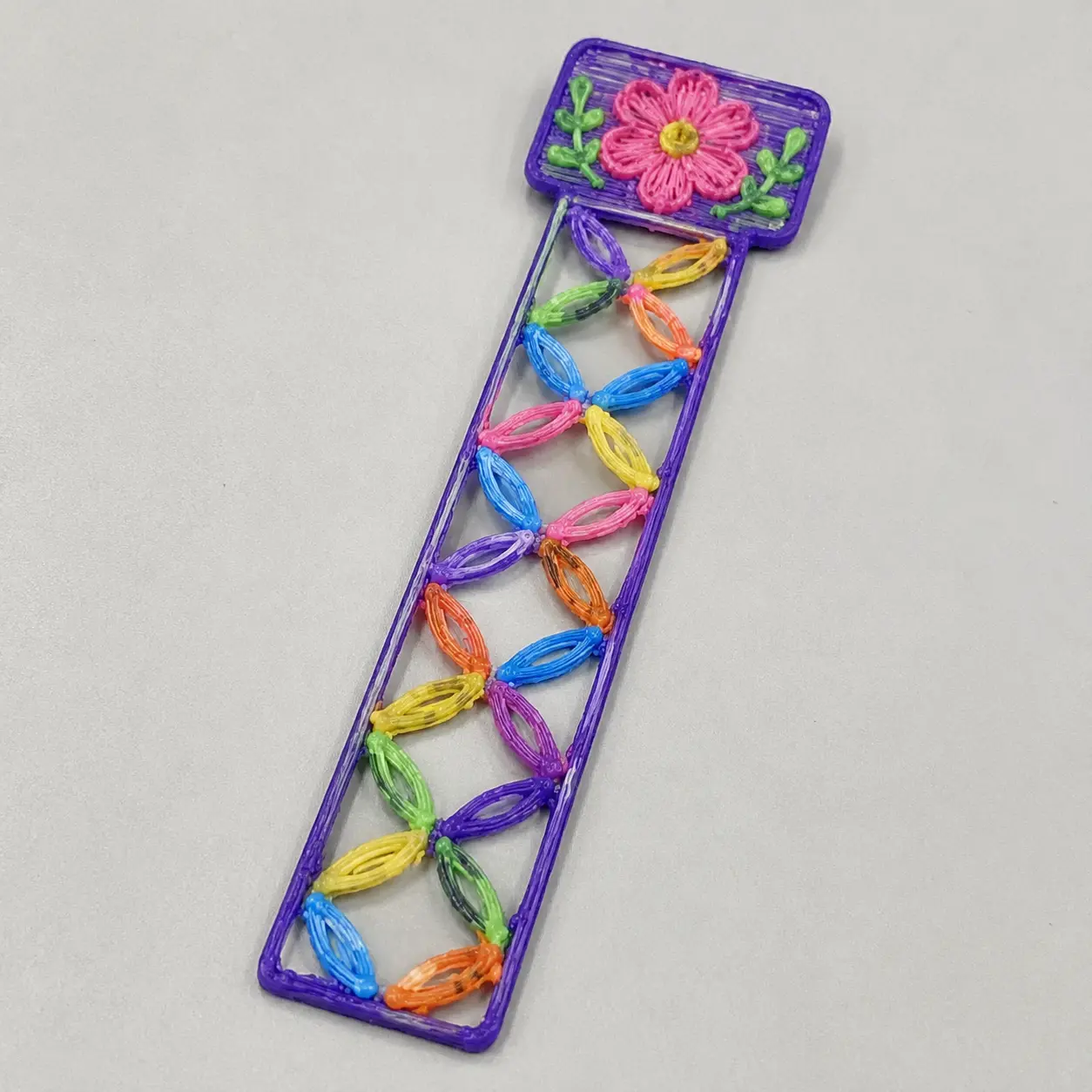
Make a flat, smooth-edged strip with a connected pattern to mark a practice book page.
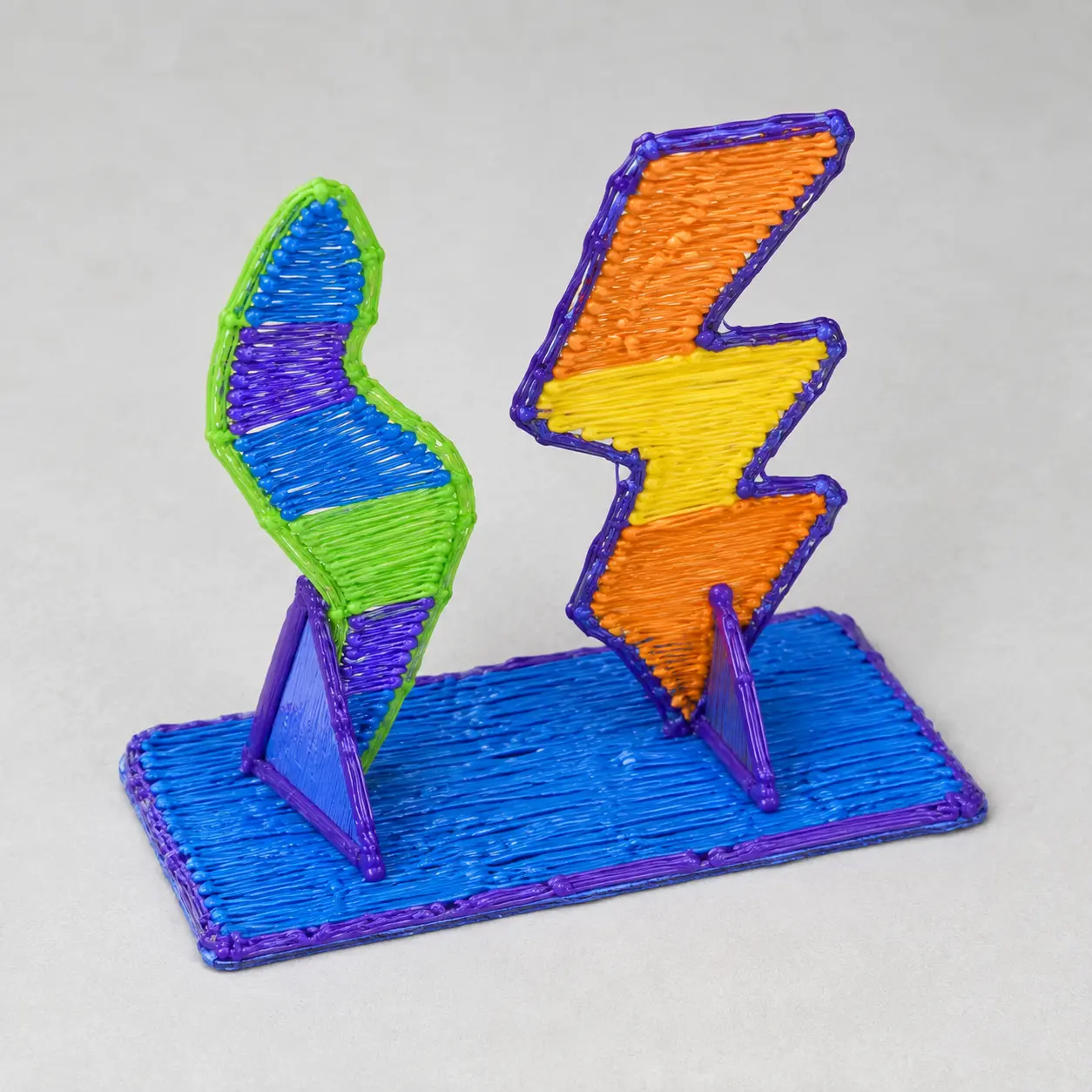
Make two flat abstract shapes and join them to a broad base to create a small standing sculpture.
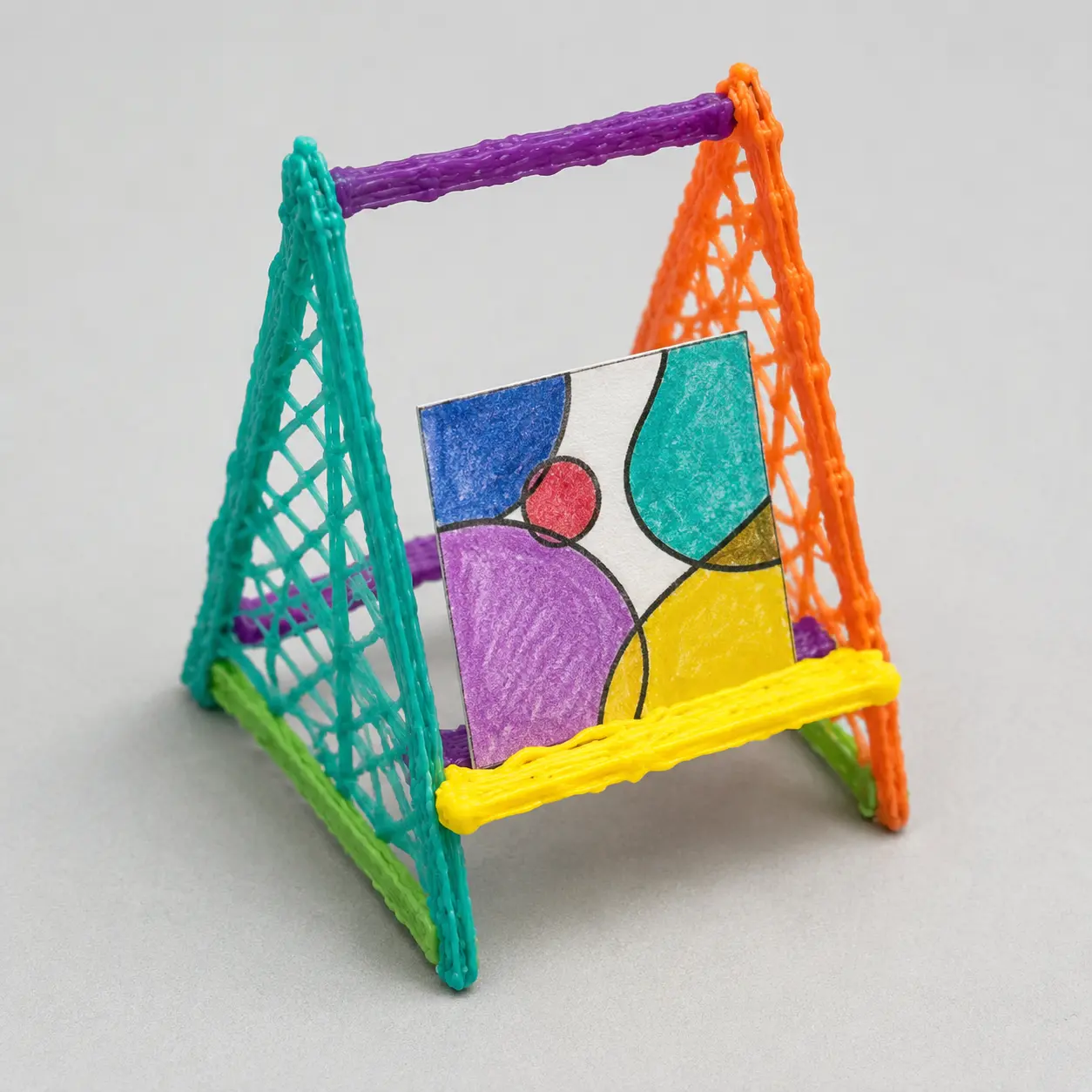
Make a small stand from two traced triangular sides and crossbars to hold a light paper picture.
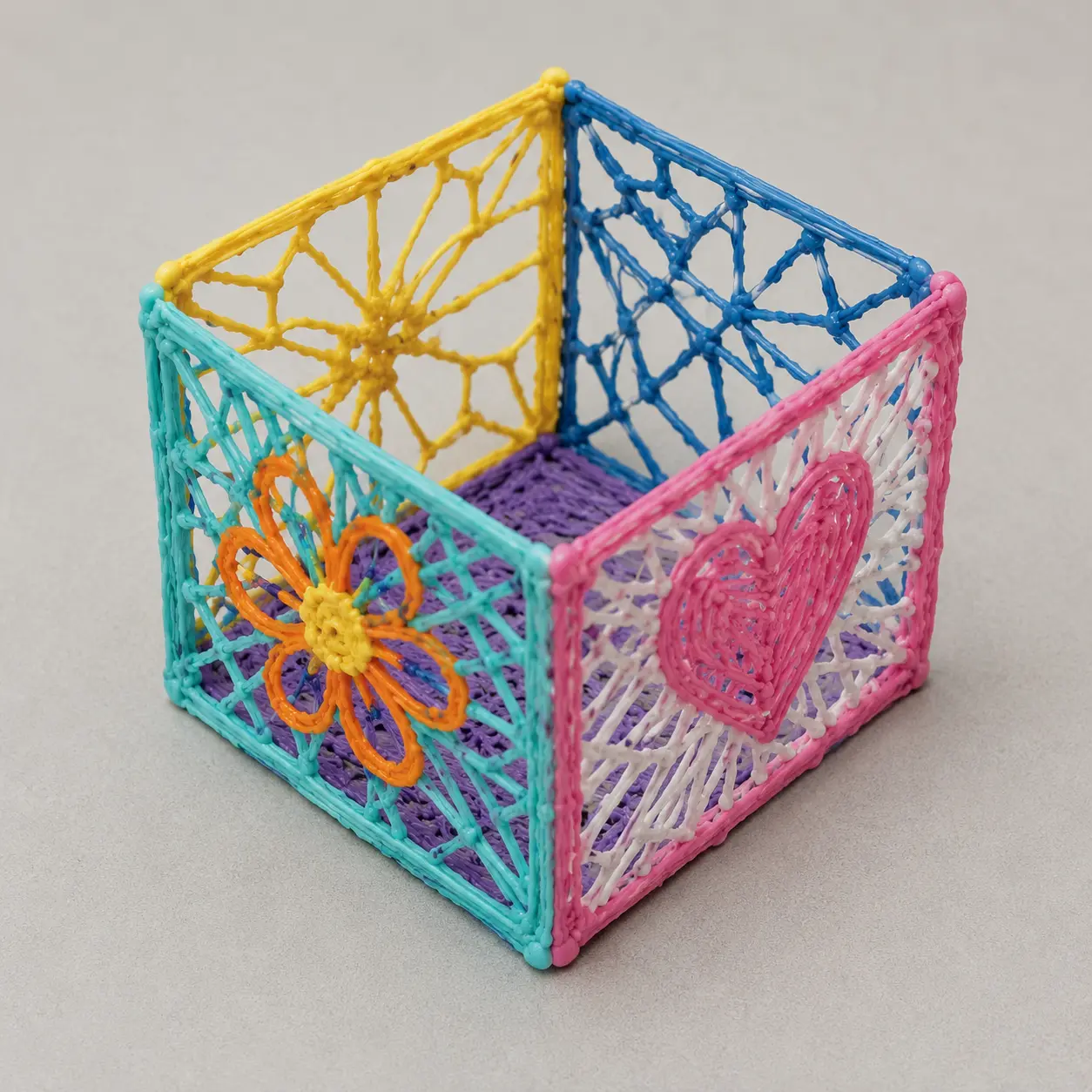
Make a small open cube frame from matching flat square panels and decorate its faces with connected lines.
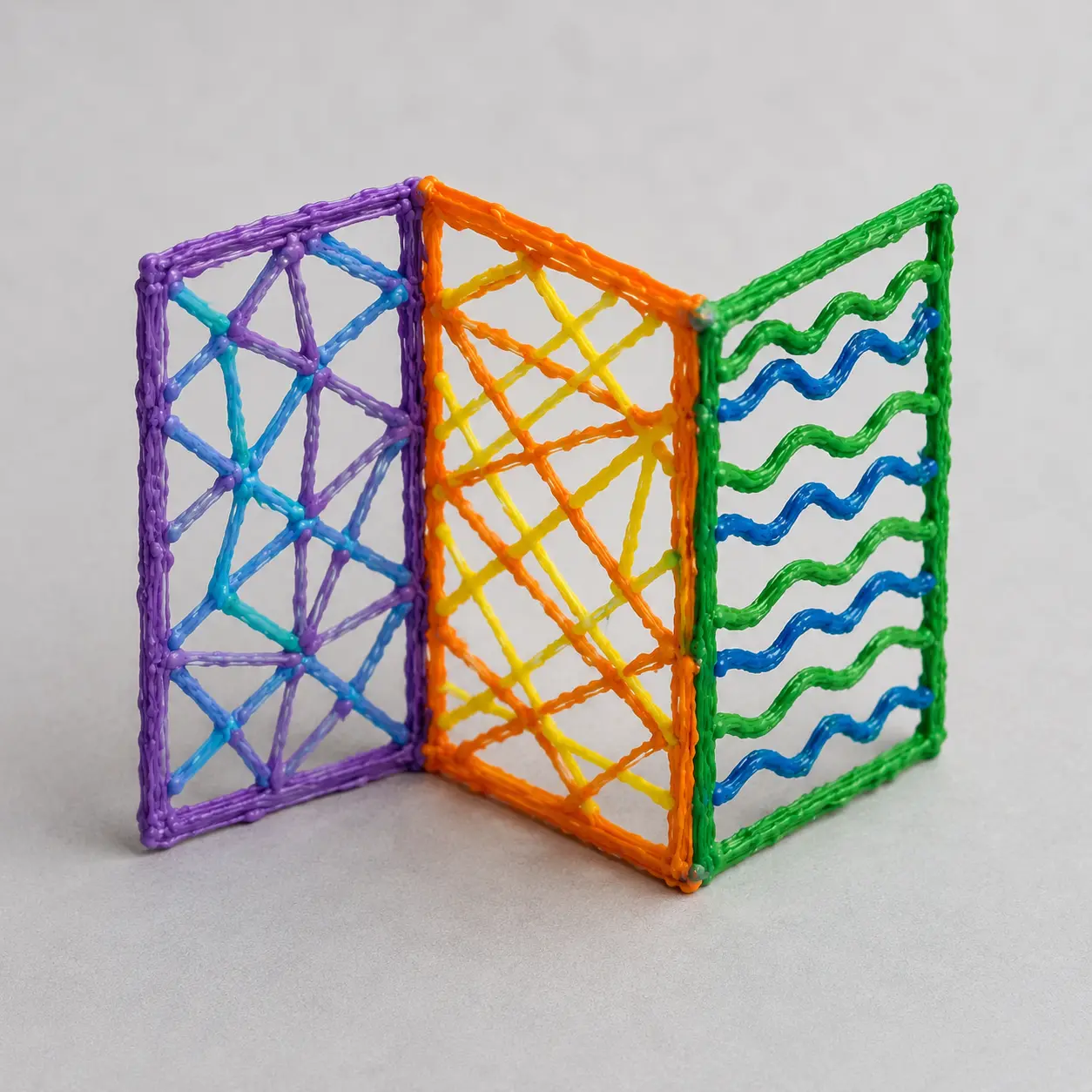
Make three patterned panels joined at fixed angles into a small freestanding display screen.
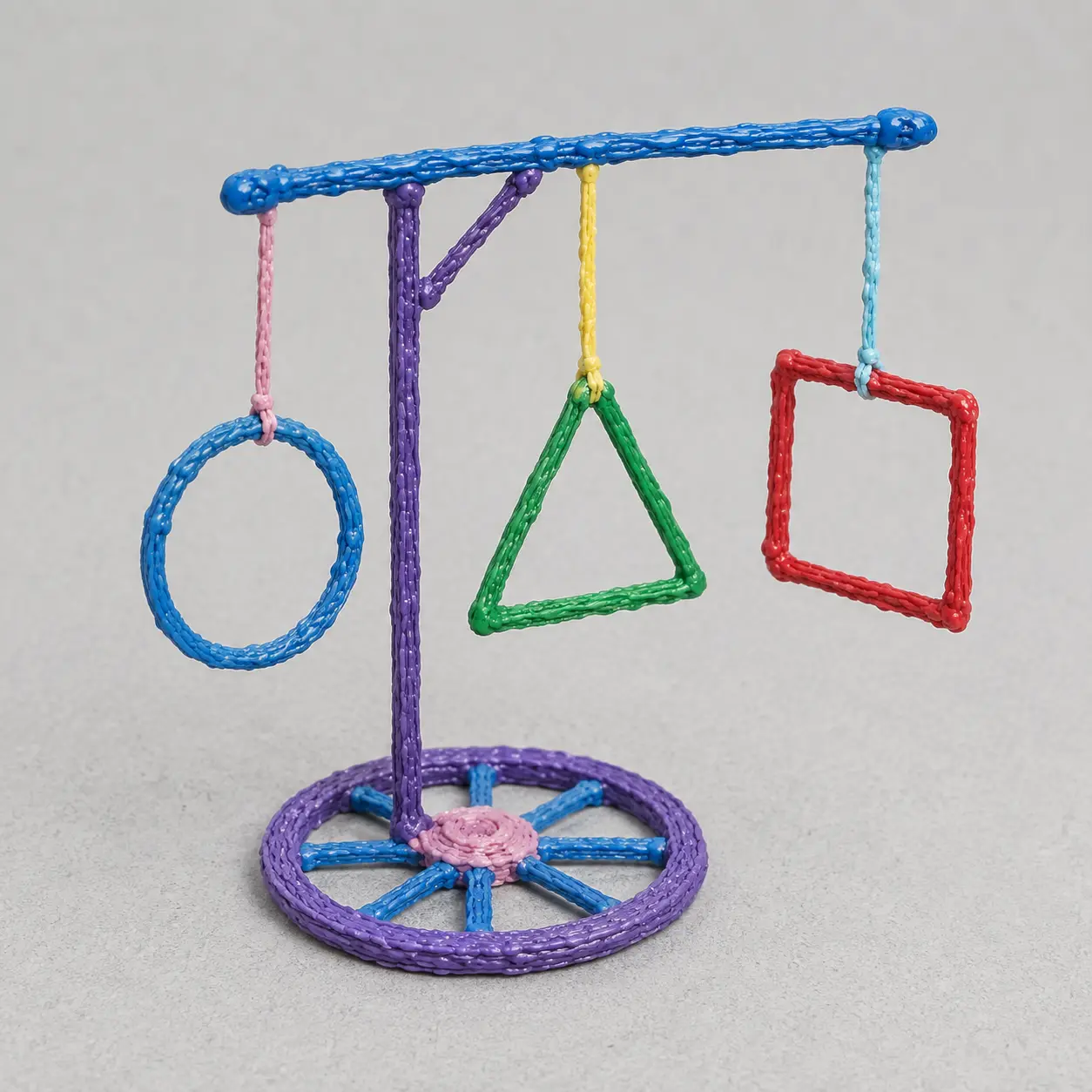
Make three lightweight traced shapes that balance on a teacher-prepared short tabletop mobile support.
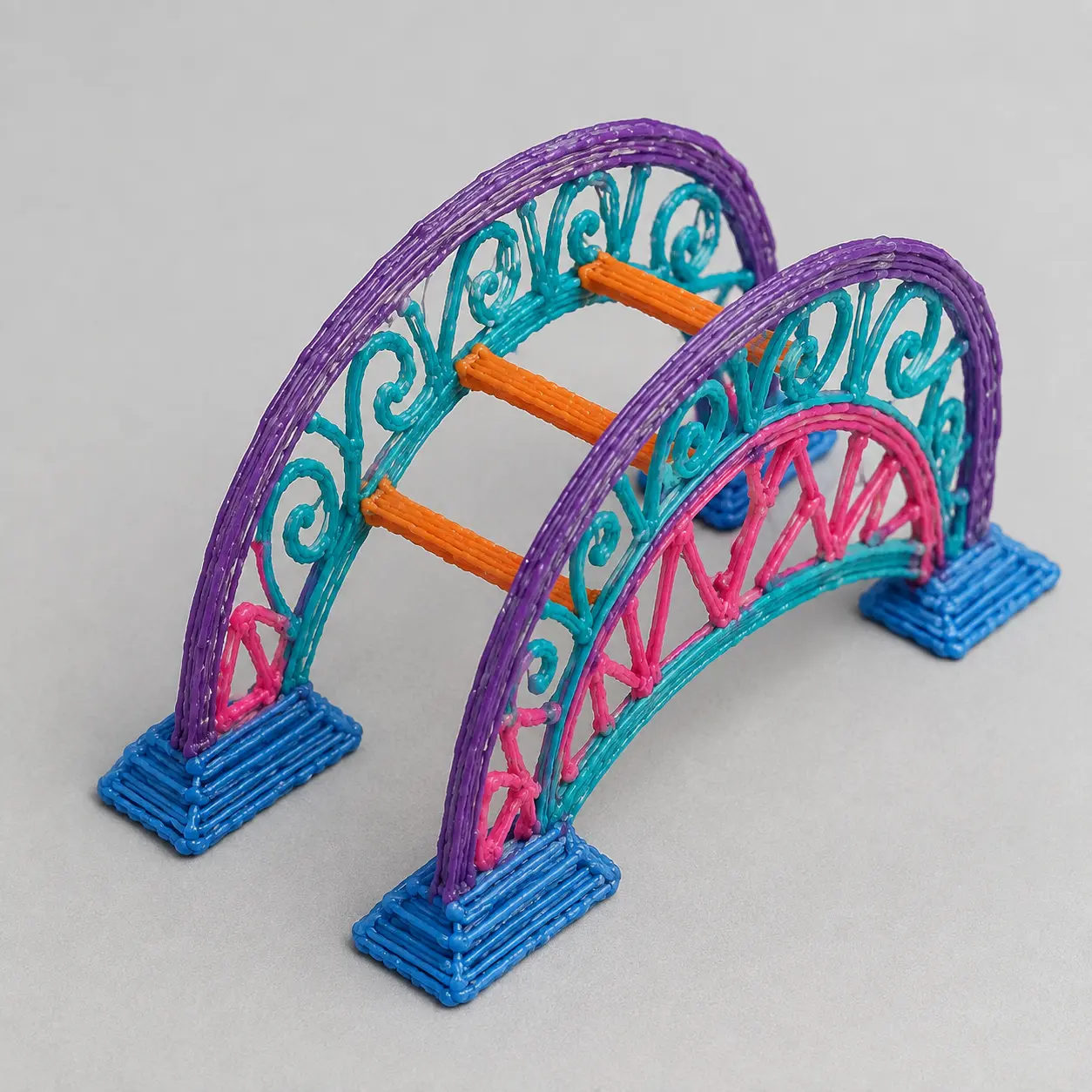
Make a small decorative arch from two flat curved frames connected by short crosspieces.
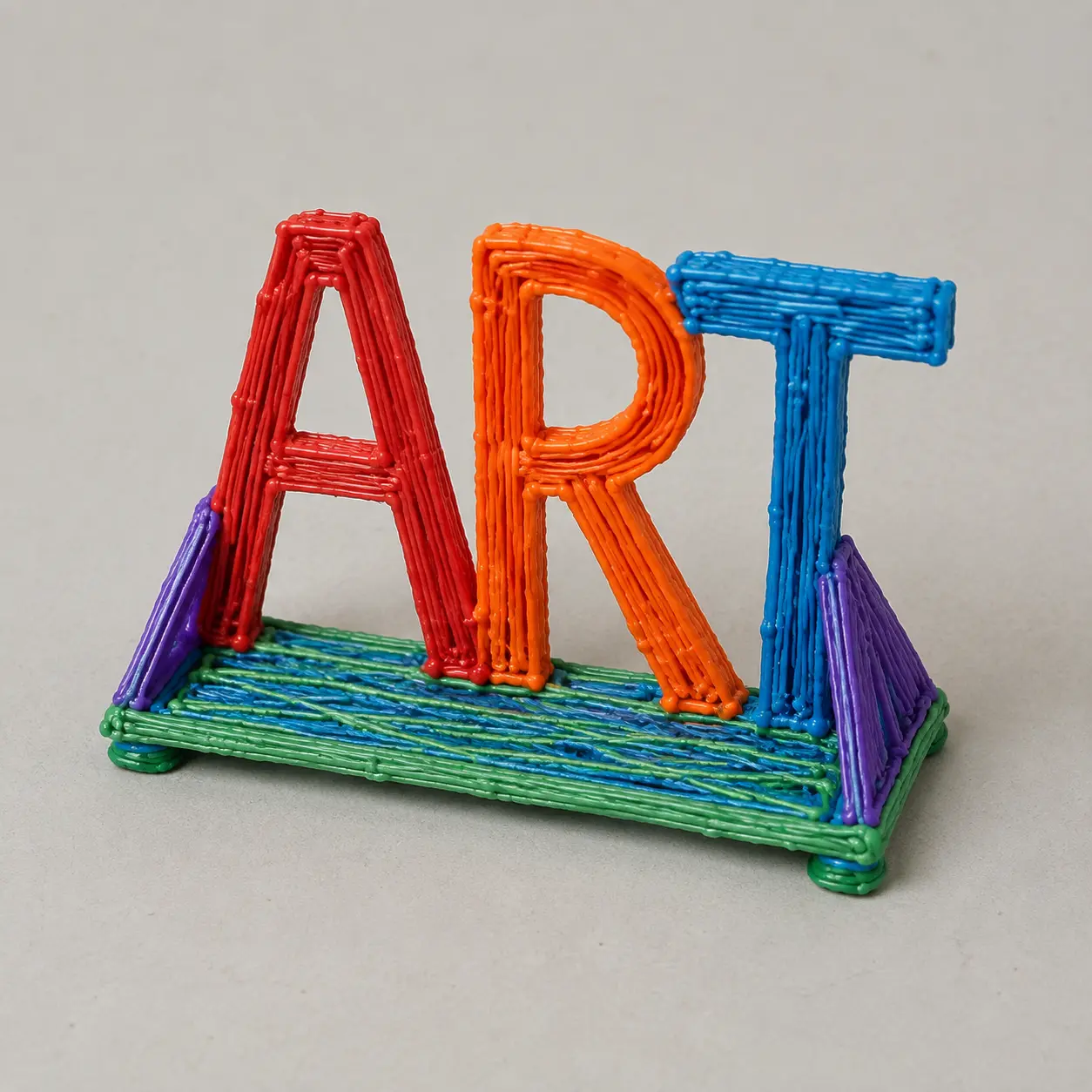
Make a short connected word or approved name on a broad standing base for a desk display.
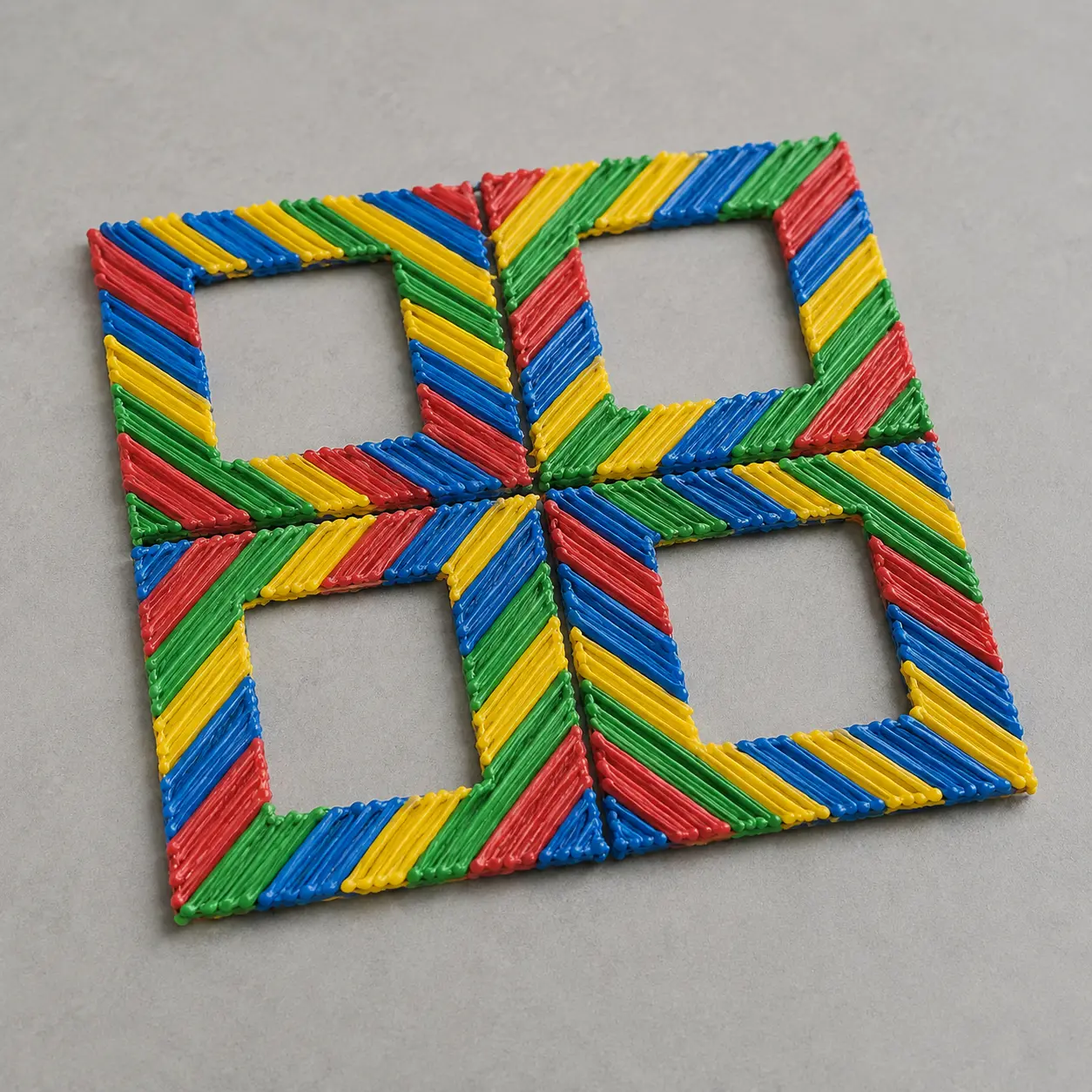
Make four matching square frames that sit together as a repeating tabletop pattern.
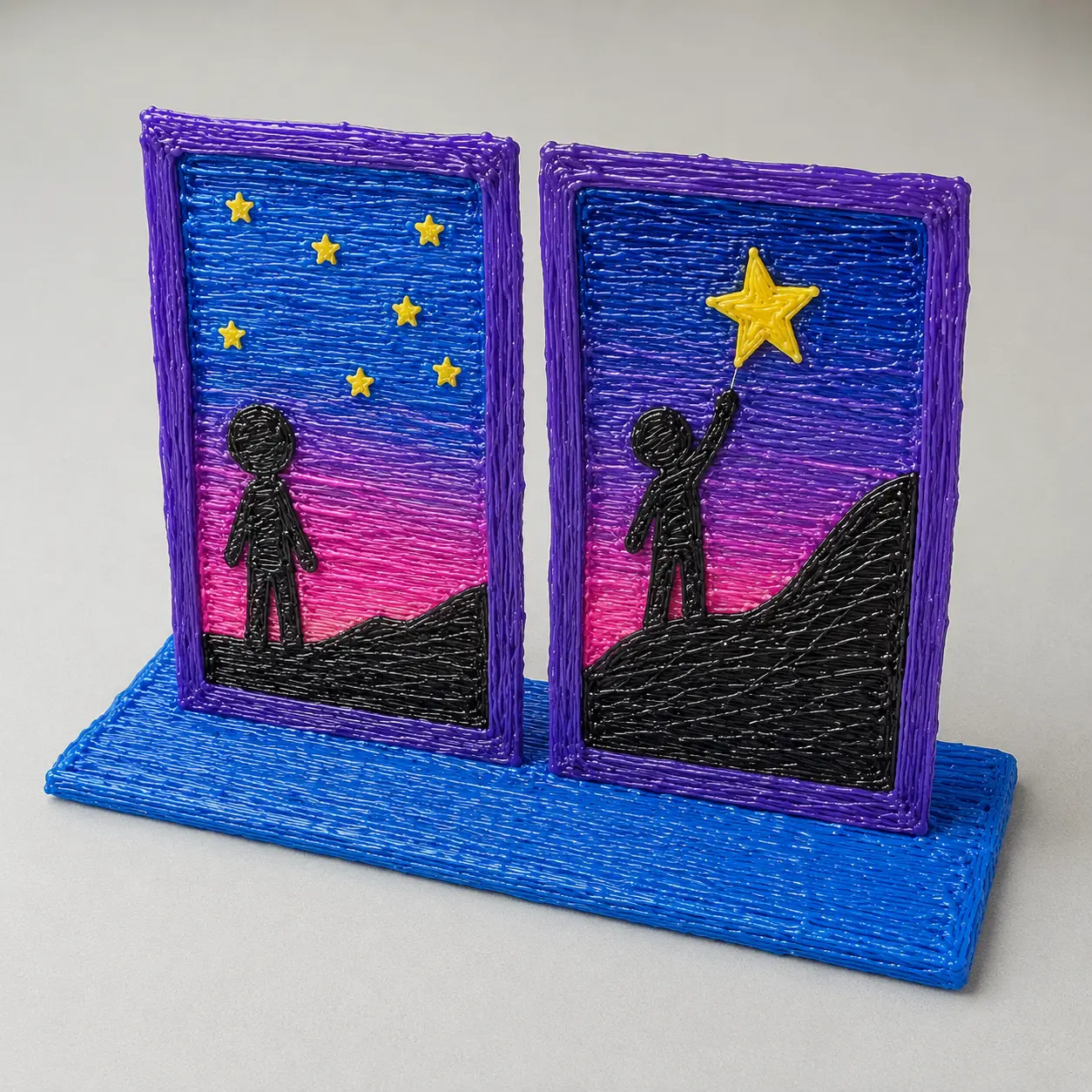
Make a small standing frame with two connected silhouette panels that suggest a short original story.
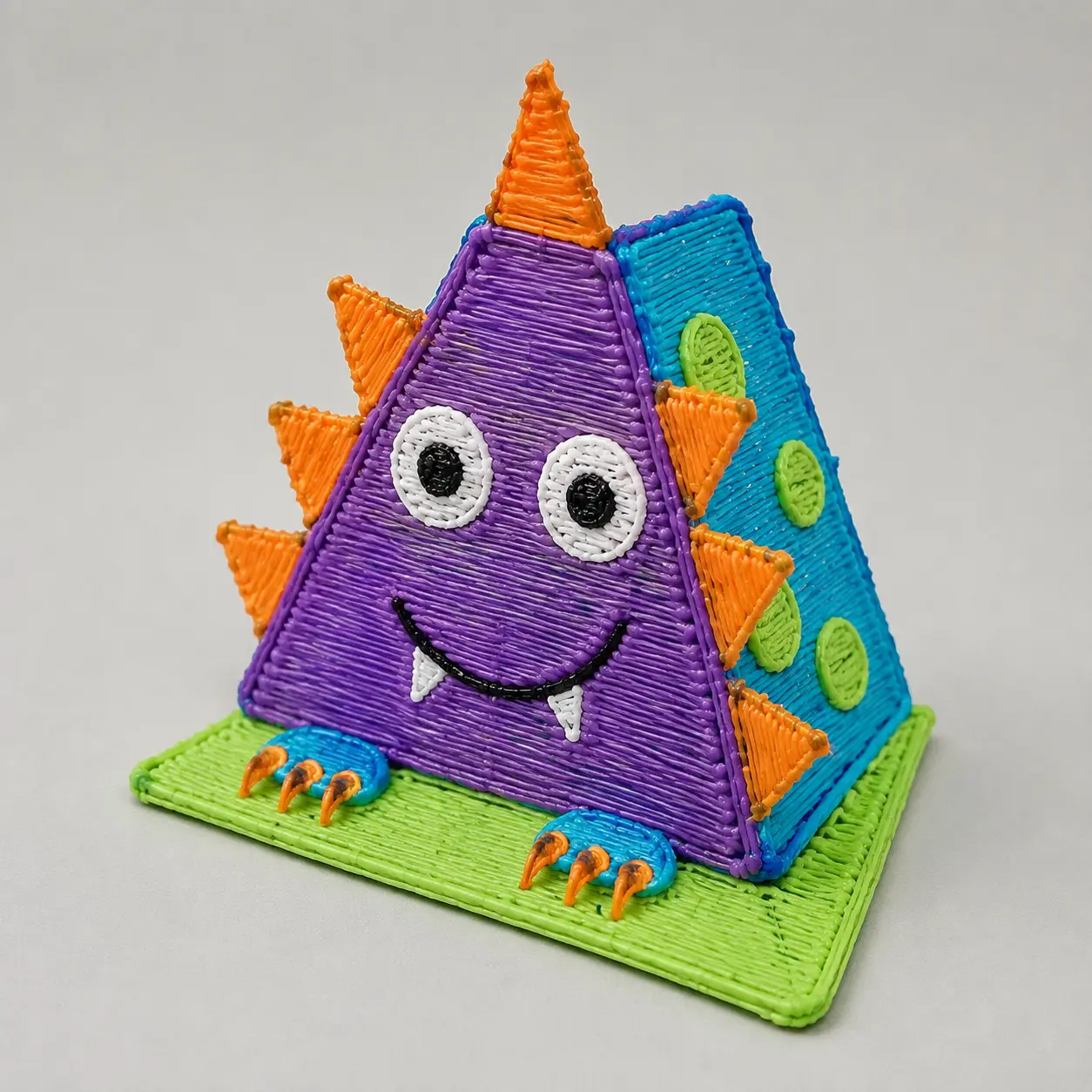
Make a small tabletop creature from flat geometric panels joined to a stable base, with no freehand drawing in the air.
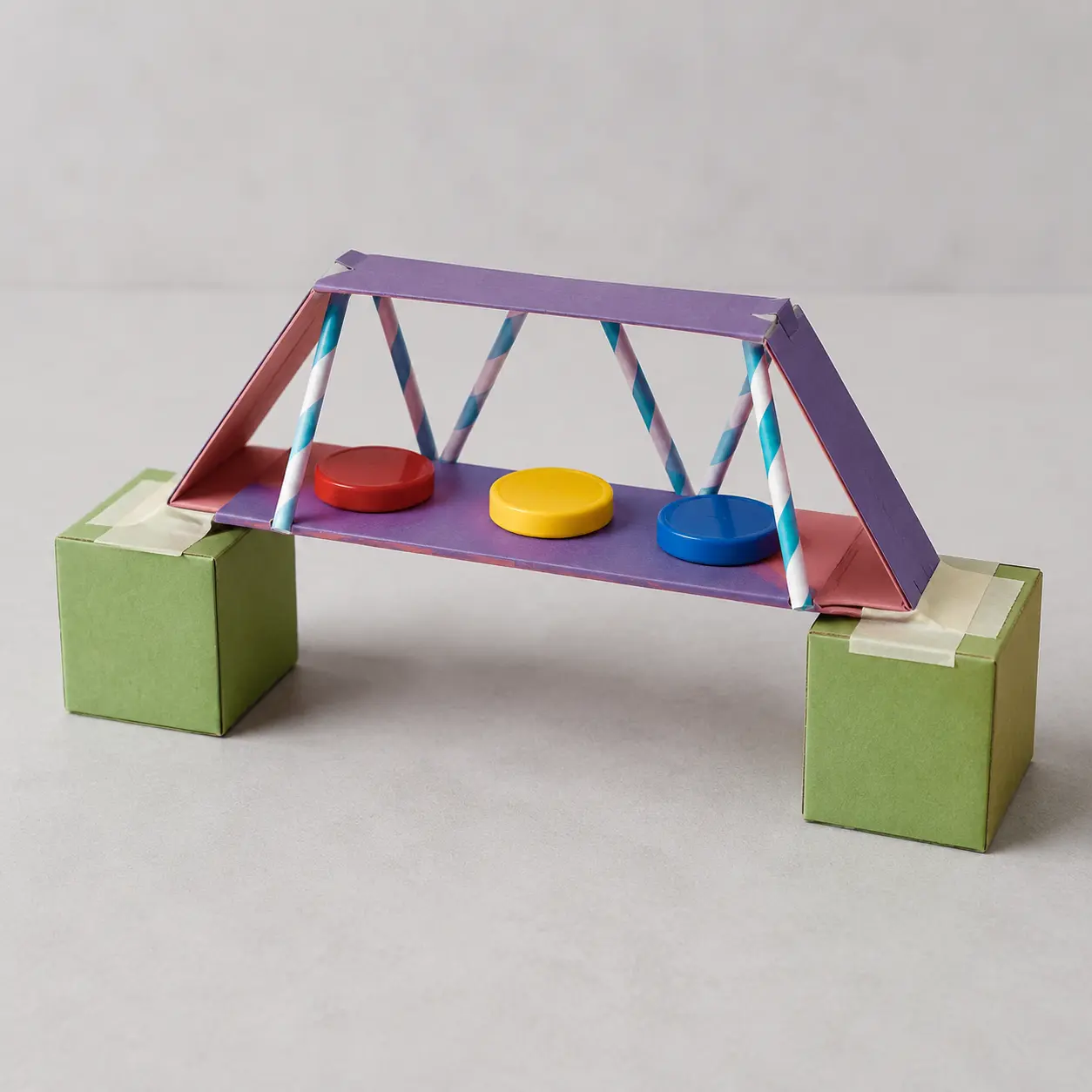
Build a folded-paper bridge that spans a 20 cm gap and holds at least three large classroom counters.
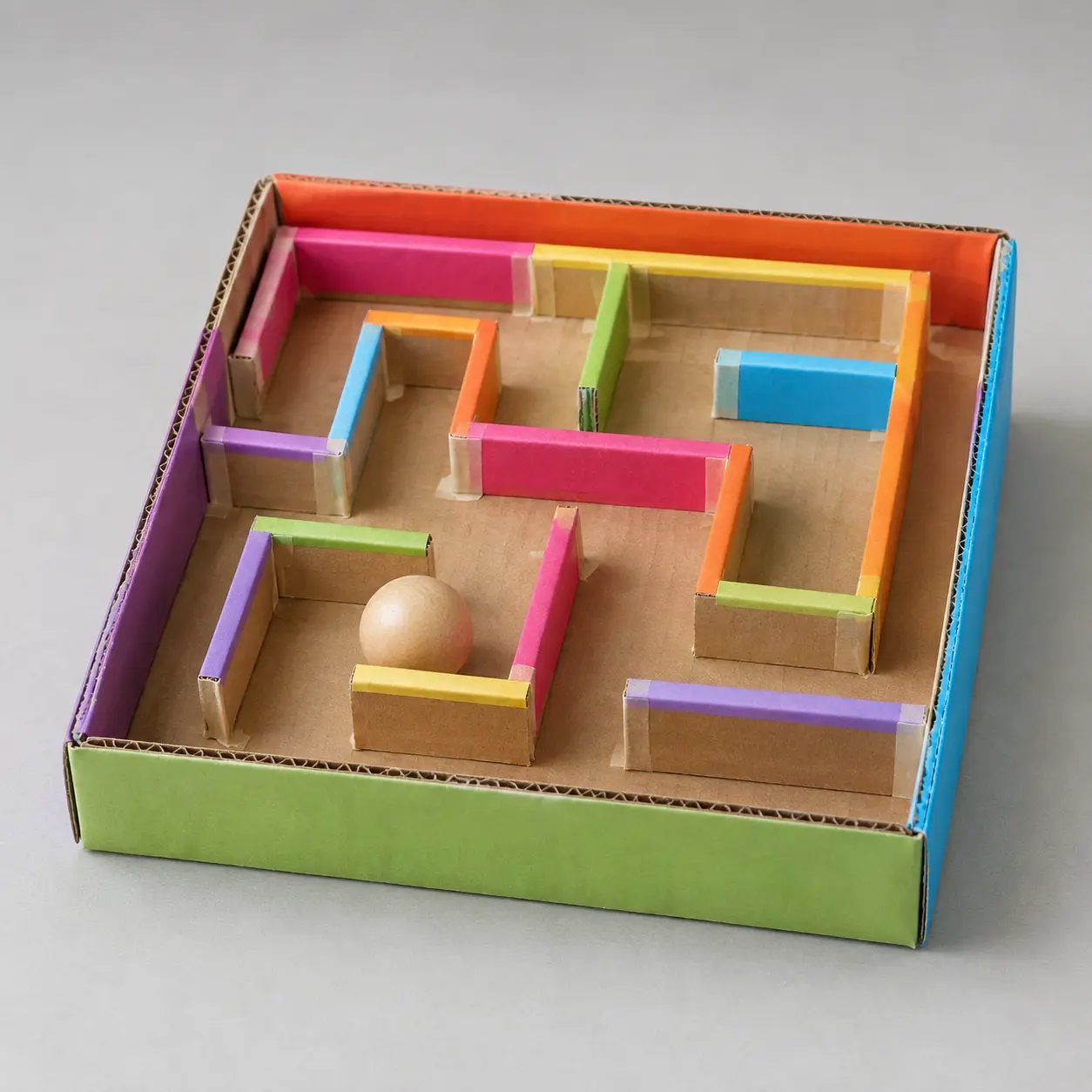
Build a shallow cardboard maze that guides one large wooden ball from START to FINISH without leaving the board.
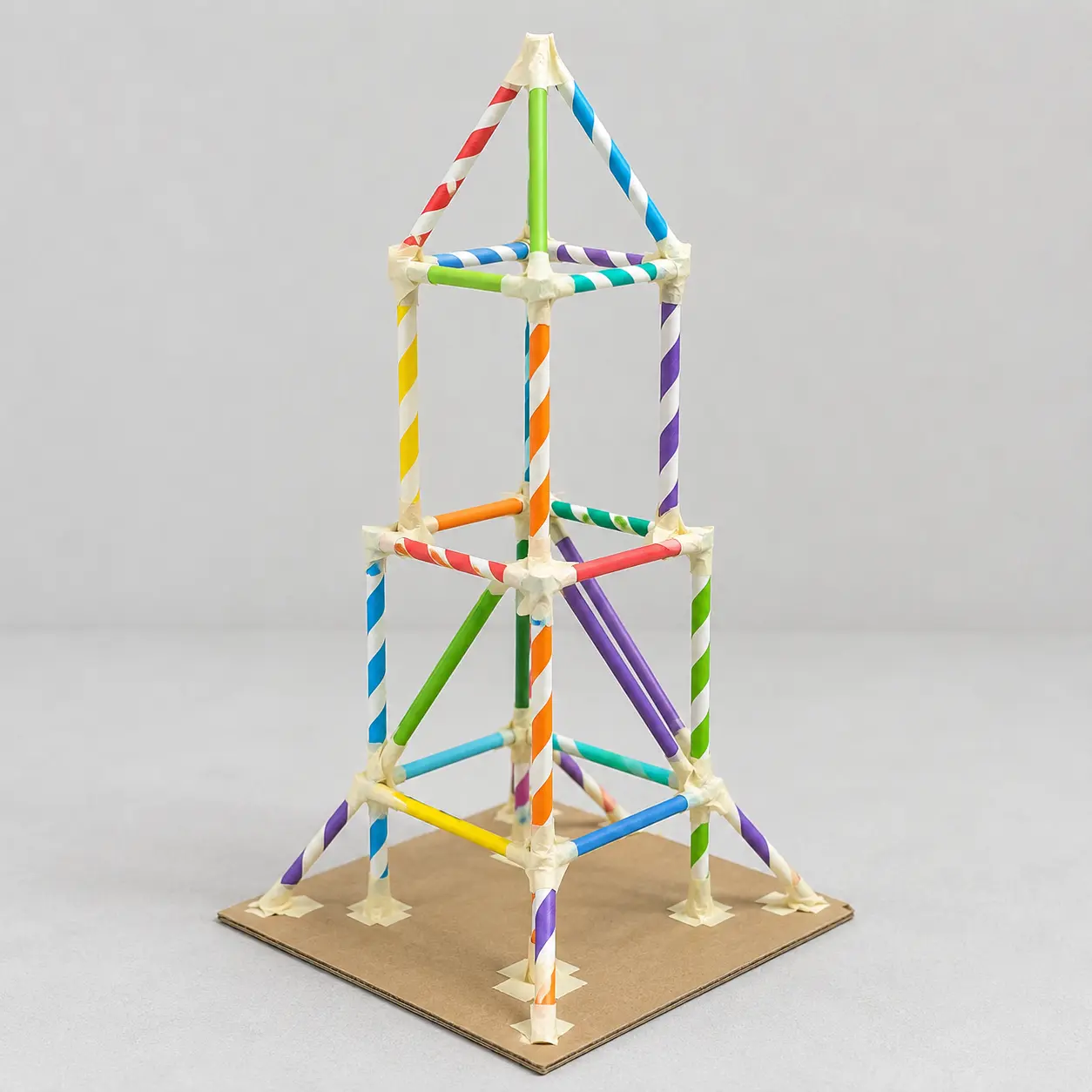
Build a freestanding tower from paper straws and tape that reaches 35 cm and holds a paper flag.
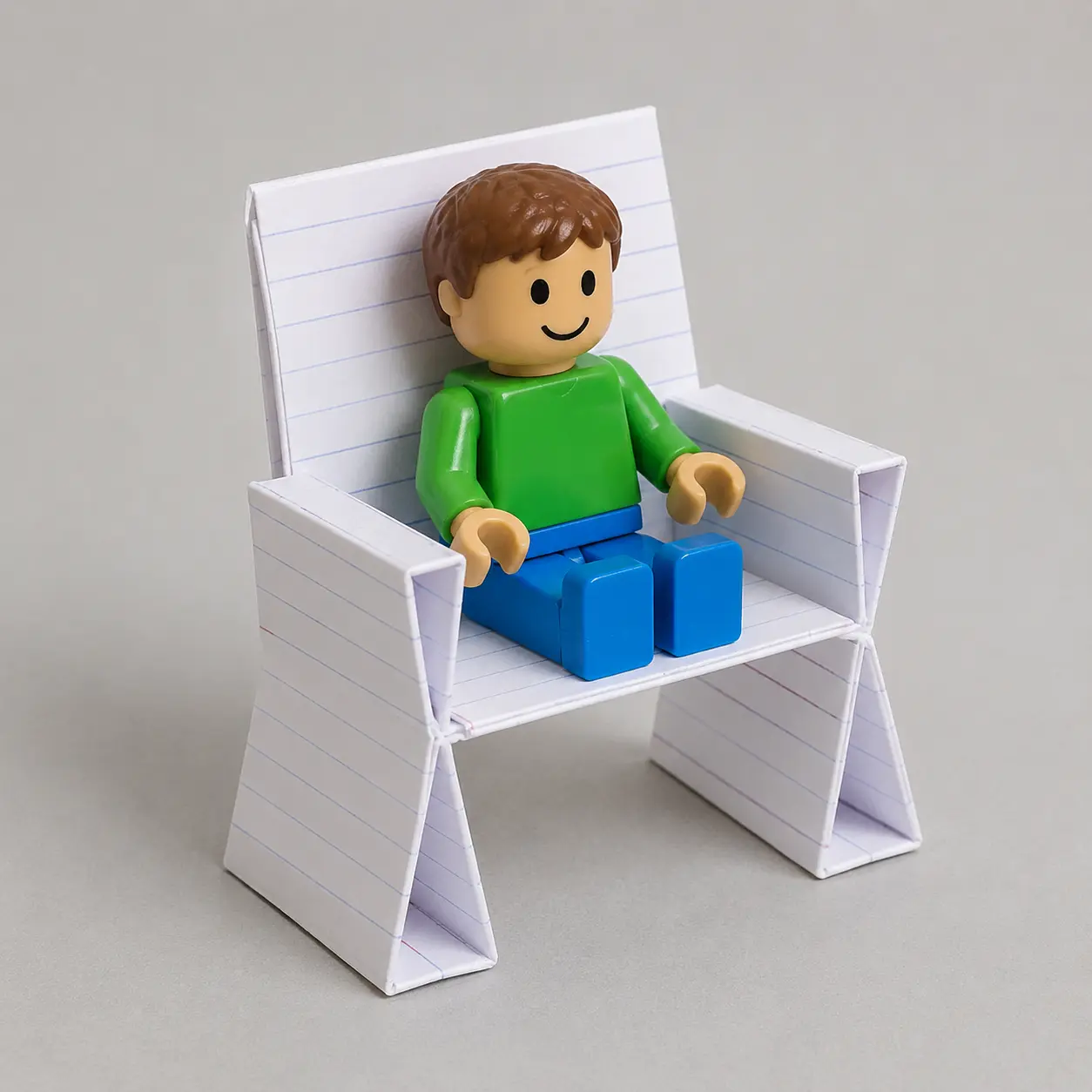
Build a small chair from folded index cards that supports one teacher-provided toy figure for 30 seconds.
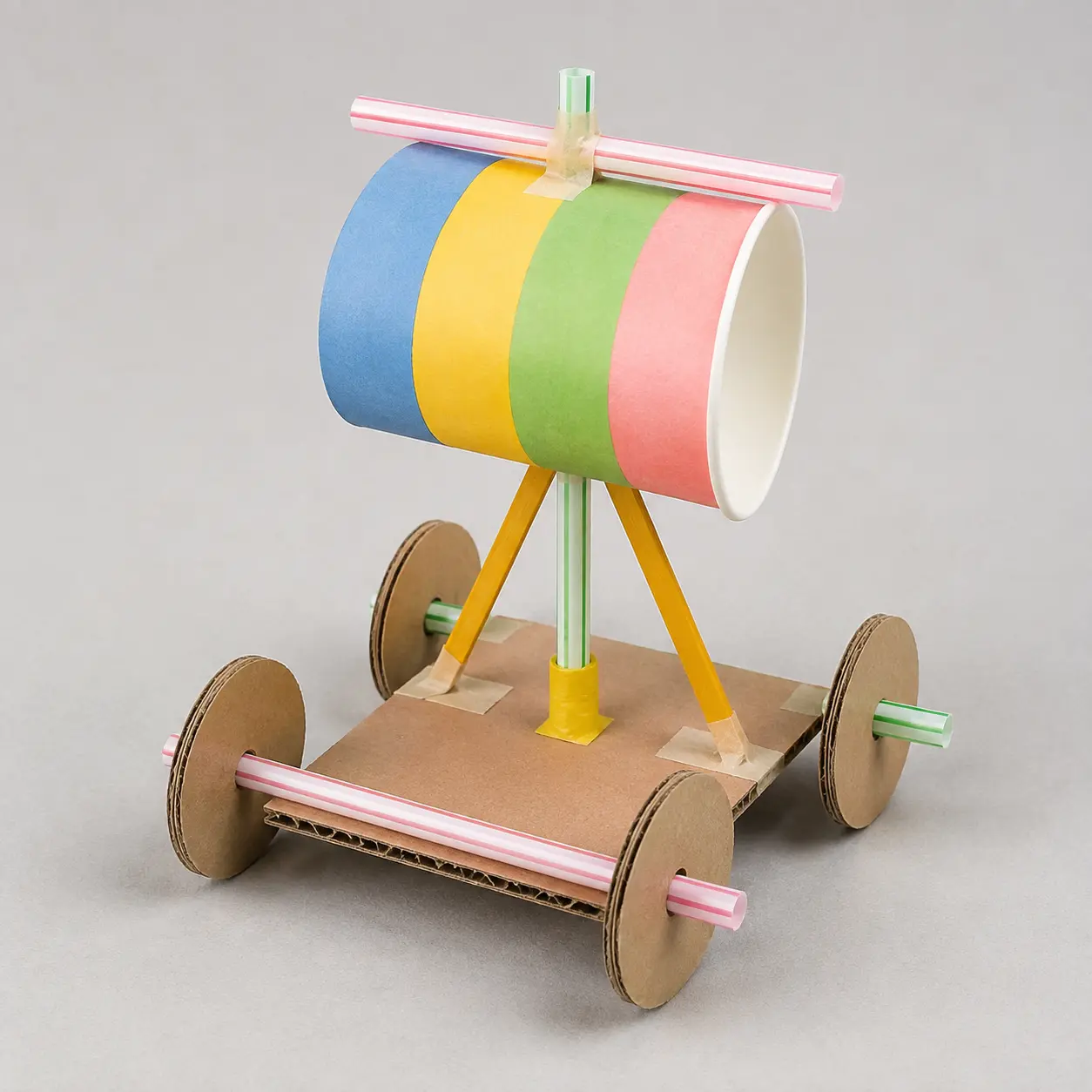
Build a lightweight car with a paper-cup sail that rolls when pushed by air from a hand fan.
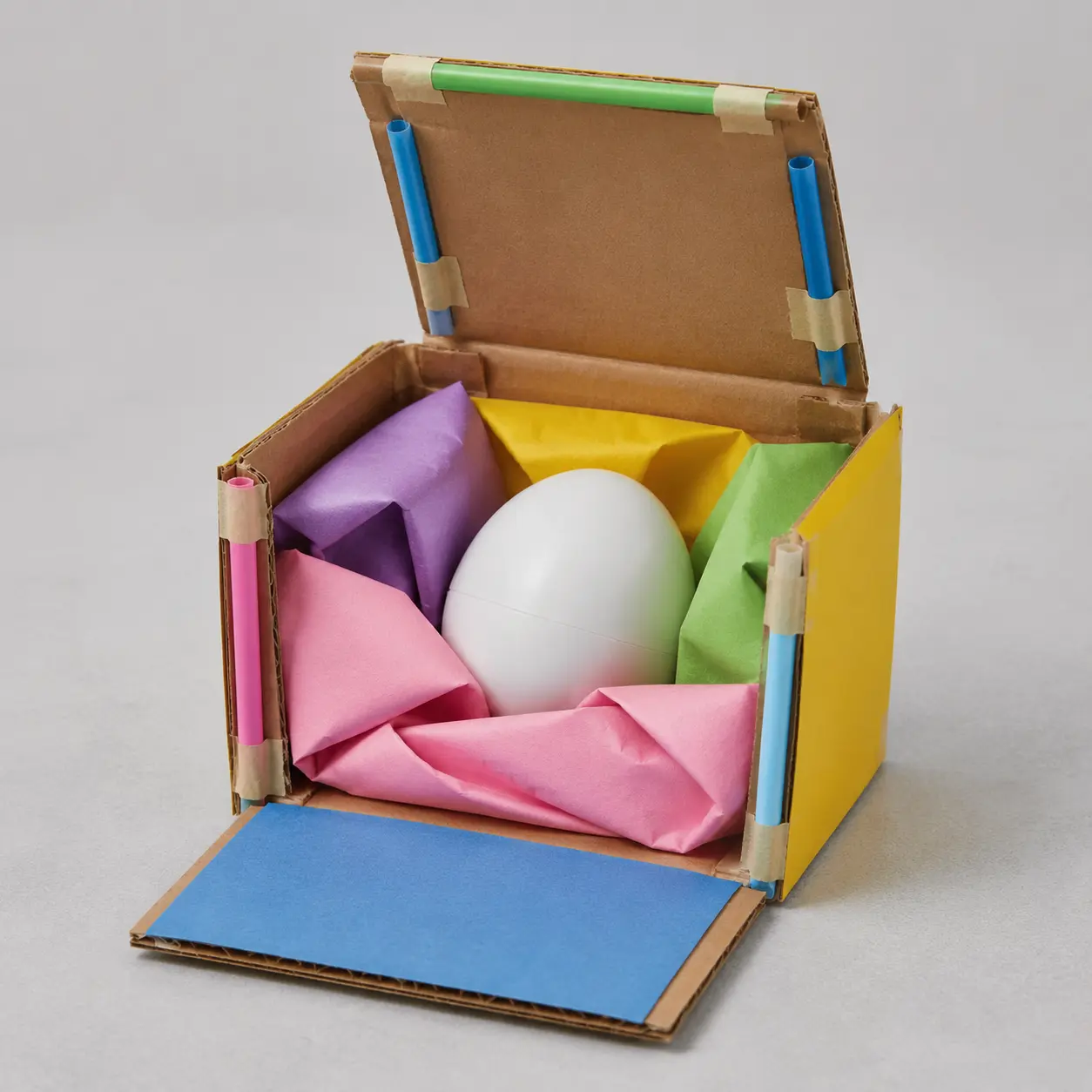
Design a small package that protects a plastic practice egg during three gentle teacher-controlled drops.
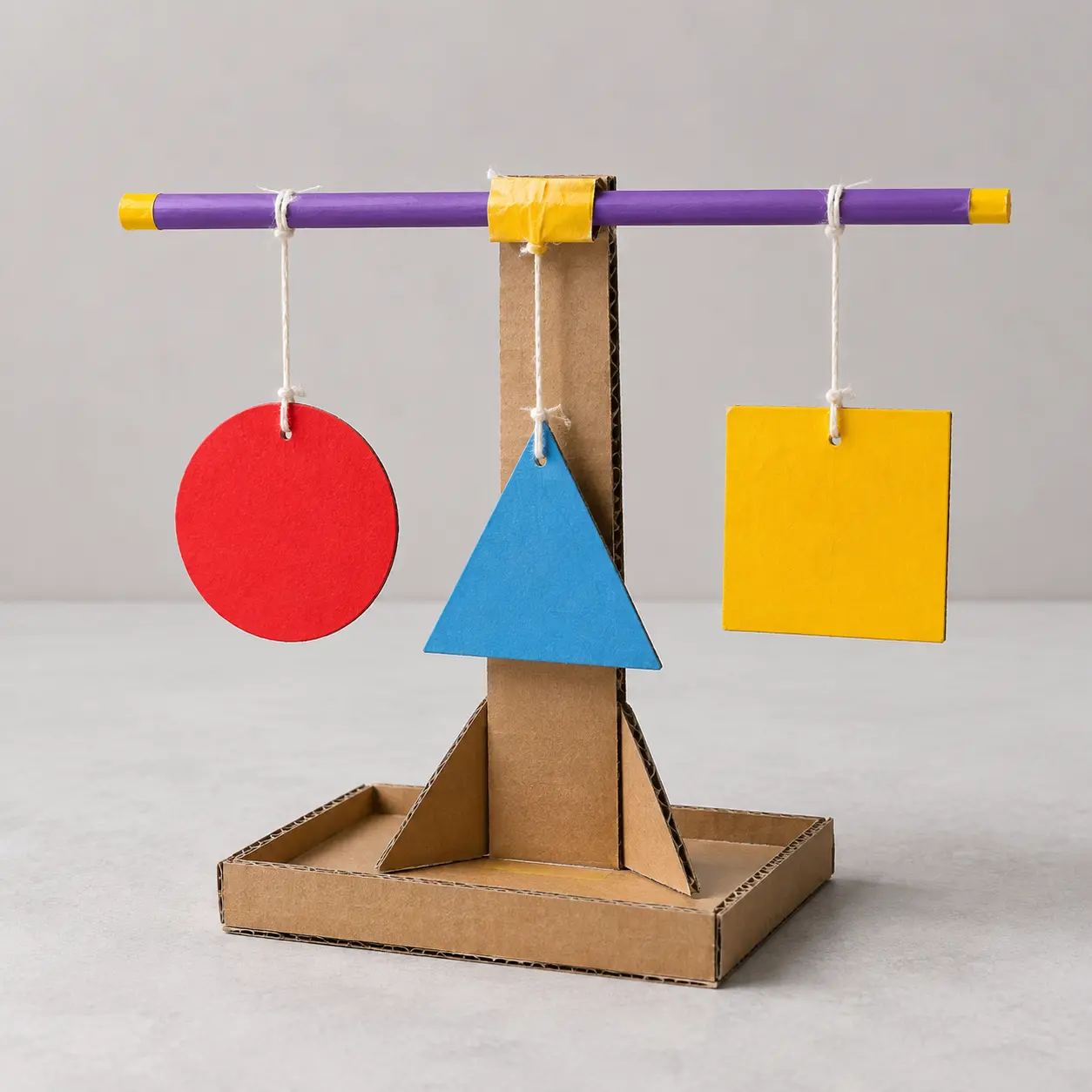
Build a tabletop mobile with three large paper shapes that balances for 20 seconds and can move gently.
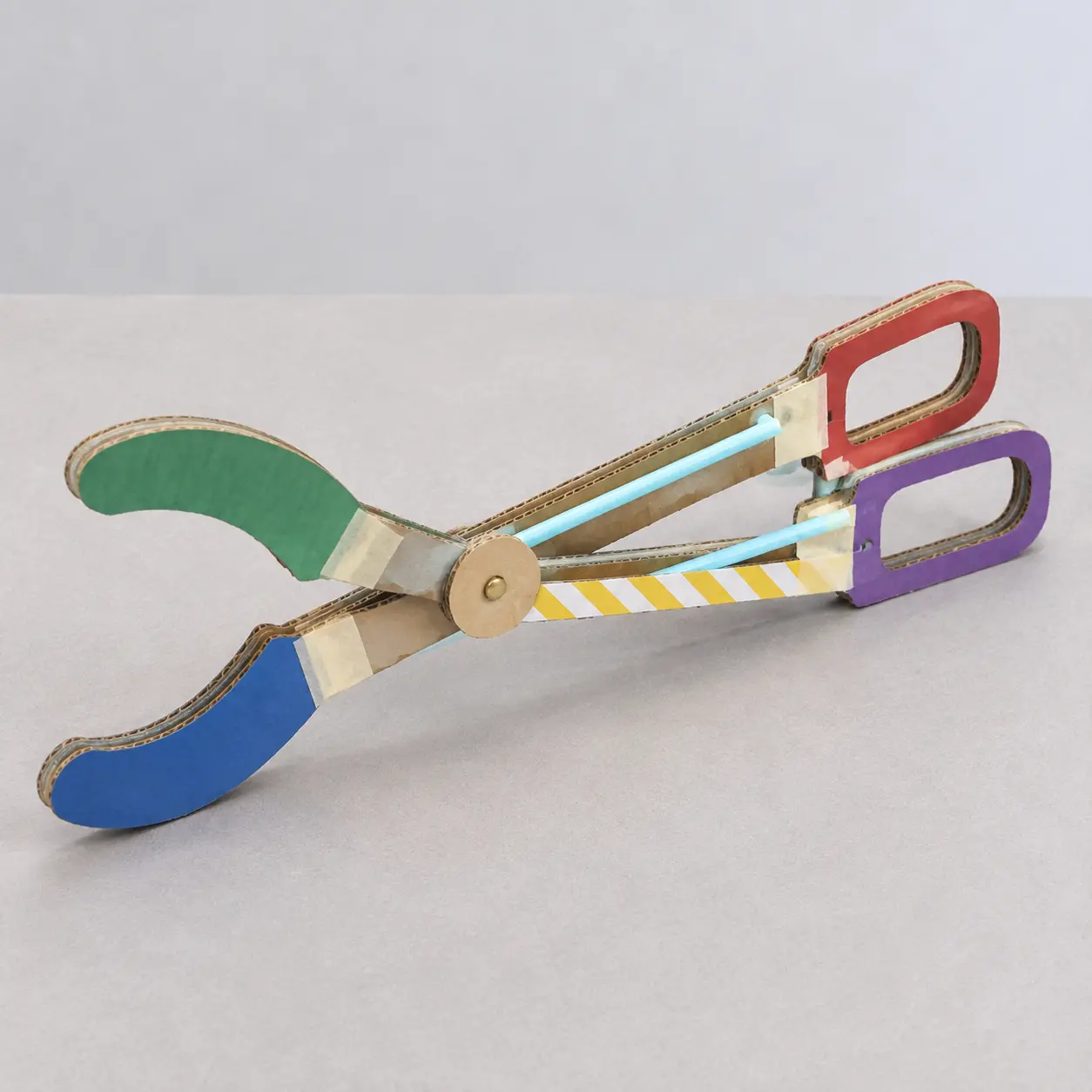
Build a safe cardboard grabber that picks up and moves three large paper balls without using fingers on the balls.
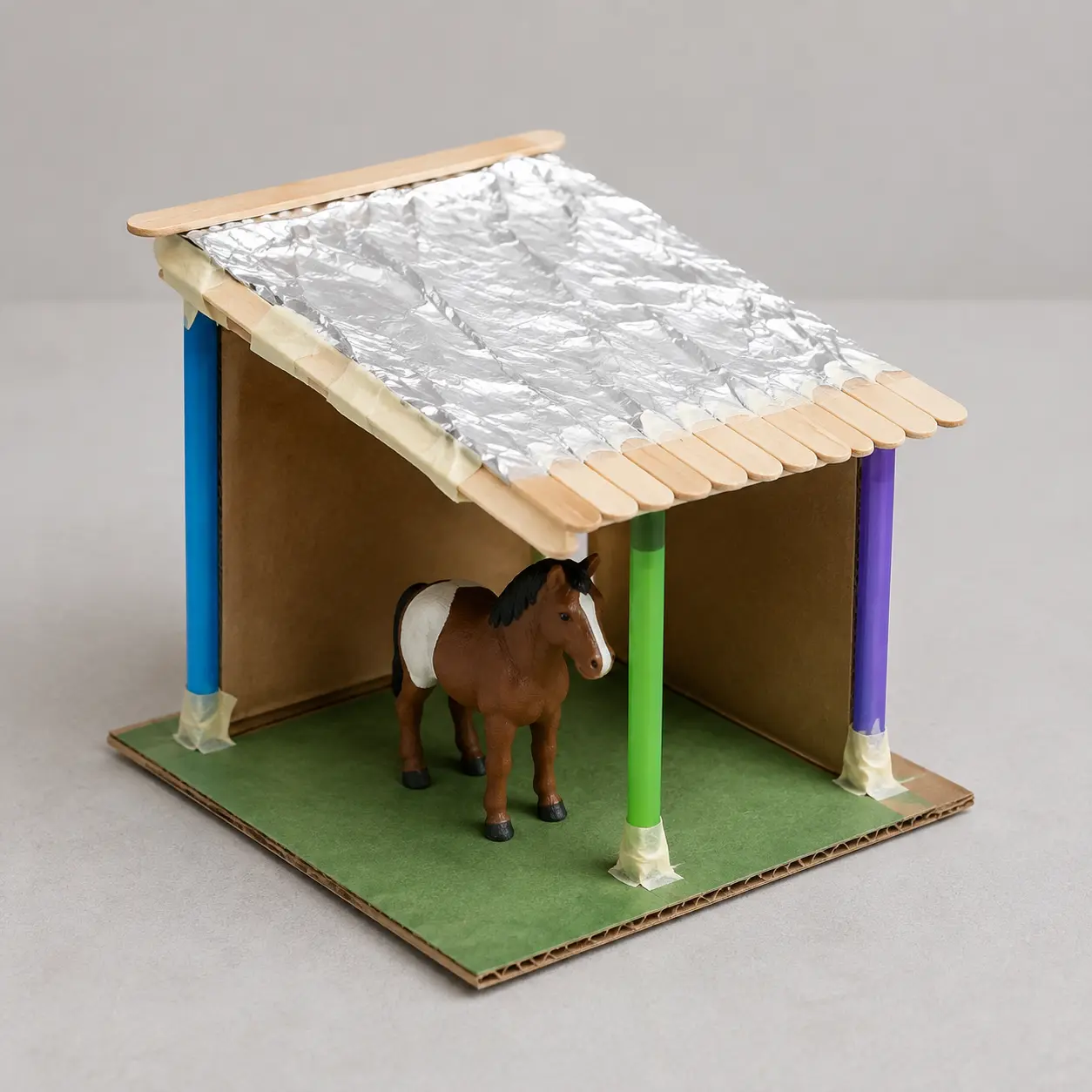
Build a model shelter that keeps a toy animal dry during a gentle spray-bottle rain test.
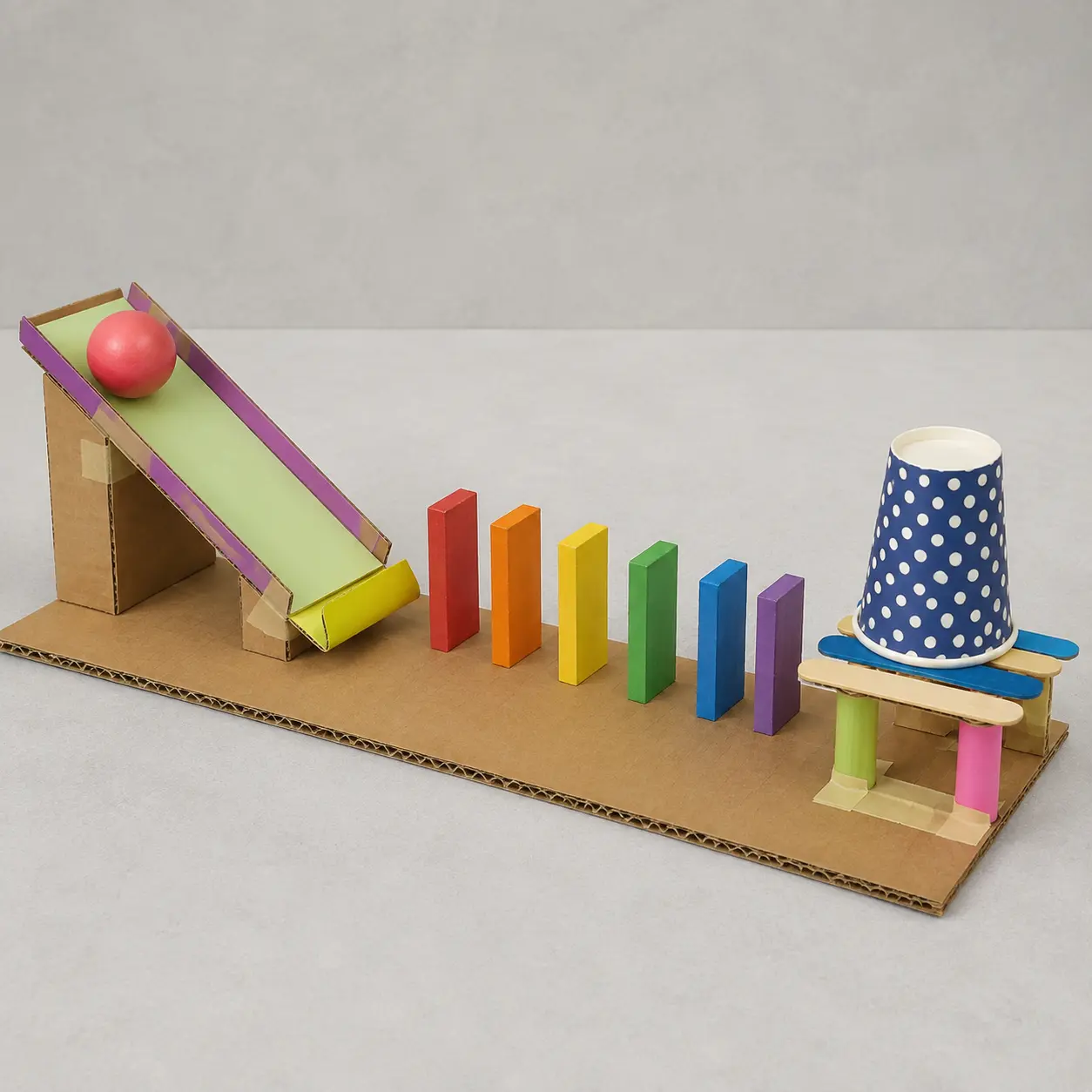
Build a four-step tabletop chain reaction in which one action starts the next and the final step tips a paper cup.
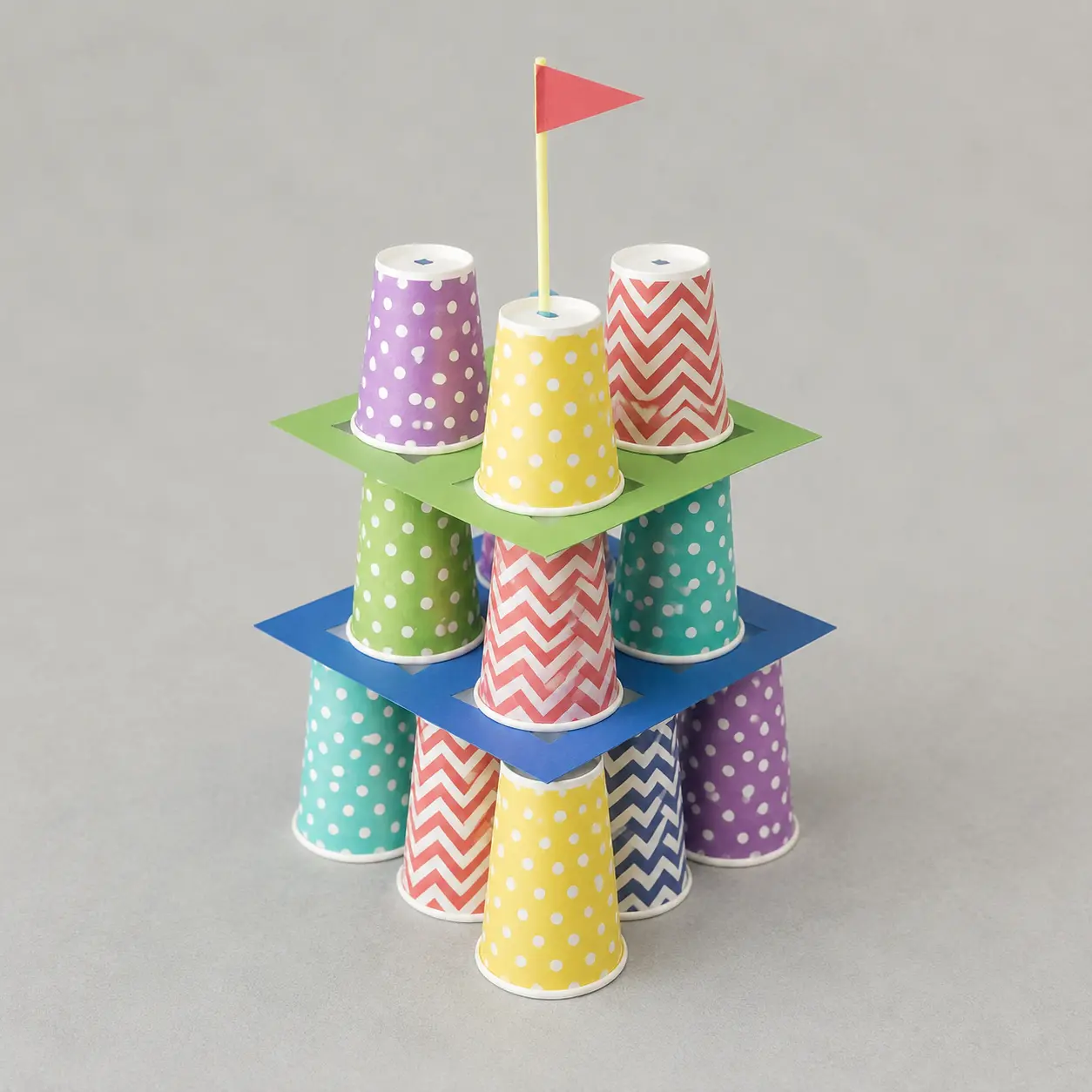
Build a paper-cup tower with two platform floors that stands for 30 seconds.
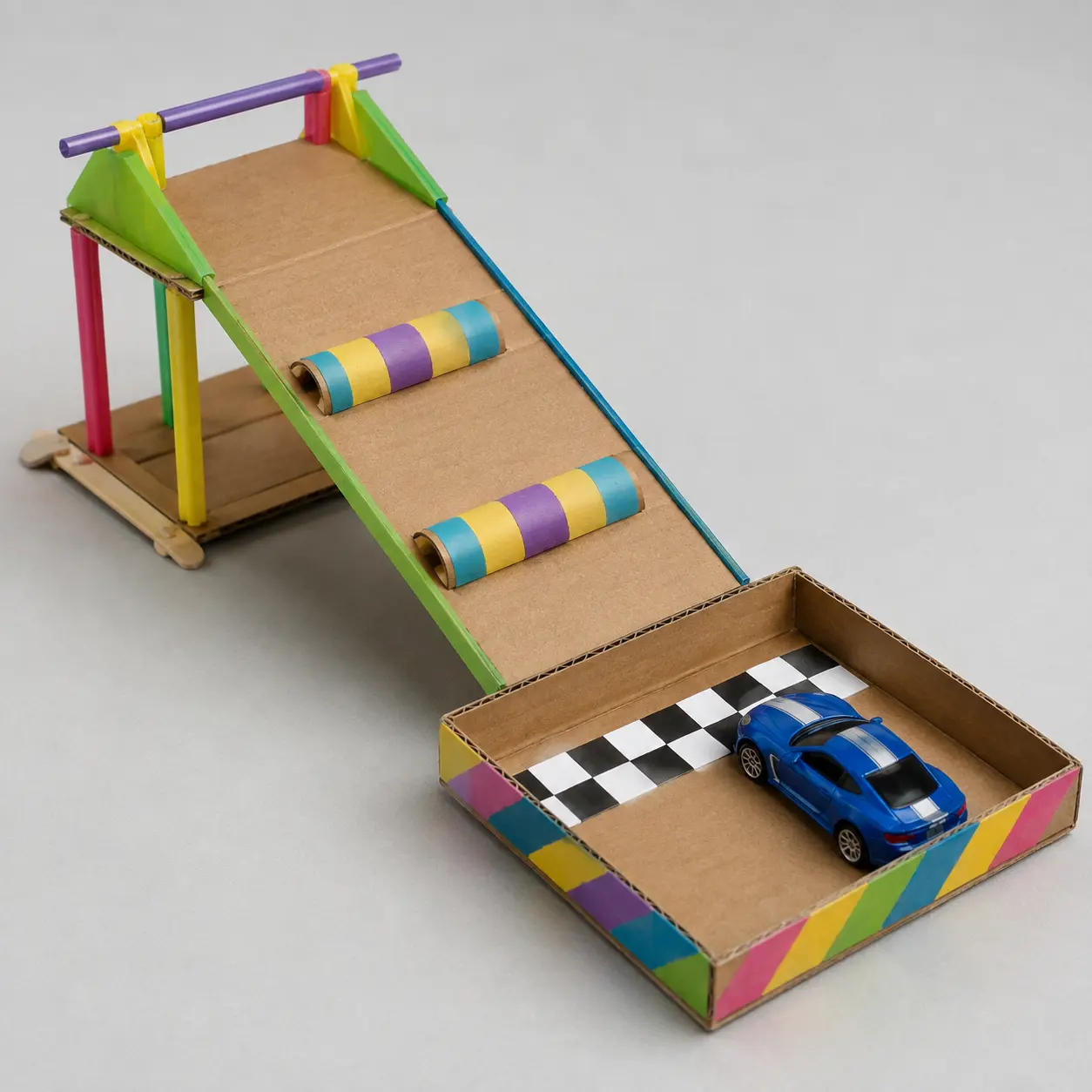
Build a cardboard ramp that guides a toy car into a finish tray without bouncing out.
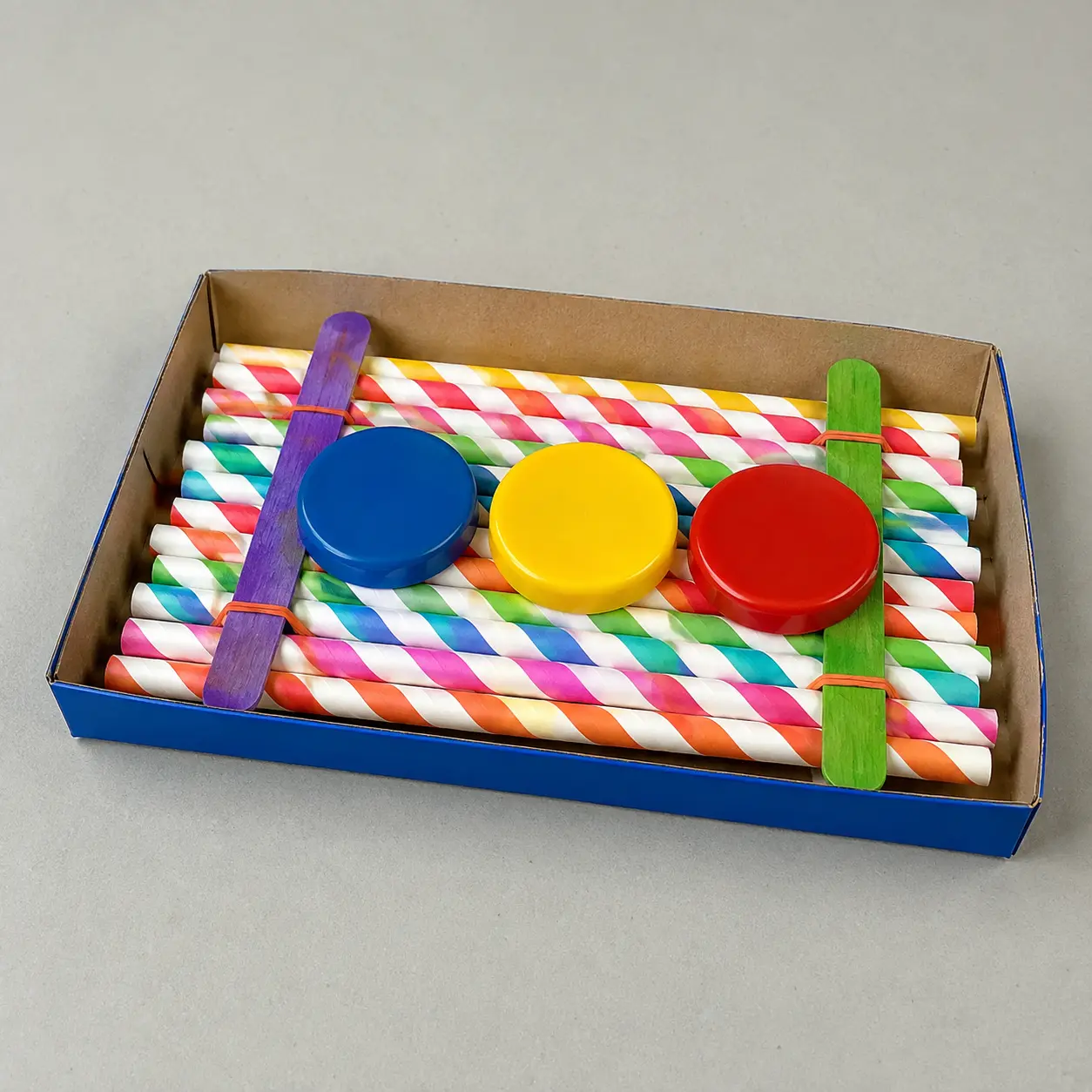
Build a paper-straw raft that floats while carrying three large plastic counters.
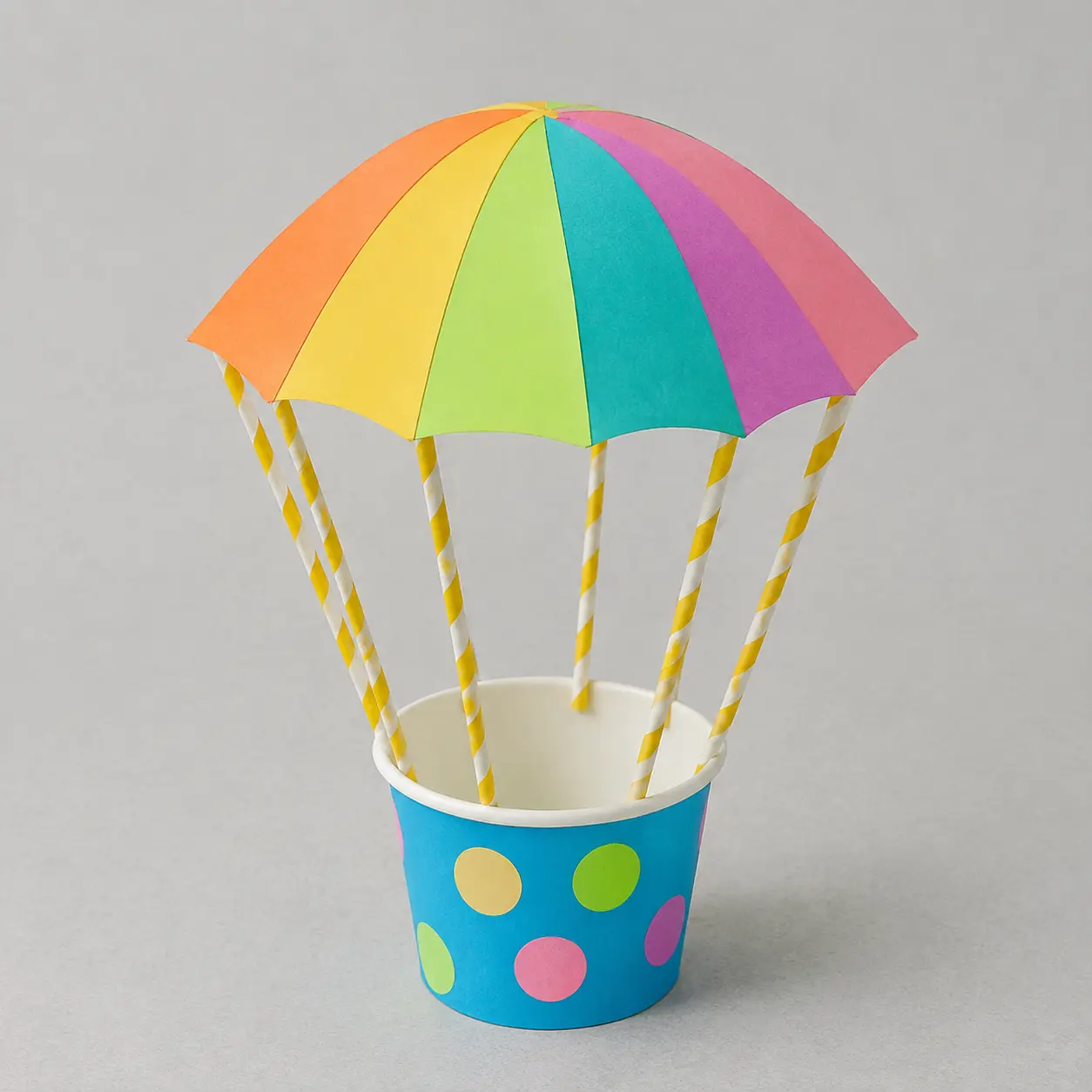
Build a paper capsule and parachute that carries one paper astronaut through a controlled drop.
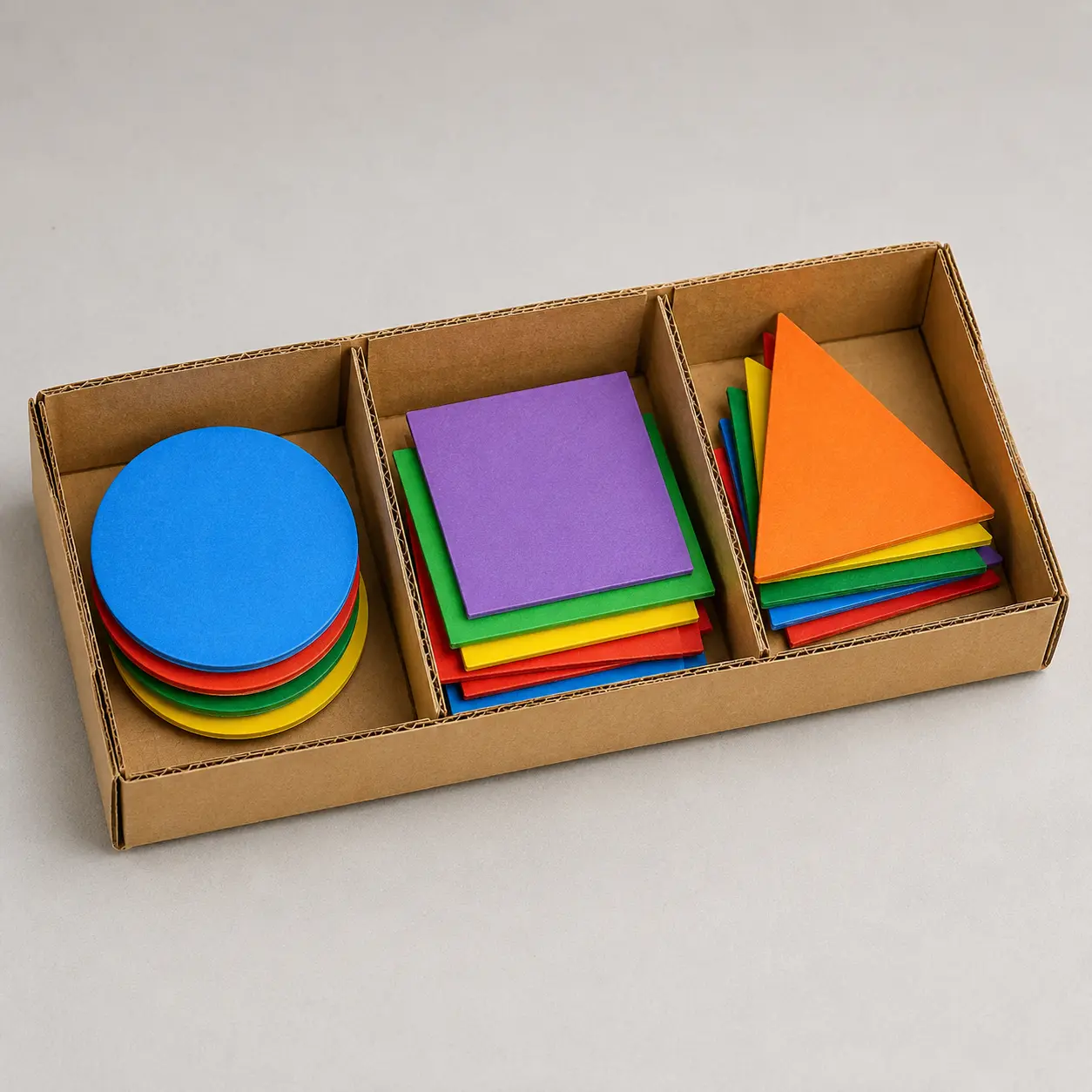
Build a three-part tray that helps a partner sort large classroom shapes quickly and correctly.
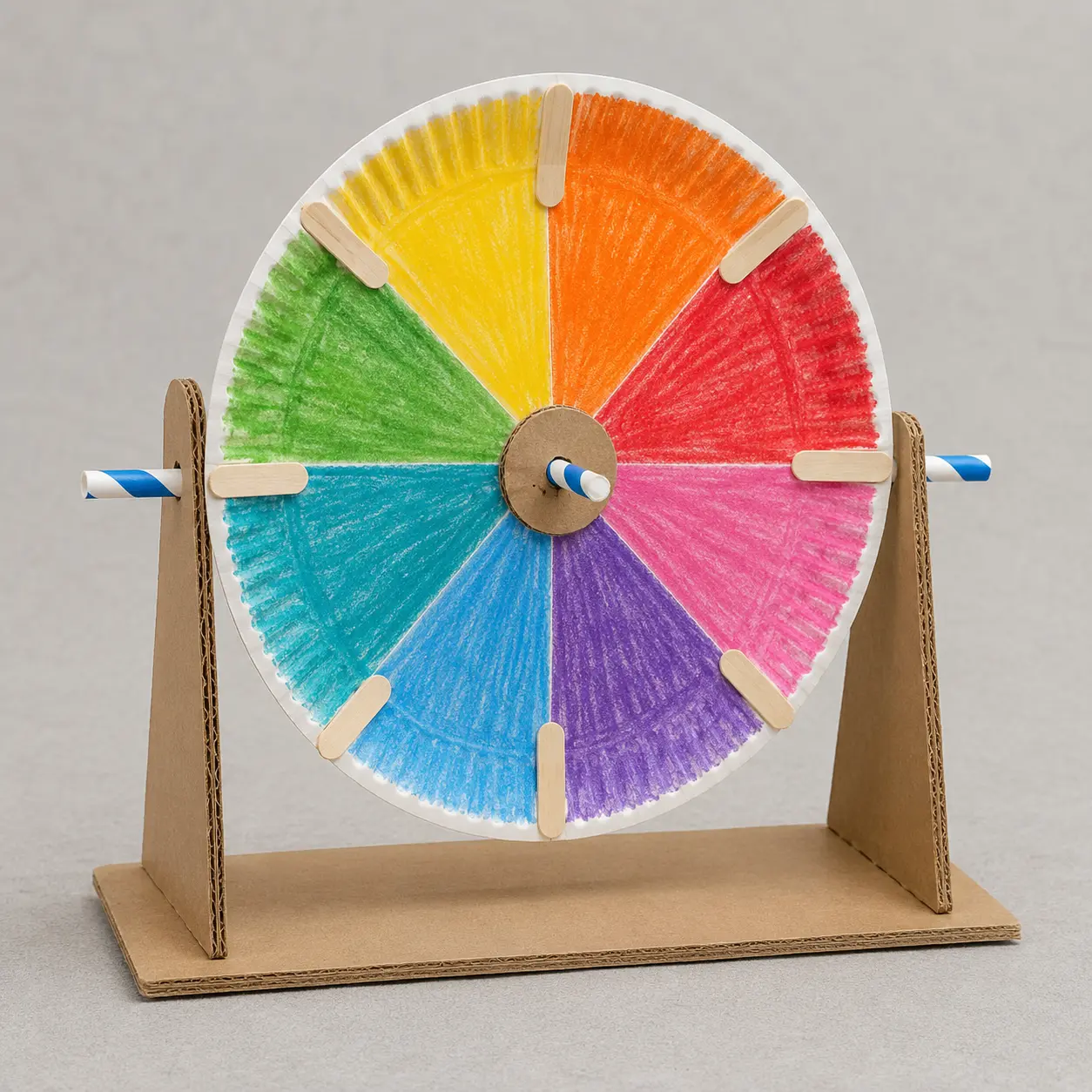
Build an upright paper wheel that spins freely on a straw axle for at least five turns.
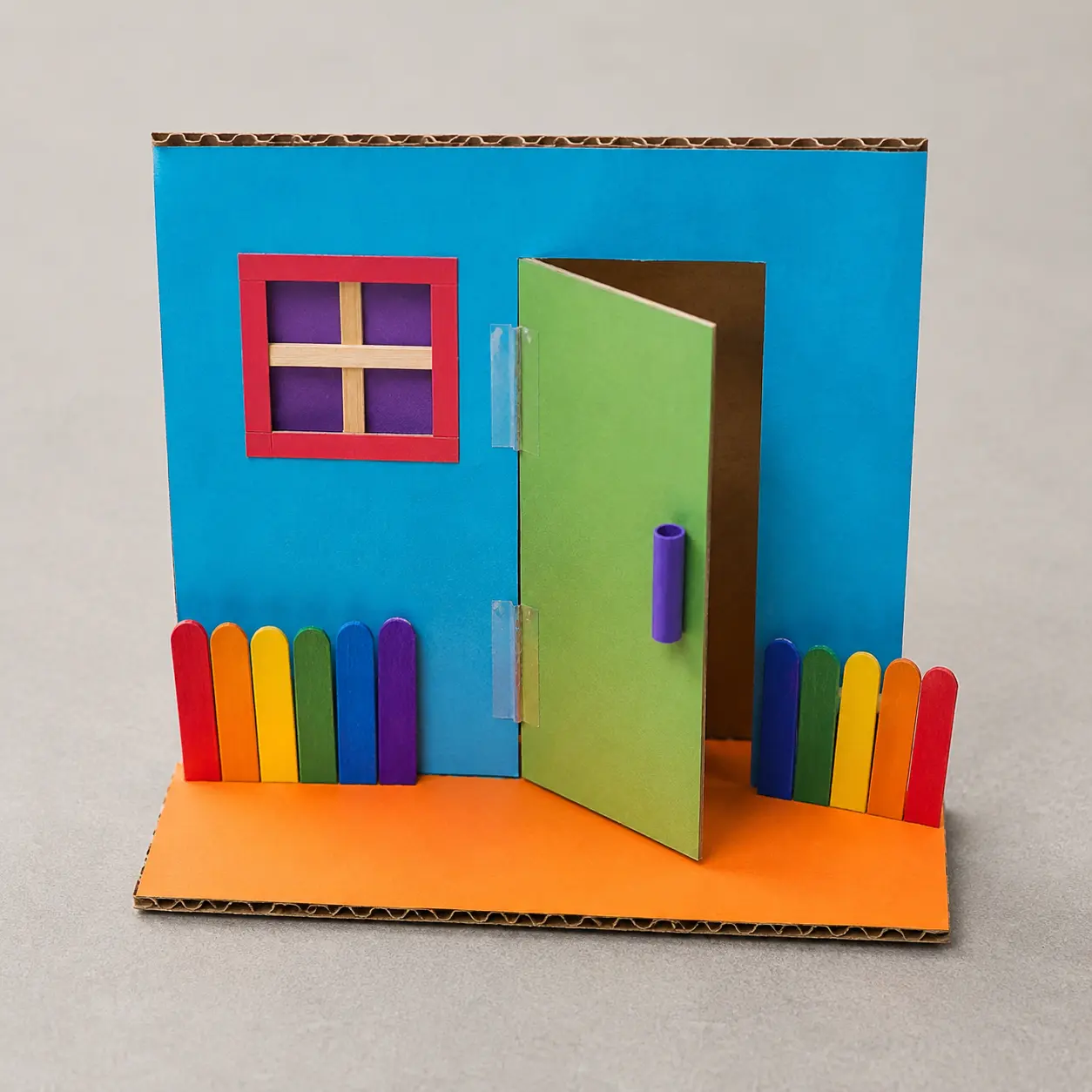
Build a small cardboard door that opens at least 90 degrees and closes into its frame.
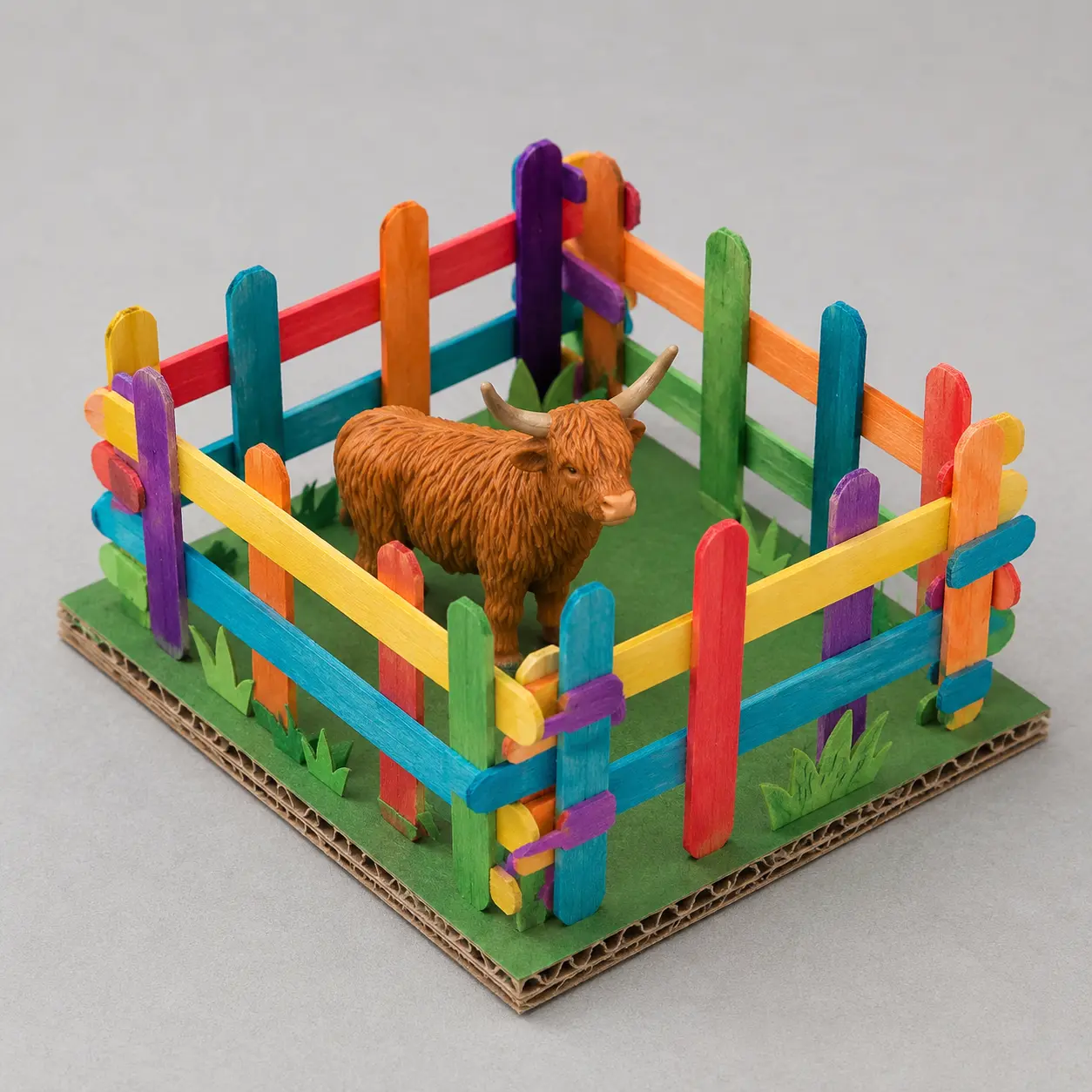
Build a freestanding craft-stick fence that keeps a toy animal inside a marked space.
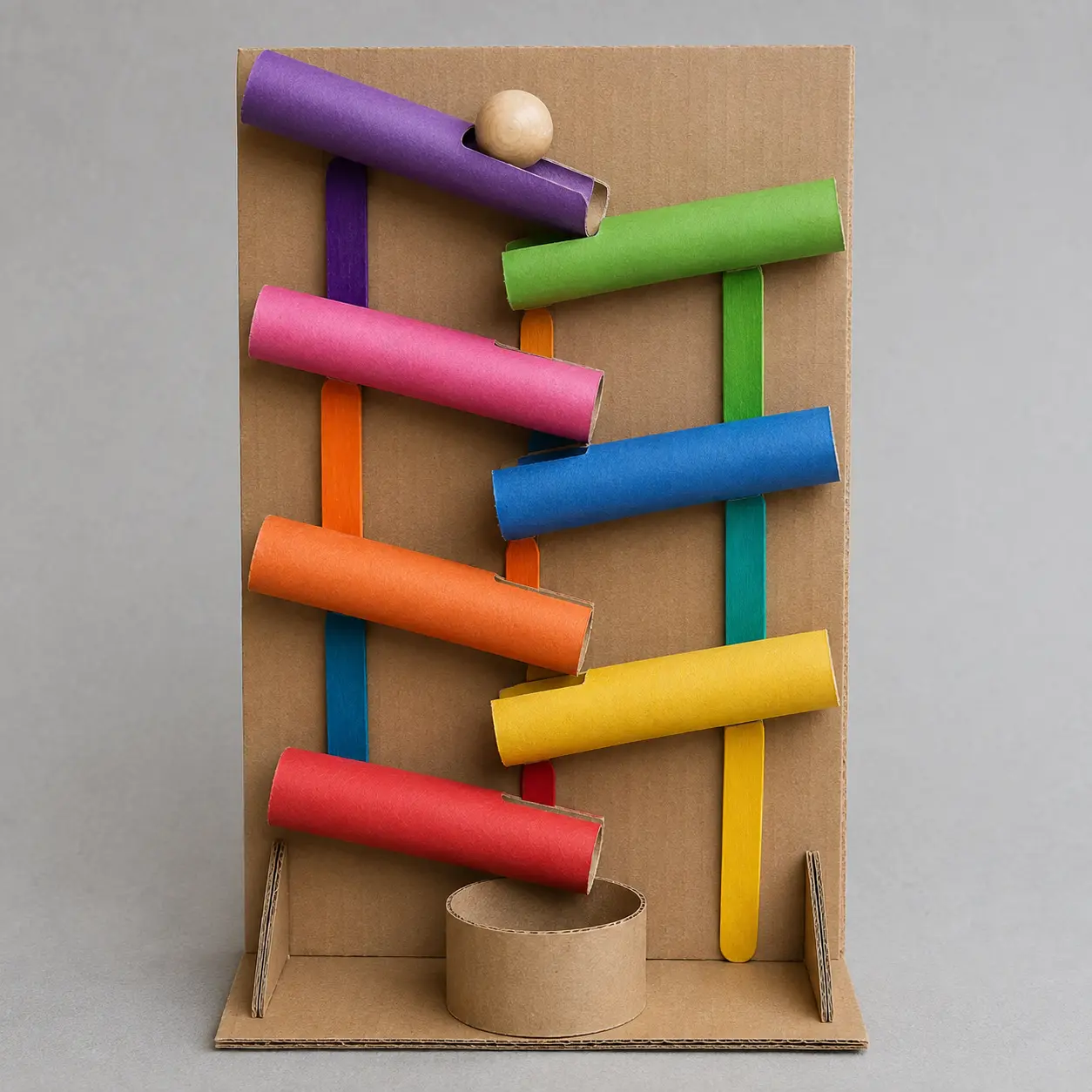
Build a wall-mounted paper-tube path that carries a large wooden ball through three sections into a cup.
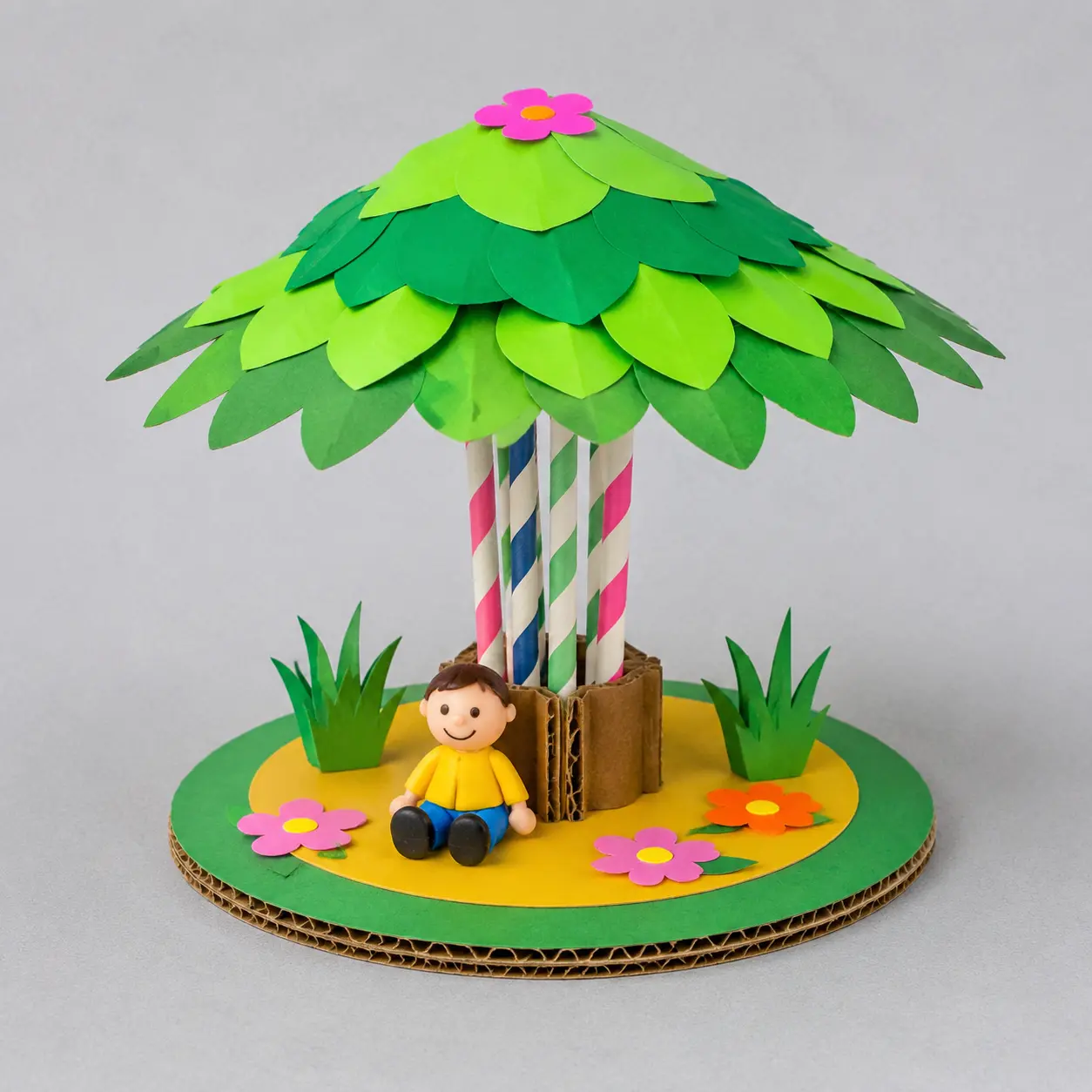
Build a freestanding canopy that shades a toy person at the teacher-marked light angle.
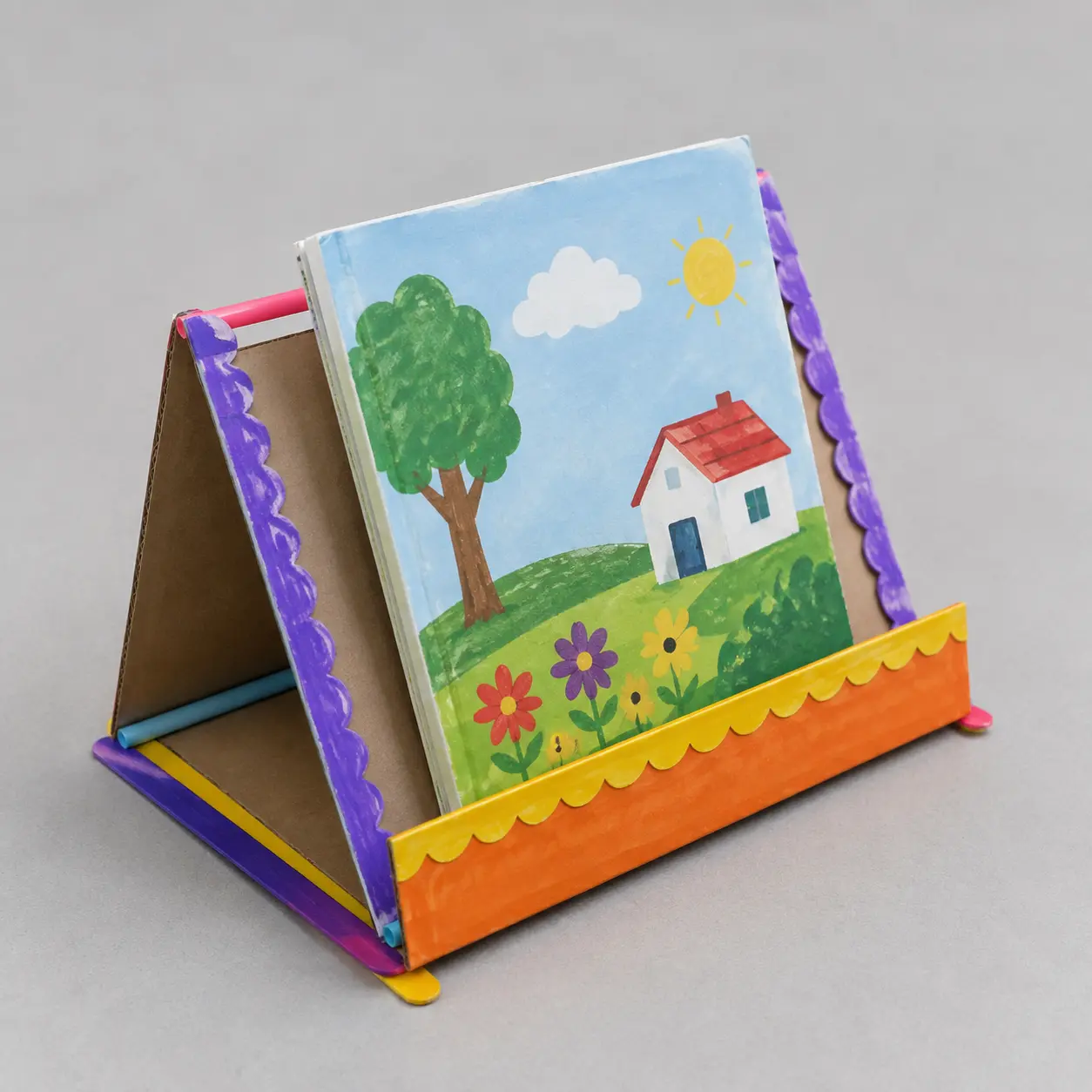
Build a folding cardboard stand that holds a thin classroom book open at a comfortable angle.
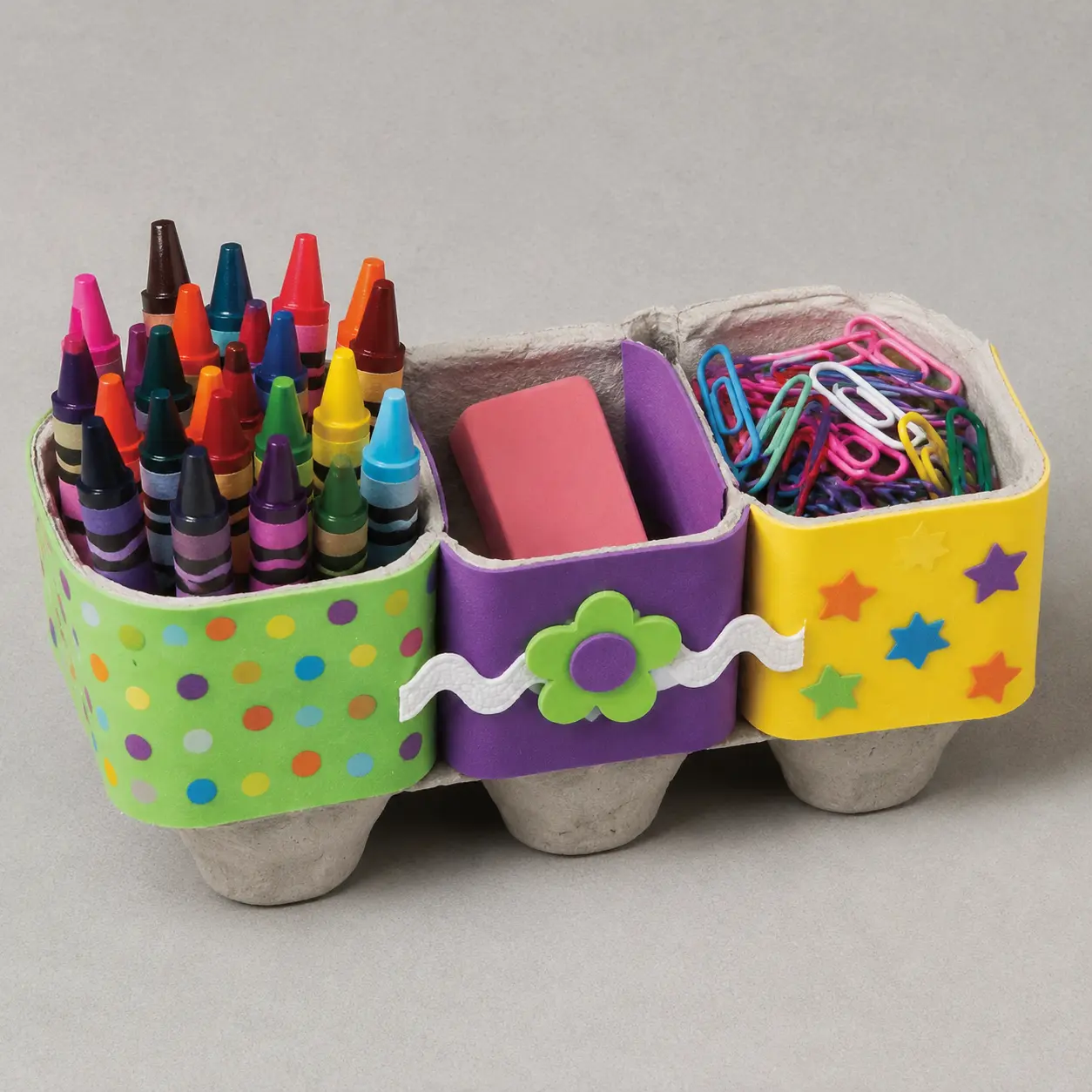
Turn an egg carton into an organizer that separates three kinds of classroom supplies.
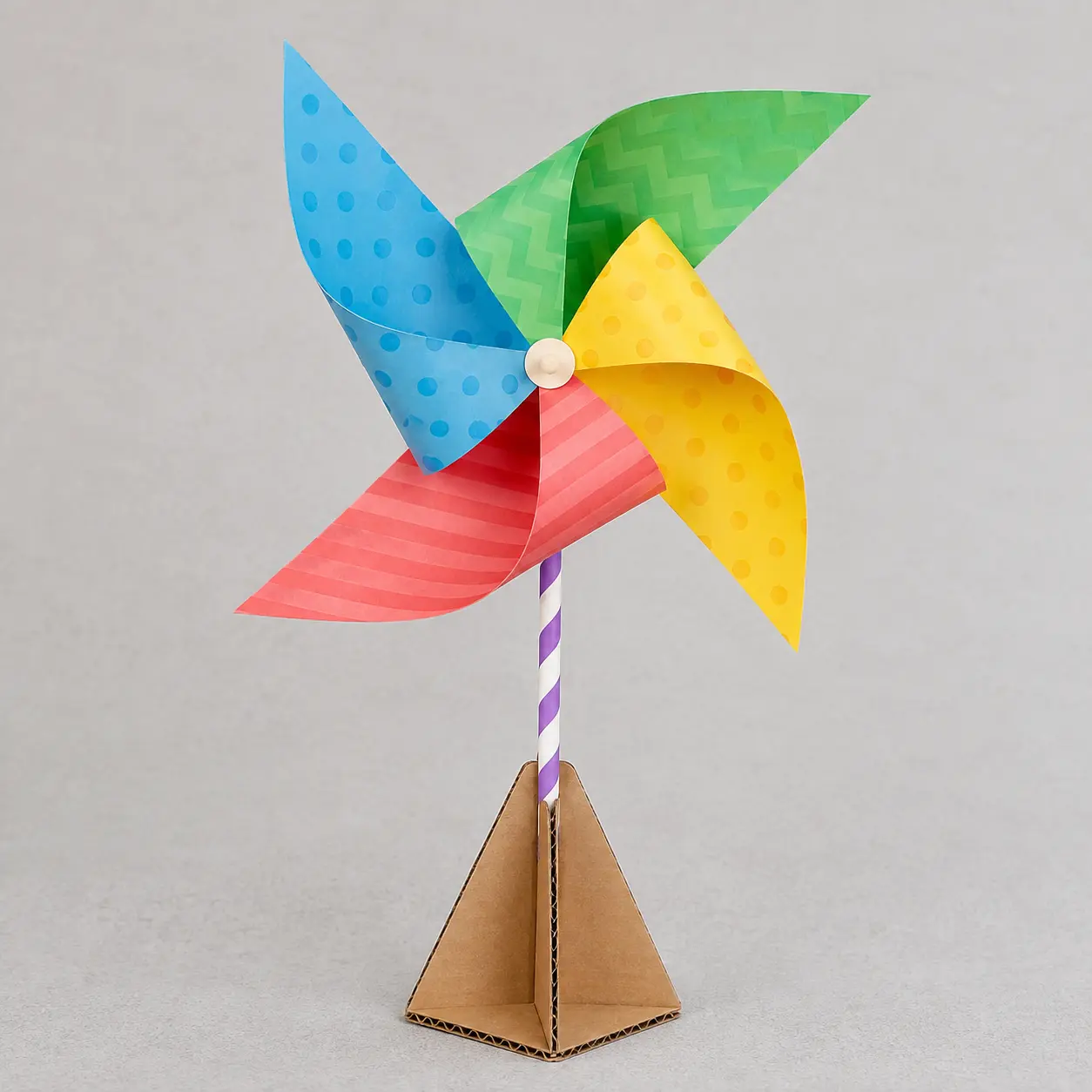
Build a large paper pinwheel that turns when a hand fan moves air from a marked spot.
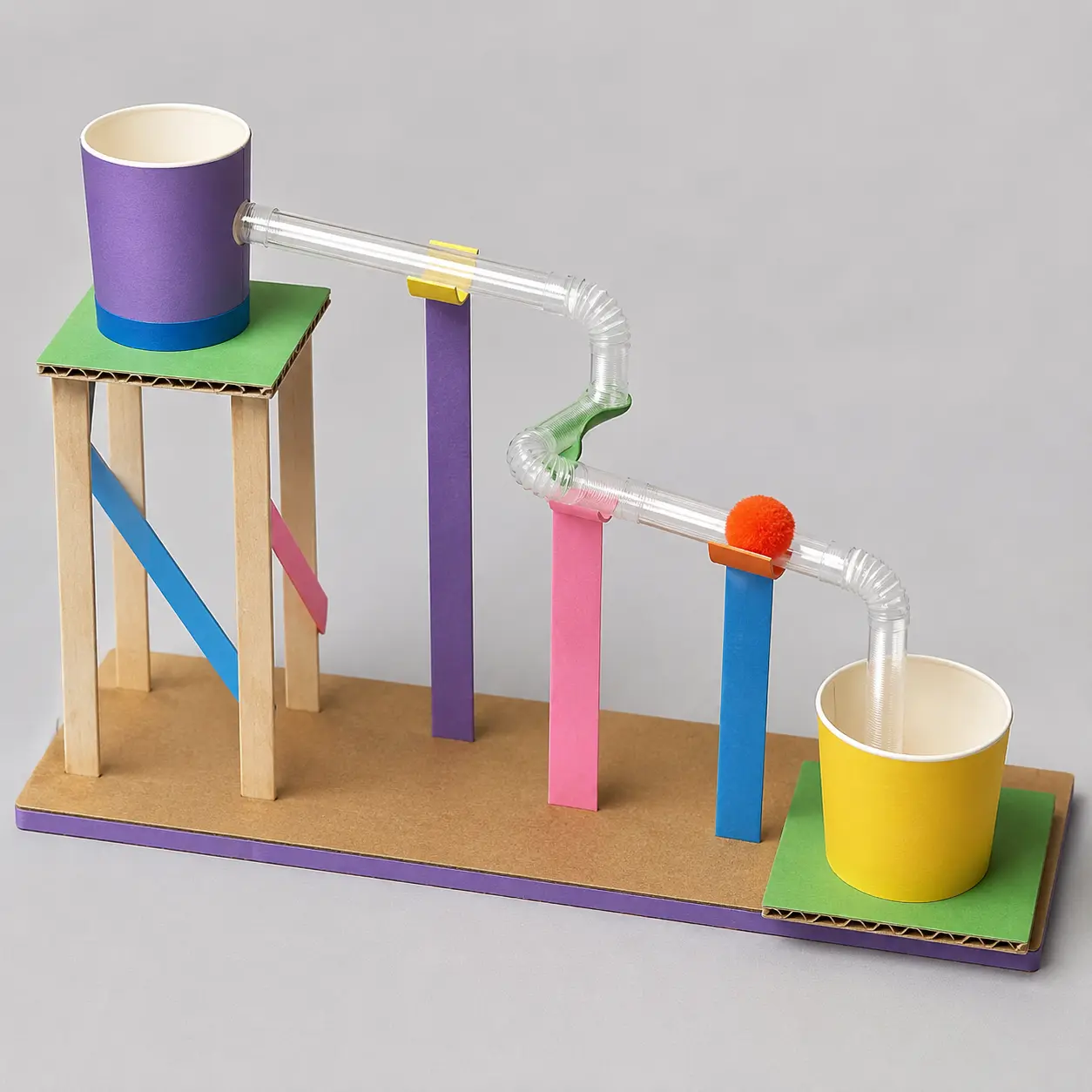
Build a supported straw pipeline that carries one large pom-pom from a high cup to a low cup.
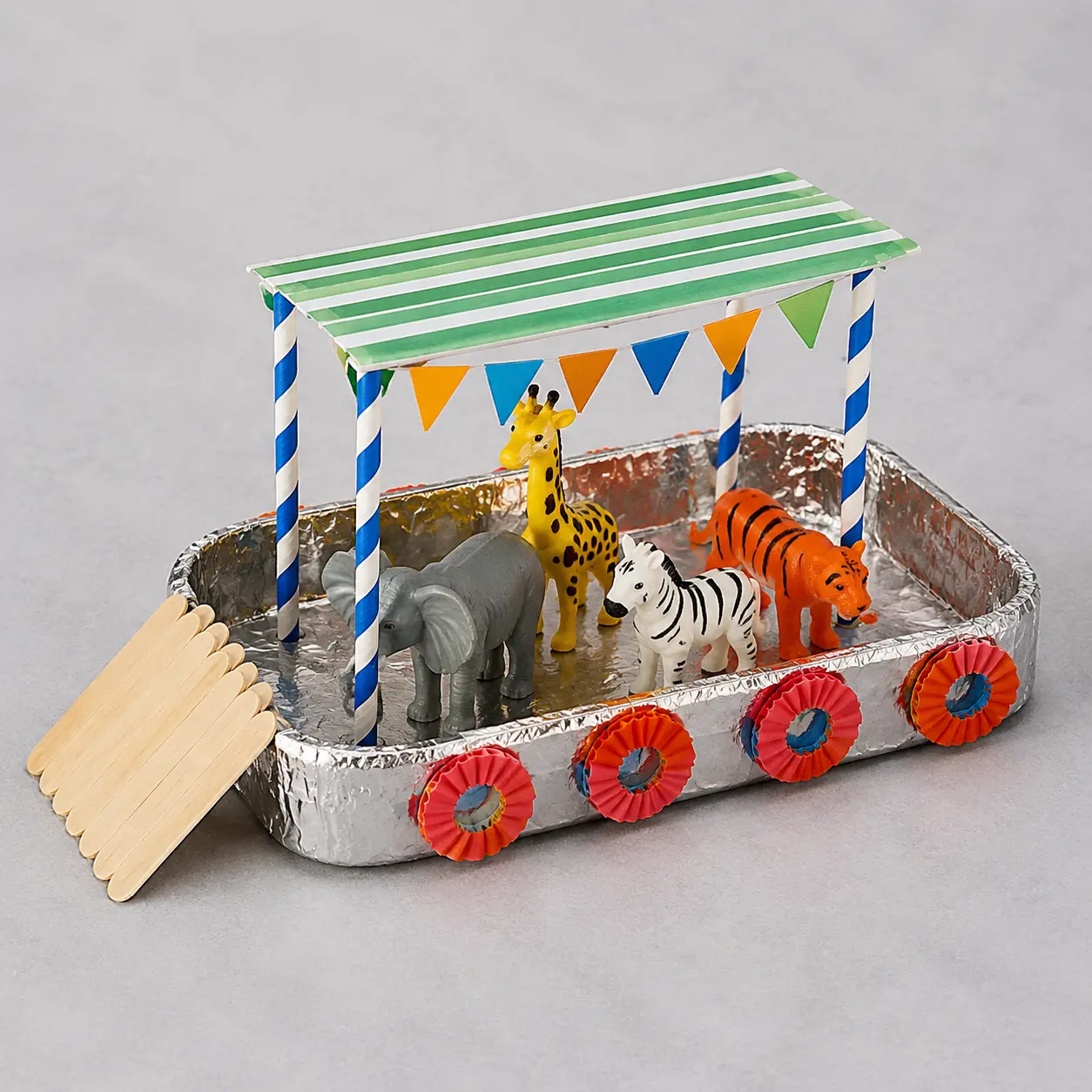
Build a wide foil ferry that floats while carrying four large plastic passengers.
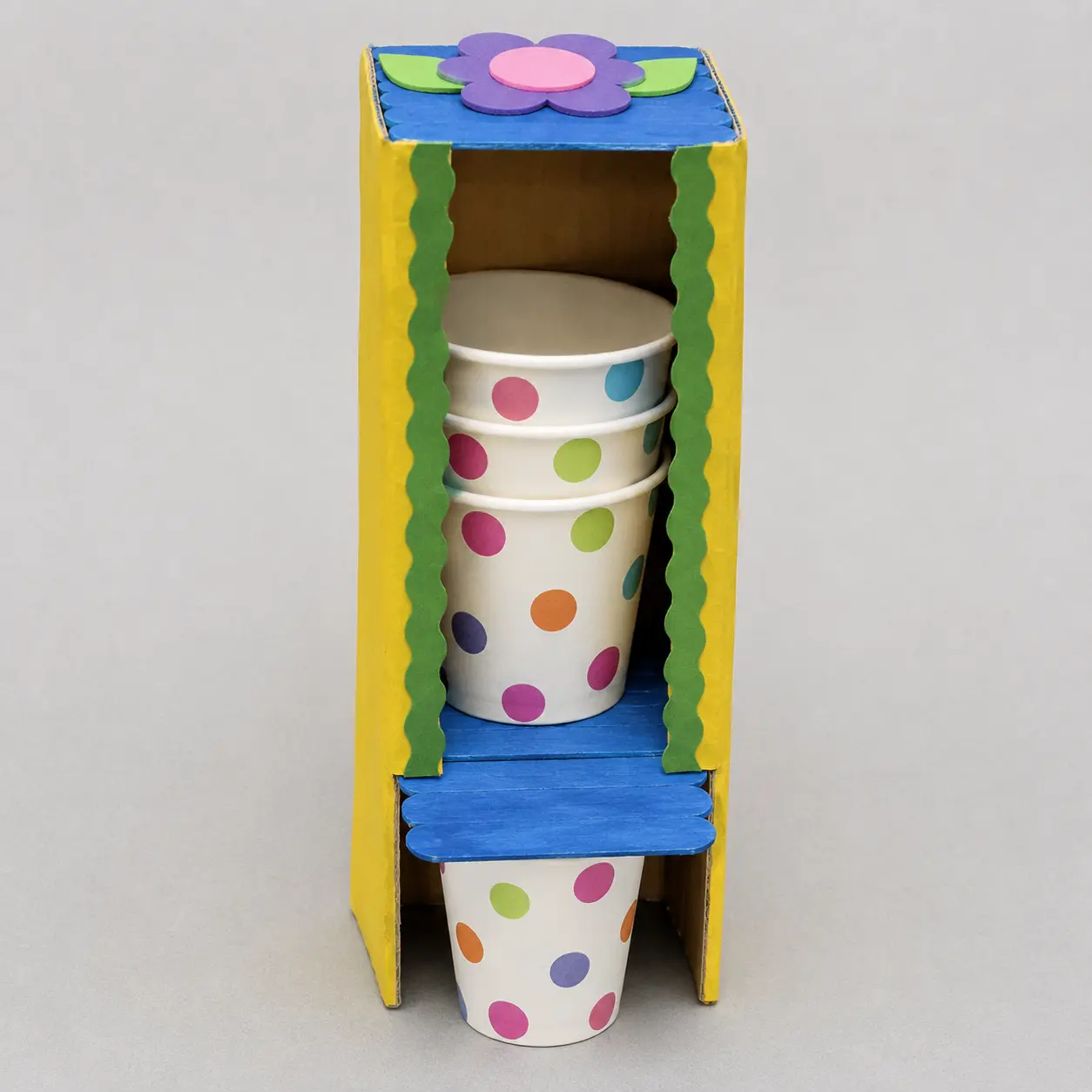
Build a cardboard sleeve that stores four paper cups and lets a user remove only the bottom cup.
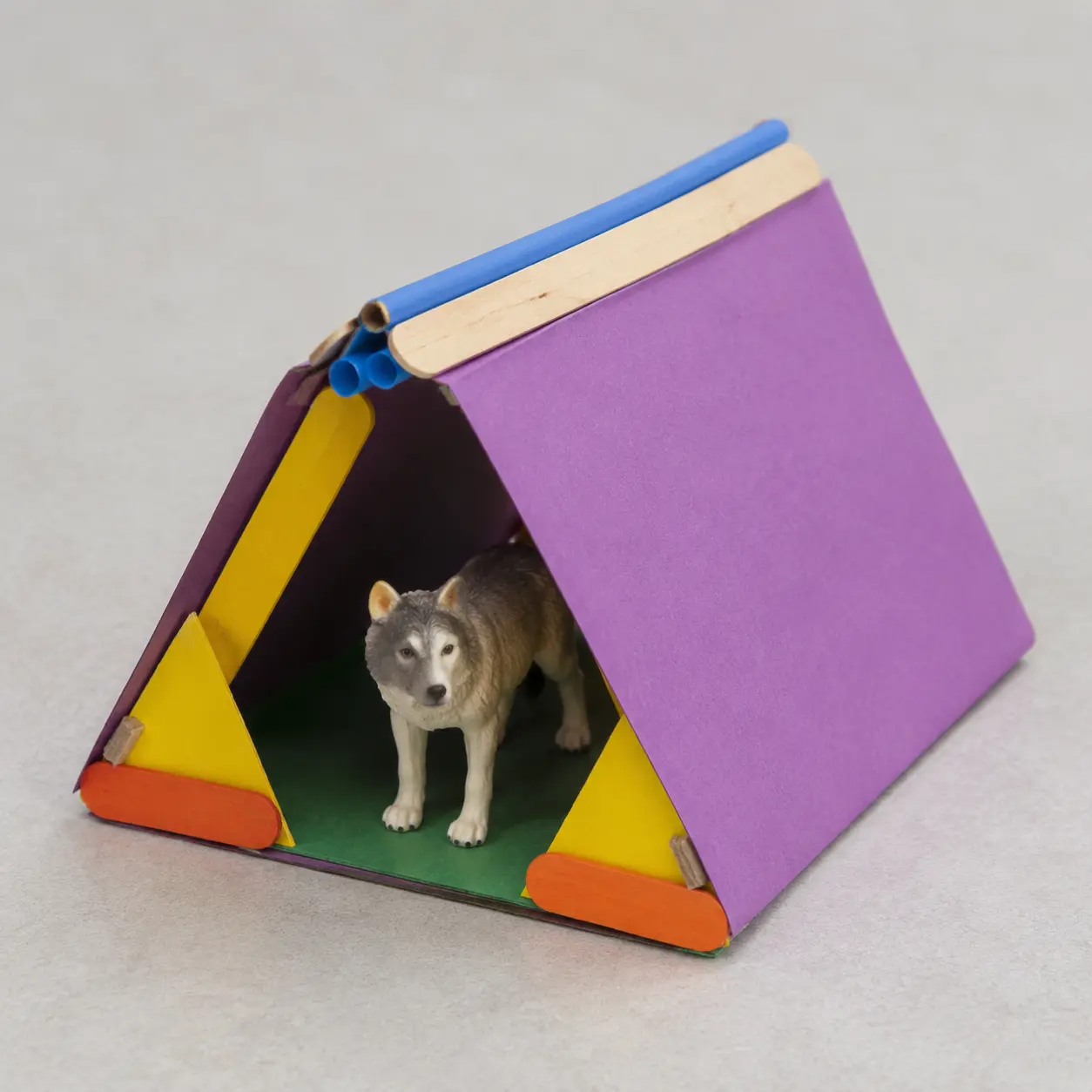
Build a folded-paper tent that stands for one minute and shelters a toy animal.
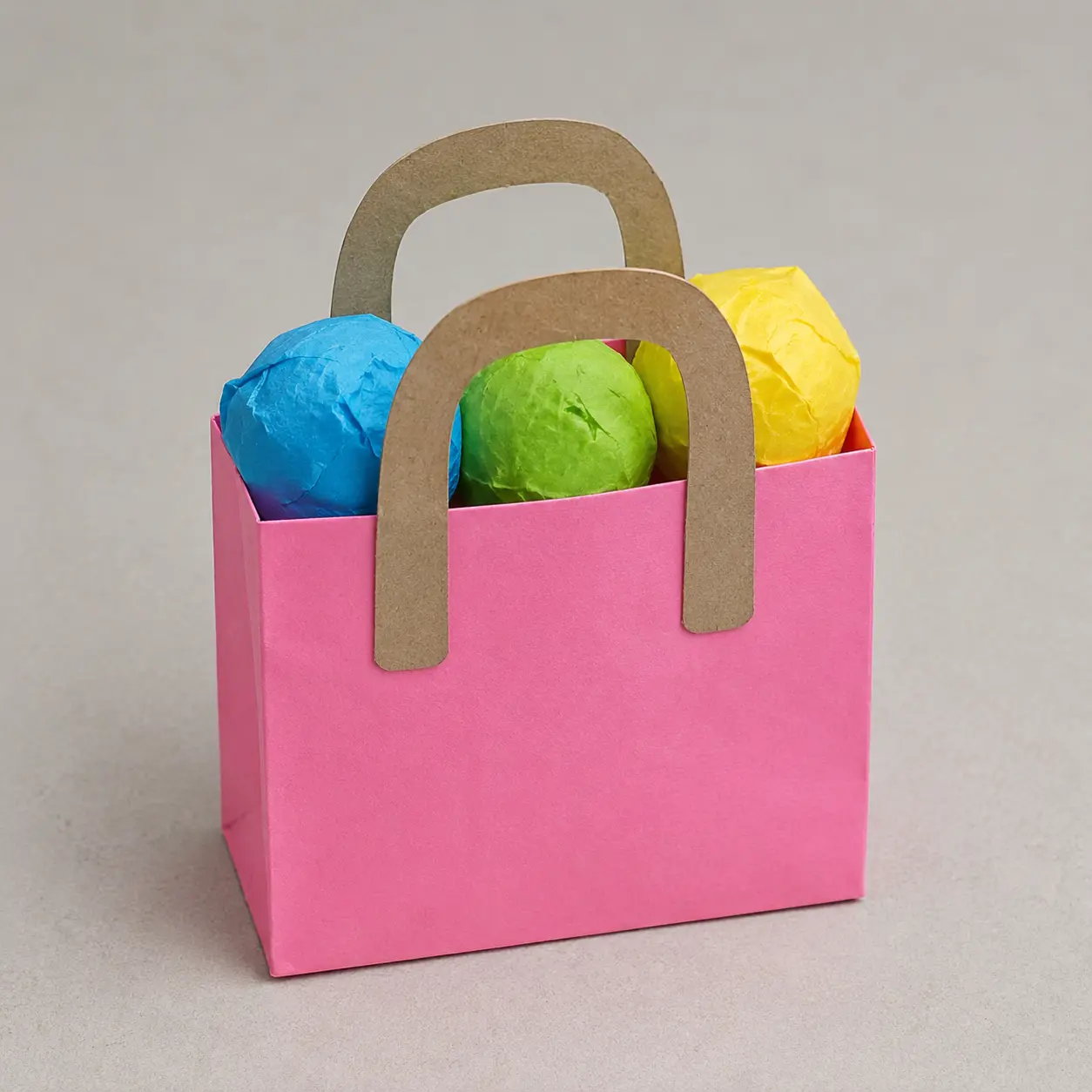
Build a small paper bag with reinforced handles that carries three paper balls.
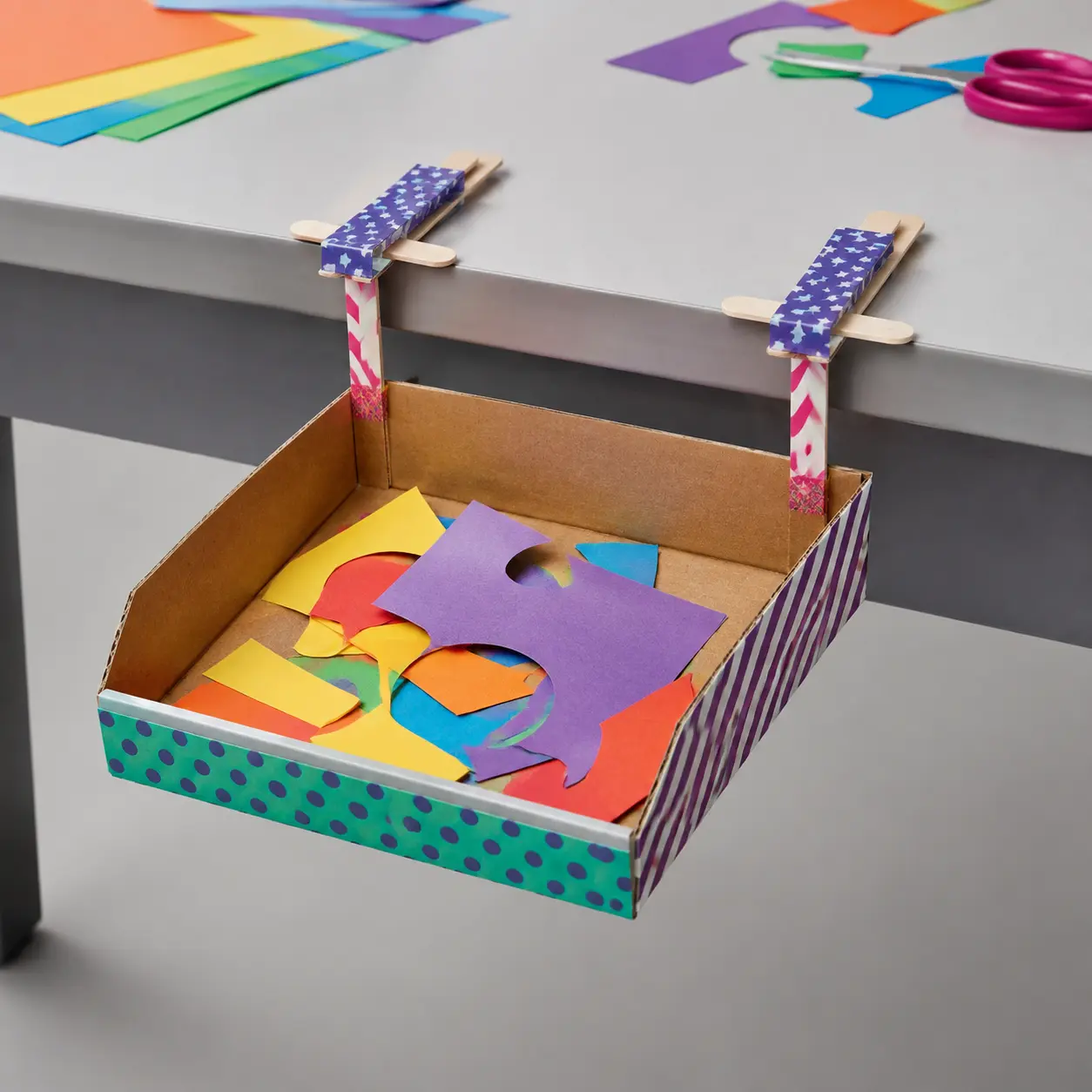
Build a removable cardboard tray that catches large paper scraps at the edge of a model table.
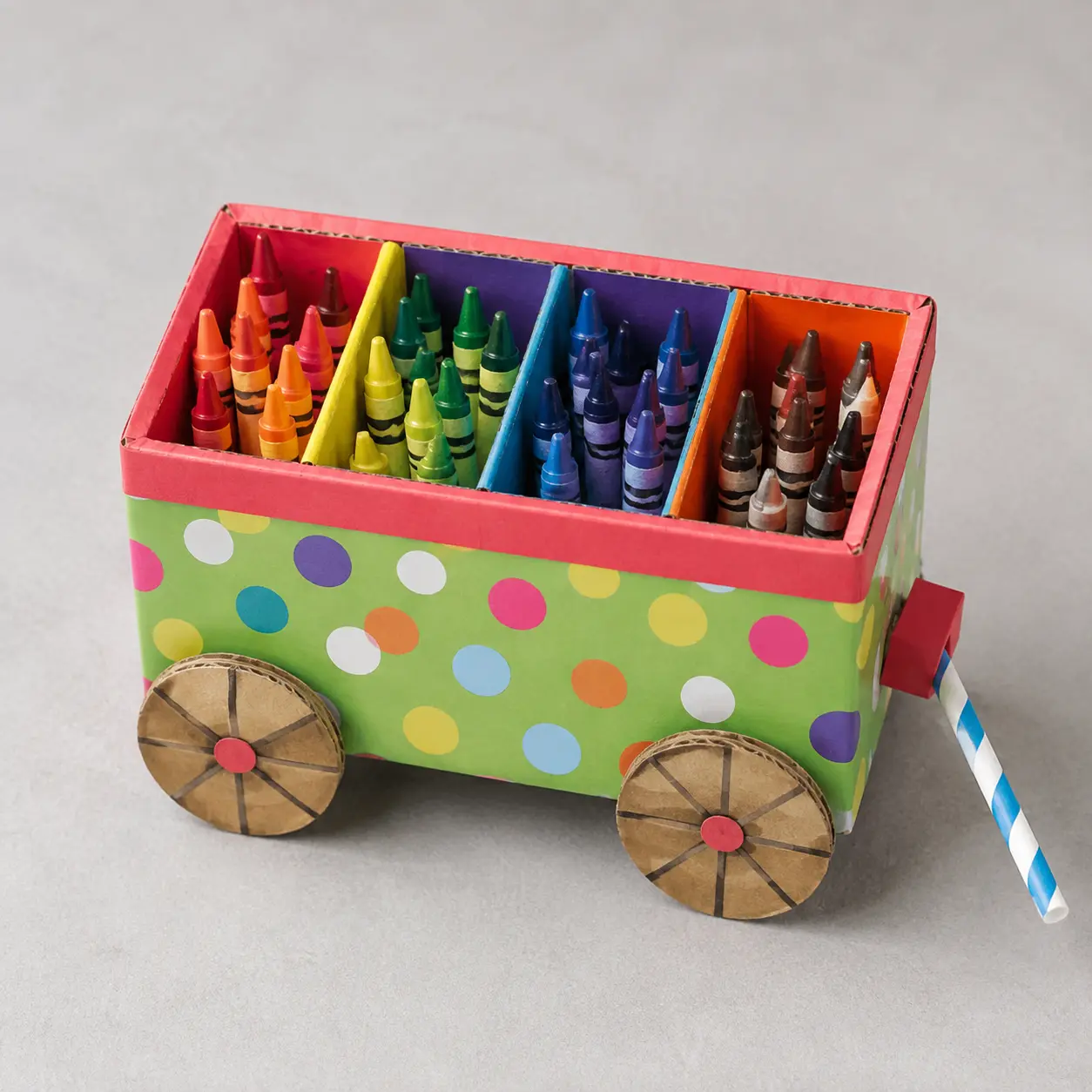
Build a small cardboard cart that rolls 1 m while carrying six crayons in divided spaces.
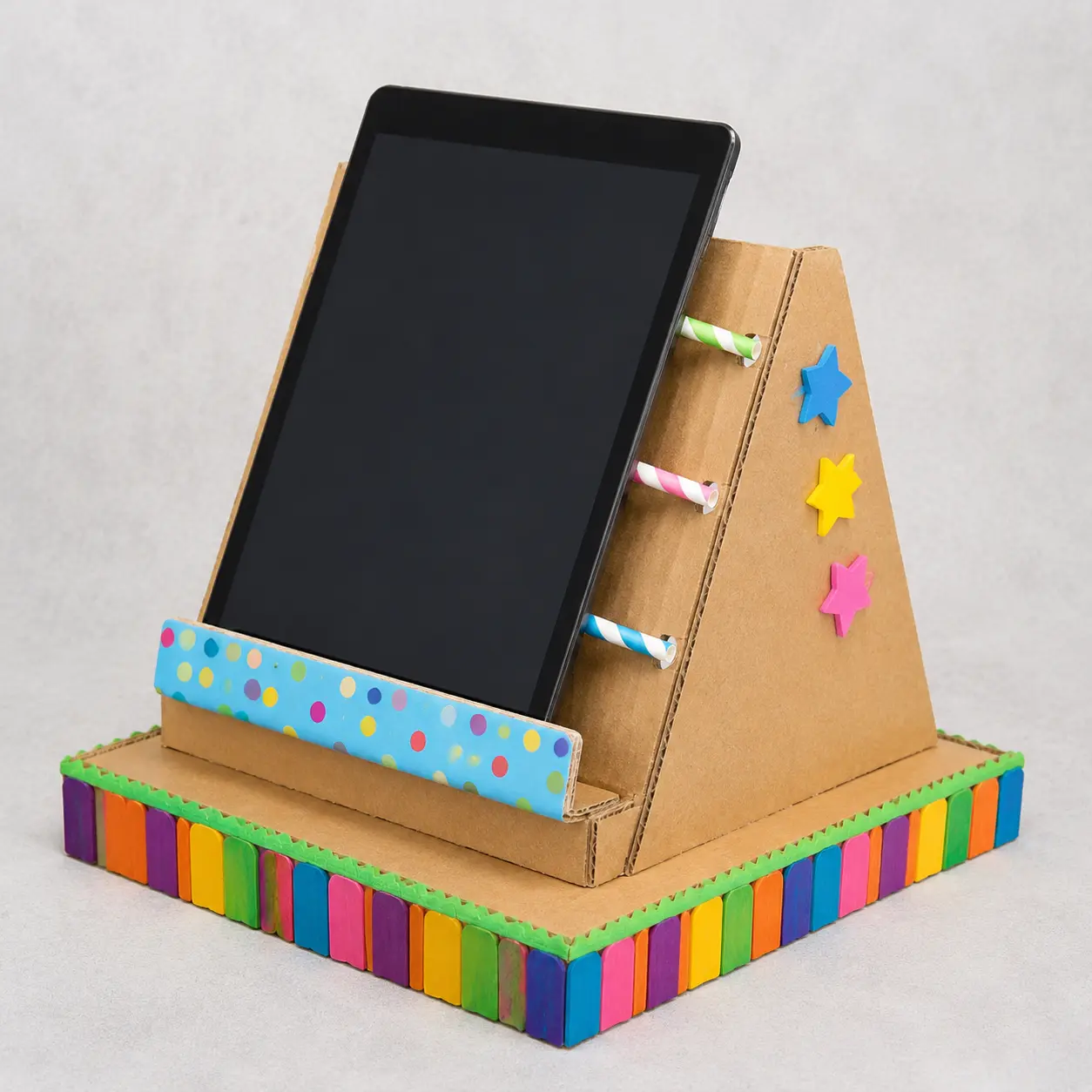
Build a cardboard stand that safely holds a classroom tablet at three viewing angles.
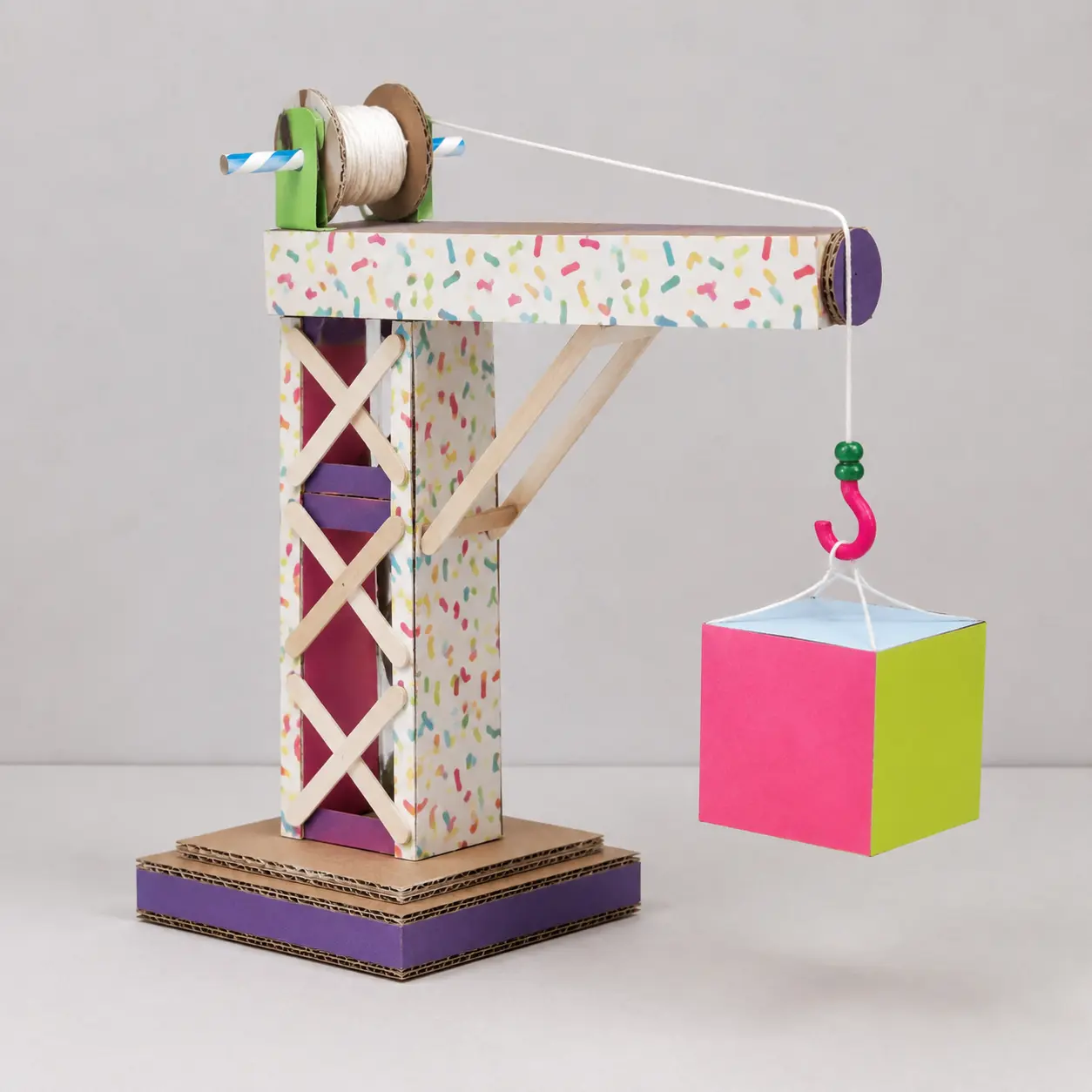
Build a stable cardboard crane that lifts and lowers one large paper cube 15 cm.
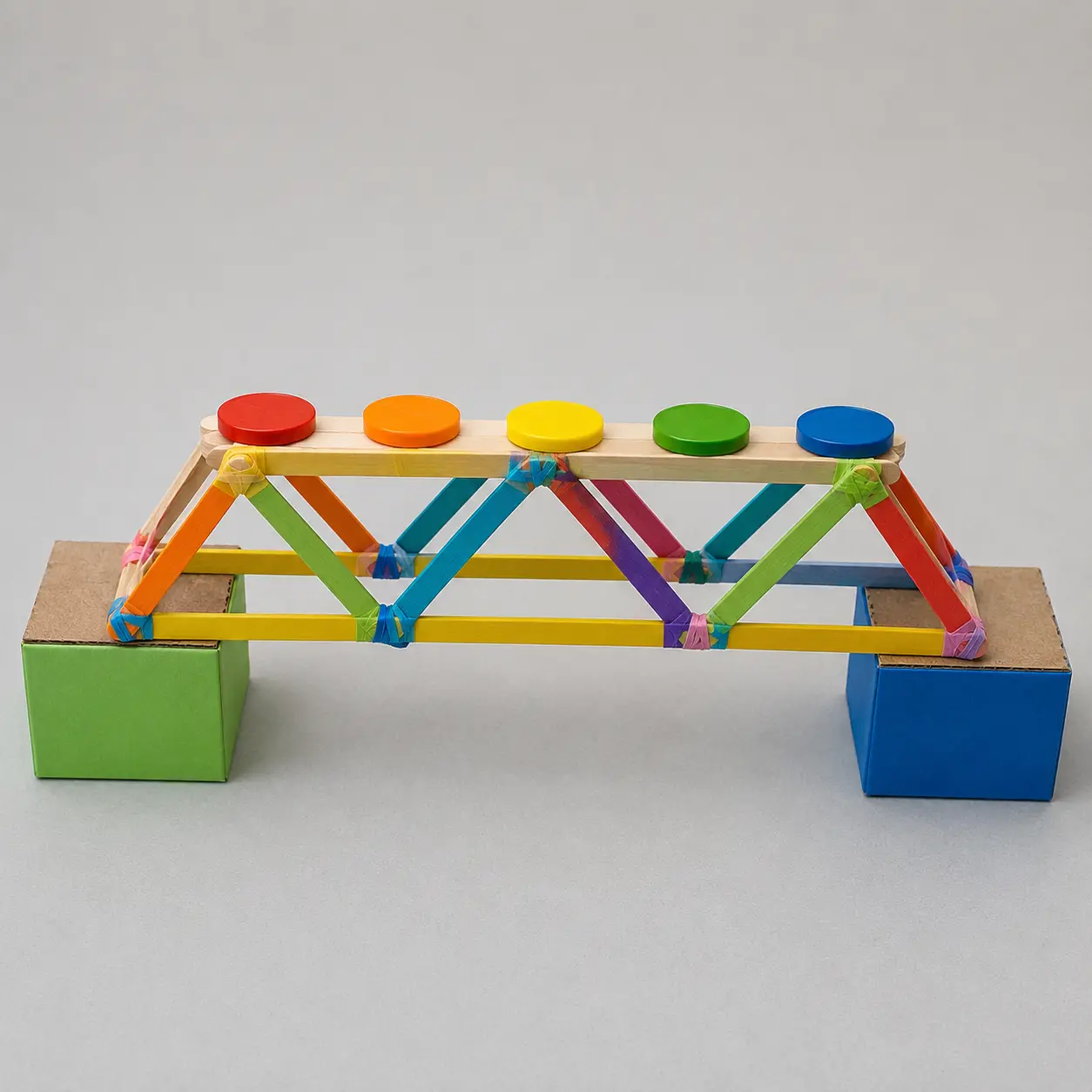
Build a craft-stick truss that spans 25 cm and holds five large counters.
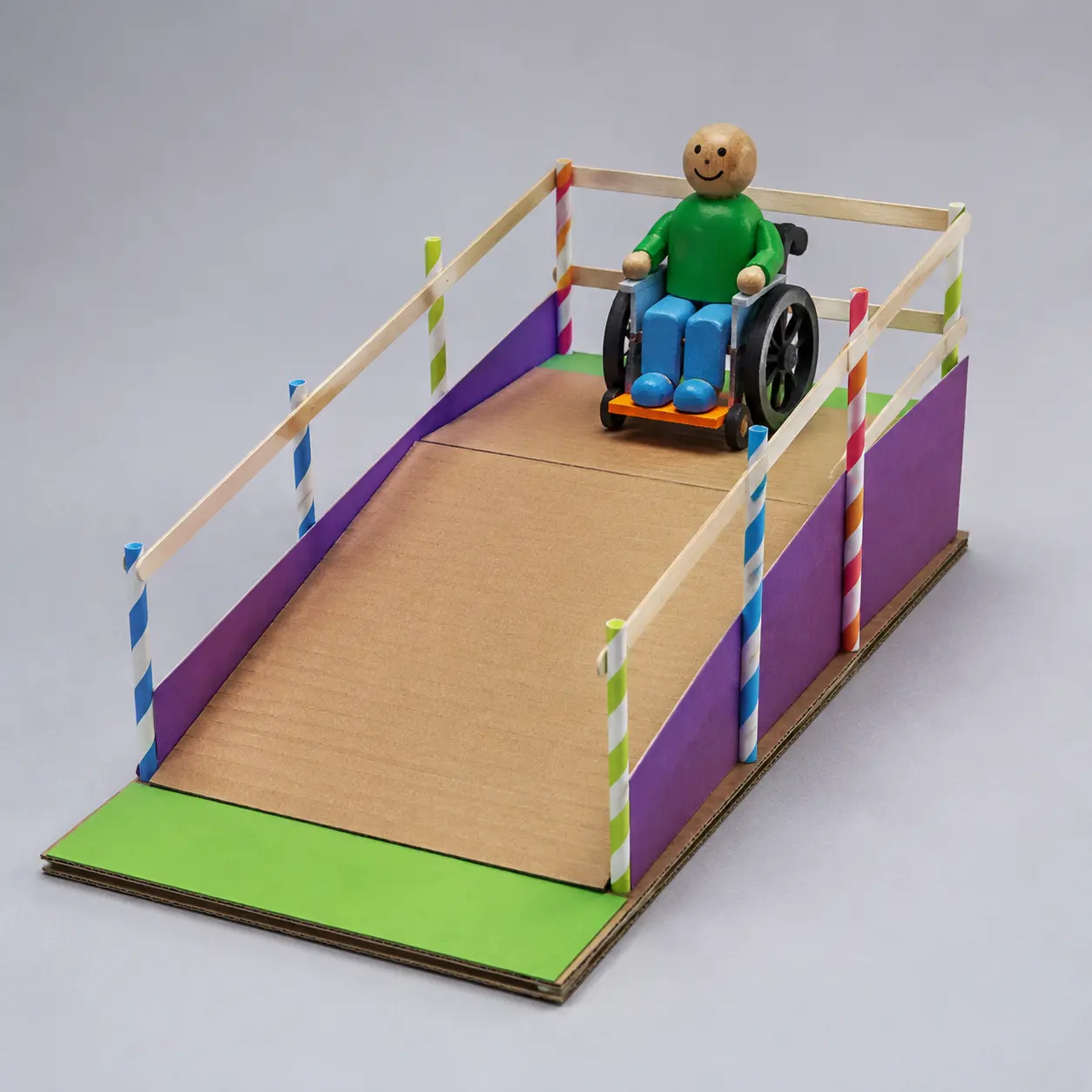
Build a model ramp with rails and a level landing that a toy wheelchair can use.
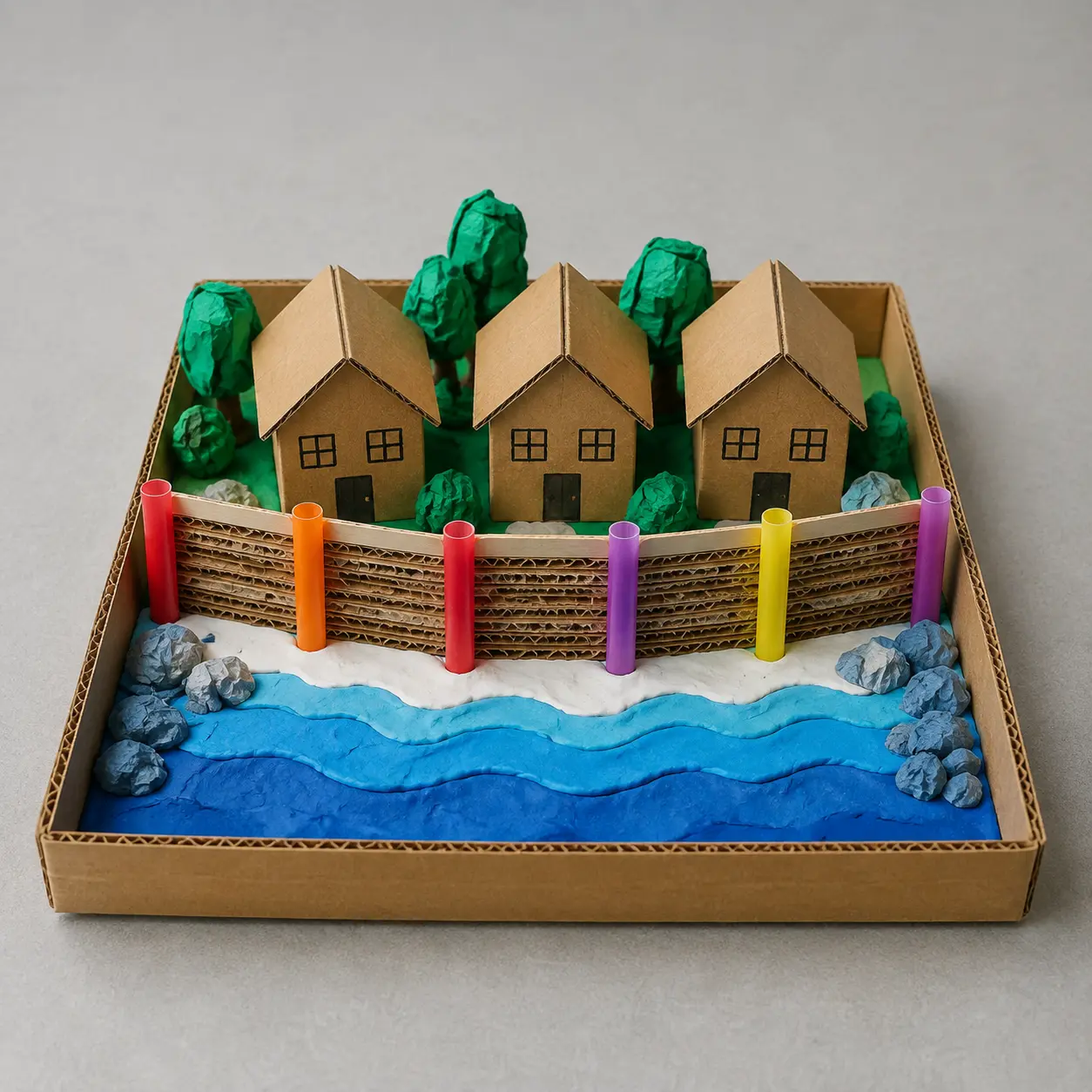
Build a model barrier that keeps a row of three paper houses dry during a measured water test.
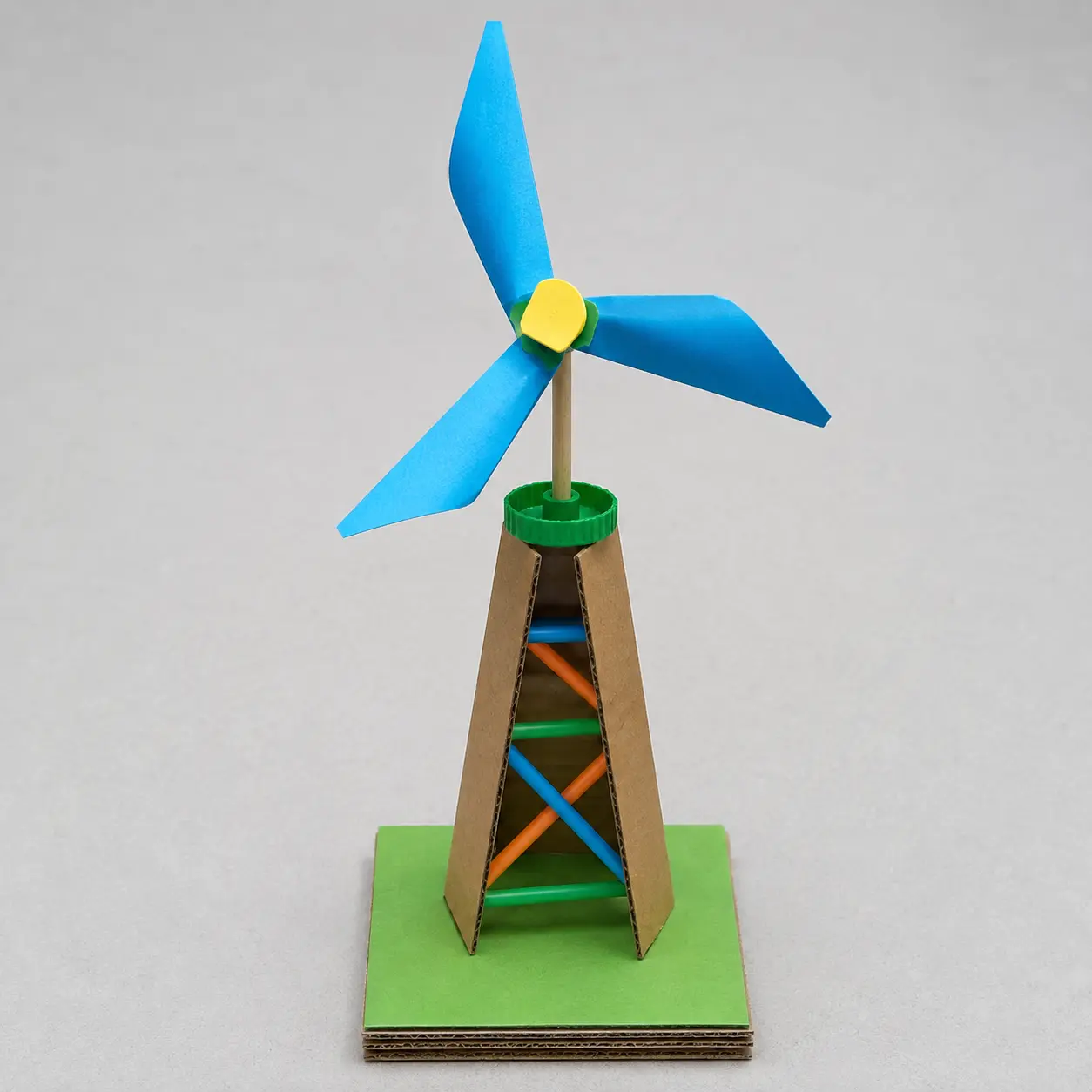
Build a paper-blade turbine that turns on a stable tower when moved by a hand fan.
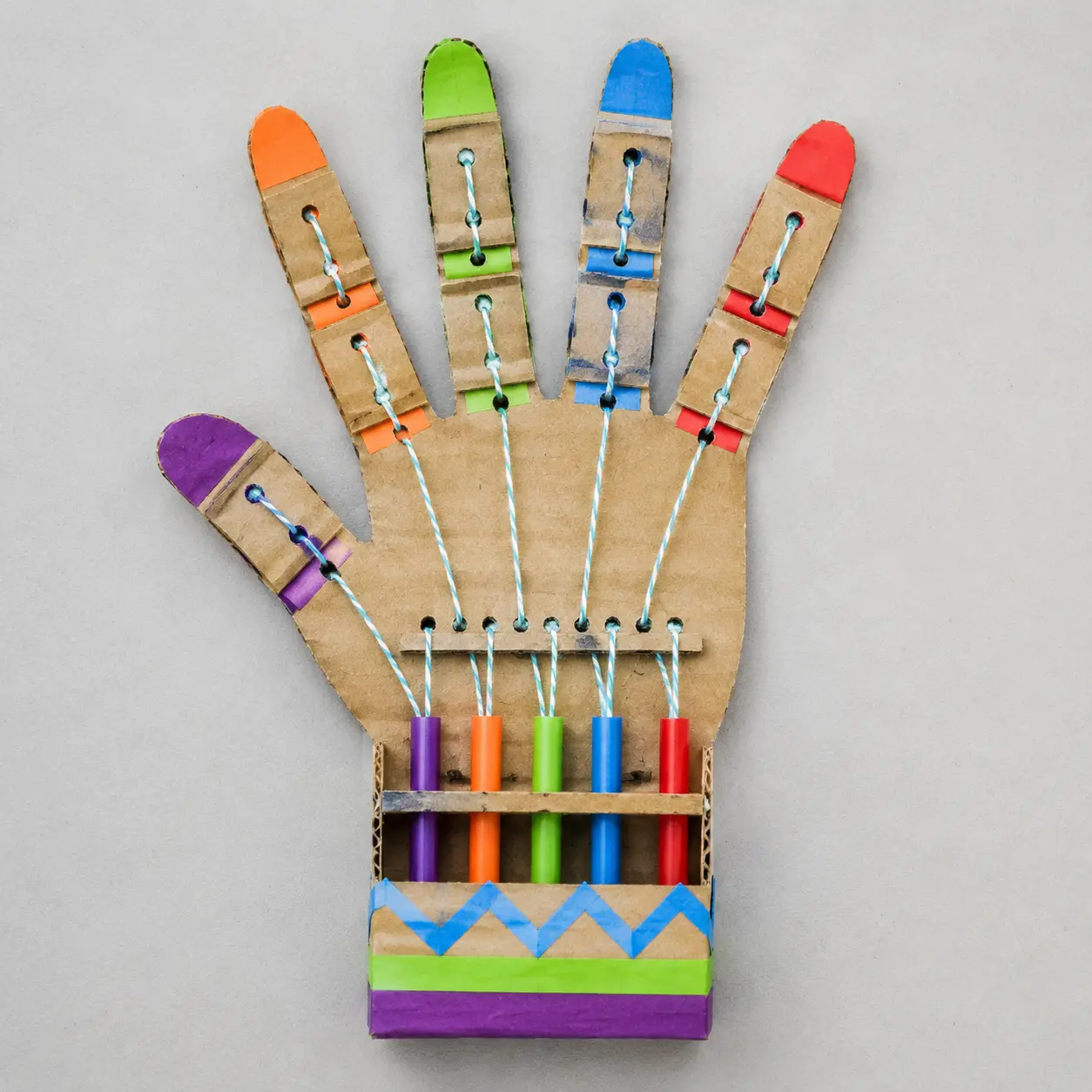
Build a flat cardboard hand model with five fingers that bend when short strings are pulled.
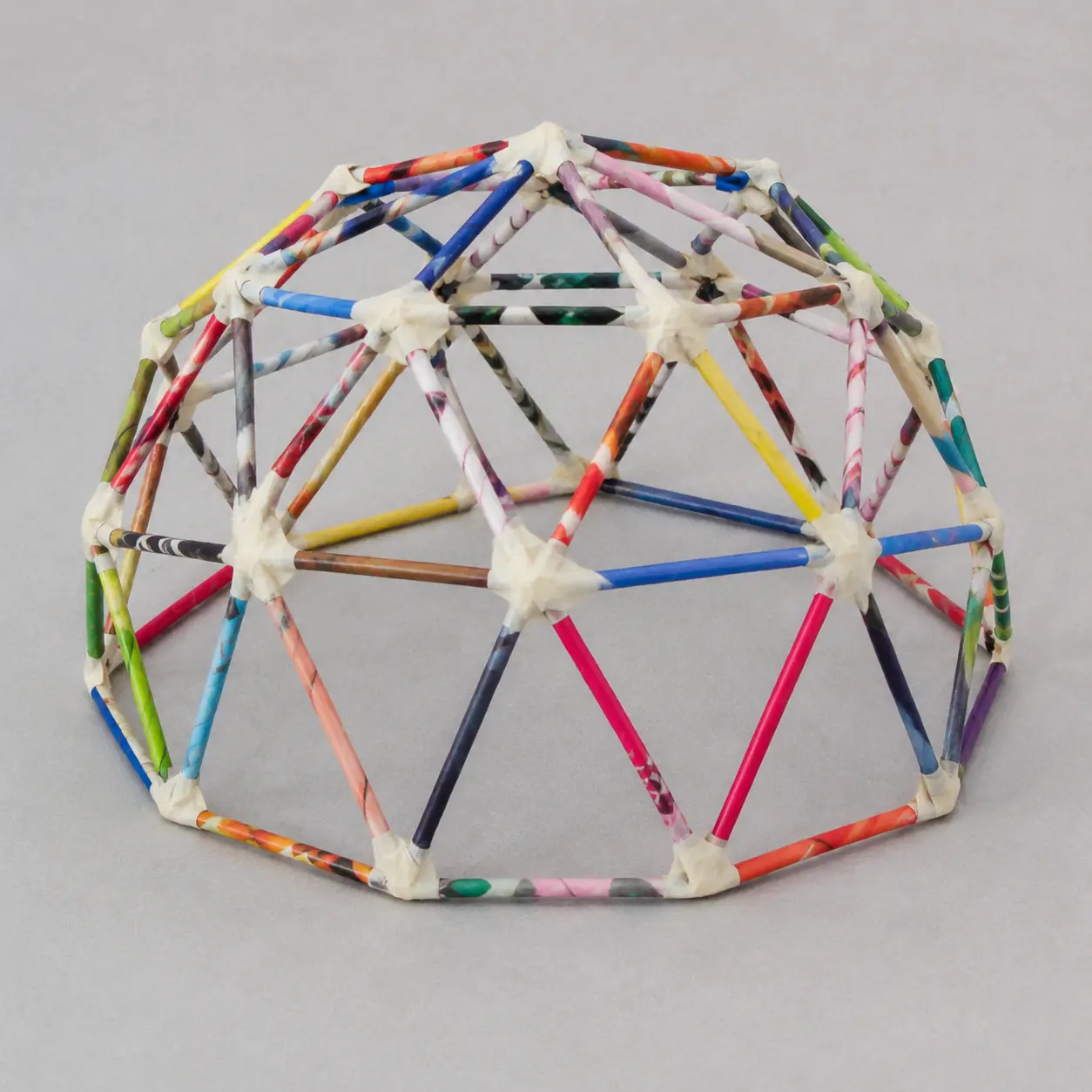
Build a freestanding dome from rolled-paper struts that covers a 25 cm circle.
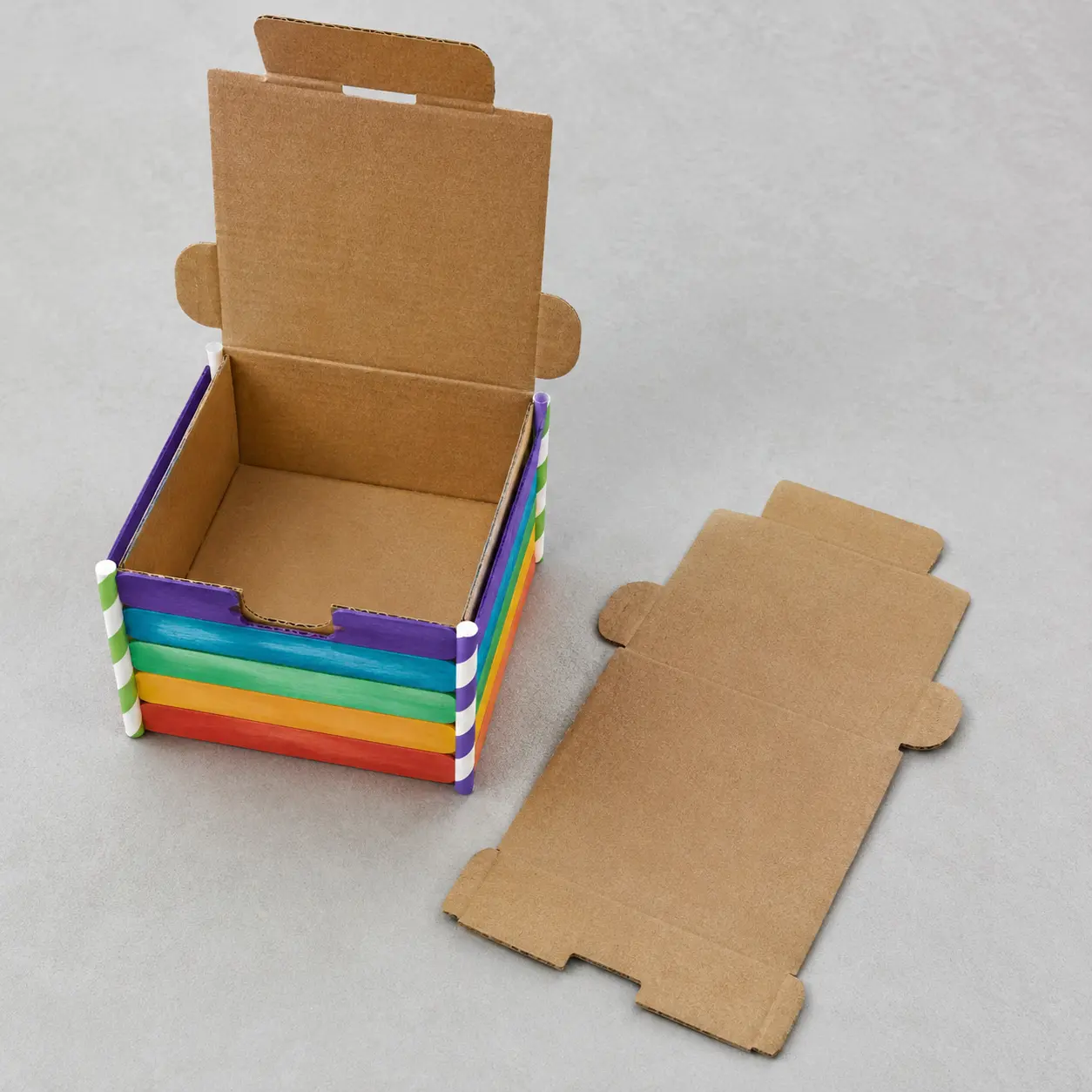
Build a reusable cardboard box that locks open, holds supplies and folds flat without removing tape.
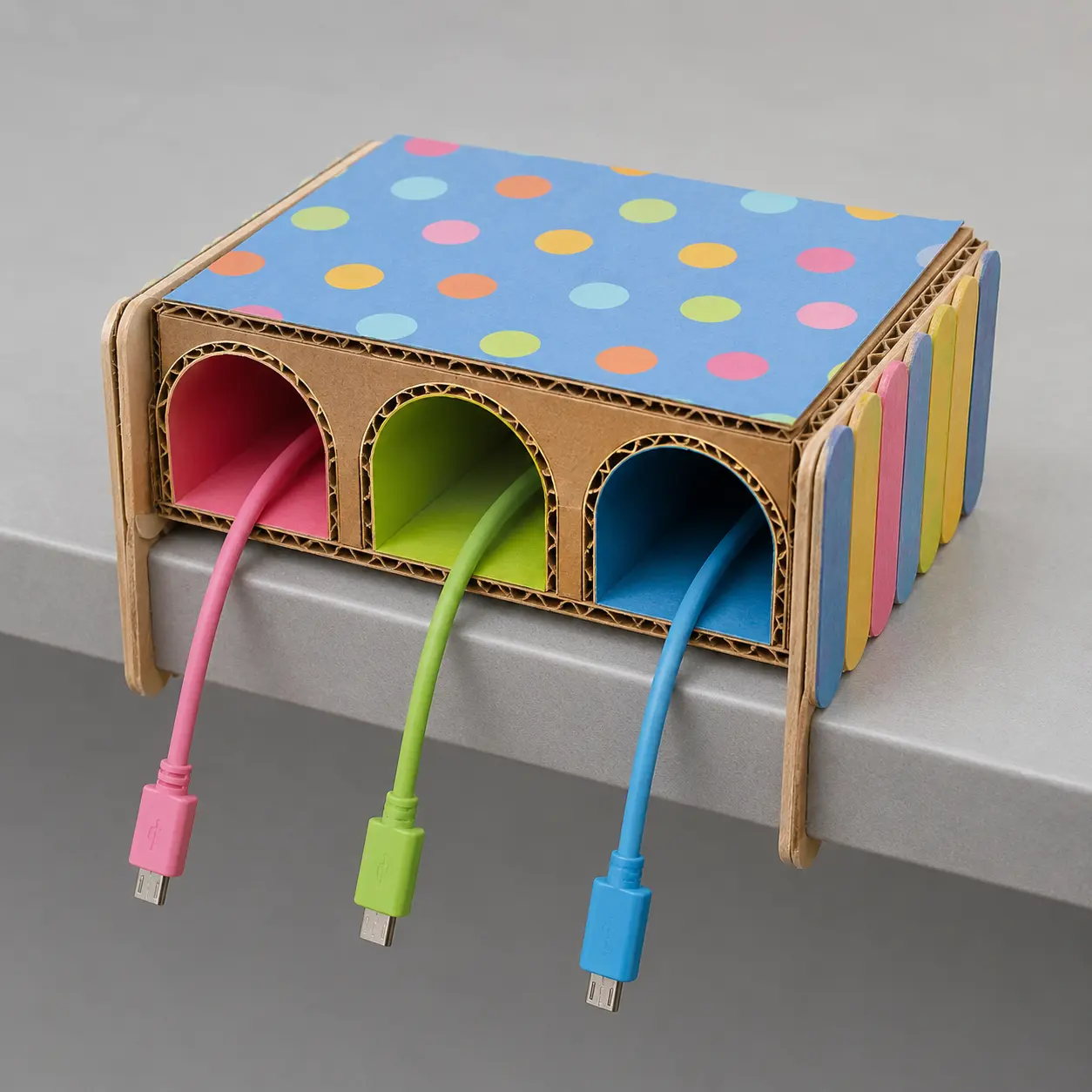
Build a removable desk-edge guide that keeps three classroom cords separated and reachable.
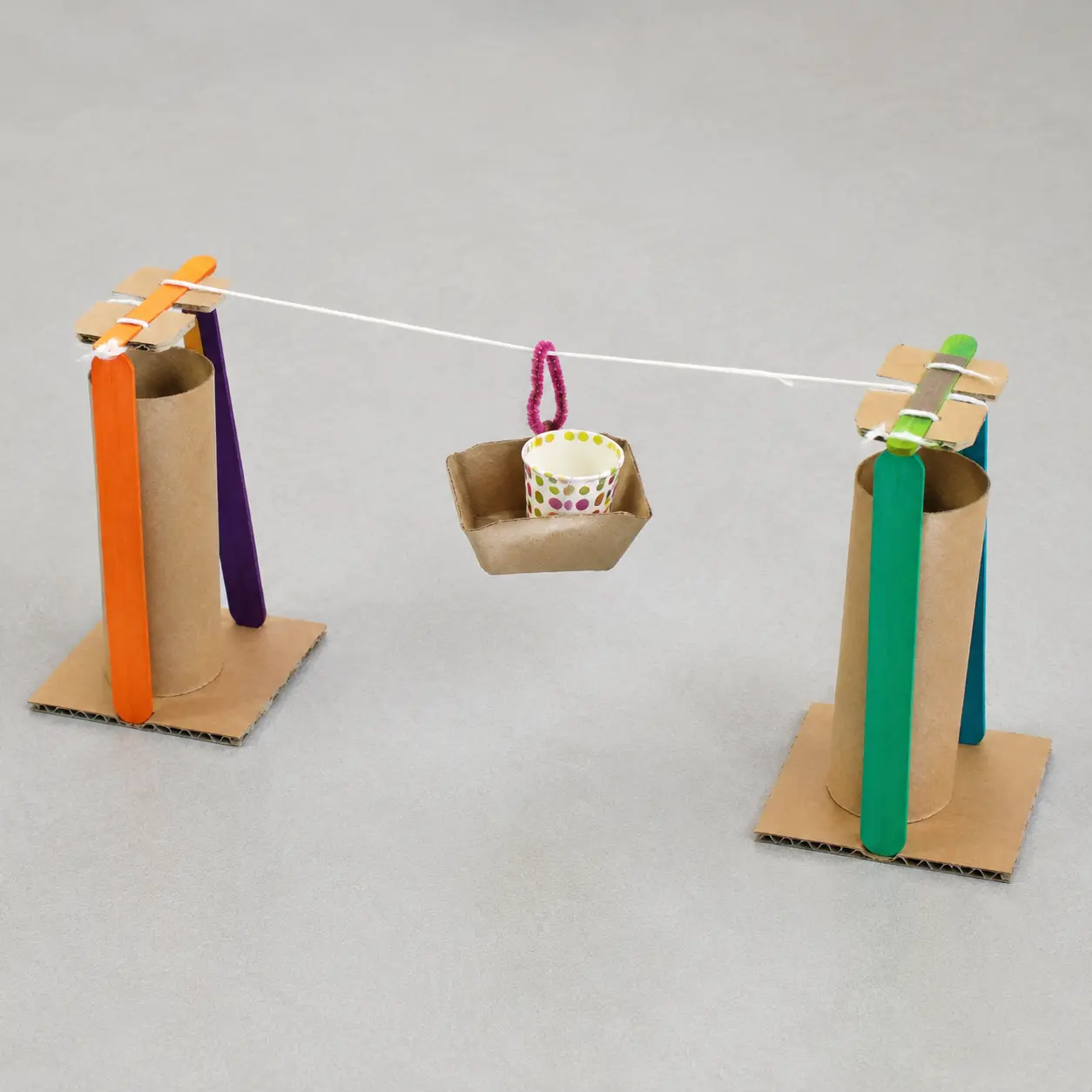
Build a low tabletop carrier that travels down a short string line and delivers one paper message.
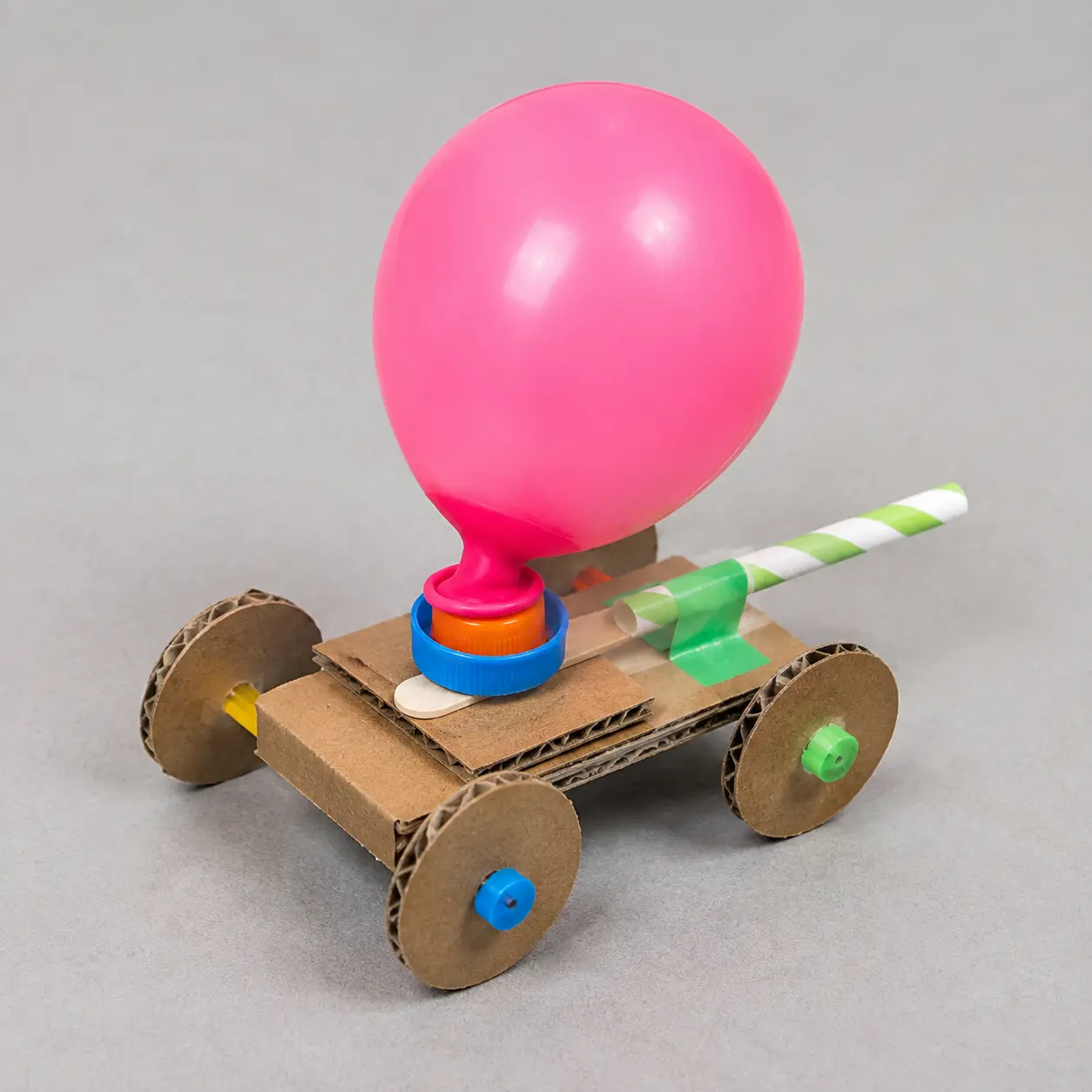
Build a four-wheel car powered by air leaving an inflated balloon through a straw.
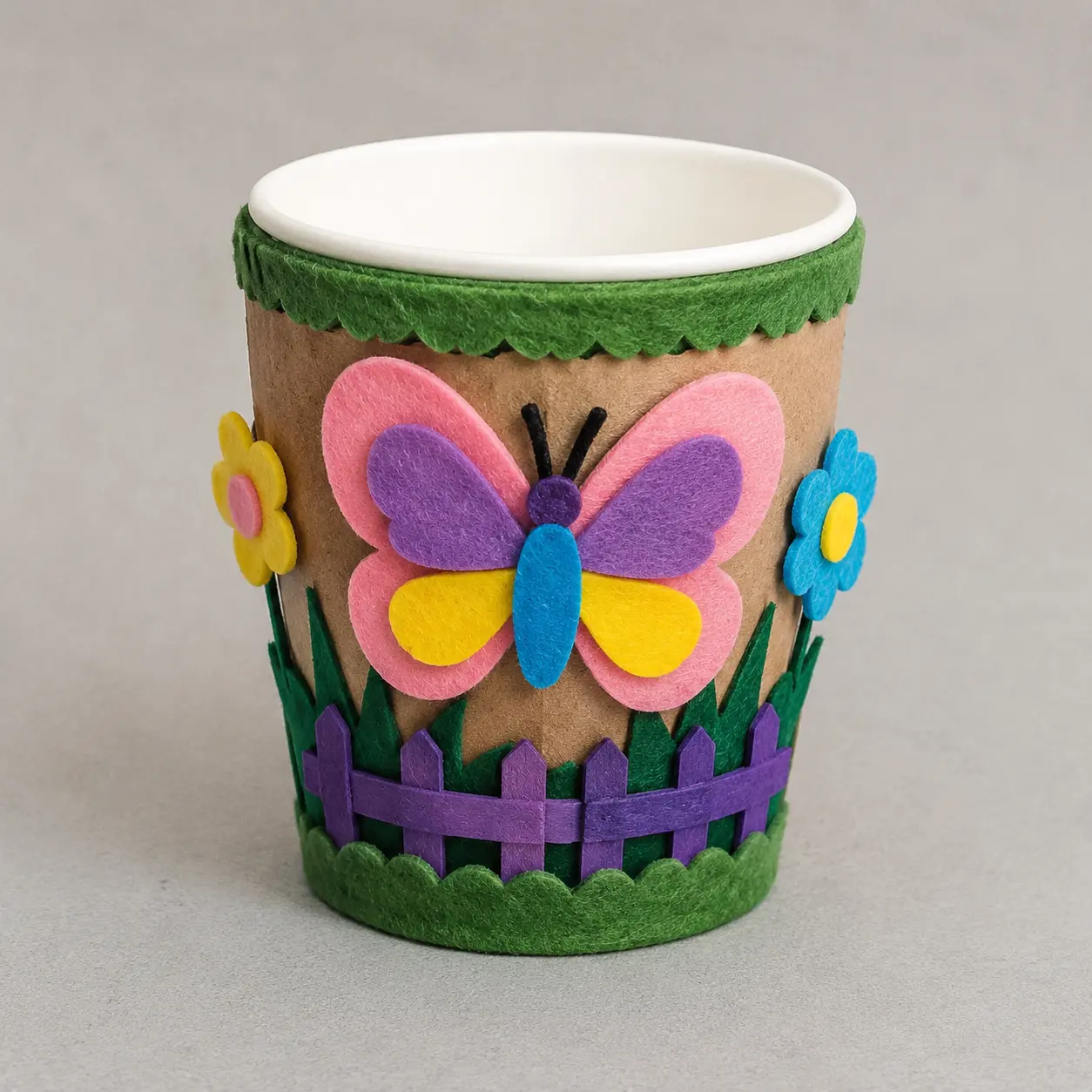
Build a reusable sleeve that slows temperature change in a paper cup filled by the teacher.
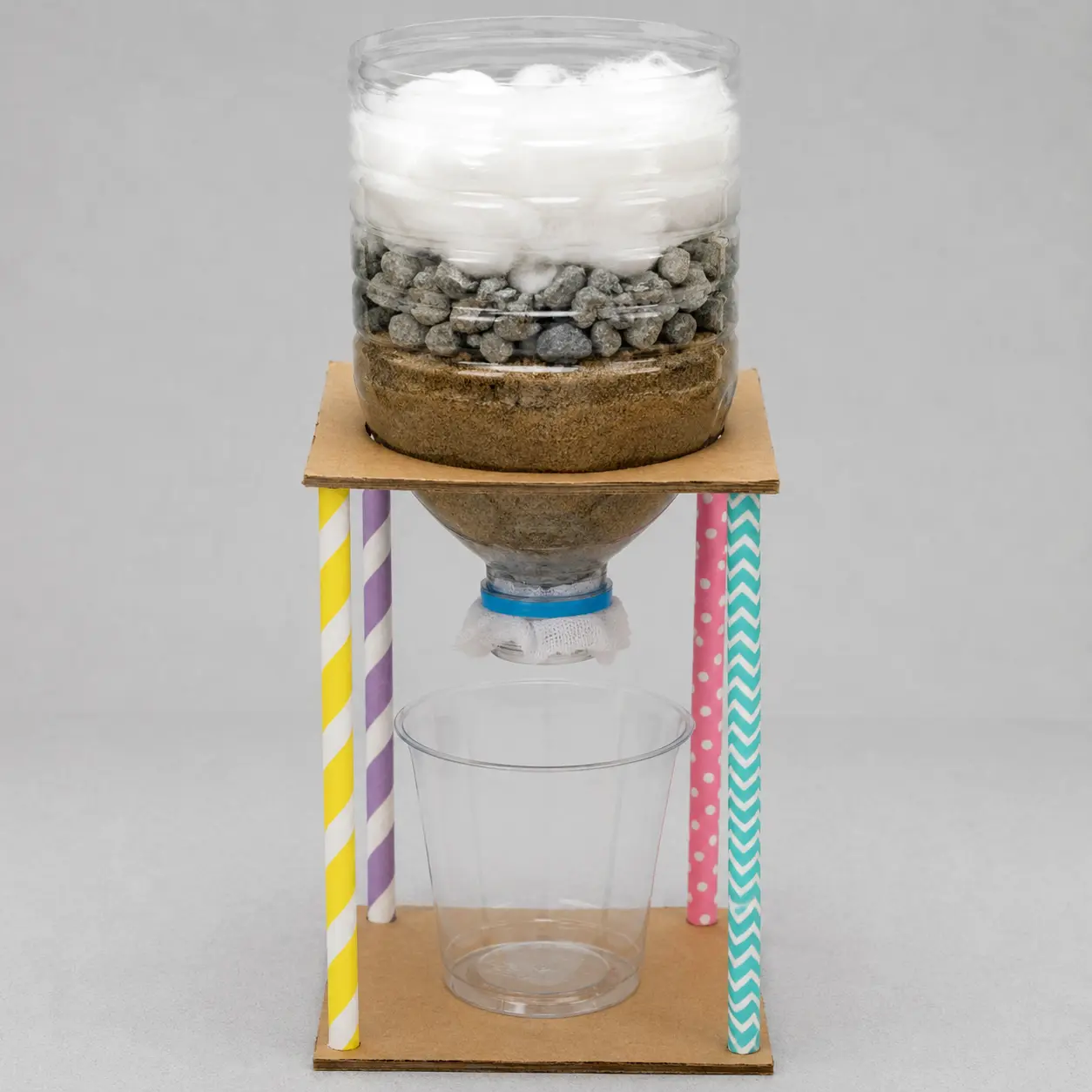
Build a bottle filter model that removes visible particles from muddy test water for observation only.
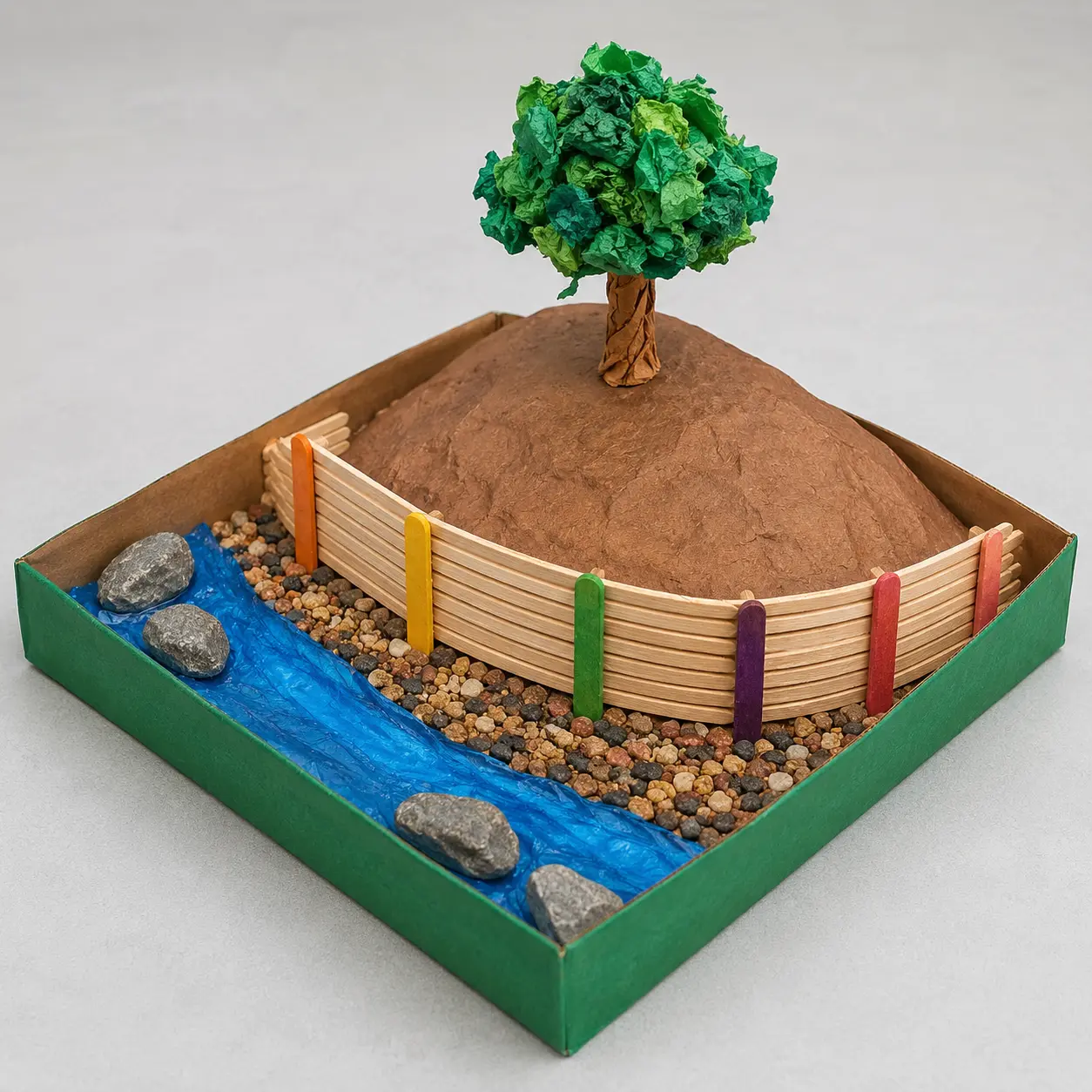
Build a model retaining wall that keeps a clay hill and toy tree in place during a measured water test.
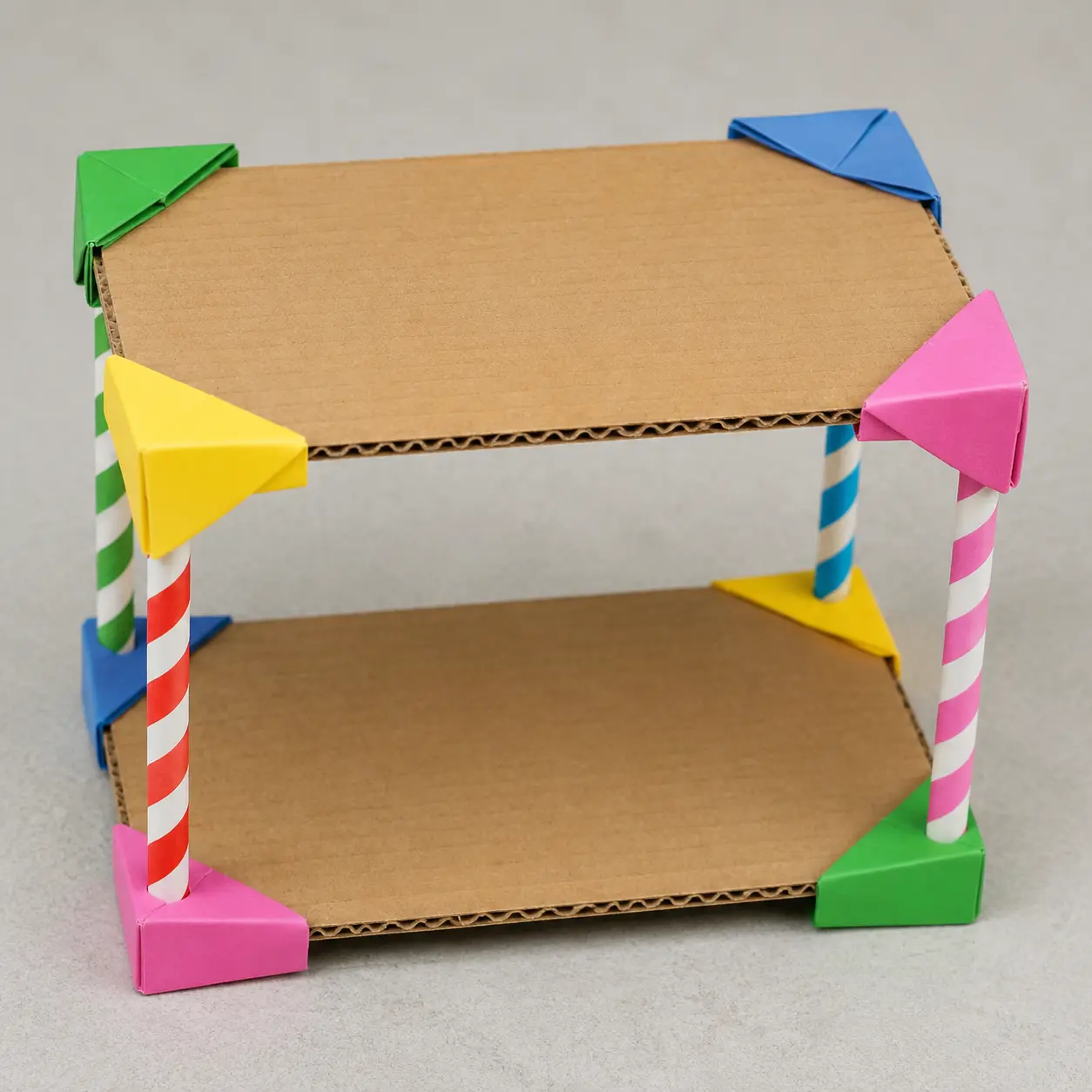
Build a two-level cardboard shelf using removable folded connectors instead of permanent glue.
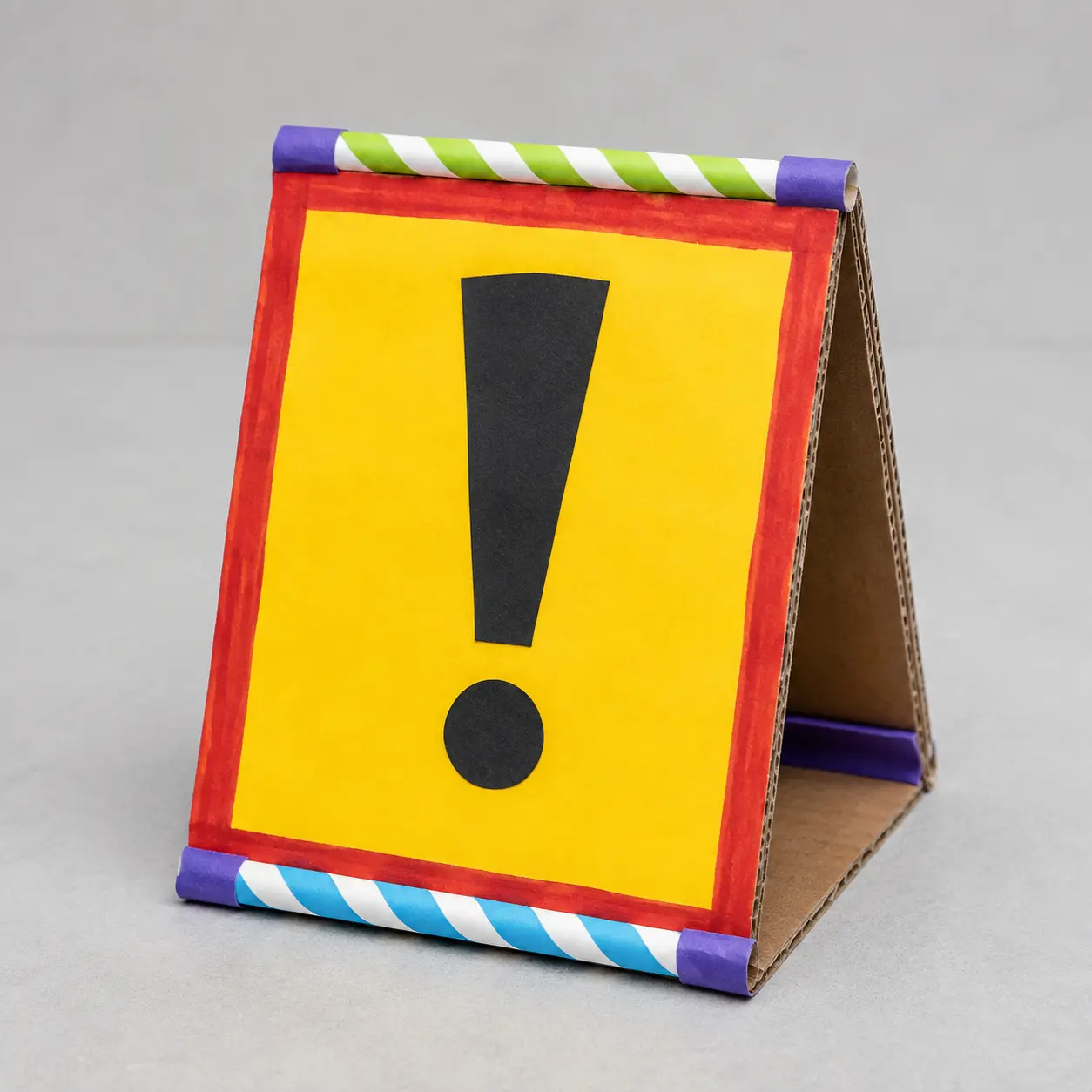
Build a folding tabletop sign that opens quickly, stands from two viewing directions and folds flat.
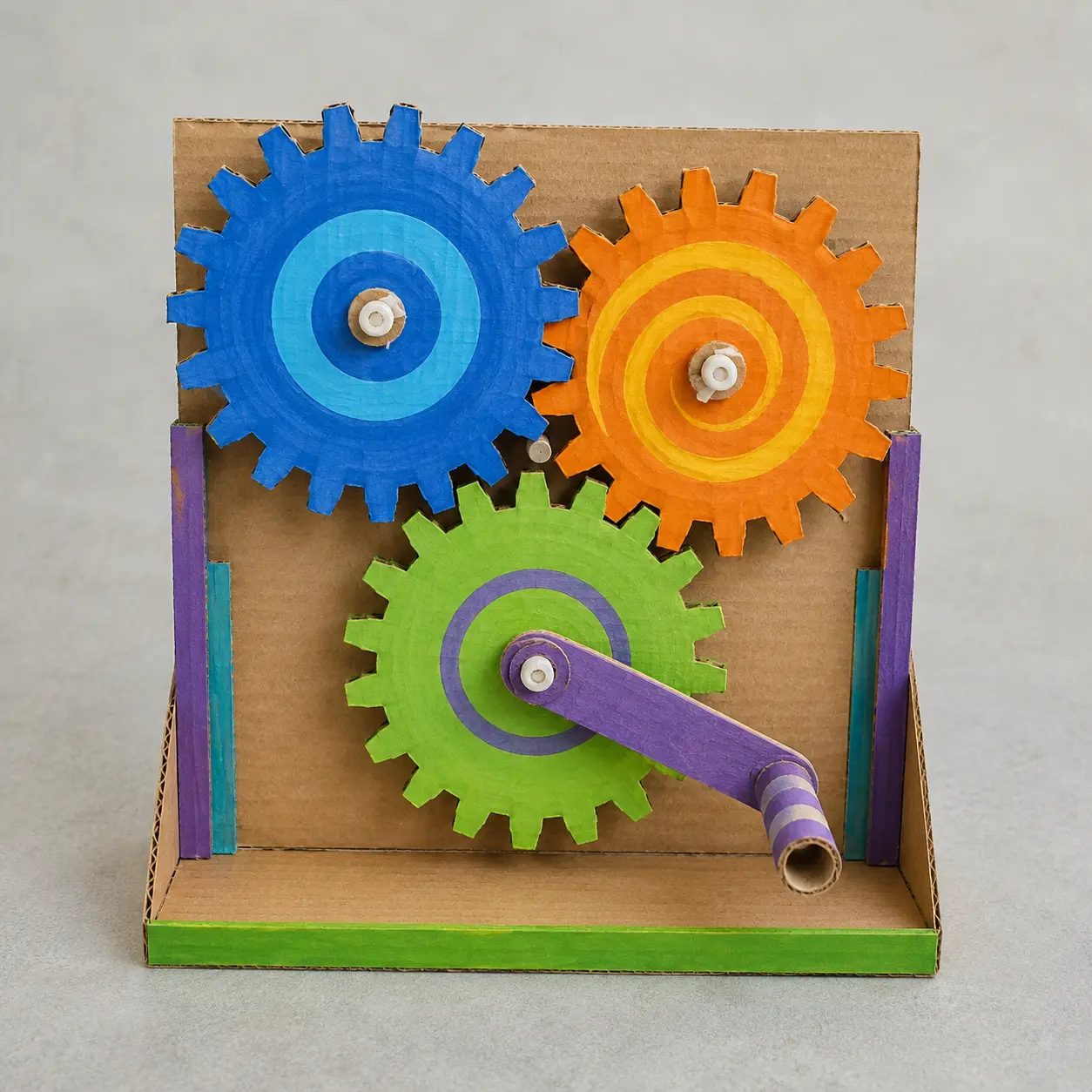
Build three interlocking cardboard gears so one hand crank turns all three.
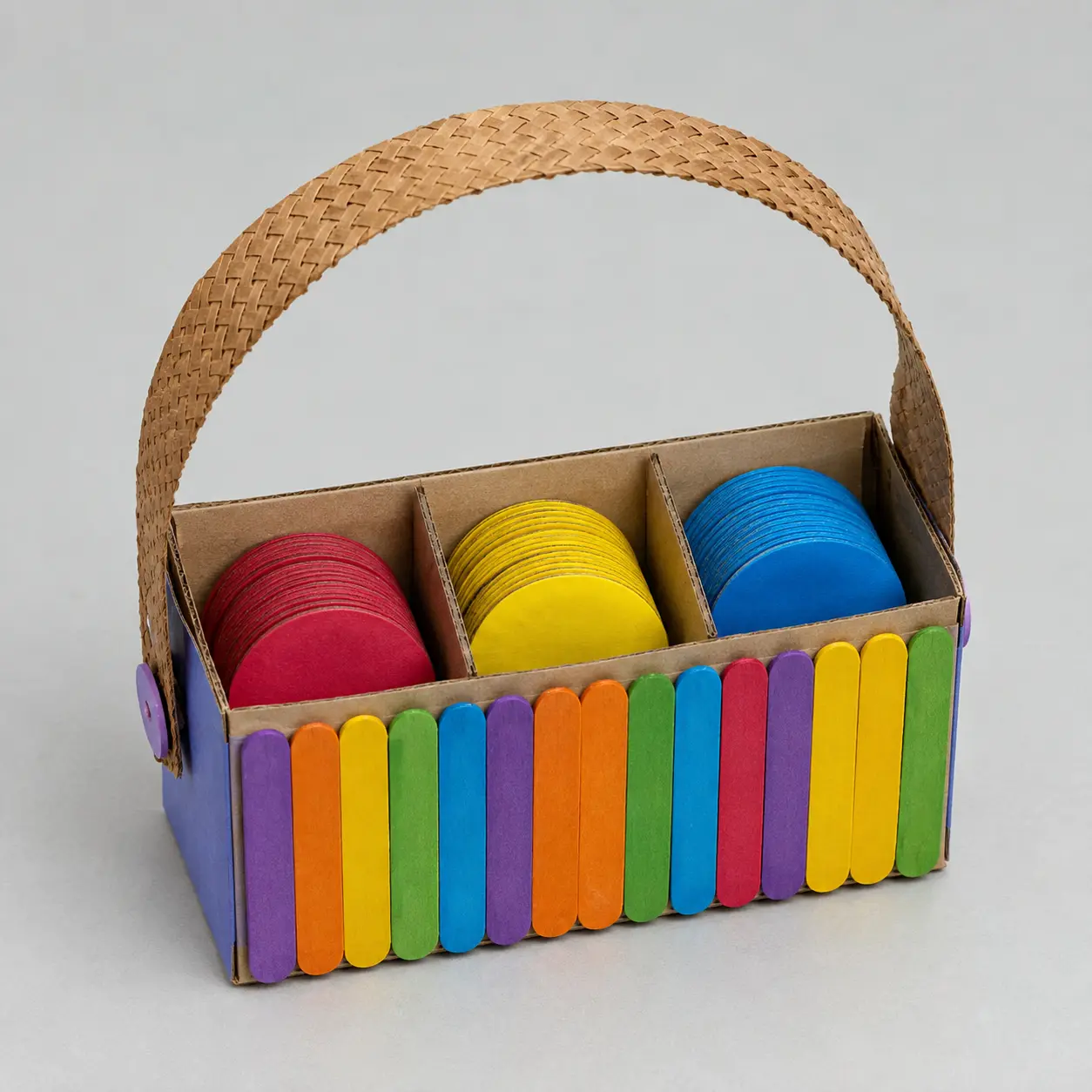
Build a reinforced paper handle for a cardboard package carrying five large counters.
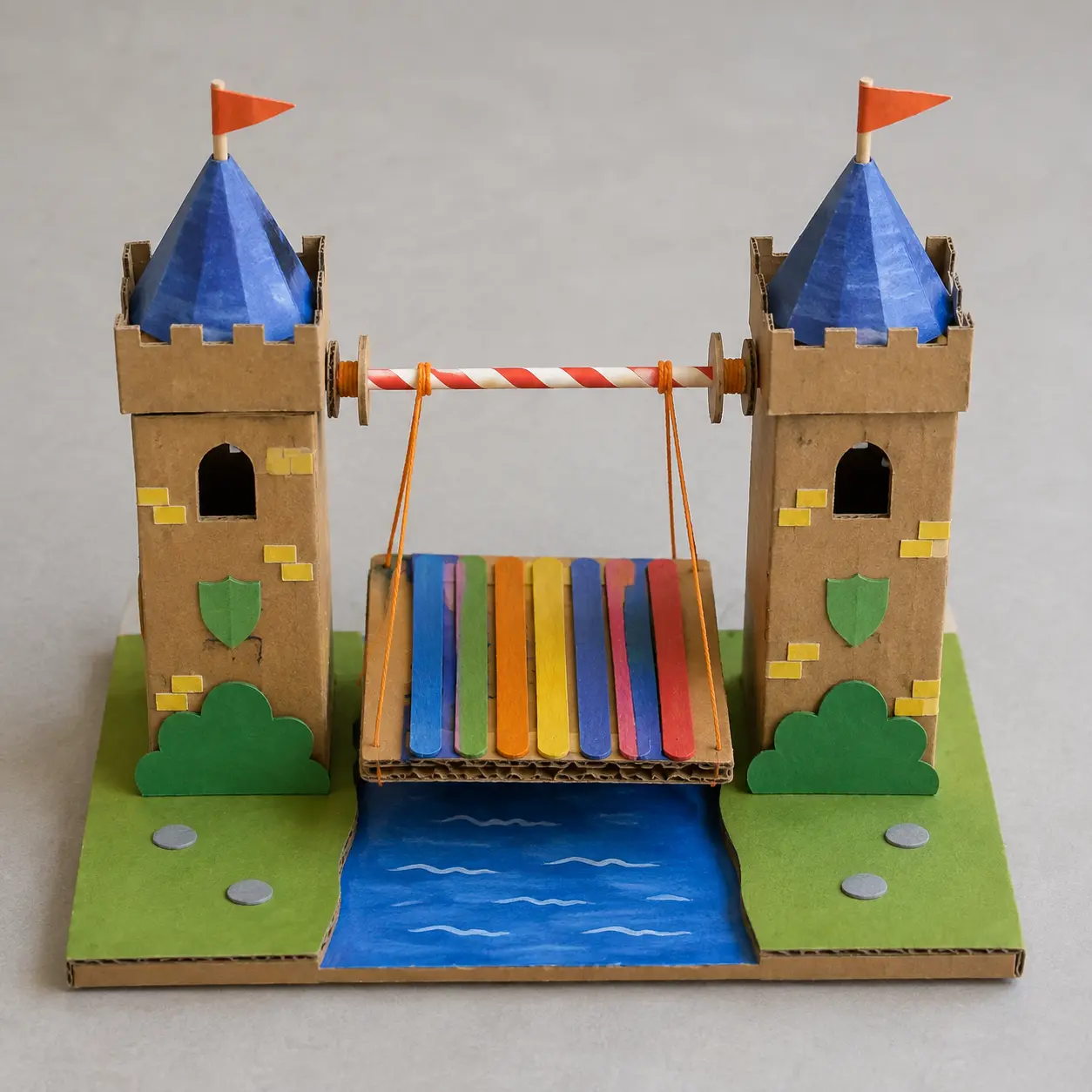
Build a small cardboard drawbridge that lifts, stays open and lowers to reconnect a level path.
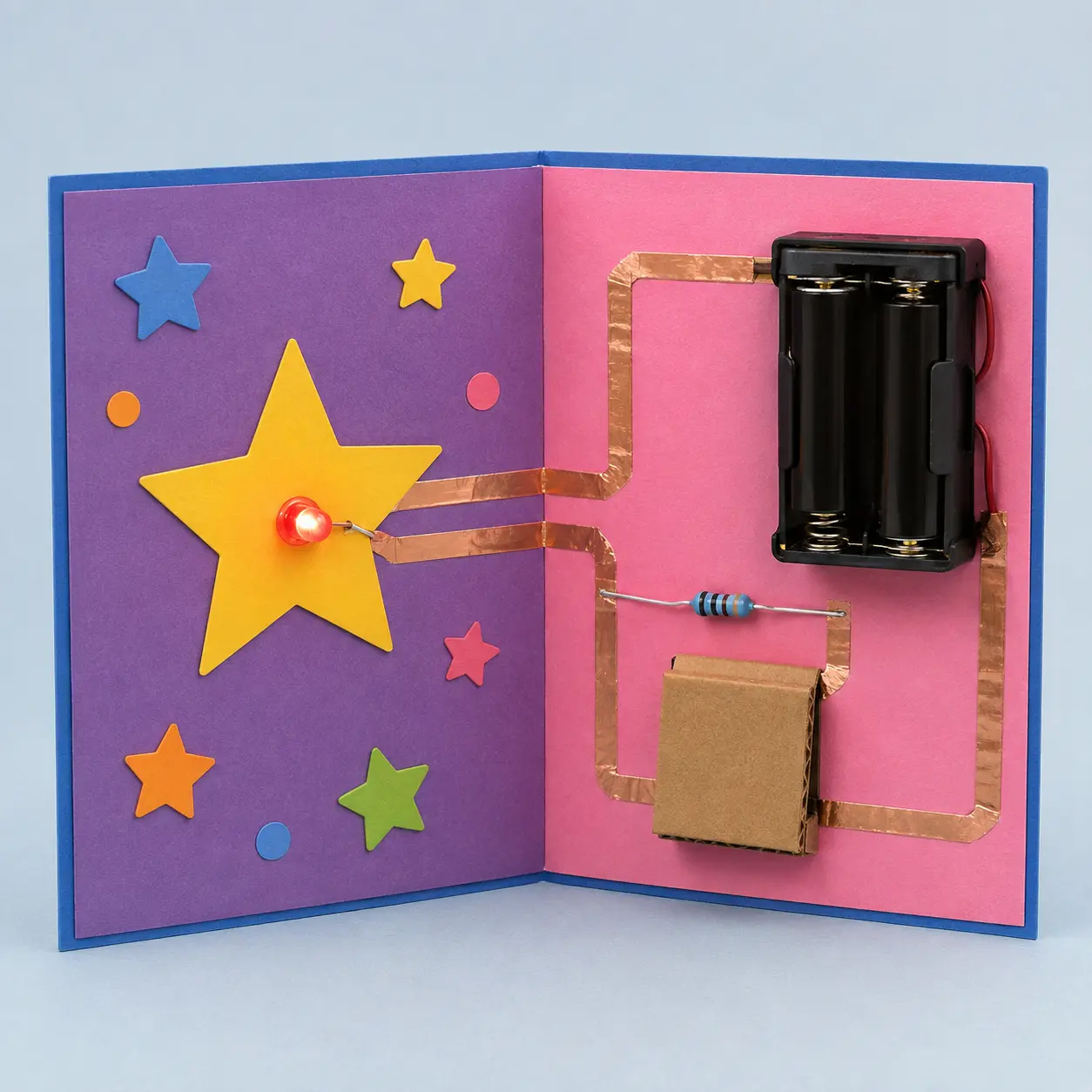
Make a folded greeting card with one red LED that turns on only when a cardboard button is pressed.
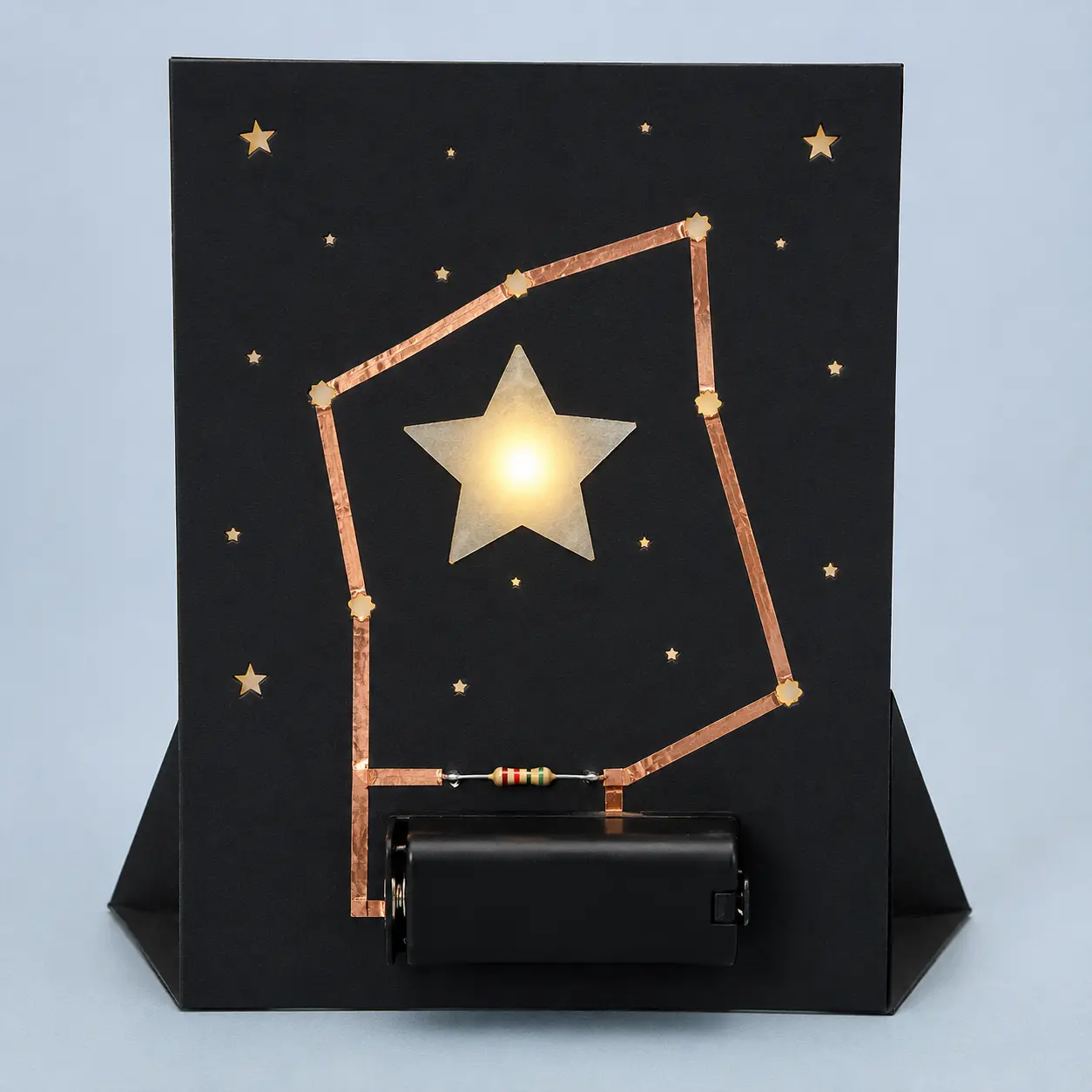
Create a dark paper night sky with one safe LED marking an important star.
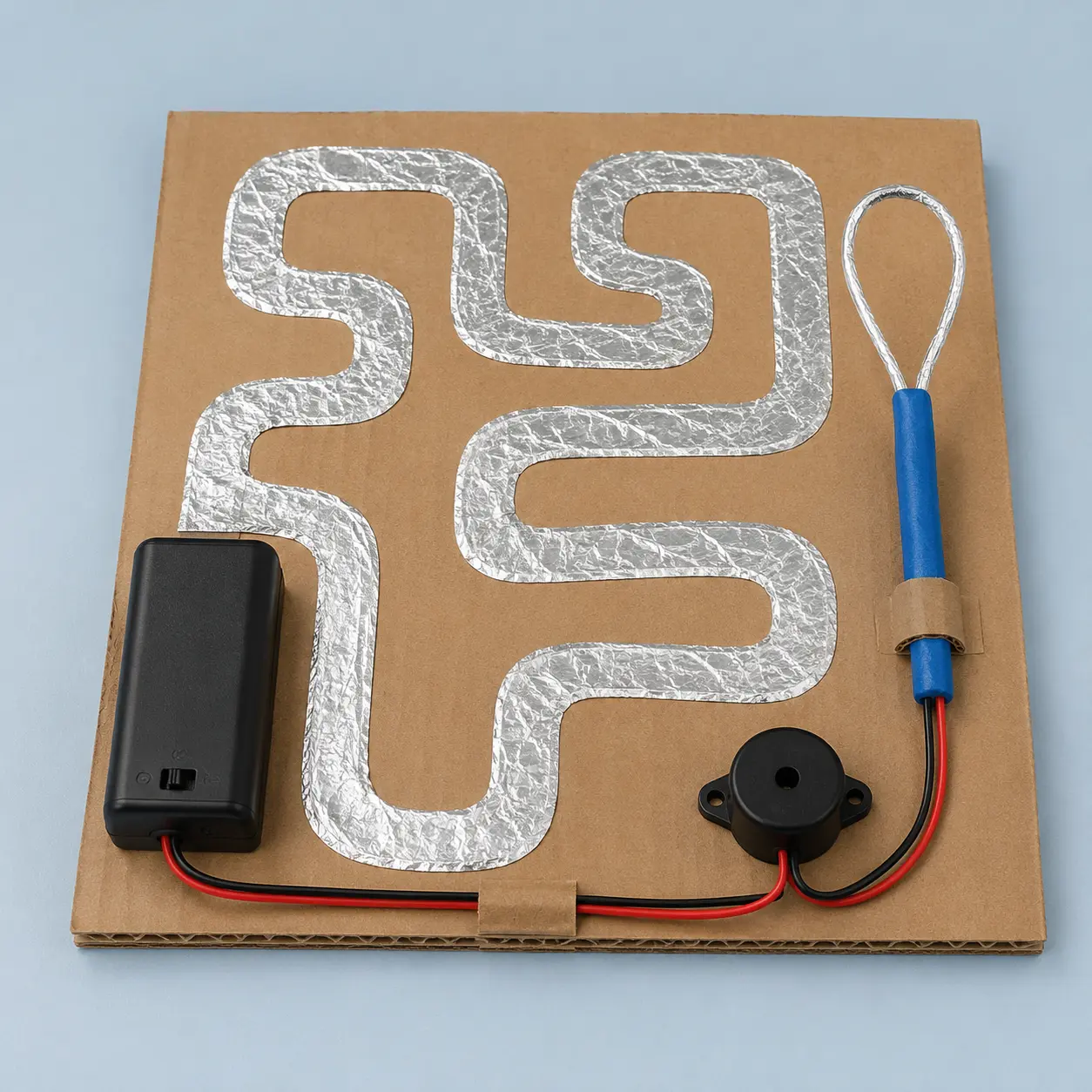
Make a tabletop path game that sounds a low-voltage buzzer when a foil wand touches the foil trail.
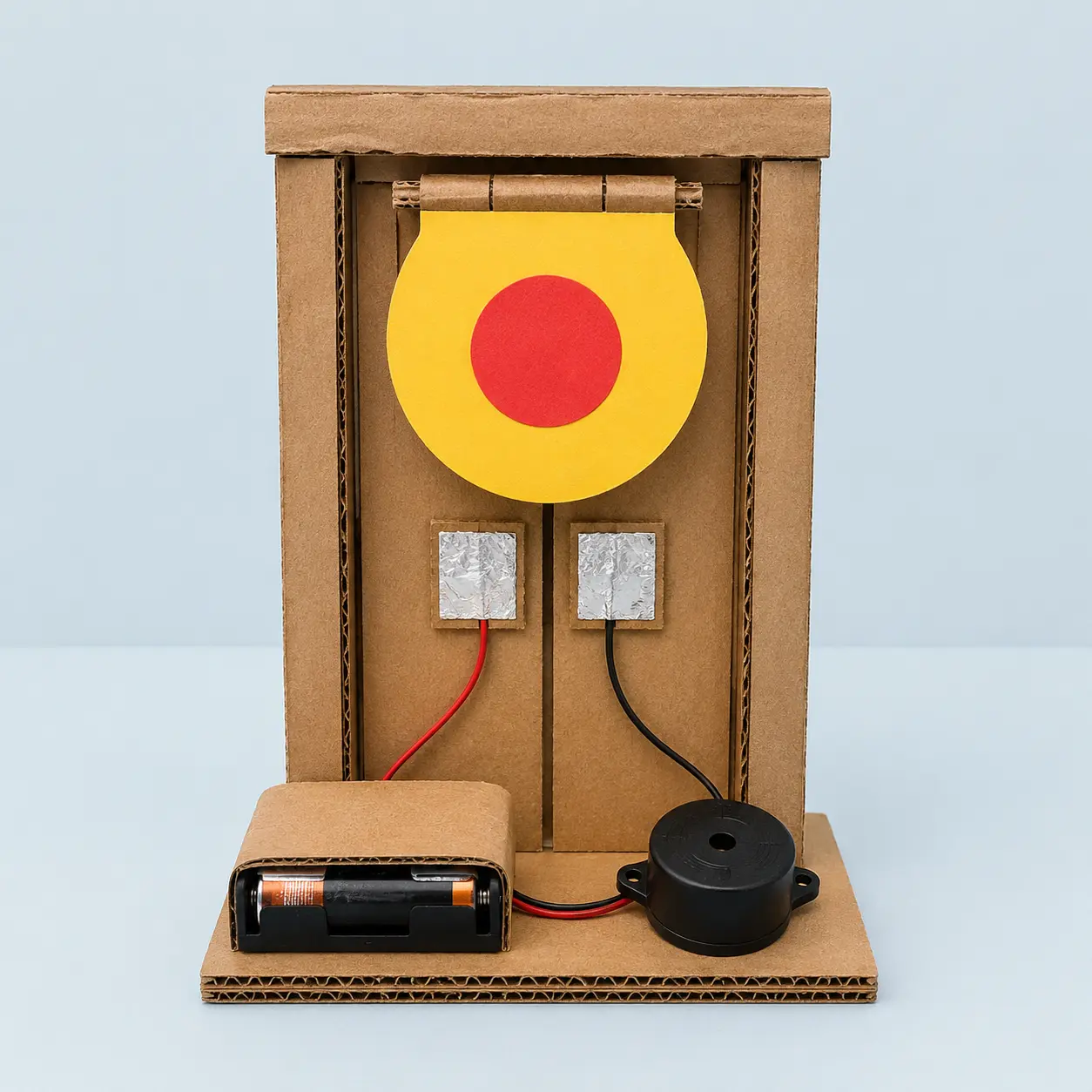
Build a small cardboard doorway with a push button that sounds a safe 3 V buzzer.
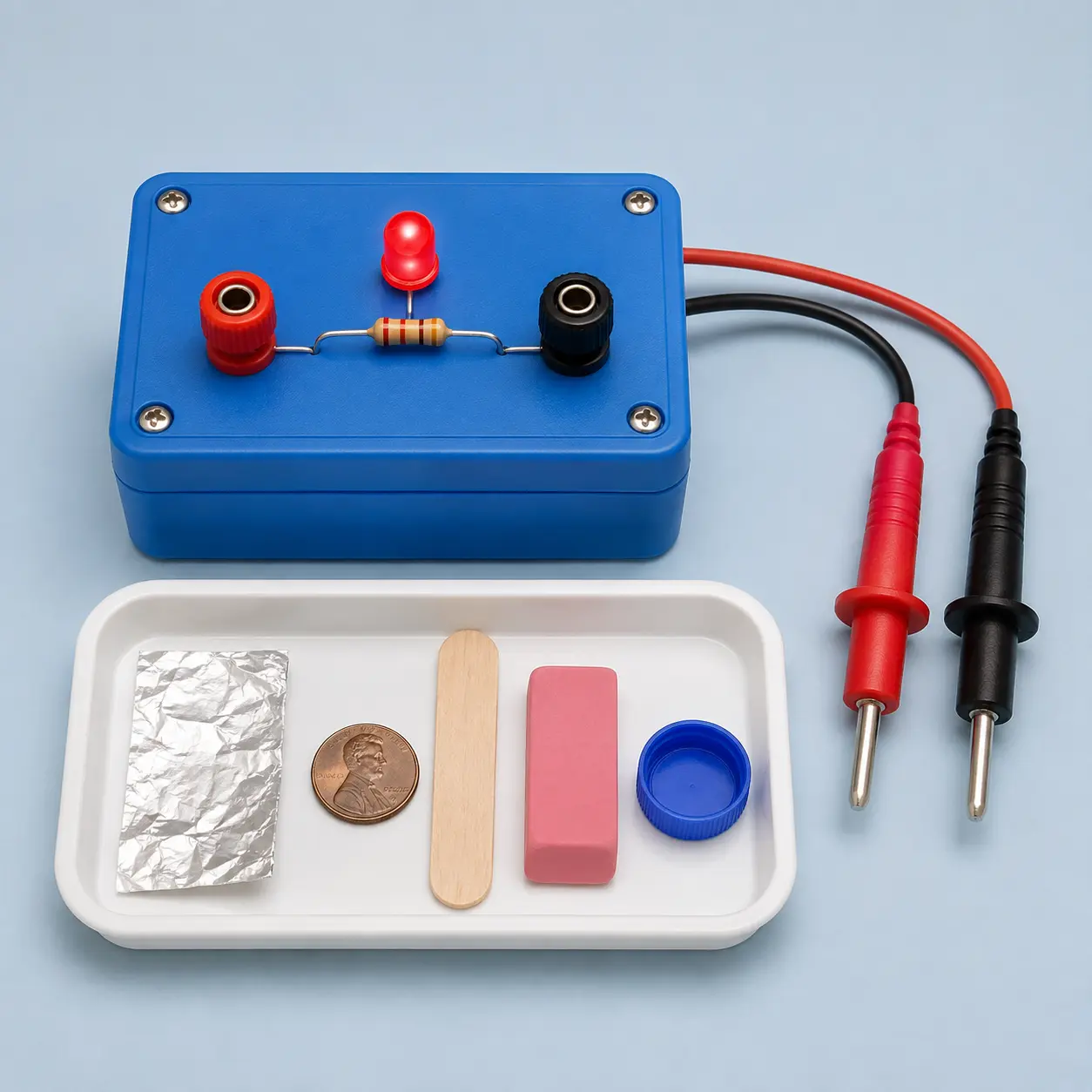
Use a teacher-checked light circuit to find which dry classroom objects complete a circuit.
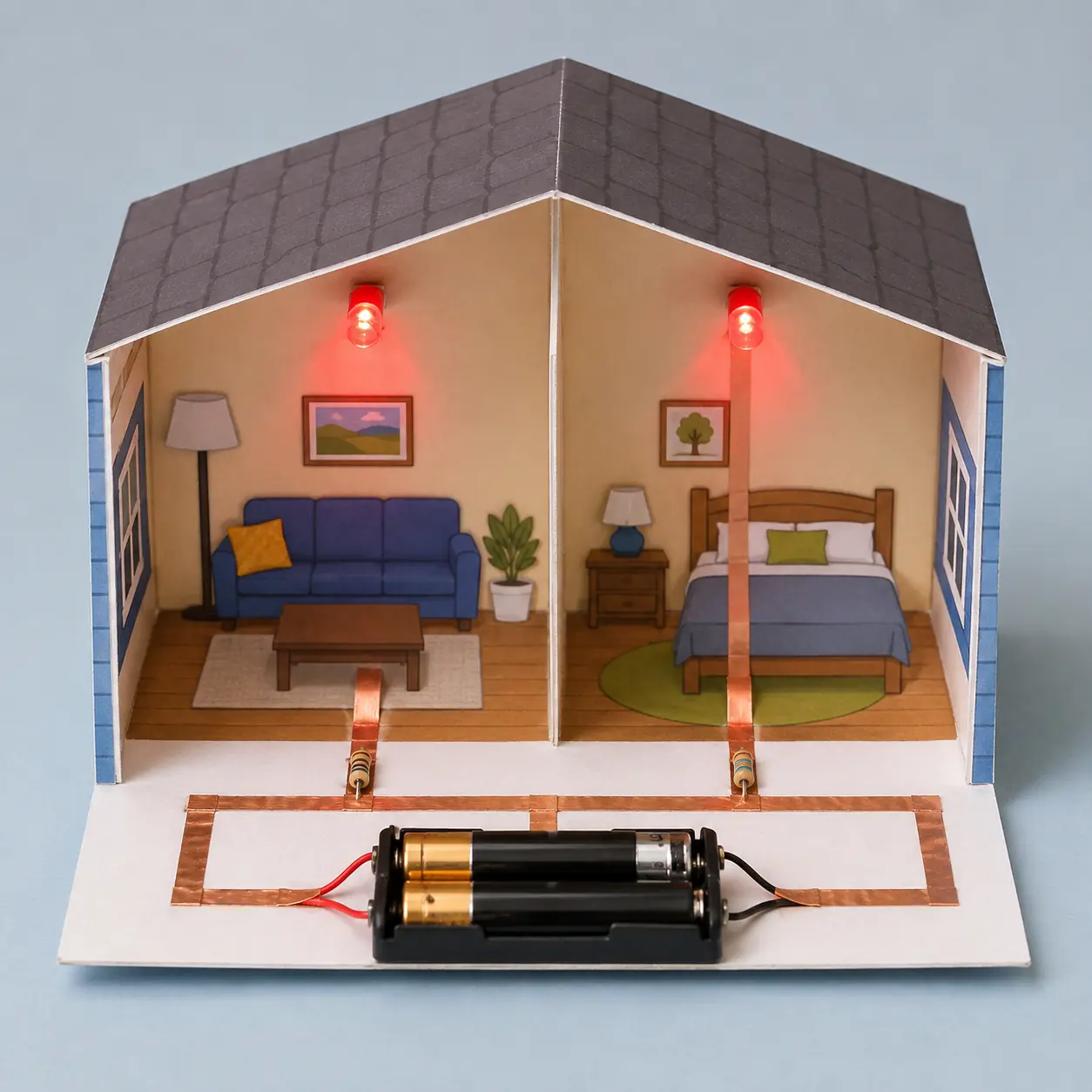
Make a paper house model with two room lights that can shine at the same time.
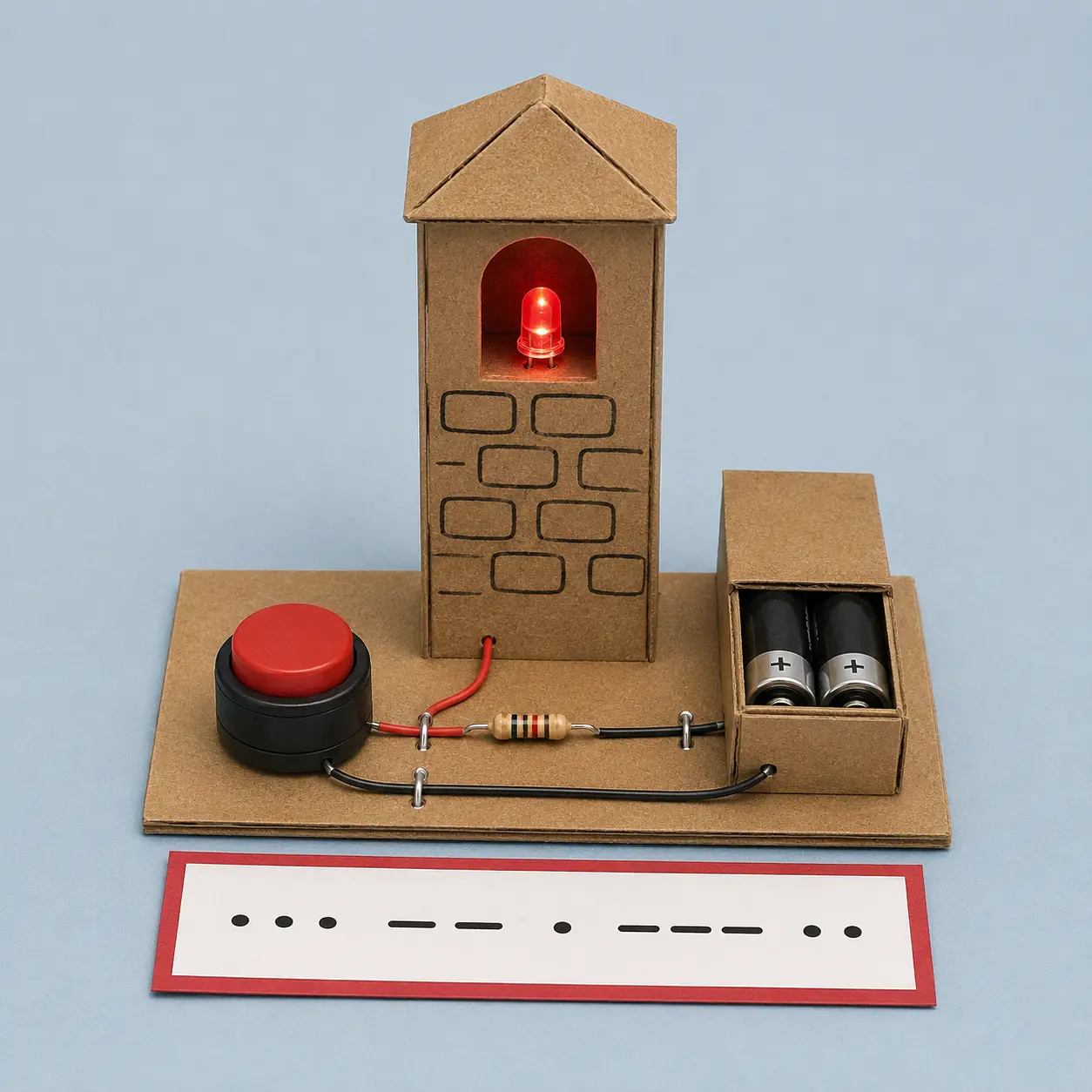
Build a push-to-light signal and use short and long presses to send a three-letter message.
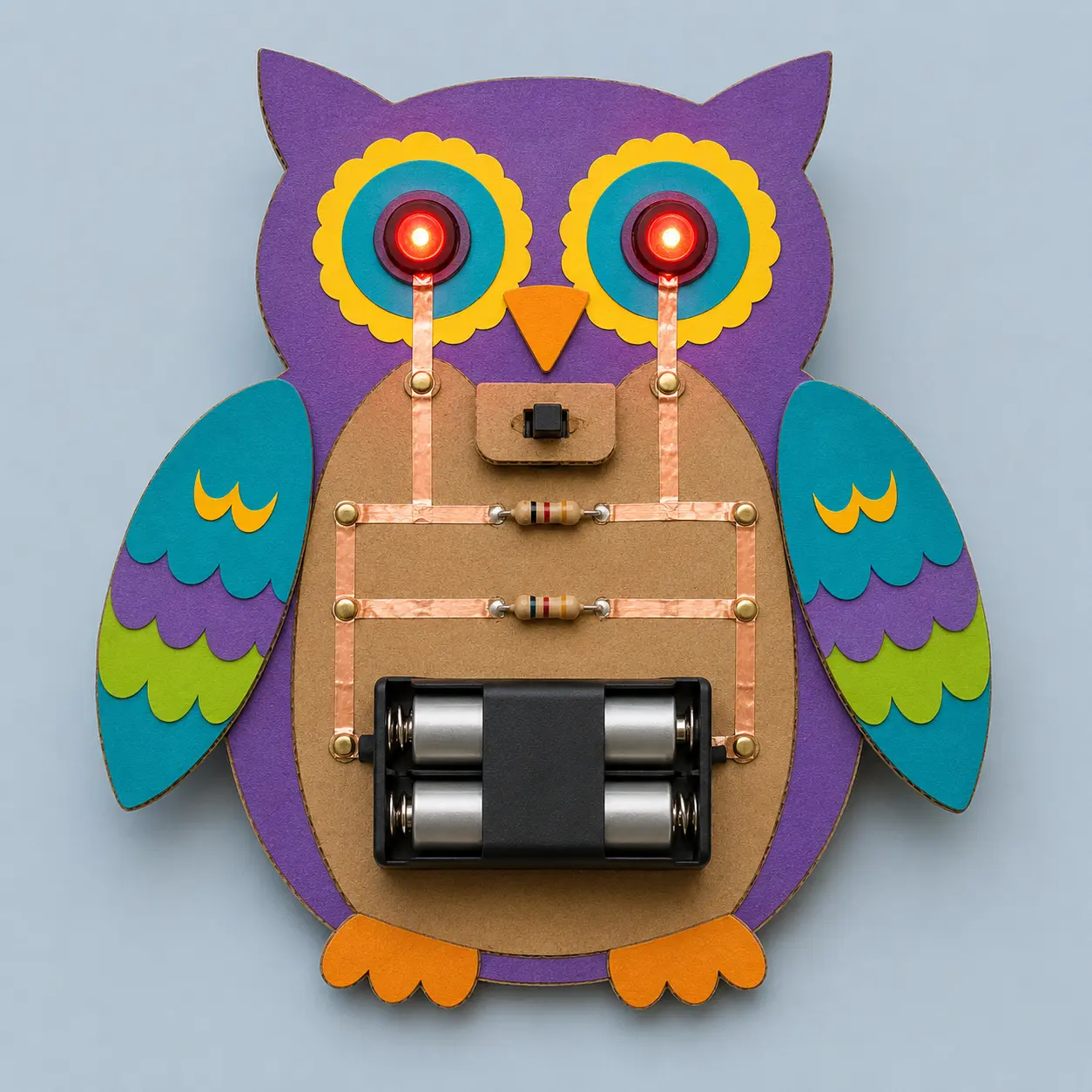
Create a cardboard night animal whose two LED eyes light together when a hidden flap switch closes.
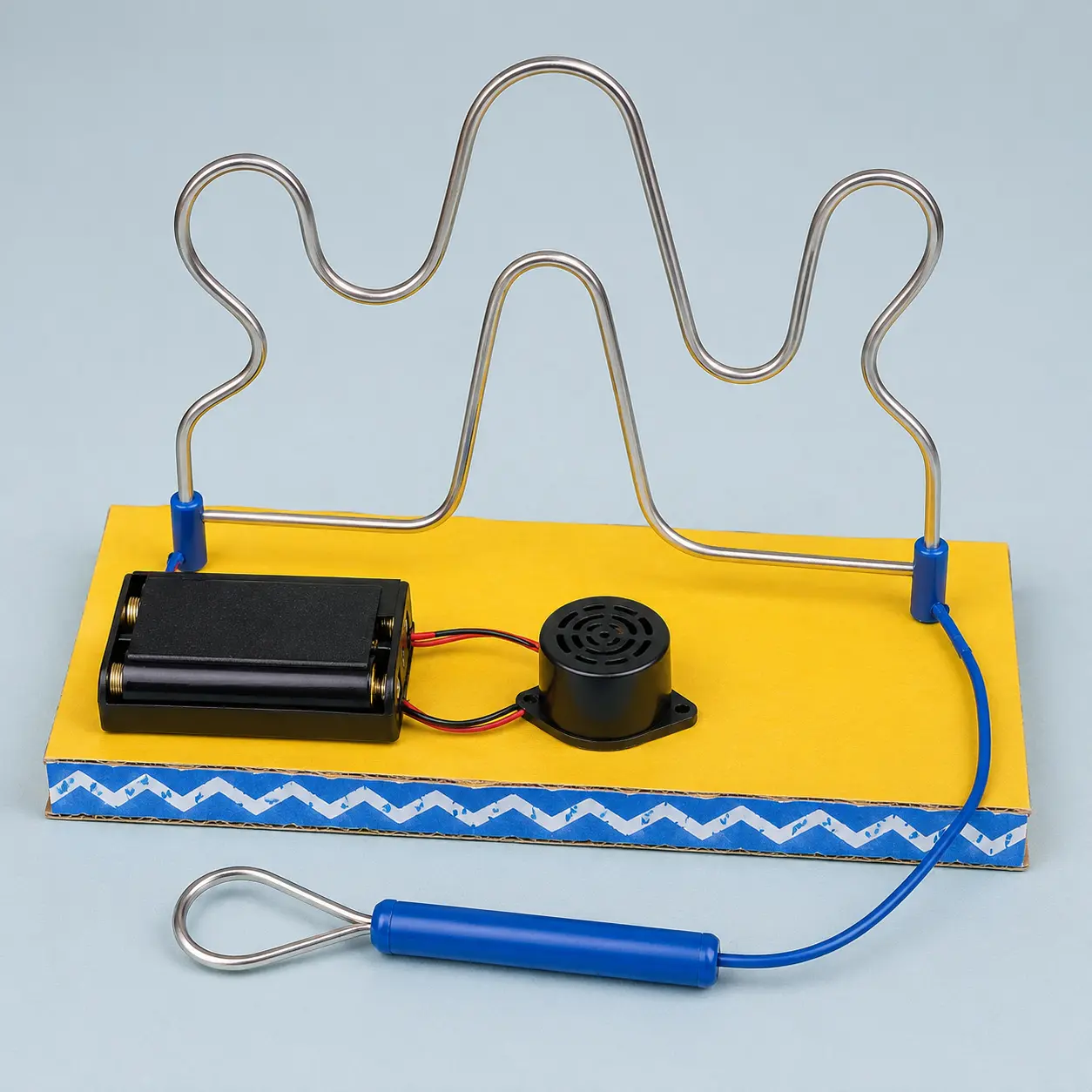
Make a large safe wire-loop challenge that buzzes when the handheld loop touches the path.
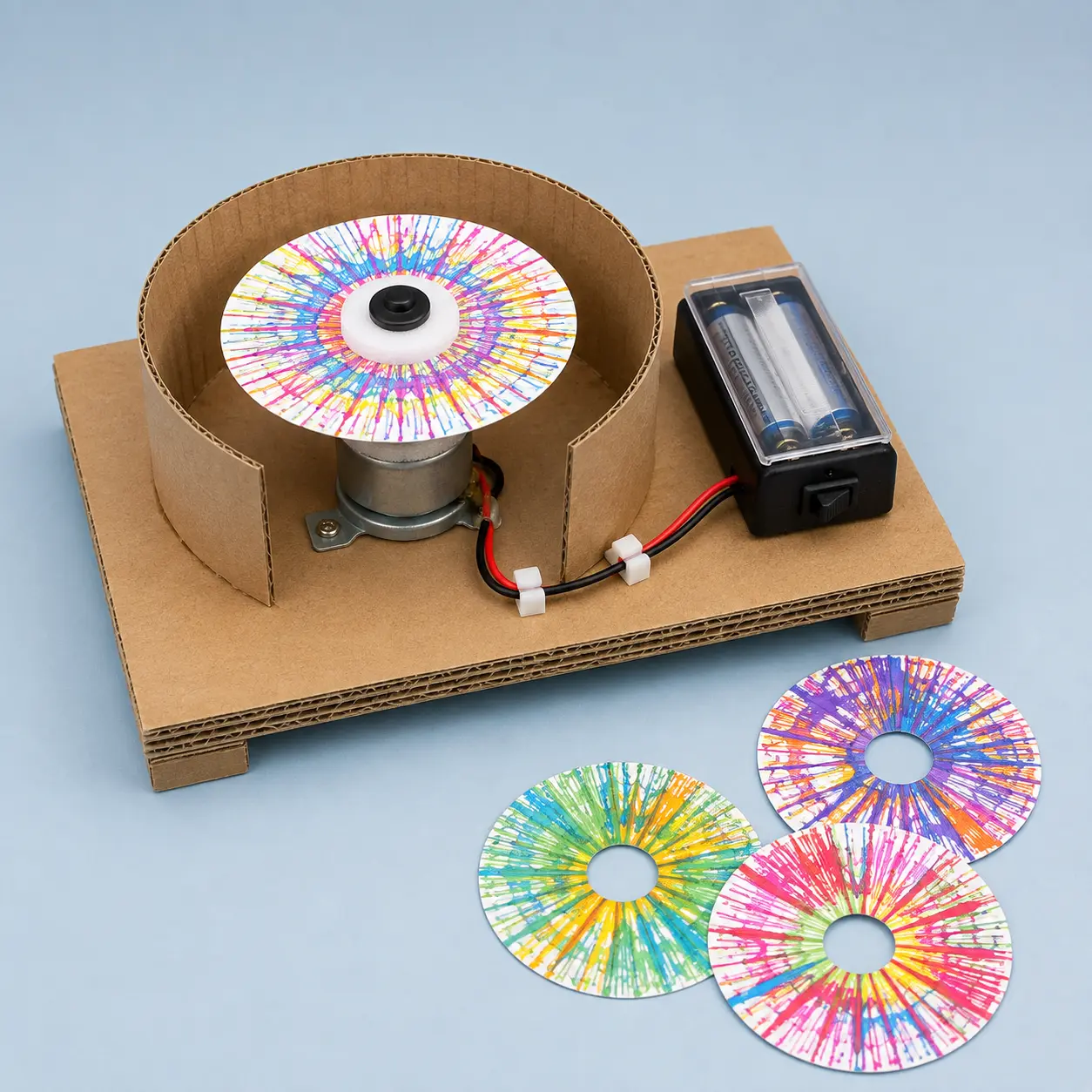
Build a guarded low-speed motor platform that spins a small paper disk for marker-dot pattern experiments.
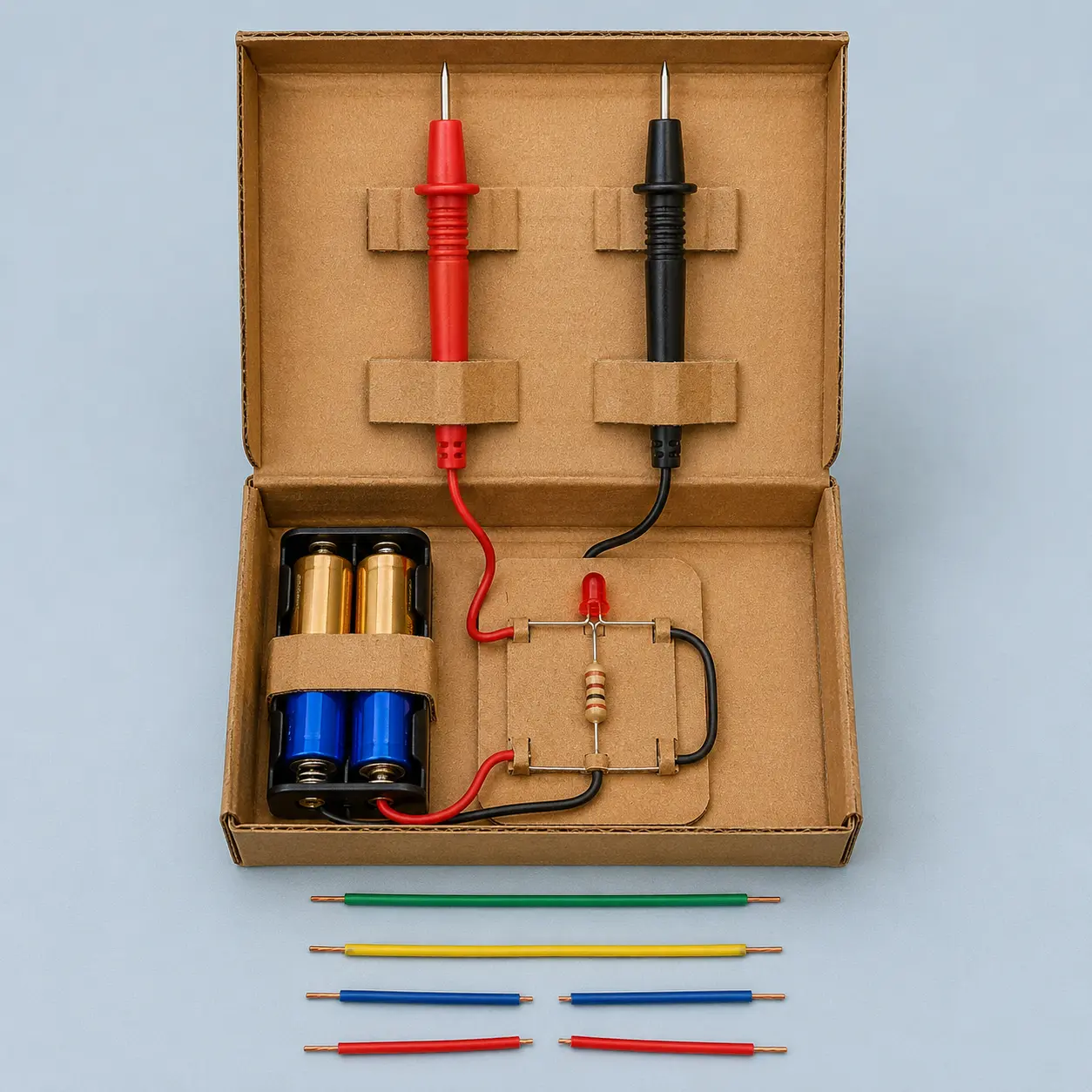
Build a labeled LED tool that shows whether a disconnected path is electrically complete.
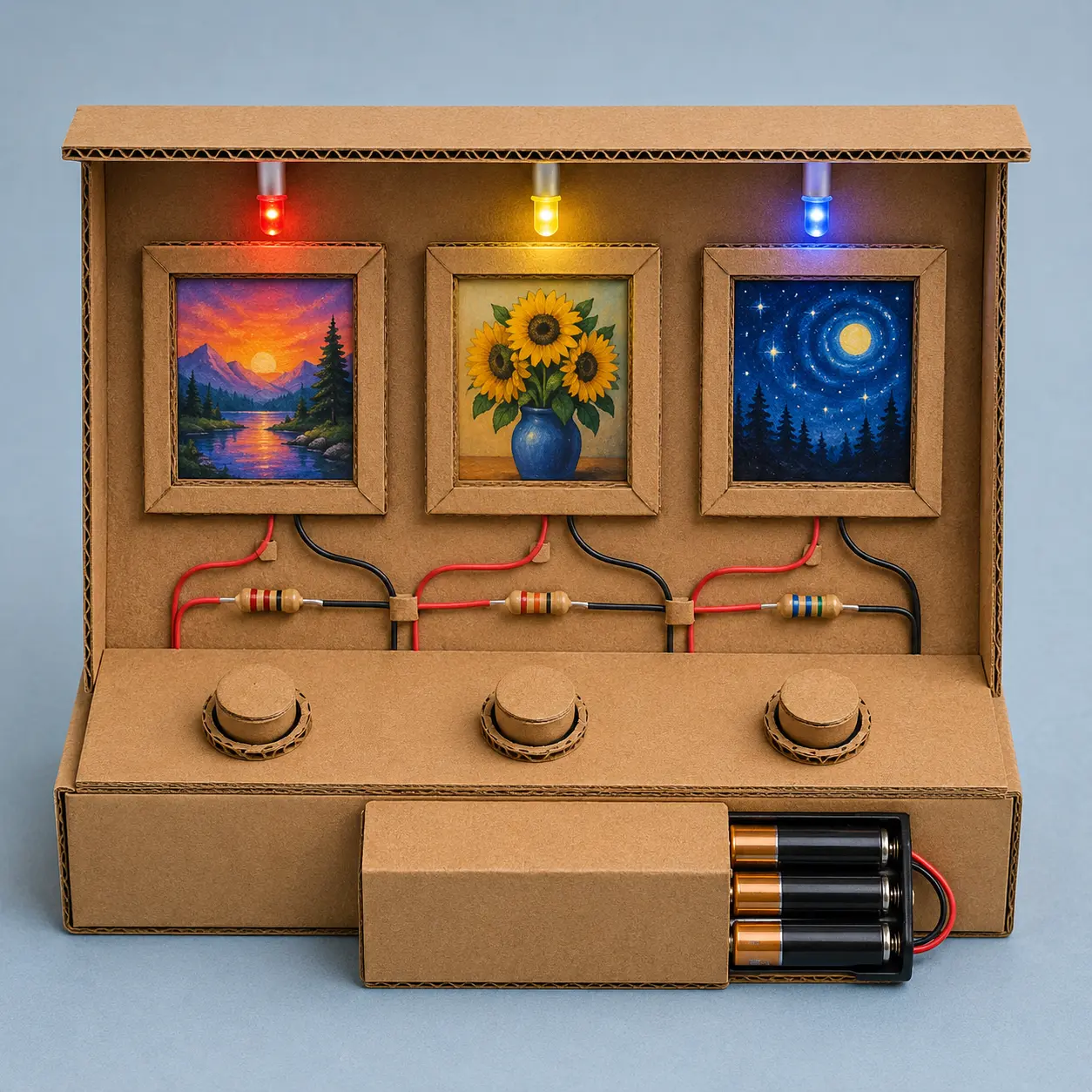
Build a three-artwork cardboard gallery with three independently switched LED lights.
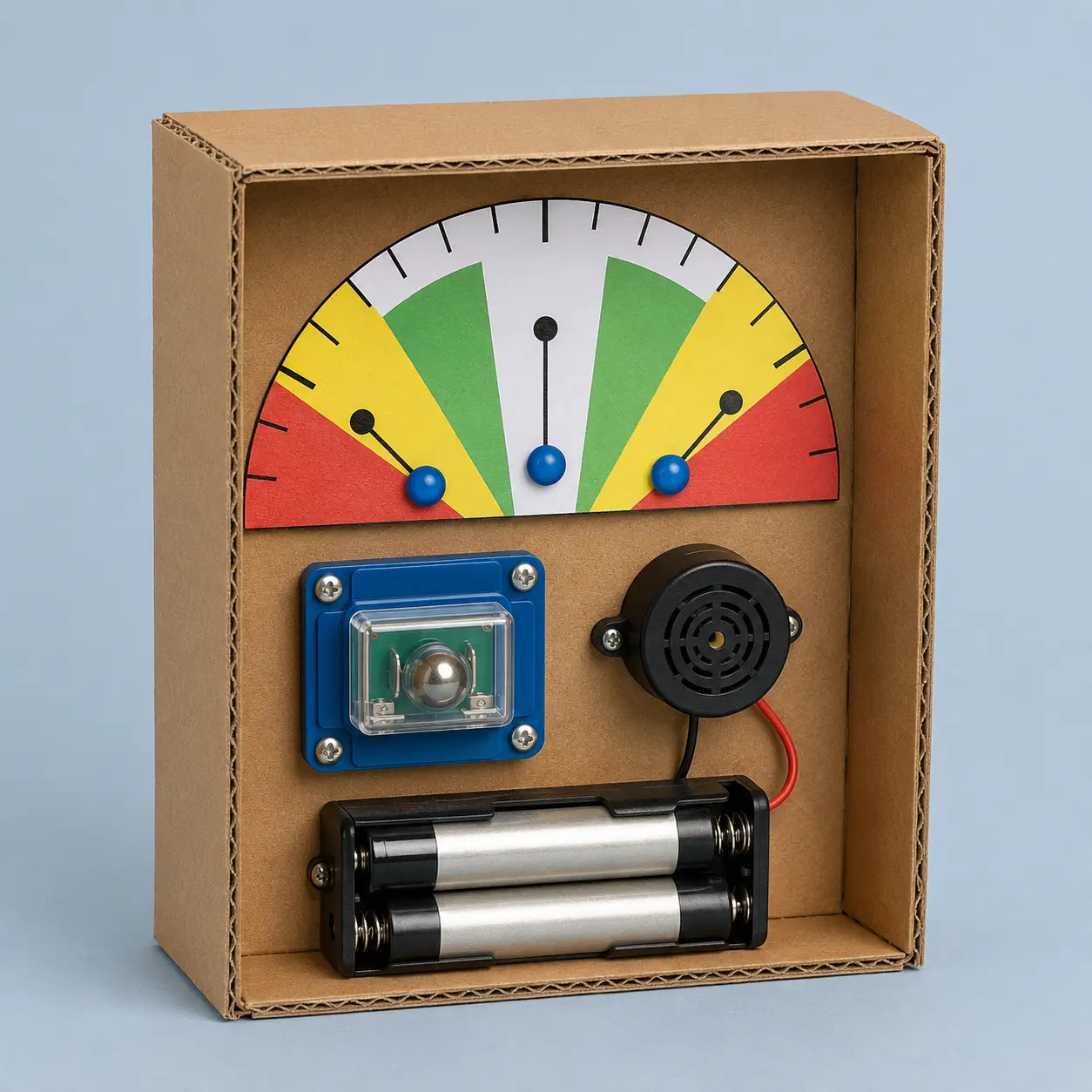
Build a model package that buzzes when it tips beyond the intended upright position.
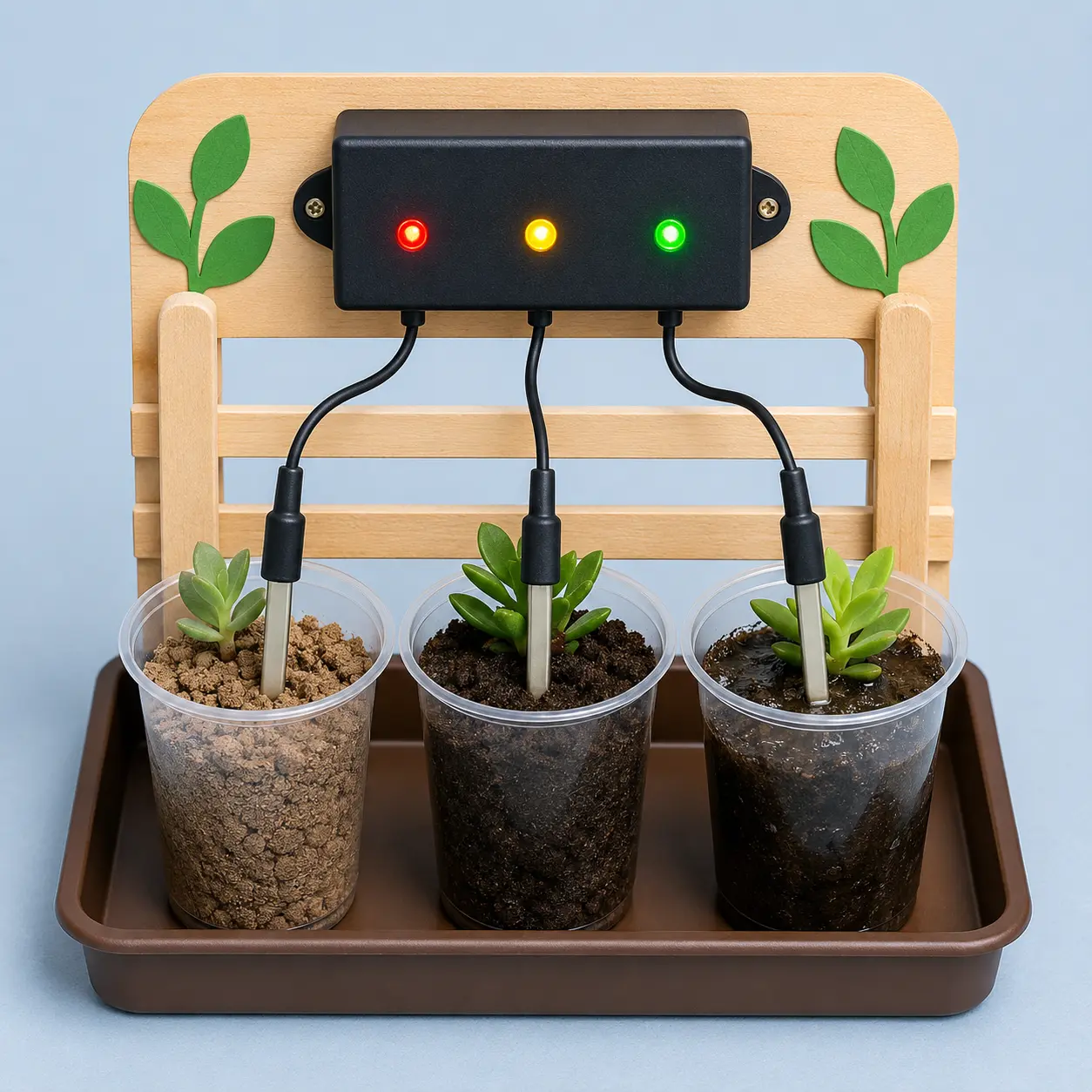
Use a sealed classroom moisture sensor module to compare dry, damp and wet soil samples with an LED indicator.
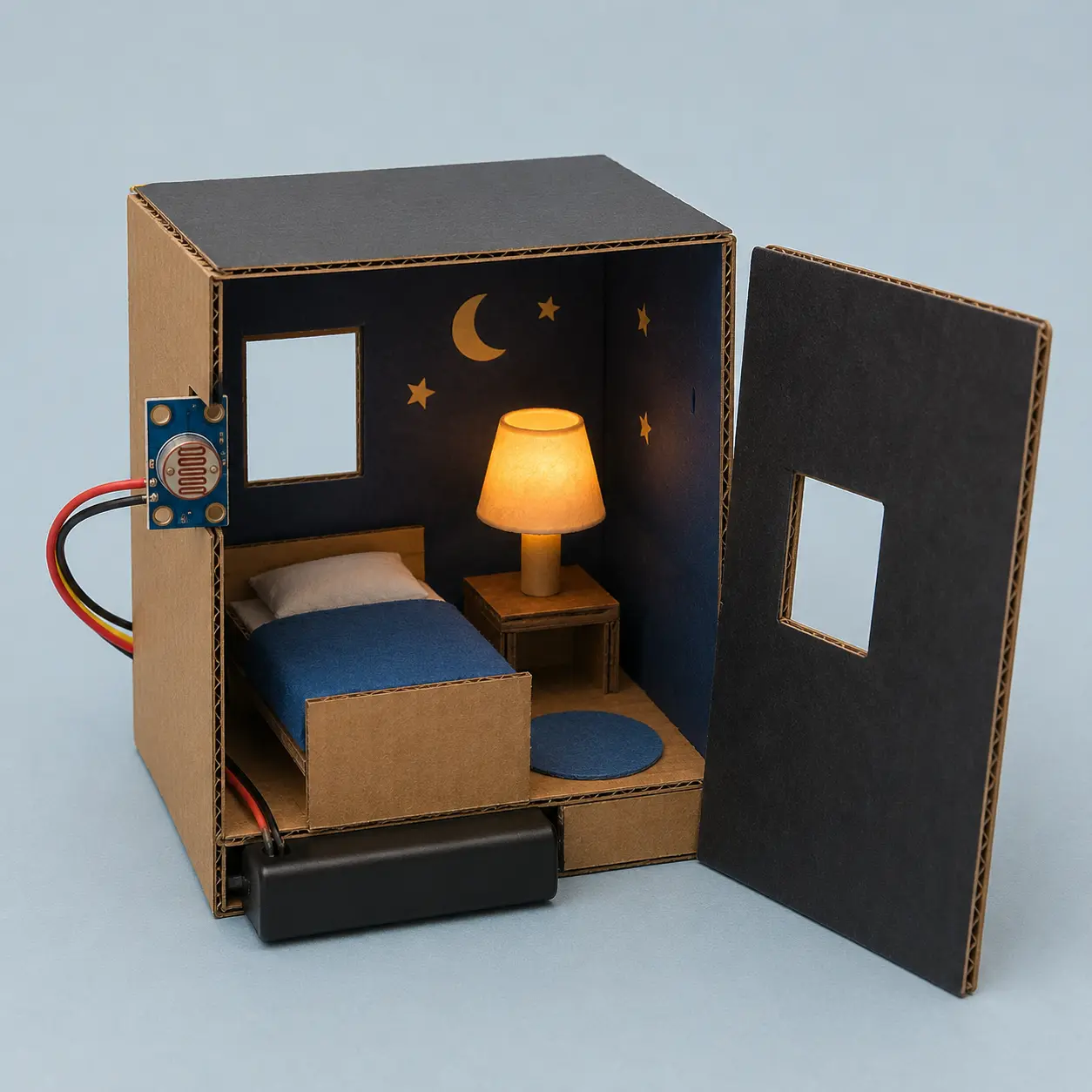
Build a simple sensor module display that turns on an LED when a cardboard room becomes dark.
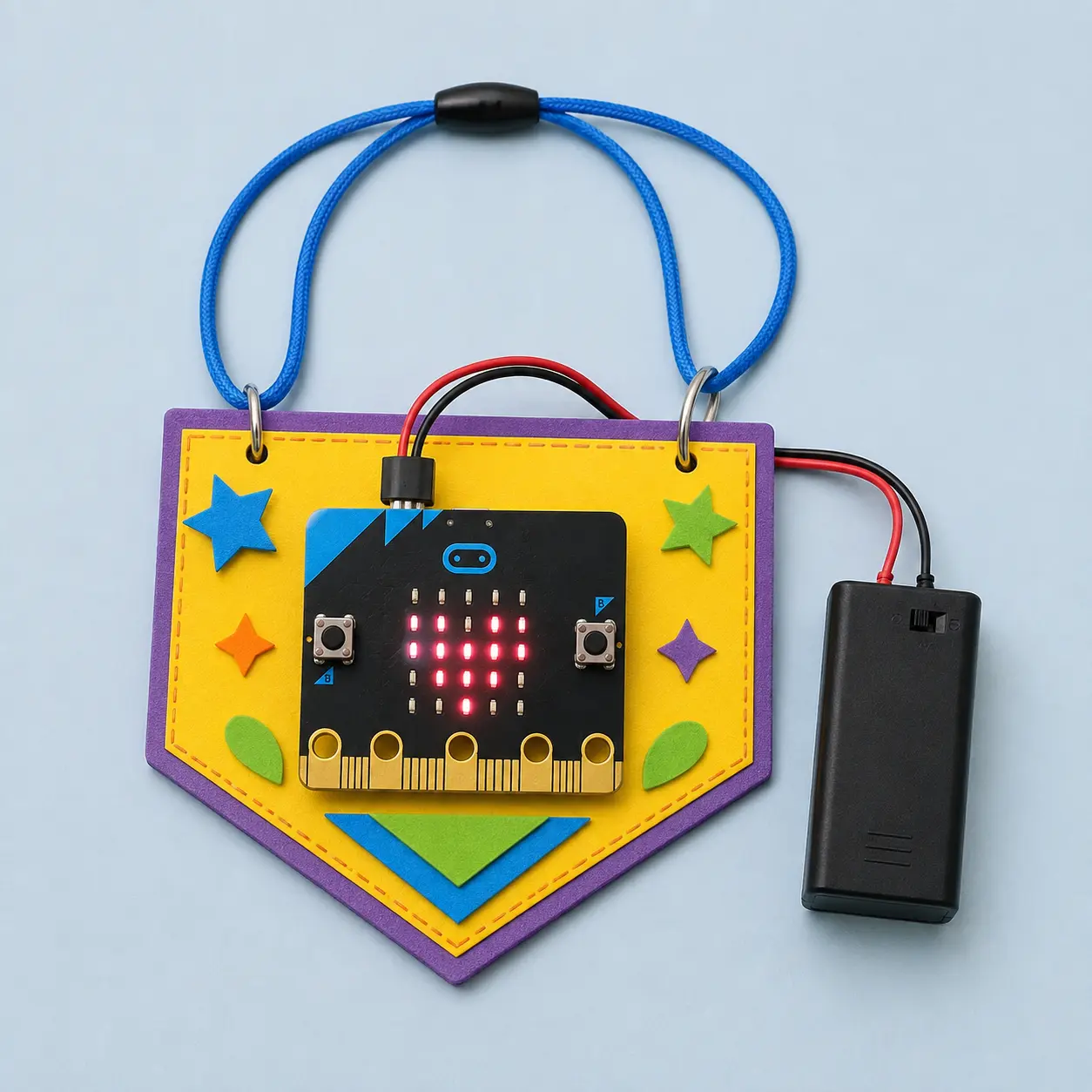
Program a micro:bit badge that shows initials and one original icon when button A is pressed.
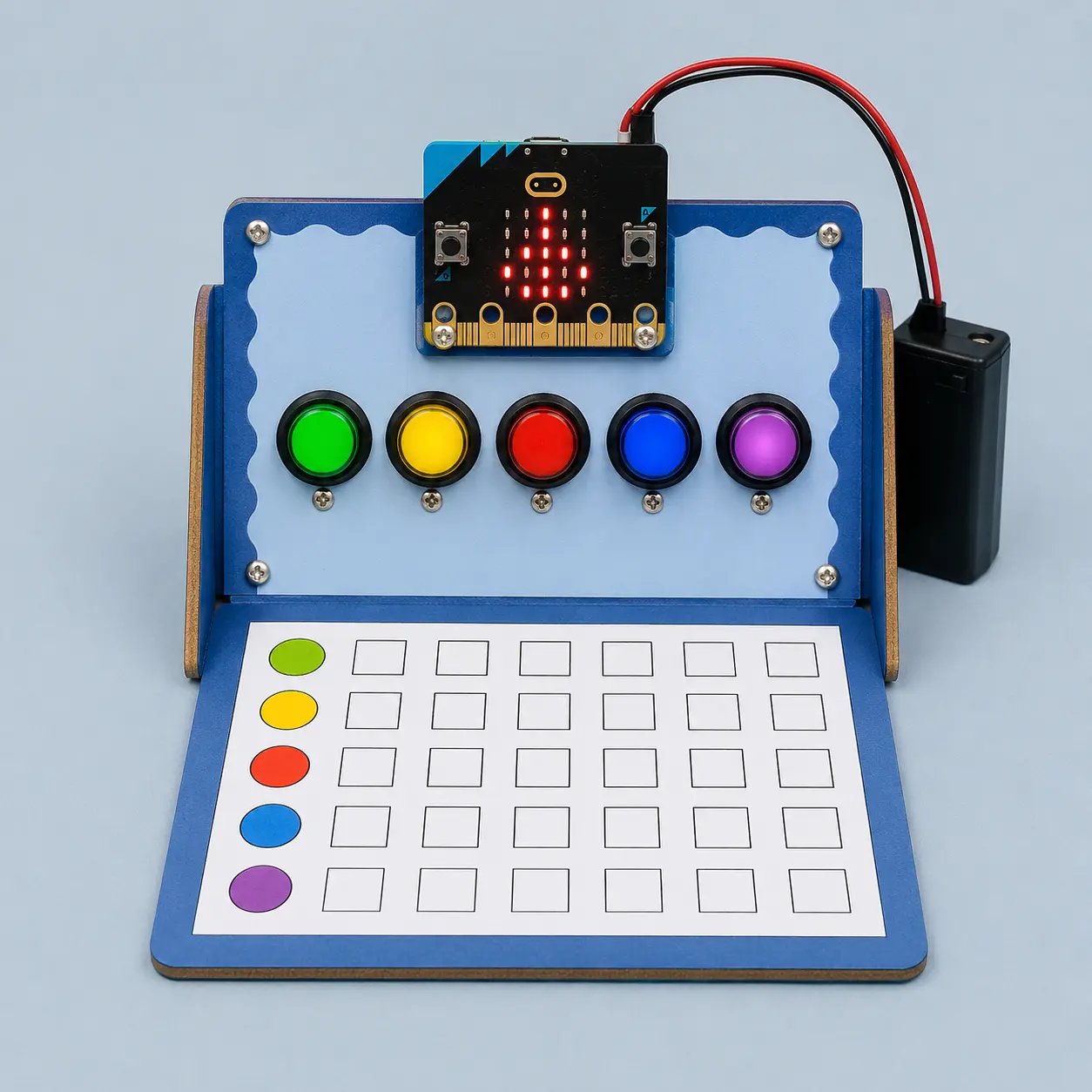
Program a micro:bit game that waits a random time, shows a signal, and records when a player presses a button.
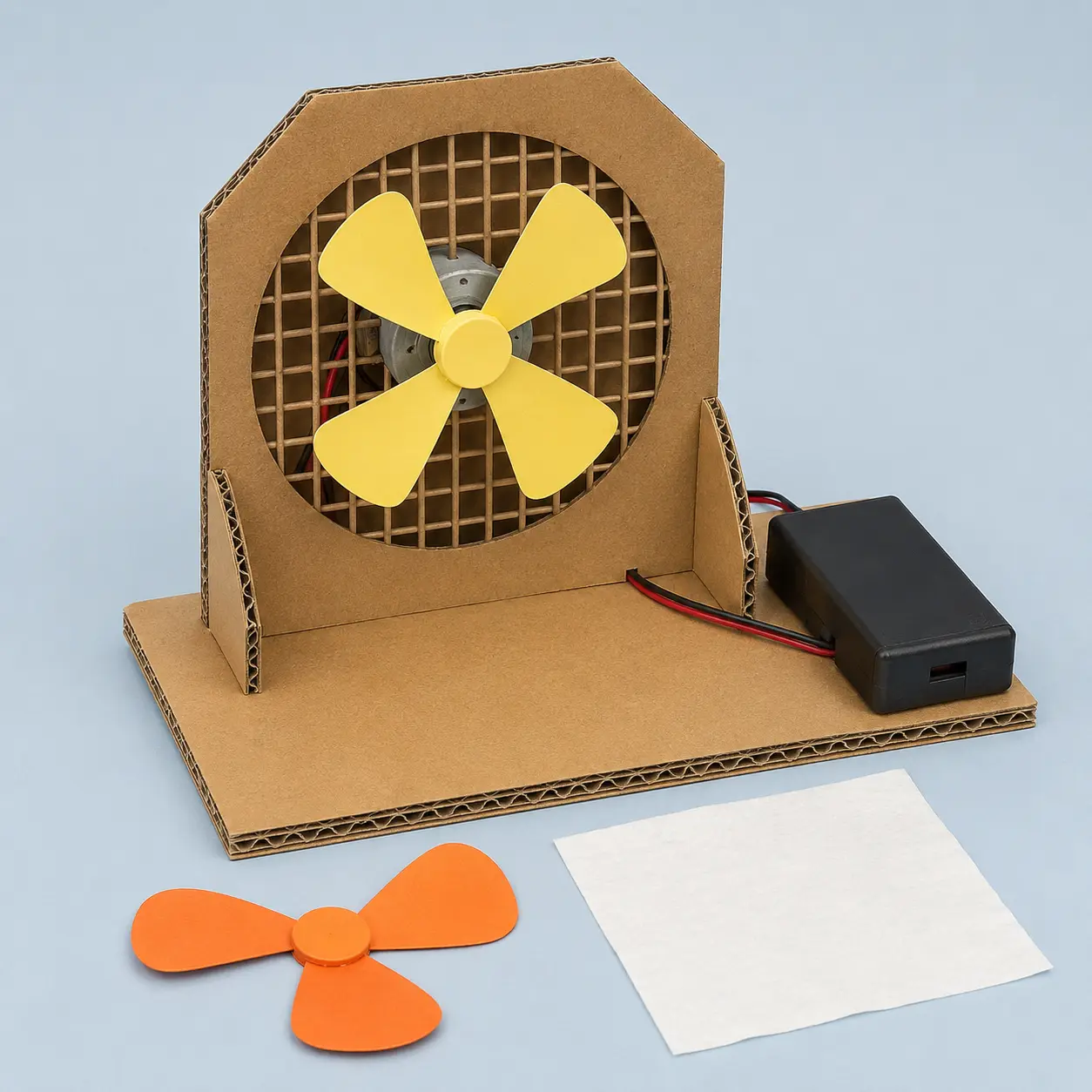
Compare two lightweight paper fan-blade designs on the same guarded low-voltage motor.
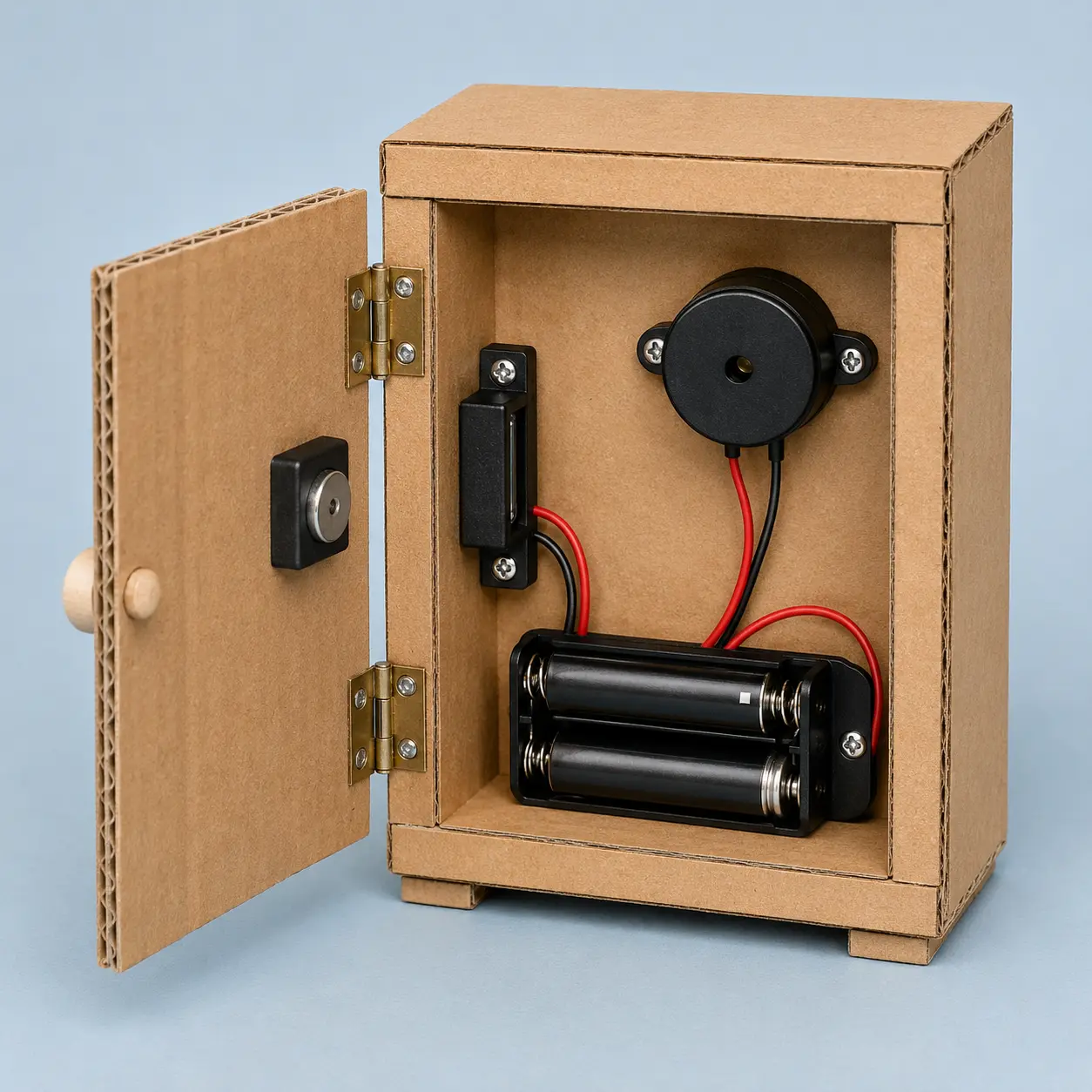
Build a model cabinet alarm that sounds when its cardboard door opens.
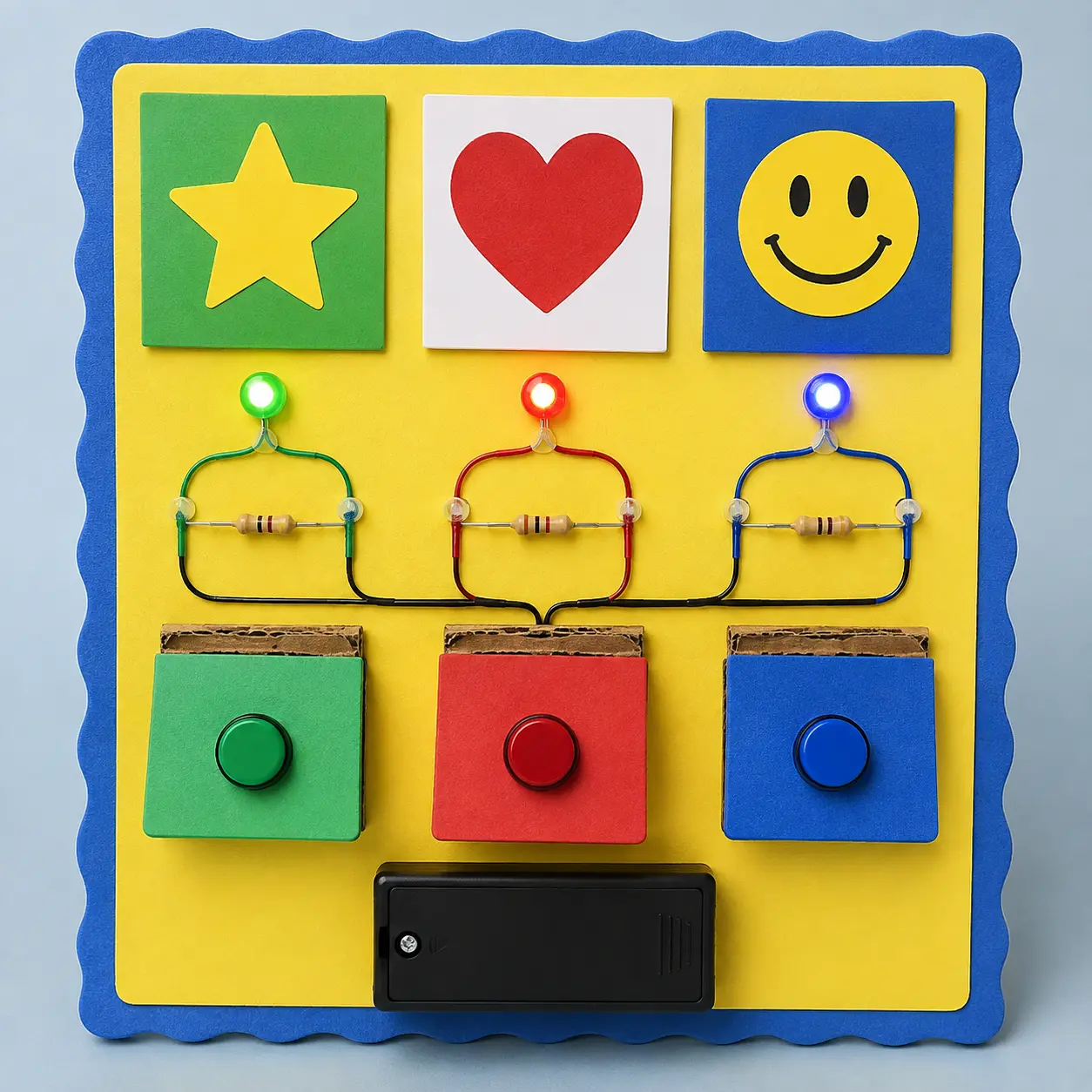
Build a three-choice board where each push button lights its own labeled LED.
Nationally aligned
Every activity connects the challenge, student evidence, and assessment to NGSS Engineering Design. ITEEA STEL connections are added when they meaningfully support the work.
Identify a need, criteria for success, and project constraints.
Create and compare possible solutions using the criteria.
Fair-test a prototype and use evidence to make it better.
The E-Fabrication lab
Students may combine cardboard, paper, craft materials, reused objects, simple circuits, coding, sensors, and any lab machine that genuinely improves their idea. Every challenge welcomes more than one solution, with adult-operated fabrication steps, safety guidance, and no-machine alternatives.